A pair of headphones is a remarkably efficient way to excuse yourself. Put them on and the conversation usually stops. Richie Zeng helped build a pair that complicated this arrangement. The Wearhaus Arc could send your music to another listener nearby, giving an object associated with solitude a small but consequential social obligation. Now there was someone else to consider when choosing the next song.
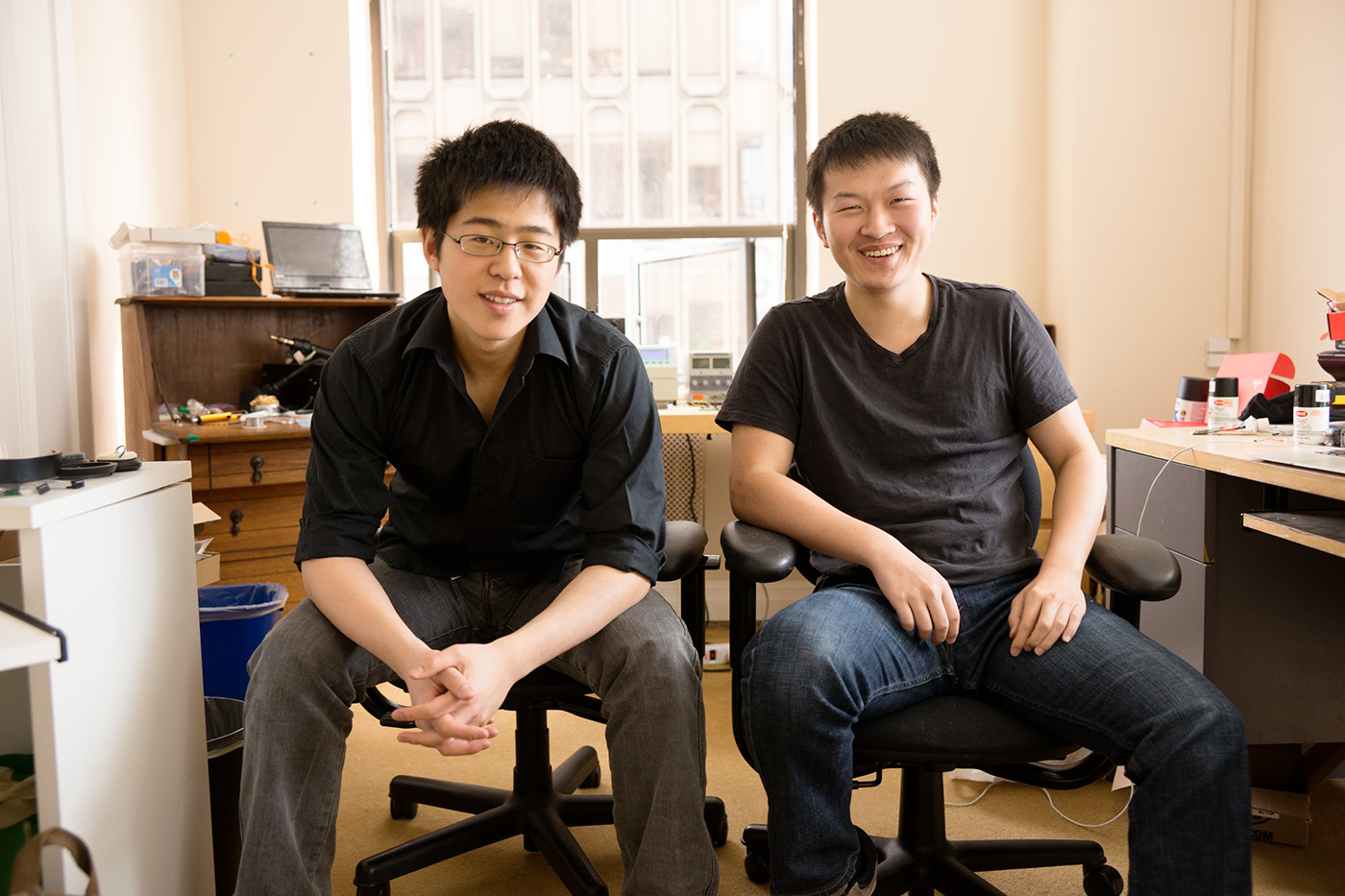
The idea came from a friendship. Zeng and Nelson Zhang met as engineering students at the University of California, Berkeley, where their enthusiasm for music extended beyond coursework into concerts and record-store visits. Music had helped them find each other. They wanted the equipment used to hear it to make that kind of connection easier.
This is an appealingly specific beginning for a technology company. There was an everyday pleasure worth preserving, and an everyday object that made it awkward. Sharing a taste in music was easy enough. Sharing the actual moment of listening required a little more cooperation from the hardware.
A friendship before a company
Zeng’s route into Wearhaus passed through software engineering. He interned at Rackspace in 2012 and Yelp in 2013. The young company he would co-found required a wider assortment of skills: an audio product had to be designed, manufactured, controlled by an app, explained to buyers, and delivered. A working demonstration would only settle the first round of questions.
He and Zhang founded Wearhaus in 2013, having left Berkeley before completing their studies. They joined Highway1, the hardware incubator owned by product development and supply chain company PCH International. The choice put their headphone idea in a setting concerned with the practical distance between something that works on a table and something that can be made repeatedly.
Their division of responsibilities was straightforward on paper: Zeng was CEO; Zhang was CTO. In a young hardware business, those titles sit on top of a great many less glamorous jobs. The product has to become comprehensible to a manufacturer, an investor, and someone who simply wants to hear a favorite track on the way home. Each conversation asks for a different kind of precision.
An invitation you could wear
The Arc’s product book dates its crude electrical beginnings to July 2013. Over the following year, the team built more than twenty versions. Sketches became three-dimensional designs, which became objects that people could try. The attractive finished shape was preceded by a succession of answers that had seemed promising until someone put them on.
Some of the design was a form of translation. Bluetooth could carry a shared listening session without showing the room anything at all. The Arc’s customizable light rings made that invisible connection visible. When people tuned in together, their headphones could pulse in the same color. The little private group acquired a public sign.
It was a useful bit of theater. Nobody needed to wave a phone in the air to establish membership of this particular listening party. The headphones could help communicate it. Their restrained black or white shells provided the background; the light supplied the personality. Even a quiet gathering could have a dress code.
The company’s May 2014 launch offered choices about how social the experience should become. Owners could share with nearby Arc users, restrict sharing to friends, or switch it off. That last option mattered. A product intended to create company still needed to respect a person’s wish to be left with a song.
“Music has always been a medium for social interaction,” Zeng said at that launch. His starting point was familiar human behavior. The engineering had to preserve its ease. If inviting a friend became a troubleshooting exercise, the device would be asking rather a lot of the friendship.
“Throughout the development process, our users played a huge part in telling us what they really want in their headphones.”
Richie Zeng · November 2014
The second listener
Wearhaus initially asked the crowd for support on its own website. Its May 2014 campaign had a $75,000 goal and an early price of about $150. Keeping the campaign on the company’s own platform gave the founders control over the presentation. They had an unusual behavior to demonstrate, as well as a physical object to sell.
In November, the Arc came to Kickstarter, advertised at $179 through December 12. This put the same proposition in front of a community accustomed to backing products before they arrived. Buyers were being asked to imagine a future listening session and to trust that the object needed for it would follow.
The pitch had an unusual complication. An individual could enjoy the headphones alone, but sharing depended on another compatible pair being close enough to join. The social feature required a little local infrastructure: a friend, the right equipment, and a moment when both people wanted to hear the same thing.
That condition changes the economics of enthusiasm. A pleased buyer has a reason to recommend the product beyond ordinary satisfaction. A friend’s purchase can make the first pair more useful. Wearhaus’s company pitch explicitly connected recommendations with an improved experience for existing customers. The benefit of adoption could be heard by someone who had already paid.
There is also a human limit built into this arrangement. People have different budgets, different tastes in headphones, and different tolerances for an illuminated earcup. A shared experience has to fit those differences. The Arc made the mechanism tangible, but getting two people into the same listening session still involved two people.
The product book describes roughly a year of prototypes, user testing, and refinement. A finished object has a talent for hiding its previous drafts.
Learning to ship the invitation
For Zeng, the next education involved financing and production. His Startup Sense interview covered meetings with forty angel investors, twenty of whom invested, and a seed round of roughly $600,000. It also covered finding manufacturing partners in China. The intimacy of the original idea had become an international set of working relationships.
Those numbers describe conversations as much as capital. An investor needs a reason to believe the business can grow. A manufacturing partner needs decisions specific enough to build from. A customer needs the product to arrive and behave as promised. The founder sits between these expectations, translating an ambition into commitments that other people can act on.
In November 2016, Wearhaus announced a $4 million Series A from Tellus International and China Media Capital. The stated purpose was to increase production and fulfill individual sales and forthcoming retail orders. Funding at that stage had a plainly physical destination: more products, available when customers and retailers wanted them.
The following year, Wearhaus introduced Beam, an in-ear model. By the June 2017 announcement, the company described a twenty-person team split between Berkeley and Shenzhen, with sales across Asia, Europe, and North America. Arc was offered through channels including Amazon, BestBuy.com, and Fry’s Electronics. The company had moved well beyond the conversation between its two founders.
Zeng described Wearhaus as “a music-first company.” Beam extended the proposition to another shape of listening device, while the accompanying app allowed an Apple Music account to join the experience. A collaboratively assembled queue gave the group something to do after making the connection. Agreeing on what to play remained, mercifully, outside the jurisdiction of Bluetooth.
- 2013Berkeley friendship becomes Wearhaus.
- 2014Direct crowdfunding, then a Kickstarter launch.
- 2016A $4 million Series A supports production.
- 2017Beam brings the concept to in-ear headphones.
- 2020Monster announces a technology partnership.
The idea leaves its own headphones
At CES in January 2020, Monster announced a Music Share experience powered by MultiLink technology. Developed through a partnership between MultiLink LLC and Wearhaus, it enabled multiple Bluetooth devices to play audio in sync. Wearhaus was now described as a supplier of audio-sharing technology to wireless audio brands.
The change is significant in Zeng’s story. Early on, the founders had needed their own finished headphones to put the proposition into someone’s hands. A partnership offered a route for the capability to travel inside another company’s products. The idea could acquire a different enclosure and retain its original purpose.
It also changes what one sees when looking for the company’s work. A branded headset is an obvious artifact. Technology inside a partner’s product is less visible to the person wearing it. For a business built around connection, there is something fitting about the work taking the form of another connection, this time between companies.
Zeng shared a CES 2020 announcement about demonstrations with Monster. His subsequent professional path includes Meta, which his public LinkedIn profile now lists as his affiliation. The Wearhaus chapter gives that career a particular texture: he had already spent years working on the relationship between software, things people wear, and the behavior those things invite.
The enduring interest in the Arc is how little explaining its original wish requires. You hear a song. You want somebody else to hear it with you. Zeng and Zhang took that ordinary impulse seriously enough to build a company around the equipment it required. Somewhere between the first prototype and a partner’s product line, the invitation survived.
Keep listening
Profiles, conversations, and the original demonstration.