A replacement laptop battery is an odd place to put a grand ambition. Nobody invites friends over to admire one. It is purchased reluctantly, often after something more expensive has stopped doing its job. Steven Yang saw room for a business there anyway. The original manufacturer charged a premium. The anonymous alternative required a leap of faith. Between those choices sat a customer who would quite reasonably prefer a third.
In 2011, Yang left Google to try to supply it. The decision sounds tidy when compressed into a founder biography: engineer spots gap, starts company, sells useful thing. The useful thing took about twelve months to prototype. Hardware had apparently declined to read the biography.
That awkward first year belongs near the center of his story. Anker became familiar through the objects around more glamorous machines: the cable, the charger, the battery pack. Its founder had to learn how to make those objects before he could make them familiar. Now he wants to connect much more of the household, with a question about where its intelligence should live.
The software before the hardware
Yang grew up in Changsha, studied computer science at Peking University and completed a master’s degree at the University of Texas at Austin in 2005. His next professional world was Google. Algorithms were his trade; consumer manufacturing would be a later acquisition.
The introduction to selling came through someone closer to home. His girlfriend, later his wife, ran an Amazon side business selling women’s accessories and other goods. Yang wrote software to handle the repetitive work behind it: inventory, logistics, fulfillment and sales tracking. The operation reached 300 orders a day.
Here was an education in the division between selling a product and having a product worth selling. An online marketplace could put an item in front of buyers and help move it to their door. The quality of the thing arriving remained somebody’s responsibility. Yang began considering whether that somebody could be him.
His mother helped finance the answer. He combined her money with savings from Google and started with less than $1 million in seed capital. The early company therefore carried a particularly domestic kind of backing. Venture capital comes with meetings. Family money comes with a longer shared history.
A year for one battery
Yang moved from California to Shenzhen, closer to the suppliers and manufacturing partners he needed. Distance mattered in a very literal way. Waiting for prototypes to cross an ocean made each correction slower; proximity let an engineer get nearer to the stubborn physical object.
“I didn’t know anyone in the electronics manufacturing world.”
Steven Yang, recalling the beginning in 2017
Software credentials did not automatically produce a supply chain. Cells, components and finished units had to be tested. Factories had to be found. A product had to emerge that could earn trust from someone who had never heard the name on its packaging.
Anker is German for anchor, an agreeably solid name for a company entering the accessories business. The early work moved from laptop batteries into phone batteries and then toward portable charging. The opportunity followed the devices people were carrying. A replacement battery addressed one moment in a laptop’s life; a phone that needed charging created a recurring appointment.
Starts Anker
in Shenzhen
one-brand transition
An unusually useful complaints department
Amazon offered Yang more than a checkout. It held a large, untidy account of what people disliked about the products they had bought. He described gathering reviews before entering a category, sorting the responses and trying to quantify what customers valued.
It is easy to call this listening. The harder part is translating a sentence written in irritation into a decision an engineer can act on. Too bulky becomes a size target. Too fragile becomes a question about materials and testing. A review gives the company a place to begin, rather than permission to congratulate itself.
Yang’s attention to household inconvenience could become almost comically specific. In 2018, he described the year spent reducing a robot vacuum’s height to 2.85 inches so it could travel beneath couches. Furniture had imposed a product specification. The couch, at least, would be spared a software update.
Anker listed in Shenzhen in August 2020. By then, a brand born on Amazon had expanded into physical retail as well. That transition changed where customers encountered its products, but the original challenge survived: persuade a buyer that an accessory bearing this particular name would do its job.
The pocket-sized semiconductor bet
Yang’s curiosity extended below the finished plastic case. Gallium nitride, usually abbreviated to GaN, offered a route to more compact charging hardware. For the customer, the appeal could be as simple as reclaiming space in a bag. Producing that difference required work with semiconductor companies.
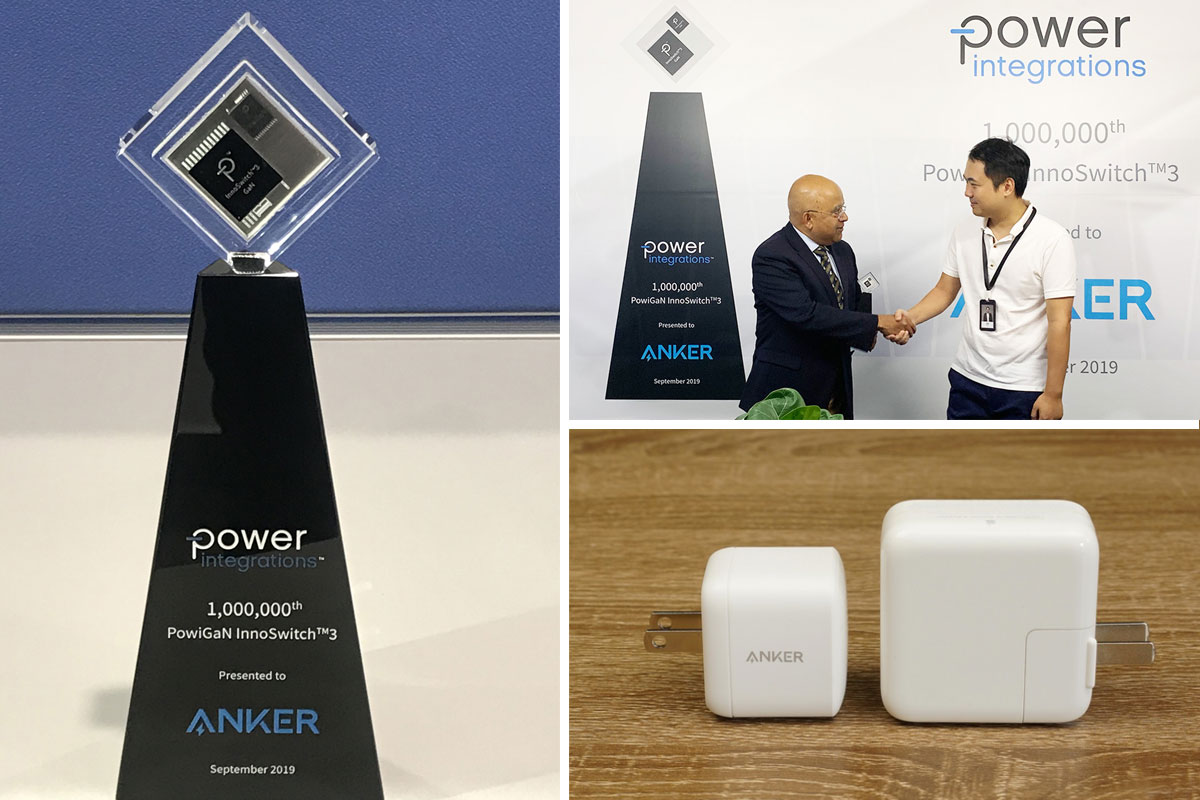
He was also thinking about the charger that came free in the box. In 2018, Yang expressed the hope that customers would become accustomed to owning USB-C chargers, allowing phone manufacturers to stop supplying another with each handset. For a charging company, that was a consequential possibility. The accessory would become a separate purchase, chosen by its owner rather than included by the device maker. It also suited the practical problem he kept returning to: how many different pieces of equipment should a person need to keep everyday electronics running? A common connector offered a chance to simplify the collection.
In September 2019, Power Integrations chief executive Balu Balakrishnan presented Yang with the company’s one-millionth GaN-based InnoSwitch3 integrated circuit. It was a ceremonial handshake attached to a very practical relationship. A charger company needed partners capable of helping it turn a material advantage into something manufacturable.
Yang discussed moving beyond the first lower-power products toward higher power and multiple ports. He also expected prices and dimensions to fall as the technology spread. Smaller was part of the argument; affordability belonged in it too.
In 2022, Anker announced further charging partnerships with Infineon and Navitas, alongside other chip suppliers. This is a less photogenic form of entrepreneurship than launching a device onstage. It helps explain the device. A familiar little brick represents decisions distributed across several companies before it ever reaches a socket.
A cable that could ruin a print
Expansion also created opportunities to be wrong in new ways. In a 2025 conversation, Yang discussed an Anker 3D printer whose moving print head used a dual USB-C connection. It worked initially. Months later, customers encountered connection failures during long prints.
The episode brings an inconvenient distinction into view: a product can demonstrate its promise before it demonstrates its durability. The customer pays for both. A printer that stops well into a job turns an internal engineering choice into someone else’s wasted afternoon.
Yang described the need to look after customers first and then change the processes behind the failure. He spoke about expansion through related steps, using the image of climbing stairs. The appeal is understandable. Each new category should draw on something the organization already knows.
But adjacent categories have their own demands. Knowing cables does not automatically mean knowing every punishment a cable will receive inside a moving machine. This episode makes his incremental approach more interesting: the steps can be close together and still have sharp edges.
Five names on the same front door
By September 2026, Yang was overseeing a company that reported more than 200 million consumers across over 180 countries and regions. Charging had acquired a much larger cast of neighbors: soundcore in audio, eufy in the smart home, SOLIX in energy and eufyMake in creative tools.
At IFA in Berlin, Anker announced that those five brands would gradually come together under Anker. The familiar category names would continue inside the new structure. Existing products would transition over time, with new products leading the change.
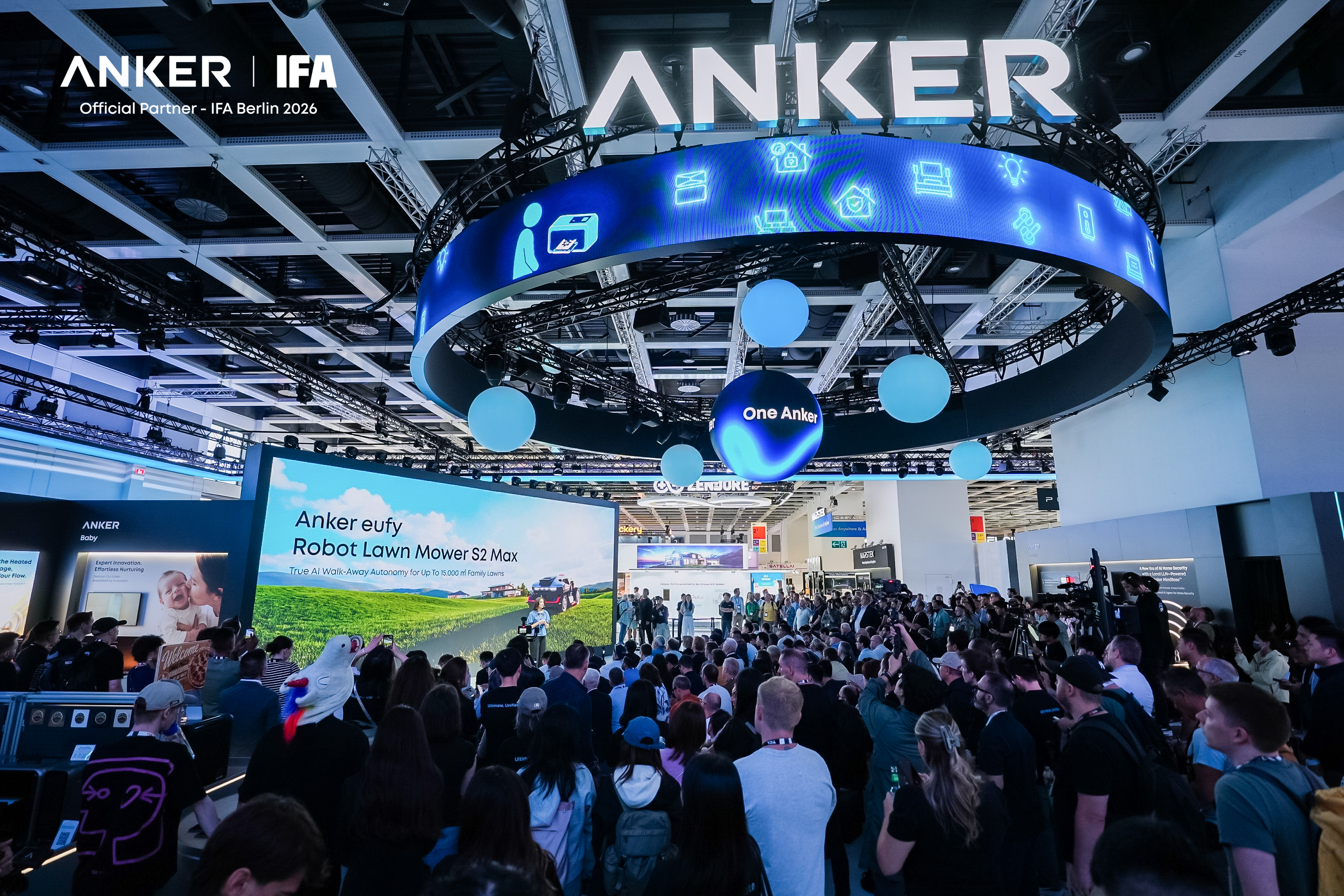
The commercial reasoning was plain enough. Funding five identities in multiple markets is expensive. A single name concentrates that spending. There was also a product argument: cameras, robots, energy storage and local computing increasingly belong in the same conversation about how a household operates.
For Yang, this enlarges the task he began with. A replacement battery can succeed on its own. A collection of connected devices has to justify the connections as well as the individual purchases. The customer gains another question to ask: will these things cooperate when nobody is standing beside them giving a demonstration?
Who gets to keep the house’s memory?
Anker’s 2026 announcements included MindBase, a local AI hub for the home. Yang’s accompanying argument for local intelligence reached beyond convenience. Devices that can act on a household’s behalf must learn something about it. Over time, that information becomes an intimate record of the people living there.
“We should not be the caretakers of our customers’ memories.”
Steven Yang, 2026
He acknowledged that cloud computing helped make early connected devices possible, including Anker’s own. His proposed next step keeps the cloud involved in updates and wider connections while placing household intelligence and memory inside the home, under residents’ control. It is an ambition whose value depends on how faithfully the products implement it.
There is a recognizable engineer’s concern running from the first battery to this argument: what must an owner tolerate to use the thing they bought? Price, bulk, unreliable connections, dependence on a remote computer. The objects have changed; the irritating conditions attached to ownership keep supplying work.
Yang has said he wants to give other makers a place to build. The task now includes creating room for them inside a much larger organization, while keeping their attention on the household outside it. That household will have practical requests. Finish the print. Fit beneath the couch. Keep the lights and devices working. And if the home is going to remember, let the people who live there keep the keys.
Continue the conversation
The products, the early years and Yang in conversation.
Anker Innovations Official website ↗Steven Yang on LinkedIn Public profile ↗The first battery and the move to Shenzhen The Verge · 2017 ↗Watch Yang discuss GaN chargers ChargerLAB · 2019 ↗Yang in conversation with John Biggs Keep Going · 2025 ↗Watch the 张晓珺 interview Chinese · 2026 ↗The Cloud: Our Faustian Bargain Comes Due Yang’s letter · 2026 ↗