The first watch was almost four times the size of a conventional one. For a device intended for a child, this was a fairly pointed objection. Aníbal Madrid had an idea about keeping families connected, an electrical engineering education and a prototype that required considerably more wrist than the customer could reasonably supply. The problem was now visible. Shrinking it would require a trip.
Madrid went to Shenzhen to find a manufacturer. There is something pleasingly literal about this part of his career: confronted with an electronics problem he could not solve at home, he travelled to a place that made electronics. The journey sits near the beginning of SoyMomo, the company he founded in Chile in 2016. It also introduces a recurring feature of his working life. He likes getting close enough to a product to understand what is inside.
A wrist-sized problem
The motivation was closer to home. Madrid had become an uncle. Thinking about his niece meant thinking about the technology she would eventually be handed. Parents wanted a way to reach their children and know where they were. An adult smartphone supplied that connection, along with a remarkable quantity of other business.
His answer was a watch that could make calls and provide location information. A wearable device would be harder to mislay than a loose phone; restricting its capabilities would keep its purpose clear. The challenge was turning that sensible description into an object a child could actually use. Descriptions, unlike circuit boards, are very easy to make smaller.
Early work took place at his mother’s home. Family investment, support from Corfo and resources from his earlier business helped finance the beginning. By November 2016, the first thousand watches were ready to sell in Chile. The number is worth pausing over. A thousand physical products require a thousand functioning examples of the idea, with all the opportunities for disappointment that multiplication brings.
An engineer before the job title
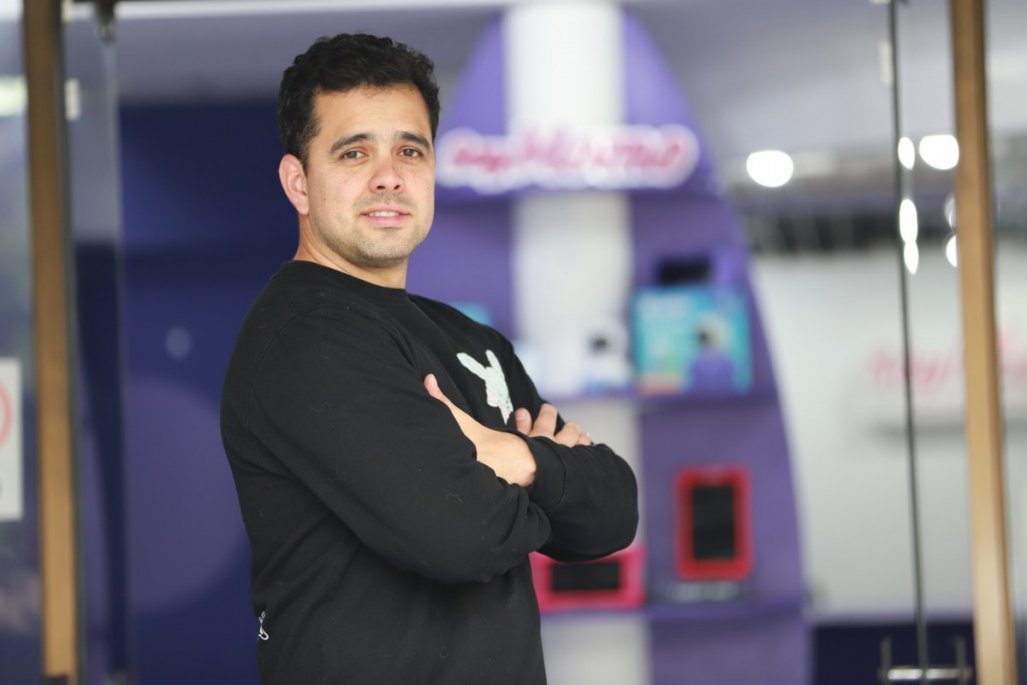
Madrid studied electrical engineering at Universidad de Chile. His background included automatic control, robotics and artificial intelligence; he also spent a semester studying electrical engineering and computer science at UC Berkeley in 2012. Before SoyMomo, there were research assignments, student projects and Sosmart Labs, which he led before his children’s-device business began.
In 2013, he founded Hackers @ Beauchef, a student community at the university’s engineering school. The group gave students access to university facilities to develop personal projects. The later company would add manufacturing, distribution and customer service to that impulse. A circuit can be an absorbing problem. Several countries’ worth of customers make it a considerably larger one.
His own account of his beginnings retains an old Lenovo i5 laptop. It is a wonderfully specific piece of equipment to keep in a founder’s biography: ordinary, slightly dated, and apparently sufficient to get started. The recollection leaves room for the work to matter more than the desk on which it happened.
“Soy muy fanático del detalle tecnológico.”
Aníbal Madrid, 2023
“I’m very keen on technological detail.”
By 2023, he described dividing his working time between the technical side and sales and operations. Conversations with managers and engineers included code, batteries and circuits. He also favored being together in person, where he believed creativity happened. This is a more revealing picture of a chief executive than a title alone: someone who still wants to inspect the machinery while accepting responsibility for selling it.
The arrangement contains an everyday tension. A founder can spend an afternoon on a technical detail because the detail matters. The company still requires decisions about stock, people and money. Madrid’s account places those obligations in the same working day. The person who wants to build the device must also help build the business that delivers it.
The tablet that needed another year
His later account of SoyMomo’s tablet launch is less polished than a sales presentation. The device reached the market in 2019, with substantial expectations and very little initial demand. In 2020, remote schooling changed the situation. Sales increased, giving the company room to improve both hardware and software.
The reversal matters because it leaves timing in the picture. Madrid had backed a product; customers did not immediately reward the decision. Later demand gave the team another opportunity to work on it. His telling preserves the uncomfortable interval between those moments, when the product already existed and the anticipated buyers had yet to arrive. A launch date, it turns out, cannot oblige the market to keep an appointment.
A passport does not translate a product
SoyMomo entered Spain in 2018. Germany followed in the company’s expansion, bringing the business into markets where Madrid found different expectations about privacy, quality and the language used to describe a product. Hiring local people became part of learning how to sell there.
He observed that competitive pricing could be a persuasive approach in Spain, while German customers placed particular weight on quality. These were his observations from running the business, rather than a formula for every buyer. Their practical consequence was clear enough: a company could not assume that the pitch which worked in Chile would survive the flight unchanged.
For a children’s device, the language problem is unusually intimate. A family is buying a way to communicate and setting rules about who may contact a child. The company has to explain what the device does, what parents control and how information is handled. A translated instruction is only the beginning of that conversation.
FROM PROTOTYPE TO PRODUCTS
- 2016First 1,000 watches ready in Chile
- 2018Expansion into Spain
- 2021$5 million Series A announced
- 2024MomoPhone joins the range
Selected events, not a revenue chart.
In August 2021, SoyMomo announced a $5 million Series A, with Equitas Capital as the sole investor. The plans included further Latin American expansion. At that point, the company described a business selling through both retailers and its own website. Getting the device made was only one part of getting it into a home.
Madrid’s ambition was explicit: an integrated electronics business for children. Such an ambition spreads the work across hardware and software, purchasing and distribution. A parent sees a watch. The founder has to see the entire chain that makes the watch available, keeps it working and answers when it does not.
The Thursday the money moved
In March 2023, one of those responsibilities arrived through Twitter. Madrid saw warnings about Silicon Valley Bank and instructed chief financial officer Pamela Elías to move SoyMomo’s money to Chase. The company transferred almost all the capital it held at SVB before the bank’s collapse disrupted access to funds.
The scene is a useful interruption to the familiar founder story. There is no new product in it. The important action is an instruction to a colleague, followed by a transfer. Yet the ability to continue making products depends on precisely this sort of operational attention. Supplier payments are unimpressed by a persuasive mission statement.
SoyMomo had opened US operations and chosen a bank accustomed to technology companies. That familiarity had been part of the attraction. When the warning signs appeared, Madrid changed course. His account gives Elías a concrete place in the story, too. A founder makes the call; a company needs people who can carry it out.
It is a reminder of how far his job had travelled from the original prototype. The questions now included where to keep cash and how to protect the American operation. The work on the wrist depended on decisions taking place well beyond it.
How much internet fits on a wrist?
In an October 2025 interview, Madrid described the purpose of the watch as delaying a child’s first mobile phone. He discussed parent approval for applications and an approach to AI processing that, he said, kept information on the child’s device. These are claims about how the company designs its products, and they belong alongside the limits he sets for them.
The older promise remains recognizable: allow communication with approved people while limiting what else arrives. An adult phone offers access to a sprawling collection of services. Madrid’s proposal asks a family to choose a narrower set of possibilities for a particular stage of childhood.
This requires judgment as well as engineering. A feature can be useful in one setting and an unwelcome distraction in another. The product has to make its boundaries understandable to the adults setting them and usable for the child living with them. A rule that exists only in an instruction manual is unlikely to enjoy a distinguished career.
The range has grown beyond the first watch. SoyMomo’s own history records MomoPhone’s introduction in 2024 and the Space 4.0 watch in 2026, alongside tablets and baby monitors. The original customer also grows older. A company organized around children’s devices eventually has to decide how its products change with them.
For Madrid, that leaves the engineering brief open. His niece supplied the personal reason to begin; manufacturers, foreign customers and colleagues helped determine what the idea became. Each expansion added another practical question to the one he started with.
The oversized prototype remains a useful place to return. It made the distance between intention and execution impossible to overlook. Madrid could describe a small device long before he could deliver one. The work that followed was to close that distance, until a child could wear the answer.
Follow the thread
Explore the products, hear Madrid discuss the business, or read the interviews behind these episodes.
SoyMomo · Company website ↗Aníbal Madrid · LinkedIn ↗Watch · MAS Pitch interview, June 2024 ↗Listen · Radio María interview, 2020 ↗