LIAM CASEY FOUNDER & CEO, PCH INTERNATIONAL "IN OUR WORLD, TIME IS THE NUMBER ONE CURRENCY, DOLLAR IS SECOND" IRISH TIMES BUSINESS PERSON OF THE YEAR 2023 "MR CHINA" — NEVER LEARNED MANDARIN $1.1B REVENUE ∙ 2,600 EMPLOYEES ∙ 1,200+ FACTORIES GEOGRAPHY IS HISTORY LIAM CASEY FOUNDER & CEO, PCH INTERNATIONAL "IN OUR WORLD, TIME IS THE NUMBER ONE CURRENCY, DOLLAR IS SECOND" IRISH TIMES BUSINESS PERSON OF THE YEAR 2023 "MR CHINA" — NEVER LEARNED MANDARIN $1.1B REVENUE ∙ 2,600 EMPLOYEES ∙ 1,200+ FACTORIES GEOGRAPHY IS HISTORY
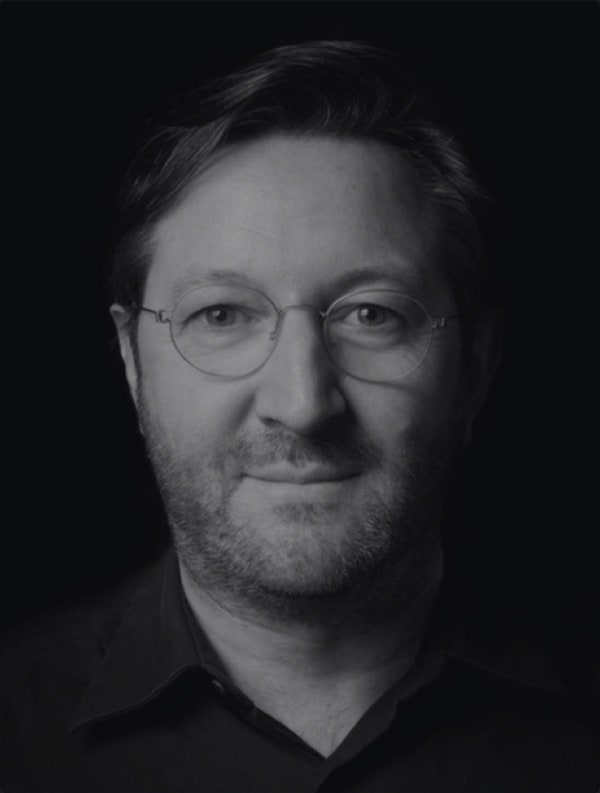
Liam Casey, Founder & CEO of PCH International

YesPress Profile  /  Founder  /  Cork, Ireland & San Francisco

Liam
Casey

Founder & CEO  ·  PCH International  ·  "Mr China"

The man who named a billion-dollar supply chain empire after a California coastal road. Carries three phones. Owns no home. Never learned Mandarin. Ships 10 million products a day.

Supply Chain Hardware Cork / Shenzhen / SF Mr China B2B Irish Entrepreneur
$1.1B

Peak Annual Revenue

1,200+

Factories in Network

10M

Products Moved Daily

23+

Years in China

3

iPhones Carried

0

Words of Mandarin Learned

The Profile

The Cork Farmer Who Cracked China

In 1996, Liam Casey drove along the Pacific Coast Highway and saw something most people miss on vacation: a gap. Silicon Valley was exploding with hardware ambition, and almost no one knew how to actually make the things they were designing. Casey, raised on a dairy farm outside Cork and seasoned by a decade in European fashion, spotted that gap and built a company inside it. He named it PCH - after the road.

PCH International became the connective tissue of the global tech supply chain. At peak, it was moving up to 10 million products a day through a network of over 1,200 Chinese factories, generating $1.1 billion in annual revenue, and Apple listed PCH as one of its top 200 suppliers. The company could take a product off a production line in Shenzhen and get it to a consumer in San Francisco in 4 days, 5 hours, and 14 minutes. Casey knows the exact number.

That precision matters to him. His operating philosophy strips out every friction point between a product and its customer. He once declared that "equity should never go into inventory" - a line that sounds like a finance aphorism but is really a supply chain manifesto. Build to demand, not to forecast. Eliminate the dead weight. Move faster than your competitors think is possible.

In our world, time is the number one currency, dollar is second.
- Liam Casey, PCH International
Origins

A Decade in Parisian Fashion, Then Shenzhen

Before Shenzhen, there was Paris. Casey left school at 18 and spent ten years working in the European fashion trade, attending Première Vision - the world's most prestigious fabric trade fair - and working with manufacturers like Club Tricot on contract garment production. He learned how to talk to factory owners. He learned what "change the design on the line" actually means when you're facing a production deadline. He developed a sensibility for materials, quality, and the relationship between concept and execution that most tech entrepreneurs simply never acquire.

When he arrived in California in 1996 and spotted the opportunity, he wasn't starting from zero. He was applying a decade of hard-won supply chain instinct to a completely different industry. He initially sourced computer components from Taiwan for US manufacturers setting up operations in Ireland. When his Taiwanese supplier moved to Shenzhen, Casey followed - and began building what would become an 1,200-factory network of trusted relationships.

Anecdote By 1999, three years after founding PCH, Casey had his first deal with Apple. He got there not by pitching the conventional way, but by being present at the factory level in Shenzhen when everyone else was still flying to meetings in Cupertino.

The fashion background shows up in unexpected ways. PCH consistently gravitates toward clients who care about design quality, not just cost reduction. Casey has said explicitly that PCH won't work with companies chasing the bottom of the price curve. The company's accelerator, Highway1, targets hardware startups with strong design intent. The thread from Première Vision to PCH is direct, if invisible from the outside.

3 Phones / time zones
2 Continents per week
0 Homes / house keys
The Method

"Mr China" Who Never Learned Chinese

Casey has lived and worked in China for over 23 years. He has navigated factory floors, renegotiated contracts, and built relationships with owners and operators across Shenzhen's manufacturing ecosystem. He has done all of this without speaking a word of Mandarin.

This is not an oversight. It's a deliberate strategy. Casey argues that his language gap forces Chinese factory owners and senior managers who speak English to step forward personally - creating a direct relationship with the decision-makers rather than being filtered through layers of translation. Vulnerability, in his framework, is a feature. The interpreter becomes unnecessary when the person across the table wants to connect.

This same instinct shapes his leadership style broadly. He values emotional intelligence over technical expertise. He champions what he calls the power of inexperience - his line "inexperience is a great innovator" isn't a consolation prize for startup founders; it's a genuine observation about how not knowing the rules produces better questions than knowing them.

You win and lose on the high streets of the US. We win and lose on the backstreets of China.
- Liam Casey
Hardware Accelerator

Highway1: Where Hardware Startups Learn to Ship

In June 2013, Casey co-founded Highway1 in San Francisco - a four-month accelerator program for hardware startups. It was not a typical incubator. Highway1 came with prototyping labs, access to PCH's manufacturing relationships, expert consultation from engineers who had actually shipped consumer products, and structured trips to Shenzhen factories. The program was so culturally distinctive it landed its own reality TV show on Syfy: "Bazillion Dollar Club."

The theory behind Highway1 was Caseyian to the core: hardware founders get killed not by bad ideas but by bad execution at the production transition. Great product, poor manufacturing plan, six months of delays, consumer confidence gone. Highway1 was designed to compress that dangerous transition from prototype to mass production and give startups the supply chain knowledge that PCH had spent two decades accumulating.

Highway1 worked with companies including Pebble, 3DRobotics, Ringly, and Drop. Casey's vision was to build the supply chain equivalent of what Y Combinator did for software - except the unit of value was not code but physical objects moving from factory floor to customer hands.

"Inexperience is a great innovator."

"Equity should never go into inventory."

"Geography's history."

"You have to be protective of the innovators, because that's where the magic is."

"Some people expect a 'China button.' But they're looking for an end-to-end button."

"Value creation and job creation are really different."

Crisis Response

Bono, PPE, and a Global Supply Chain Under Fire

In 2020, as governments scrambled for personal protective equipment and traditional procurement collapsed under the weight of competing national bids, Casey's supply chain network became suddenly geopolitical. He had twenty-plus years of Shenzhen relationships. He knew which factories made PPE to medical-grade standards. And U2 frontman Bono knew Casey.

The two partnered to coordinate €10 million worth of PPE for Ireland and planned to replicate the effort globally. Casey was clear-eyed about the chaos: "So many people are chasing PPE - countries, states in the US, hospitals - so it's hard to actually get solid supply." His distinctive contribution was knowing which manufacturers could be trusted at scale under pressure, and negotiating down from 69 cents to 39 cents per face mask - not because the price was lowest, but because the quality was verifiable.

It was a proof-of-concept for everything PCH had spent decades building. Supply chains are not infrastructure. They are relationships. When the world needed them most, Casey's relationships held.

Context The pandemic also devastated PCH International's operations. China's COVID lockdowns lasted nearly 300 days across its key manufacturing regions - a prolonged disruption that required additional capital financing and contributed to the financial pressures the company faced in subsequent years.
Philosophy

Build to Demand, Not to Forecast

Casey's supply chain philosophy has a clean logic. The dominant industrial model - build to forecast - treats inventory as necessary capital investment. You predict demand, manufacture to that prediction, and distribute the result. The problem, Casey argues, is that the forecast is always wrong, and inventory is always risk. Dead stock is dead equity.

His alternative: build to demand. Produce in response to actual consumer signals, not projected ones. This requires a supply chain fast enough to respond to real-time orders - which is exactly what PCH built. The vision goes further: consumers should be able to scan a product barcode and trace its complete manufacturing journey, from raw material to retail shelf. Supply chain transparency as both competitive advantage and social responsibility.

Casey has looked to Chinese companies like Xiaomi and DJI as models - watching how they engage communities, iterate rapidly, and treat consumers as participants in product development rather than endpoints. That he formed these views while running a company that served their Western competitors is a notable kind of intellectual honesty.

I can take a product from the production line in China to a consumer in San Francisco in 4 days, 5 hours, 14 minutes.
- Liam Casey
Career Arc

From Cork Farm to Silicon Valley Supply Chain

Pre-1996

Raised on a dairy farm in County Cork. Left school at 18 to begin a decade in the European fashion trade.

1986 - 1995

Ten years in fashion: attending Première Vision in Paris, working with contract manufacturers, learning supply chain dynamics from the texture and deadline side of business.

1996

A California road trip changes everything. Spotted the gap between Silicon Valley's hardware ambitions and its manufacturing capabilities. Founded PCH International - named after the Pacific Coast Highway.

1996 - 1999

Sourced computer components from Taiwan for US manufacturers setting up in Ireland. When the Taiwanese supplier moved to Shenzhen, Casey followed.

1999

First deal with Apple. PCH enters the supplier network of the world's most demanding hardware company.

2007

Awarded Ernst & Young Entrepreneur of the Year - Ireland. The Cork farmer is now a recognized builder of global supply infrastructure.

2011

Raised $30M in venture capital. Acquired TNS Distribution (European electronics). Became Fellow of the Hong Kong Institute of Directors. Total VC raised hit $84.5M.

2013

Co-founded Highway1, San Francisco's first dedicated hardware startup accelerator. Raised Series A. PCH revenues approaching $1 billion.

2014

PCH International hits $1.1 billion in annual revenue. Apple names PCH one of its top 200 suppliers. 2,600 employees across 9 offices.

2015

Acquired Fab.com for $15 million. PCH pivots toward niche markets and startup-focused services. Restructuring begins.

2020

Partnered with Bono to coordinate €10 million in PPE sourcing for Ireland during COVID-19. Demonstrated the power of trusted factory relationships in a crisis.

2023

Named The Irish Times Business Person of the Year. Named International Start-up Ambassador to China by Enterprise Ireland.

Recognition

Achievements

  • Ernst & Young Entrepreneur of the Year - Ireland (2007)
  • Irish Times Business Person of the Year (2023)
  • Cork Person of the Year award
  • Fellow, Hong Kong Institute of Directors (2011)
  • Named International Start-up Ambassador to China by Enterprise Ireland
  • Built PCH International to $1.1B in annual revenue (2014)
  • Apple listed PCH International among its top 200 global suppliers
  • Co-founded Highway1, San Francisco's first hardware startup accelerator
  • Partnered with Bono to coordinate €10M in PPE for Ireland during COVID-19
  • Raised $84.5M in venture capital from Silicon Valley and Chinese backers
  • Shipped Kickstarter backer products alphabetically to 80+ countries in under 3 days
  • PCH factory network moved up to 10 million products daily at peak

Things You Probably Didn't Know

  • Named his billion-dollar empire after a California coastal road he drove on a vacation.
  • Carries three iPhones set to different time zones, but owns no home and carries no house keys.
  • Attended Paris's Première Vision fabric fair during his fashion career - the same sensibility informed PCH's insistence on design-quality supply chains.
  • Never learned a word of Mandarin in 23+ years of doing business in Shenzhen - a deliberate choice he credits for better factory relationships.
  • Highway1, his hardware accelerator, was the subject of a Syfy reality TV series called "Bazillion Dollar Club."
  • PCH can quote the exact transit time from a Chinese factory floor to a San Francisco consumer: 4 days, 5 hours, 14 minutes.
  • Described by writer Om Malik as possessing a "superpower" of sharing extensively in conversation while revealing very little personally.