The first SoyMomo watch looked like a dare. Aníbal Madrid, an electrical engineer in Chile, wanted a child-sized device that could call home and tell a parent where its wearer was. His prototype was almost four times the size of an ordinary watch. Specialists told him the idea could not be made practical. He flew to Shenzhen anyway, found a manufacturer and had 1,000 watches ready for sale in November 2016. That is a tidy origin story only if you stop reading before the shipments arrive.
- SoyMomo makes connected devices for children, governed through a parent's app.
- Its first watch answered a narrow need: calls and location without a general smartphone.
- Early production brought battery and component problems; its first tablet launch brought almost no sales.
- Today the range runs from baby monitors to GPS watches, tablets and MomoPhone.
The seed was a niece named Aurora. Madrid noticed young children playing on phones and asked parents why they gave them one so early. The recurring answer was contact: adults wanted to reach their children and know where they were. His answer was to design the connection first and restrict the rest. The watch had GPS and calls to approved numbers. It was a very small rebellion against the assumption that a child's first way to call home should also be a portal to everyone else.
The sample is a promise. The shipment is a test.
SoyMomo's launch money, reported by La Tercera as nearly CLP 100 million from earlier work, family investors and public support, bought a hard education. Madrid later recalled that the server and app barely worked at first and many of the initial devices needed one-to-one fixes. In a later batch of watches, customers began returning units with weak batteries. He first feared his software. The culprit, he said, was a supplier that had used old batteries and boards.
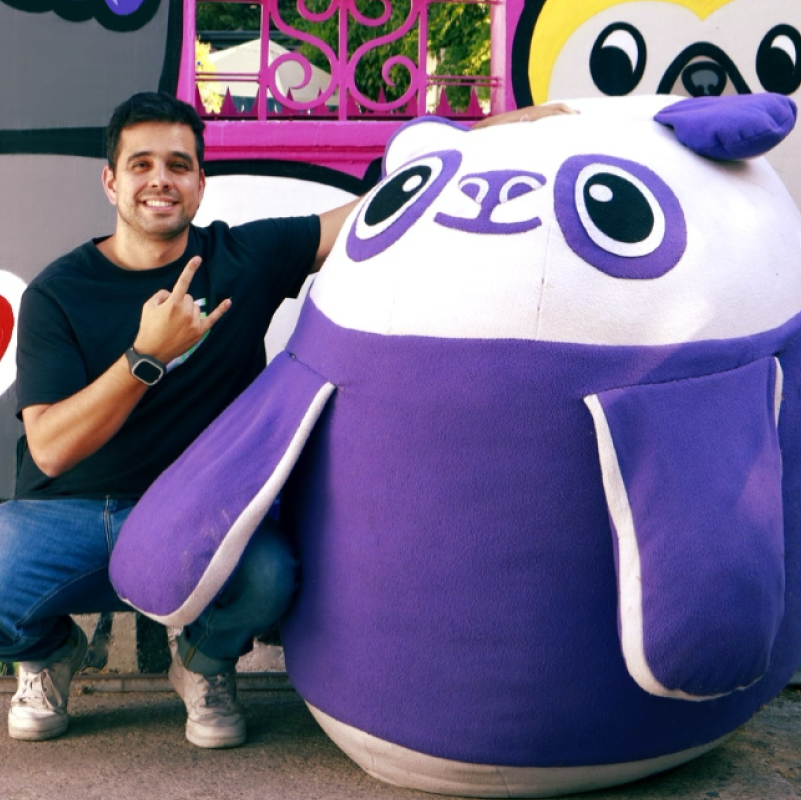
The tablet brought an even stranger lesson. SoyMomo began developing one in 2018, with parental controls and software to flag troubling content. The first sample carried the promised MediaTek chip. The production sample did not, according to Madrid's account to DF MAS. Apps could take a day to load. He returned to China to confront the factory and test hundreds of units himself. The device reached Chile in 2019, but engineering effort did not turn neatly into demand.
Madrid said the company spent CLP 5 million advertising the tablet and sold only about CLP 100,000 in a month and a half. The figures are his recollection, but the ratio makes the point. A device can solve a real problem and still arrive before families feel it sharply enough to buy. Then 2020 closed classrooms. Tablets suddenly had a job to do every weekday. Sales jumped; SoyMomo improved the hardware and software as volume grew.
“The tablets saved SoyMomo from bankruptcy for about the twentieth time.”Aníbal Madrid, recalling the shift in demand
A child's first device is a sequence
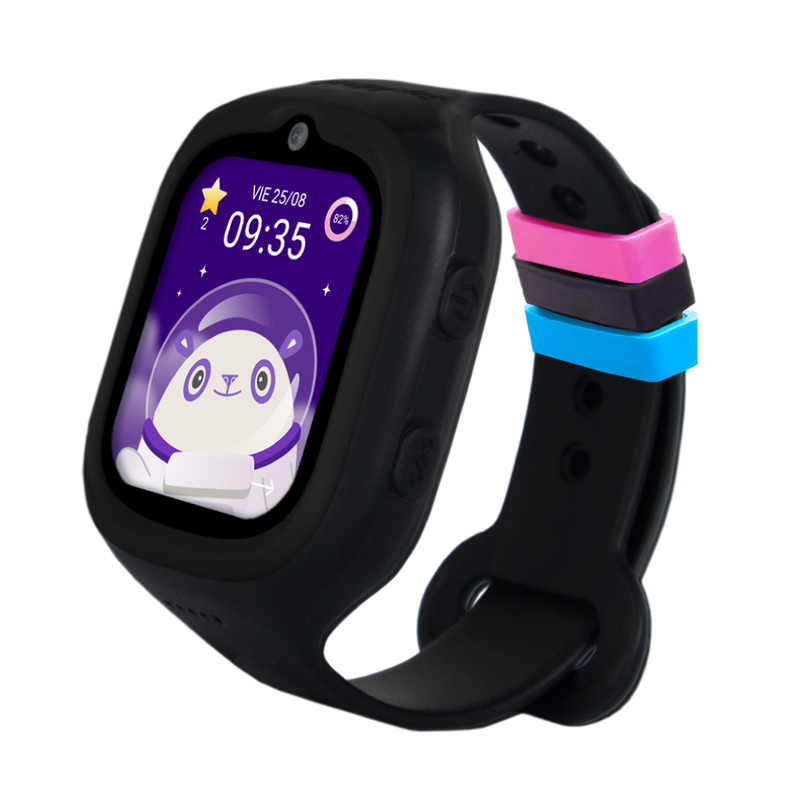
The present catalog reads like a map of childhood stages. For babies, there are monitors, including a model that uses a local connection rather than Wi-Fi or an app. For younger children, tablets offer educational content, schedules and the company's DUG alert system. The Space watches add GPS, calls, video calls and SOS; parents decide which contacts are allowed. For preteens, the MomoPhone is a more familiar phone shape, but with approved apps and parent controls. SoyMomo says it launched the phone in 2024.
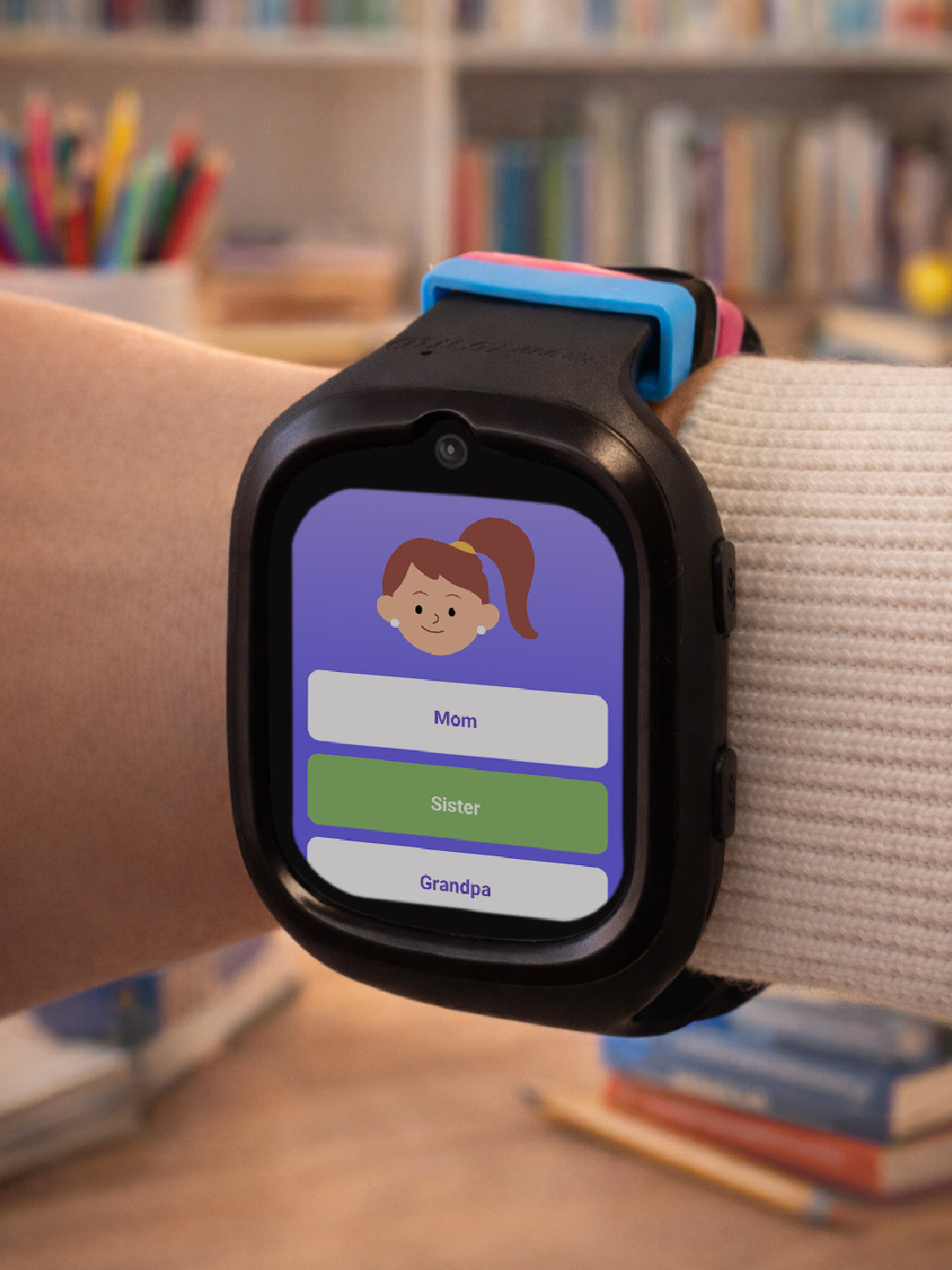
The latest Space 4.0 complicates the old idea of a deliberately simple watch. It adds HeyMomo, a child-directed AI question feature; MomoLingo, short English-learning activities; and a weather guide. Parents can still set contacts and geofenced areas through the app. The company's proposition has shifted from mere restriction to a managed introduction to digital life. That is a more demanding promise. The content needs to be useful to a child while the controls need to stay legible to an adult.
Call approved family members, send messages, check the weather, practice English and take small steps away from home.
Set contacts and schedules, view location, receive alerts and choose when a more capable device is appropriate.
The distinction matters in a crowded market. A standard phone with Apple Screen Time or Google Family Link can impose limits, and rival kids' watches also offer location and calling. SoyMomo's bet is that purpose-built hardware and one parent app make those rules easier to establish at the start. It is a claim about the household's experience, not a claim that software can remove every online risk. Families still have to decide which permissions fit their child, and talk about what happens on the screen.
The business behind the boundary
SoyMomo sells the hardware through its own site, a Santiago showroom and retailers including Falabella and Mercado Libre. In 2021 it told Bloomberg Línea that retailers accounted for 70% of product sales and direct purchases for 30%; that is a historical snapshot, not today's mix. The optional SoyMomo SIM adds a recurring service layer. On its Chilean site in September 2026, monthly plans were listed from CLP 7,990 to CLP 14,990, using Entel's network. A watch can also accept another operator's nano SIM. The hardware purchase, then, does not force a single connectivity provider.
The company reported roughly US$6 million in revenue for the twelve months preceding August 2021, then raised a US$5 million Series A from Equitas Capital at a reported US$40 million valuation. Those are 2021 figures. Current revenue and valuation have not been made public in the material reviewed. SoyMomo's own product pages say more than 350,000 families have used its products, a company-reported measure rather than an independently audited count.
There is a portable lesson here for anyone building a product, even if they never commission a watch. Madrid did not discover demand by adding every feature. He began with one specific reason parents gave children phones, then built around it. He also learned that the factory sample must be checked against the production run, and that even an inventive tablet can sit still until the buyer's circumstances change. A restricted device works when its boundaries match a family's actual needs, coverage is reliable and the child wants to wear or use it. Without those conditions, a parent dashboard is merely another app to manage.
SoyMomo's original watch was much too large. The company around it has grown larger on purpose. What began as a call home now includes screens, lessons, alerts and subscriptions. The interesting question is whether each addition still serves the first insight: a child needs connection, but the adult who buys the device wants a say in its shape.