At three in the morning, the most advanced device in Radhika Patil’s home was a yoga ball. She bounced her child on it because the motion worked. The problem was that a parent had to supply the motion, the judgment and the hours. Patil and her husband Bharath, both engineers, began wondering whether a crib could do the gentler part of that job before their daughter woke completely.
That question produced Cradlewise, a San Francisco company with roots in Bengaluru. Its main product looks like a quietly handsome wood-and-mesh crib. Inside is a different proposition: a camera and sensors watch for early movement and sound, software judges whether the baby is stirring, and the bed can begin a vertical bounce with soothing audio. An app gives parents live video, settings and sleep data. The company describes a bed for birth through about 24 months, converting from bassinet to crib without tools.
- Cradlewise combines a bassinet, crib, video monitor and sound machine.
- Its pitch is timing: intervene at the stir, before the full wake-up.
- The parents can adjust sensitivity and bounce, or use manual controls.
- The premium crib starts around $1,399 in company advertising; the actual price varies by delivery date and promotion.
- Newer purchases include two years of Nurture Core; some app features cost more later.
The machine’s best trick is timing
A standard baby monitor is an excellent messenger. It tells you the baby is awake. Cradlewise wants to be a colleague who notices the twitch before the alarm. Radhika put the distinction plainly in a 2021 interview: “Why isn’t there a crib that can monitor for signs of waking?” The question is less glamorous than “Can AI raise a baby?” and far more useful.
The motion matters. The founders spent years refining a quiet mechanism that moves vertically rather than swinging side to side. Patil said she modeled it on the way she bounced her children on that yoga ball. Parents can set a ceiling for bounce intensity, choose a gentler mode, tune how readily it reacts, and override the automatic setting. These details make the crib more legible: an anxious parent can tell it to do less, or do something now.
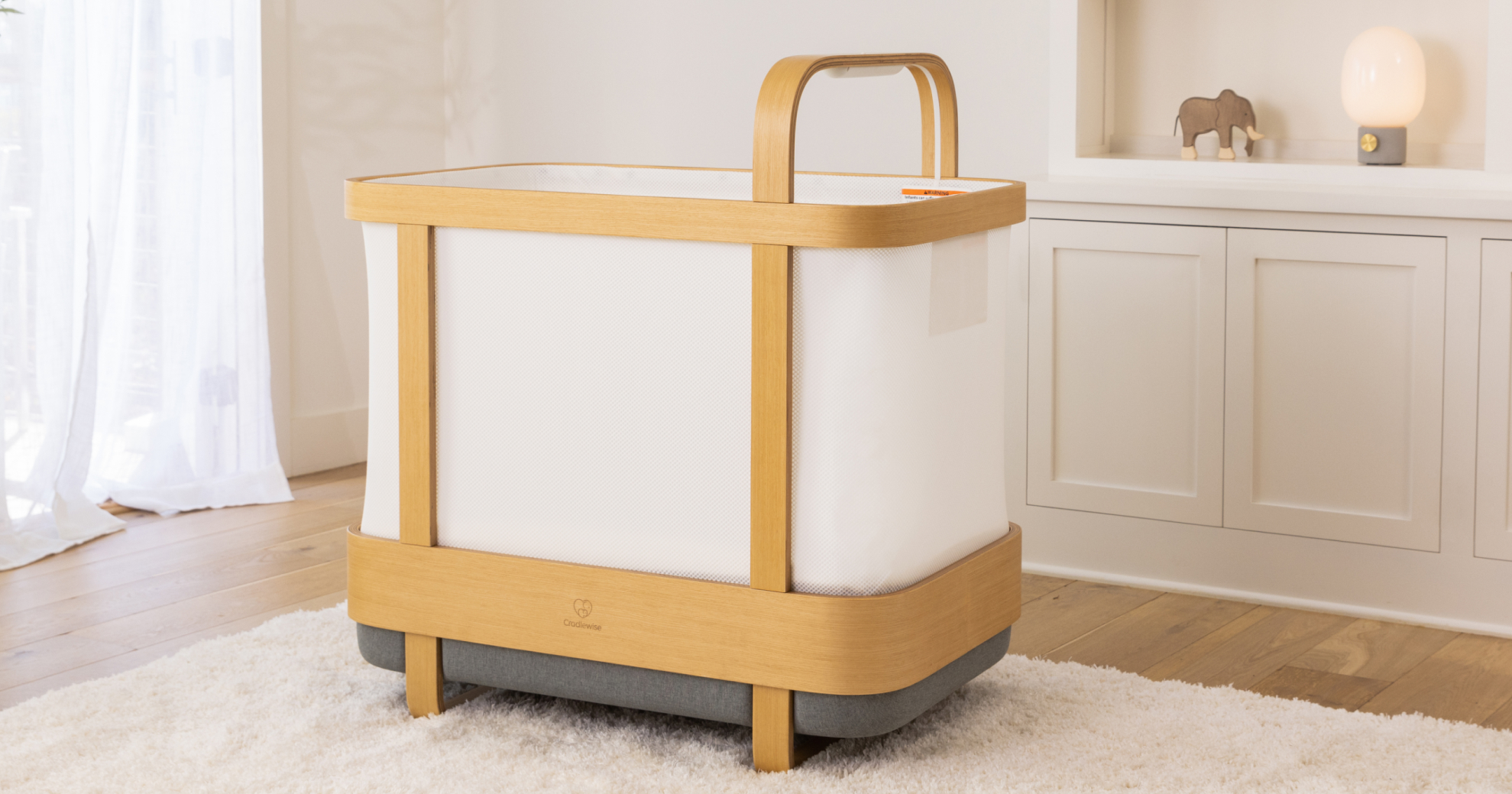
Four nursery purchases, one large receipt
Cradlewise sells to expecting parents and families in the early years of childcare. Its argument is partly arithmetic. A household might otherwise buy a bassinet, then a crib, plus a video monitor and a sound machine. Here those functions arrive in one piece of furniture. The 24-month design also gives it a different timetable from smart bassinets intended only for the youngest infants. Babylist has compared it with SNOO, the obvious premium alternative; the choice involves motion, monitoring, useful life and each baby’s response, not a universal champion.
The arithmetic is still expensive. The company advertises starting prices around $1,399, depending on when a buyer schedules delivery. At launch, TechCrunch described a roughly $2,000 crib and a $1,499 preorder price. A family already happy with a basic crib and separate monitor may see a smart bed as an unnecessary luxury. A family short on sleep, floor space or patience for four devices may value the bundle. Neither calculation can be made by a product video alone.
“We modeled our motion after the way I would bounce our children at 3 am on a yoga ball.”Radhika Patil, speaking to TechCrunch in 2021
The company’s business also grew more complicated. In May 2025 it introduced Nurture plans for newly purchased cribs. Two years of Core access come with those cribs. Afterward, Core is listed at $120 a year; the site lists Plus at a promotional $199 a year. The company says the responsive bounce and white noise continue without a paid plan. Longer sleep histories, broader caregiver access and some extras belong to paid tiers. That division is worth reading before a second child inherits the crib.
How a family prototype became a company
The first prototype came from the founders’ own sleep deprivation. Both had technical careers before Cradlewise, with Radhika at Qualcomm and Bharath at Texas Instruments. Early versions were developed in Bengaluru; the company tested a small pilot there, then moved toward the US market. Existing monitors announced a wake-up too late for the founders, while other cribs did not move the way they soothed their own child. Selection by the HAX hardware accelerator helped shift their attention to the US, where they saw greater appetite for premium baby technology. In 2020 it piloted in San Francisco and appeared on TIME’s Best Inventions list. A $7 million seed round in 2021, led by Footwork, financed the less photogenic work of hardware: supply chains, engineering and delivery.
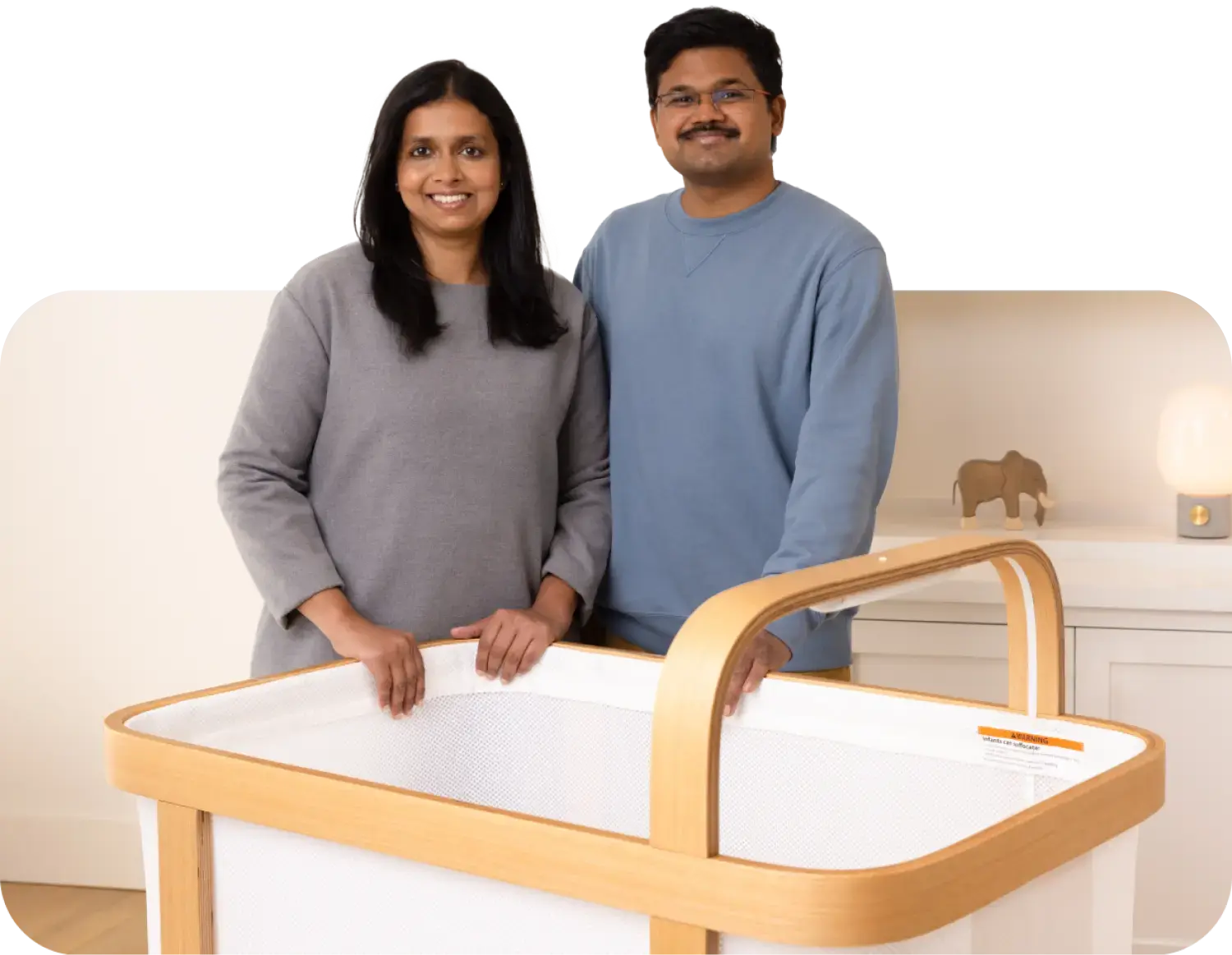
US shipments expanded in 2022. A Babylist partnership in 2023 put the crib on a retail floor in Beverly Hills, where skeptical parents could finally see and touch the thing that was asking for a place beside their child. The company later entered India, where the original idea had been developed. In September 2026, investor 3one4 Capital announced a $12 million Series A with Prudent Investment Management participating. The stated ambition is to scale an infant sleep system, rather than merely ship more wooden boxes.
What parents can actually borrow
For families, the useful idea is a measured response. Cradlewise lets them see whether the baby is stirring, decide how quickly the crib should react, and check whether a bounce helped the child return to sleep. Its app can show sleep duration, wake-ups and soothe sessions. A parent can copy the method even without buying the machine: notice the early cue, use a consistent soothing routine, and change one setting at a time. What the product adds is the ability to perform that routine while the adult is asleep.
It cannot interpret every reason a baby wakes. Hunger, a wet diaper, illness or the simple wish to be held still require a person. Nor is a company-wide sleep-hour count evidence that a particular child will gain two hours. The best use case is a baby who responds to gentle movement, in a home willing to pay for integrated equipment and to manage a connected camera and app. Families who prefer a low-tech crib, need a lower price, or have a child unmoved by bouncing may find the smart part beside the point.
The original insight remains sharp. A monitor that announces a crisis has done its assigned job, but the Patils asked whether the furniture could get there sooner. Cradlewise built a business around the few minutes before a cry. Parents will judge it by what happens after those minutes: a quieter room, perhaps, and the blessed possibility of staying in bed.