The spreadsheet that became a startup
Most parents survive the newborn fog and try to forget it. Jessica Toh opened a spreadsheet.
Her first child woke up every two to three hours for twenty months. She read the books. She tried the methods. She consulted a pediatrician and a nurse practitioner. Nothing held. What she had, that most exhausted parents do not, was a triple major from UC Berkeley in electrical engineering, computer science, and math and statistics - plus years building software for Fortune 500 companies. So instead of surrendering to the chaos, she started logging it. Wake times. Nap lengths. The shape of a bad night. Patterns surfaced. And then a thought that turns a tired parent into a founder: if this works for my kid, it works for other people's kids too.
That thought became Huckleberry, the company she co-founded and now runs as CEO from Los Angeles, with the corporate engine room in Irvine. The product pairs data science, pediatric sleep expertise, and AI to hand each family a plan built for their specific child rather than a generic chapter from a generic book. The pitch is almost suspiciously simple: take the guesswork out of children's sleep. The execution is anything but.
Why an algorithm and not a book
Along the way Toh learned something that sharpened the mission. A private sleep consultant - the kind who is on call to tell you exactly what to do at 4 a.m. - could charge a family up to ten thousand dollars a year. That is expertise priced as a luxury good. Toh's instinct was to take that same on-call judgment, encode it, and make it affordable enough that access no longer depended on a family's bank balance.
Every family would have access to help.
- Jessica Toh, on the idea that parents should not have to "just suck it up"That is the line that runs through everything Huckleberry ships. Toh frames product decisions as an exercise in empathy with a spreadsheet attached: anchor in what is best for families, then prove it with data. The numbers suggest families agree. Huckleberry has passed five million of them, across more than 150 countries. It reaches roughly 15% of babies in the United States, 24% in the U.K., and 20% in Canada and Australia. Apple has handed it Editors' Choice and App of the Day. The store rating sits at 4.9 stars on more than 120,000 reviews - the kind of number you cannot buy, only earn at 3 a.m.
The Lego briefcase
She was always going to sell something. Growing up in southern California, a young Jessica carried a Lego briefcase around the neighborhood, "selling things out of it," and ran bake sales with the seriousness of a trading desk. She played varsity tennis in high school. Then came Berkeley and the unusual decision to major in not one demanding subject but three, followed later by an MBA from the University of Cambridge. The combination - engineer's rigor, statistician's patience, operator's nerve - is exactly the toolkit you would design for someone trying to turn a baby's sleep into software.
A co-founder you can't fire
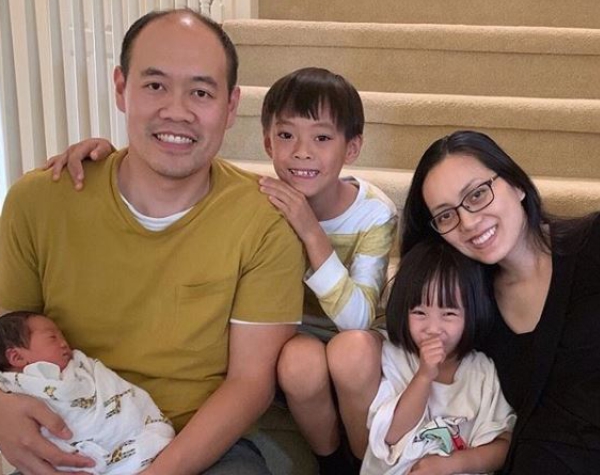
Huckleberry is a family business in the most literal sense. Toh's co-founder is her husband, Seng Toh, Ph.D., who serves as the company's chief technology officer. They are parents of three. The same household that supplied the original problem also supplied the engineering. For a sense of how this partnership operates off the clock: the two once rode a tandem bicycle the full distance from Seattle to Portland. Building a company together is, by comparison, a shorter ride on a more stable machine.
We're always putting ourselves in parents' shoes and anchoring ourselves in what is best for families.
- Jessica Toh on Huckleberry's product compassHow she decides
Ask Toh about time and she will not pretend to have conquered it. "You will never reach a point where you have enough time to do everything you want," she says, which is less a complaint than a filter. Her decision rule, borrowed from Derek Sivers, does the filtering: if it is not a "hell yeah," it is a "no." She talks about work-life harmony rather than balance - the difference between forcing two things into an even split and letting them move together. And she is candid about the company she keeps, favoring ambitious, positive people over the alternative. For founders, especially women founders watching her, the through-line is that focus is a choice you make repeatedly, not a trait you are issued.
What she's building toward
The founding wound was sleep, but the ambition is broader. Toh's stated dream is a world where help for the everyday hard parts of raising a child is not gated behind expertise that only the wealthy can hire. Huckleberry started by answering one brutal, specific question - why won't this baby sleep - and the longer game is to keep answering the next ones. The company has raised roughly $14.9 million in total funding, including a $12.5 million Series A backed by investors such as Spero Ventures and Irvine's Tamarisc Ventures. The app first launched back in 2017 with a few thousand downloads. The distance from there to five million families is the whole story, and by Toh's own framing, it is still early.
What makes her unusual is not the credentials, impressive as they are. It is the refusal to treat a personal disaster as private. A lot of parents have lived through twenty months of broken sleep. One of them happened to have the math, the software, and the stubbornness to turn the worst part of early parenthood into a product the rest of us can simply download.