The Robot Bassinet That Talked Its Way Into the FDA
A pediatrician wrote the book on calming babies. Then he built the machine - and spent seven years convincing regulators it belonged in the medicine cabinet, not just the nursery.
There is a specific kind of desperation that arrives around 3 a.m. with a newborn who will not stop crying. For most of human history the fix was a pair of exhausted arms and a lot of pacing. Happiest Baby's answer is a bassinet that does the pacing for you - a white mesh basket on hairpin legs that rocks, shushes, and, when the baby's cry escalates, rocks and shushes harder until the room goes quiet.
That machine is called SNOO, and it is the strangest kind of consumer product: one that started as a paperback. Before there was a robot, there was a method. Los Angeles pediatrician Dr. Harvey Karp spent decades teaching parents his "5 S's" for calming infants, packaged in the 2002 bestseller The Happiest Baby on the Block. The book sold on the promise that fussy babies aren't broken - they just miss the constant motion and noise of the womb. SNOO is that promise, wired.
What it actually doesA method turned into firmware
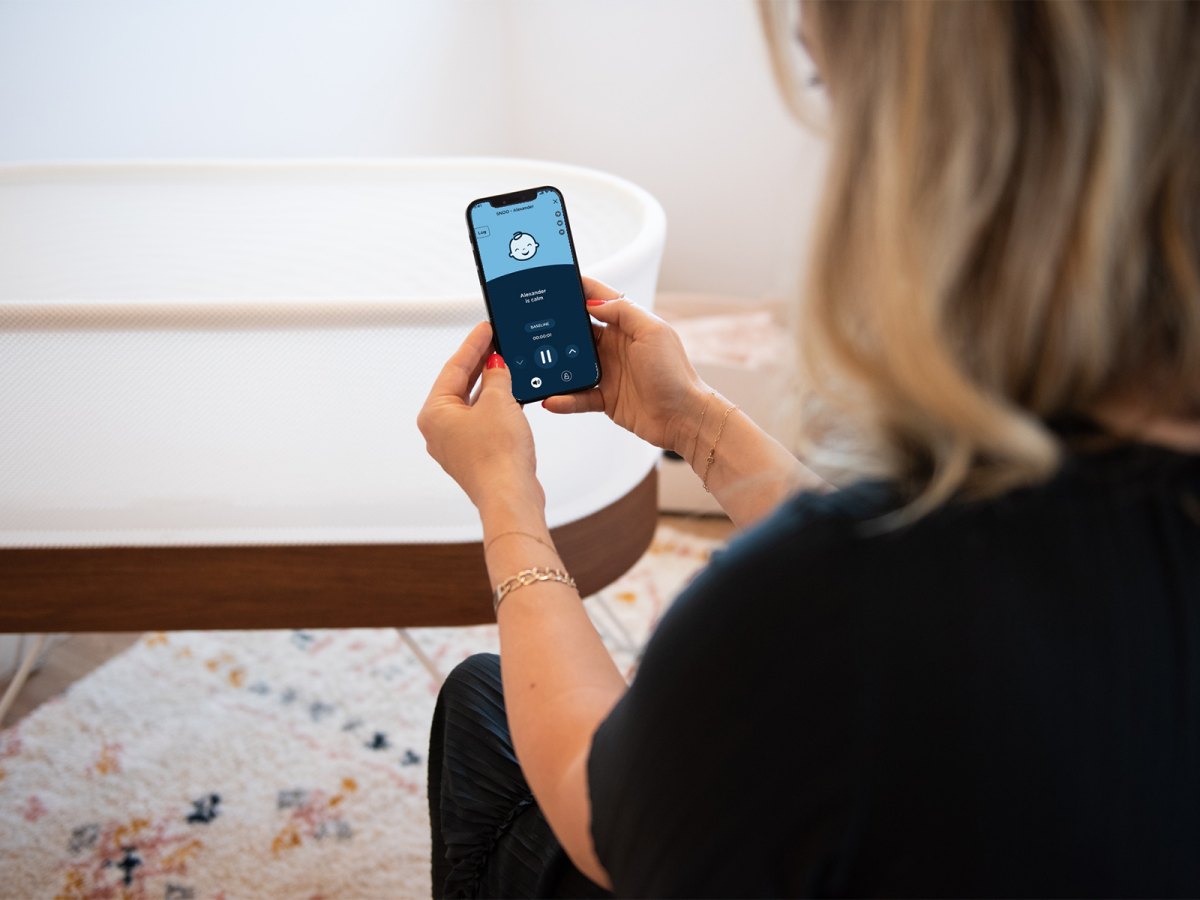
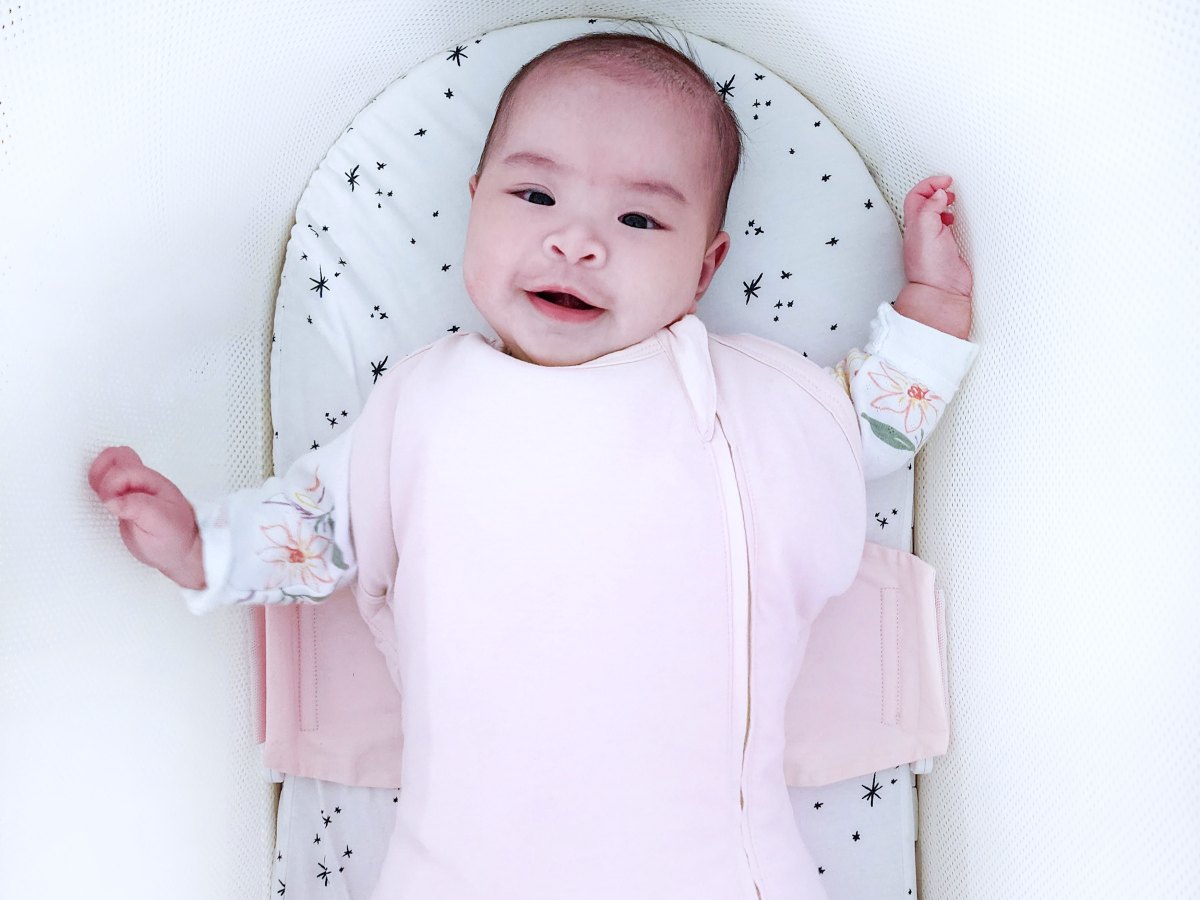
SNOO automates three of the 5 S's at once. A clip-in swaddle keeps the baby snug and on their back. A built-in speaker plays white noise. A motor rocks the bassinet in a womb-like rhythm. Microphones listen for crying, and the machine responds - stepping motion and sound up through several levels, then easing back down as the baby settles. To a bleary parent, it looks like the bassinet is negotiating with the baby. Happiest Baby says SNOO adds one to two hours of sleep a night and helps most babies sleep longer stretches by two or three months of age.
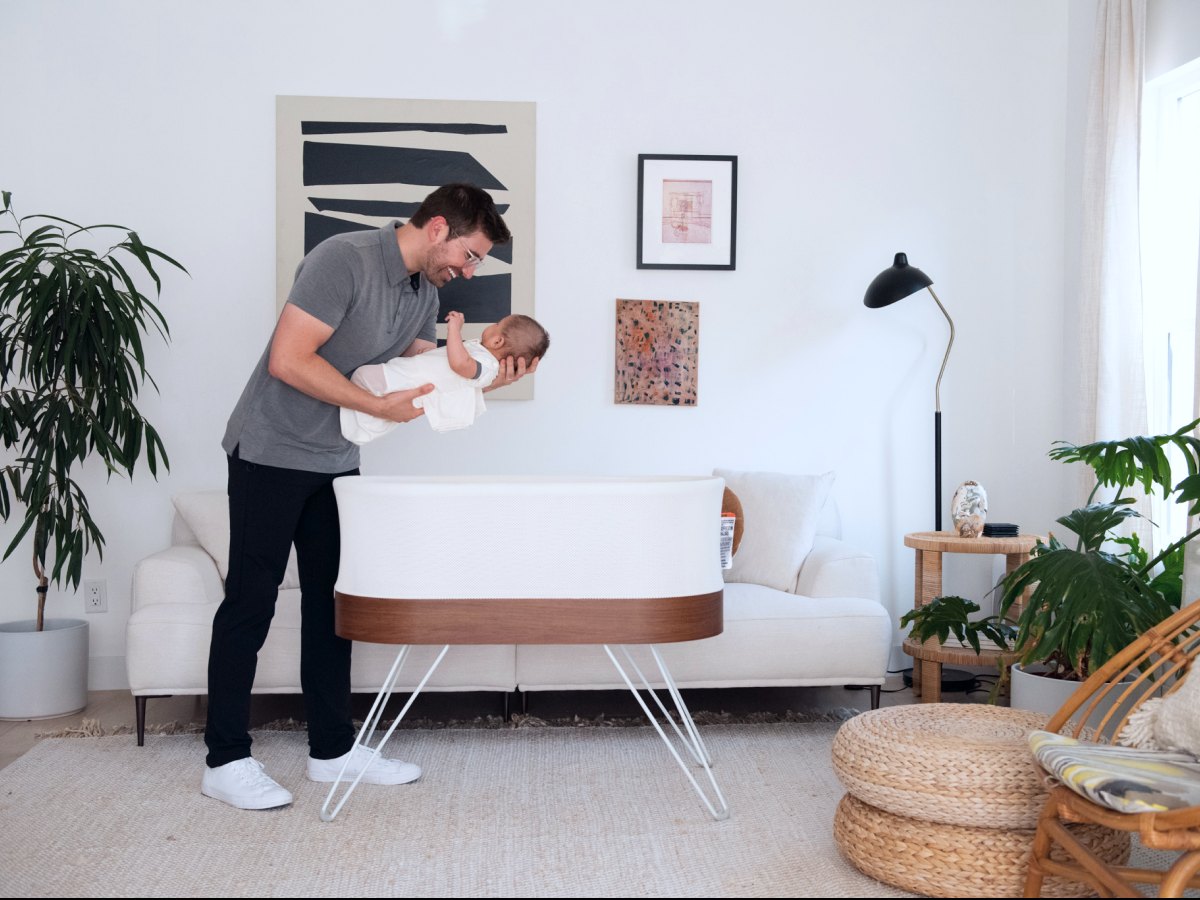
The design pedigree is unusually serious for baby gear. SNOO was co-created with industrial designer Yves Behar of fuseproject - the studio behind Jawbone and a shelf of design awards - and with Dr. Deb Roy of the MIT Media Lab, who worked on the responsive technology. The result is handsome enough that the Smithsonian added SNOO to its permanent collection, making it, as far as anyone can tell, the first bassinet in a museum.
The move that matteredGetting the FDA to sign off
Plenty of companies sell soothing gadgets. Happiest Baby did something none of them managed: it got a regulator to treat its bassinet as a medical device. In March 2023 the FDA granted SNOO a De Novo authorization - the first ever for a device intended to keep sleeping babies safely positioned on their backs. The mechanism is deceptively simple. The swaddle has patented wings that loop and clip into the bassinet, so an infant who can't yet roll consistently physically cannot flip onto their stomach, the position tied to a far higher SIDS risk.
The nuance matters, and Happiest Baby is careful about it in the fine print: the FDA authorized SNOO for keeping babies supine, not as a proven SIDS cure. Regulators noted the device facilitates safe positioning and that user data showed no increased risk - not that it directly reduces sudden infant death. Still, the authorization did something a marketing budget can't buy. It reclassified a $1,700 gadget as a Class II medical device, which in turn made SNOO eligible for HSA and FSA dollars through a partnership with Truemed. A luxury bassinet quietly became a pre-tax medical purchase.
The businessOne product, sold six different ways
The cleverest thing about Happiest Baby may not be the hardware at all - it's how many ways the company found to charge for a single SKU. A bassinet is only useful for about six months, which makes a $1,695 sticker price a hard sell. So the company leans on a rental model: roughly $159 a month, return it when your baby outgrows it. That reframes SNOO from a big purchase into a short subscription, and it dramatically widens the pool of families who will try it.
How Happiest Baby monetizes one bassinet
From there the channels multiply. There's the direct storefront on Shopify, retail partners like Pottery Barn Kids and Amazon, and a hospital program that places SNOO in nurseries and NICUs by pitching it as a way to save nurses hours of labor a night. There's an employer-benefit channel: more than 140 companies, including Chase, Under Armour and Snapchat, offer free SNOO rentals as a family perk. And there's software - a companion app that logs sleep and, since 2024, a roughly $20-a-month premium tier.
That last move is the cautionary tale. When Happiest Baby put previously free app features - like certain sound modes and a car-ride setting - behind a subscription, owners who'd already paid four figures for the hardware revolted. Fortune and The Washington Post both covered the backlash, which became a small but sharp case study in what happens when you add fees to a connected device people thought they already owned. It's the risk baked into every "smart" product: the moment the software bill arrives, the goodwill can evaporate.
Who's buyingParents, hospitals, and a famous cap table
The core customer is the obvious one: sleep-deprived new parents with enough disposable income (or a generous FSA) to spend on rest. But the reach goes wider - into hospital nurseries where nurses use SNOO to keep newborns calm, and into corporate benefits packages where it functions as a recruiting sweetener. The company says more than 600 million hours of infant sleep have been logged inside its bassinets.
The investor list reads like a maternity ward for the famous. Happiest Baby has raised a reported $90 million-plus across its rounds (database estimates vary widely, from roughly $45M to $90M), including a Series C of about $45 million in 2021. Backers have included Greycroft and Lux Capital alongside a roster of celebrity parents - Justin Timberlake, Jessica Biel, Scarlett Johansson, Gwyneth Paltrow, Zoe Saldana and Maria Sharapova. The through-line: most of them were living the exact problem SNOO solves when they wrote the check.
The competitionHow SNOO stacks up
SNOO isn't alone in the responsive-bassinet aisle anymore. Cradlewise builds a smart crib with a camera that detects cries and starts rocking; 4moms sells the mamaRoo Sleep Bassinet at a fraction of the price; Nanit and Owlet approach infant sleep from the monitoring side. What separates SNOO is less the motor and more the paperwork - the FDA authorization and the resulting HSA/FSA eligibility are things competitors can't simply copy.
| Product | Approx. price | Cry-responsive | FDA authorized |
|---|---|---|---|
| SNOO | ~$1,695 / $159 mo | Yes | Yes (2023) |
| Cradlewise | ~$1,999 | Yes | No |
| mamaRoo Sleep | ~$449 | App-set | No |
| Standard bassinet | ~$100-300 | No | No |
Where it fitsThe playbook underneath
Strip away the mesh and the motor, and Happiest Baby is a lesson in sequencing. Dr. Karp spent 14 years building an audience with a method and a book before he ever shipped hardware. The book was the marketing. The robot was the business. Then the company did the patient, expensive work of turning sleep data into a regulatory moat - the kind that lets it charge for the same product as a purchase, a rental, a subscription, a hospital tool, a benefit, and a tax-advantaged medical device, all at once.
Whether that stack holds is the open question. The subscription blowback showed how fragile connected-hardware trust can be, and the category is filling with cheaper rivals. But for a company that started with a pediatrician and a paperback, turning a soothing technique into a museum piece, a medical device, and a rental business is a long way to travel. The 3 a.m. problem, it turns out, was a very good place to start.