The App That Gave Away Free Phone Numbers Until a $15 Million Buyer Came Calling
textPlus built a business on the one thing carriers refused to give away: a phone number. Fifteen years and 150 million downloads later, Truecaller wrote the check.
Every wireless carrier in America sells you the same thing: a phone number, wrapped in a contract you can't leave. textPlus built a 15-year business by giving the number away and charging for almost nothing else. Get the app, pick an area code - Brooklyn, Austin, wherever you want to look local - and you have a working US phone line in about a minute. No SIM, no store, no plan.
That simple trick attracted more than 150 million downloads over the app's lifetime, a roster of investors that included Kleiner Perkins and Matrix Partners, and, in July 2026, a buyer. Truecaller, the Swedish caller-ID company, agreed to acquire textPlus for $15 million, cash- and debt-free, to plant a flag in the US market. The deal is small by tech-headline standards. The story behind it is more interesting than the price tag.
01 / The IdeaThe bet that smartphones would break texting
textPlus was founded in 2007 in Los Angeles by Scott Lahman with co-founders Austin Murray and Zack Norman - the same trio behind JAMDAT Mobile, the mobile-gaming company that went public and then sold to Electronic Arts for $680 million in 2006. Lahman's insight for the next act was blunt: as smartphones spread, the old carrier grip on SMS would loosen. If a phone could run apps and reach WiFi, why should texting be metered per message and tied to a single number on a single plan?
The app launched in 2009 (its Android package name, com.gogii.textplus, still carries the company's original name, GOGII). The pitch was almost aggressively practical: a free US phone number, free texting to any US or Canadian number, and free inbound calls, all running over WiFi or data.
Telecom only works when people can trust it. We're excited about helping restore trust in every connection.Scott Lahman, CEO & Founder, textPlus
02 / The ProductWhat you actually get
The core of textPlus has stayed remarkably stable. You download the app, choose an area code, and receive a real, dialable US number. From there you can send SMS, MMS, and group chats, receive calls for free, and reach toll-free numbers from almost anywhere in the world. Outbound and international calls cost money - bought as in-app credits - and that paid calling is where the free service quietly pays for itself.
Install on iOS or Android. No SIM, no carrier account.
Choose a number that looks local anywhere in the US.
SMS, MMS, group chat and inbound calls over WiFi or data.
Pay only for outbound and cheap international minutes.
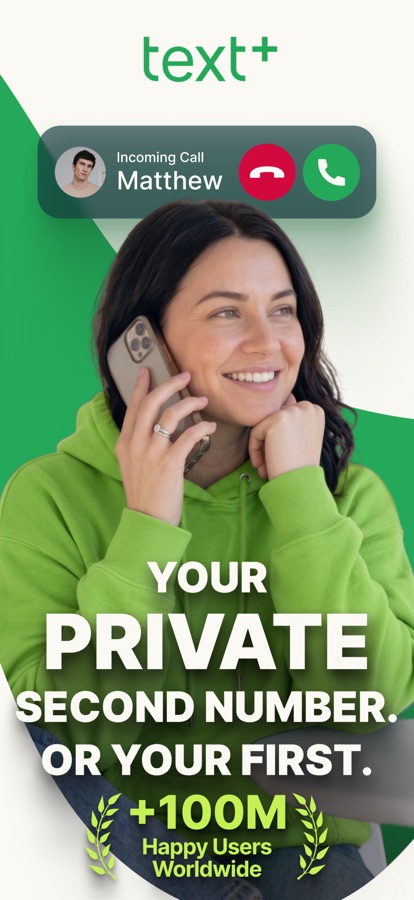
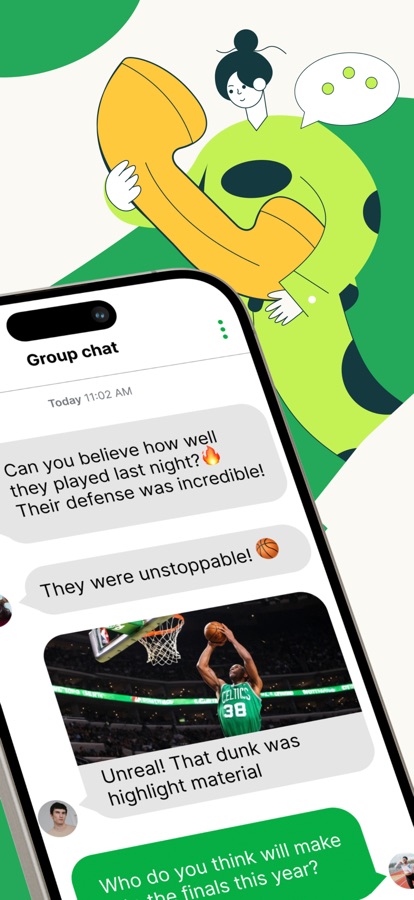
Over time the free number found a second life as a second number - the line people use for online dating, resale listings, side gigs, and travel so they never have to give a stranger their primary digits. It's an unglamorous need, and a durable one. The awkwardness of "I don't want to give you my real number" doesn't go out of style.
03 / The NumbersSmall team, real money
By the time Truecaller came calling, textPlus was not a growth-at-all-costs story. It was a profitable niche business: roughly 1.5 million monthly active users and about $5.2 million in revenue for the twelve months ending May 2026, growing at close to a 45% compound rate since 2023 - all run by a team of about 14 people.
Bars scaled to Lahman's $680M JAMDAT sale to EA for context.
The venture history reads like a who's who of consumer tech investing. textPlus raised more than $53 million across several rounds from Kleiner Perkins Caufield & Byers, Matrix Partners, and GRP Partners (now Upfront Ventures), including an $18 million round led by The Raine Group in 2012. It also made its own acquisition along the way, buying a company called Jarvus, and struck a carrier partnership with MetroPCS to bring free textPlus texting to that network's users.
04 / The FieldHow it stacks up
textPlus lives in a crowded corner of the app stores. Google Voice, TextNow, TextFree/Pinger, Nextplus, and Talkatone all chase some version of the free-number-plus-VoIP idea, while WhatsApp-style messengers cover the pure over-the-top texting side. Most of the "free SMS" clones that appeared alongside textPlus are gone. The ones that survived did the boring work of unit economics - making the paid layer (international minutes, subscriptions, ads) reliably cover the free layer.
| Feature | textPlus | Typical carrier line |
|---|---|---|
| Free US number | Yes, pick area code | No, tied to plan |
| Monthly contract | None | Usually required |
| Free inbound calls | Yes | Counts against plan |
| Works on WiFi only | Yes | Limited |
| Second/spare number | Built-in use case | Extra line fee |
The difference that matters is philosophical. A carrier sells access and treats the number as a hook. textPlus treats the number as free and sells the extras. That inversion is why it could be a second line for millions of people without asking them to switch anything.
05 / The ExitWhy Truecaller wanted it
Truecaller is best known outside the US for identifying who's calling and blocking spam. Buying textPlus gives it something harder to build than software: an established US user base and a working product for second numbers and internet-based calling. Truecaller says the acquisition broadens its capabilities and moves it toward a more complete communications platform, while keeping both companies' lean, product-first cultures intact.
Scott and the textPlus team have built a service that helps people communicate far better than they used to.Rishit Jhunjhunwala, CEO, Truecaller
For Lahman, it's a familiar shape of ending. Two decades apart, both of his big companies were built on reading where mobile was heading and shipping the useful thing before the crowd arrived - JAMDAT into a sale to EA, textPlus into a sale to Truecaller. Neither was the flashiest company in its market. Both got bought.
06 / The TakeawayWhat you can copy
The reusable lesson isn't "give things away." It's "give away the thing your competitors charge for, then know exactly what you're upselling." A free phone number is a loss leader only if the paid layer - international minutes, credits, ads - is engineered to cover it. textPlus made that math work for 15 years with a small team, which is its own kind of achievement in a market littered with free-app corpses.
Where wouldn't this play? The model leans on a real appetite for a spare or carrier-free line, and on paid calling to fund the free tier. In markets where data is scarce, regulation on virtual numbers is tight, or the free tier can't be subsidized, the same playbook gets a lot harder. textPlus worked because it picked a boring, persistent need in a market that could pay - and then kept showing up.