In 2019, Dane Witbeck watched his 8-year-old son's best friend unbox an iPhone and felt the floor tilt. The choice in front of every modern parent seemed to be binary and both options were bad: hand a grade-schooler a slab of infinite internet, or hand them a flip phone and pretend it was still 2004. Witbeck, a father of four and a serial entrepreneur, decided the missing thing was a middle path. He built it, called it Pinwheel, and turned it into one of the fastest-growing kids' phone companies in America.
The pitch is almost contrarian in consumer tech: a phone designed to be used less, not more. Pinwheel makes real Android smartphones for children and teens, then removes the parts engineered to hook them. No social media. No open web browser. No app store to wander. No ad-driven feeds. What is left is a device that calls and texts the people a parent approves, runs a hand-picked set of apps, and grows more capable as the child does.
What Pinwheel Actually Sells01The un-smartphone, and the dashboard behind it
The hardware is the easy part. Pinwheel builds its lineup on top of familiar Android devices - phones in the Slim, Plus, Pixel and Genesis families - and layers its own operating system over them. The device a kid holds looks like a phone because it is one. The difference lives on the parent's side, in a product called the Caregiver Portal.
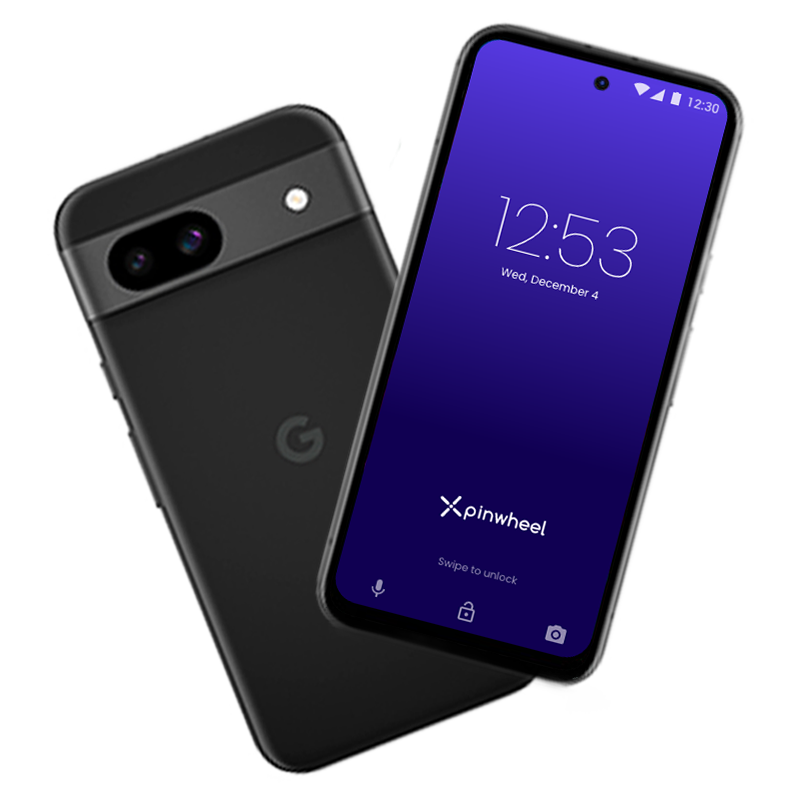
From the portal, a parent runs the whole phone remotely: approving each contact, choosing which apps appear, setting screen-time schedules (off during school, off at bedtime), and tracking location with geofence alerts. A Contact Safelist blocks strangers and spam calls before they reach the kid. The design idea is staged trust - start locked down, then unlock music, navigation, or messaging as the child demonstrates they are ready. Pinwheel likes to compare it to teaching a teenager to drive: you do not hand over the keys to a Ferrari, you supervise, then let go by degrees.
What's On the Phone
- Calls & texts to approved contacts
- 1,200+ vetted apps, added one by one
- Music, maps, educational tools
- GPS location & geofence alerts
What's Deleted
- Social media feeds
- Open web browser
- An app store to browse
- Ads and algorithmic rabbit holes
Instead of an app store, Pinwheel offers a curated library of more than 1,200 expert-vetted, age-appropriate titles - Spotify and Apple Music, educational apps, Google Maps for a kid learning to get around town. Parents approve each one. There is no infinite shelf to scroll, which is the entire point.
02Anxious parents, and a category that keeps growing
Pinwheel's customer is easy to picture: a parent of an elementary- or middle-school-age child who wants to reach their kid, and wants their kid to reach them, without inviting TikTok, group-chat drama, and the open internet into a backpack. The company now serves families across the United States, United Kingdom, Canada, and Australia, and its phone is described in press coverage as a category best-seller.
That customer is not a niche. The backlash against kids-on-phones has hardened from parenting-blog worry into a durable market, and Pinwheel is one of the clearest bets on its permanence. Demand showed up early: on the strength of roughly 8x revenue growth in 2021, the company raised its seed round and kept building.
Pinwheel was developed by therapists, technologists, and parents on a mission to promote curiosity and social and emotional health in a world saturated by technology. — Pinwheel, on how the product is built
That trio - therapist, technologist, parent - is not marketing garnish. It shows up in the defaults. Leadership even includes a Director of Parent Education alongside the usual VP of Engineering, a tell that the company sees itself as much in the coaching business as the hardware business.
03From a phone to a whole kid-safe stack
Pinwheel started with one phone in 2020 and has since built outward. In 2023 it launched PinwheelGPT, billed as the first kid-safe, parent-monitored AI chat app powered by ChatGPT. Built for ages 7 to 12, it is tuned to give age-appropriate answers with no explicit content, links, or images - and, in its most talked-about feature, it lets parents review their child's conversations, including chats the kid deleted. It is a genuinely unusual product: a version of "AI for kids" honest enough to admit that supervision is the feature.
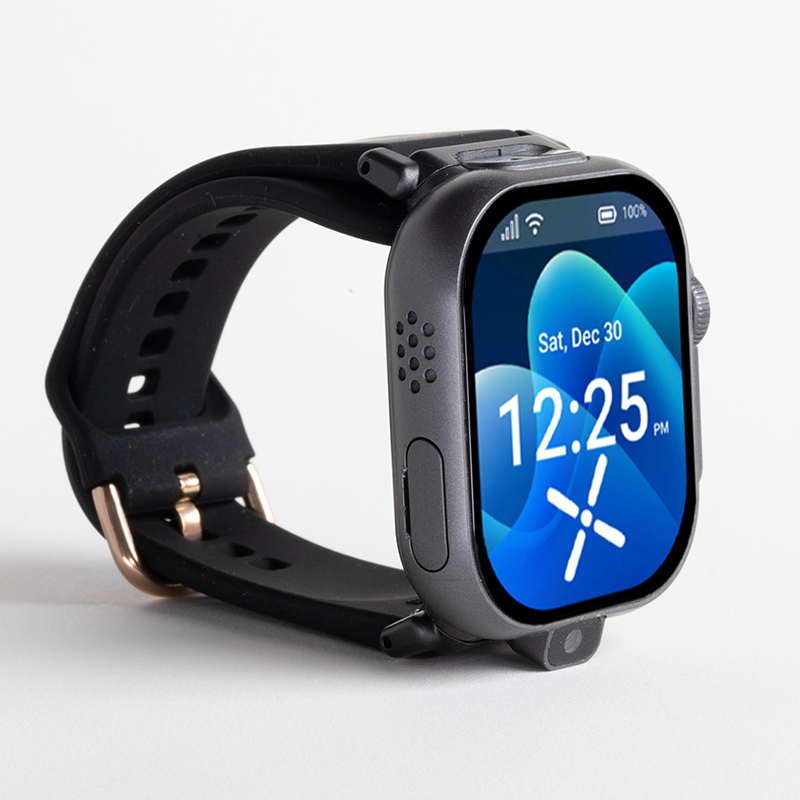
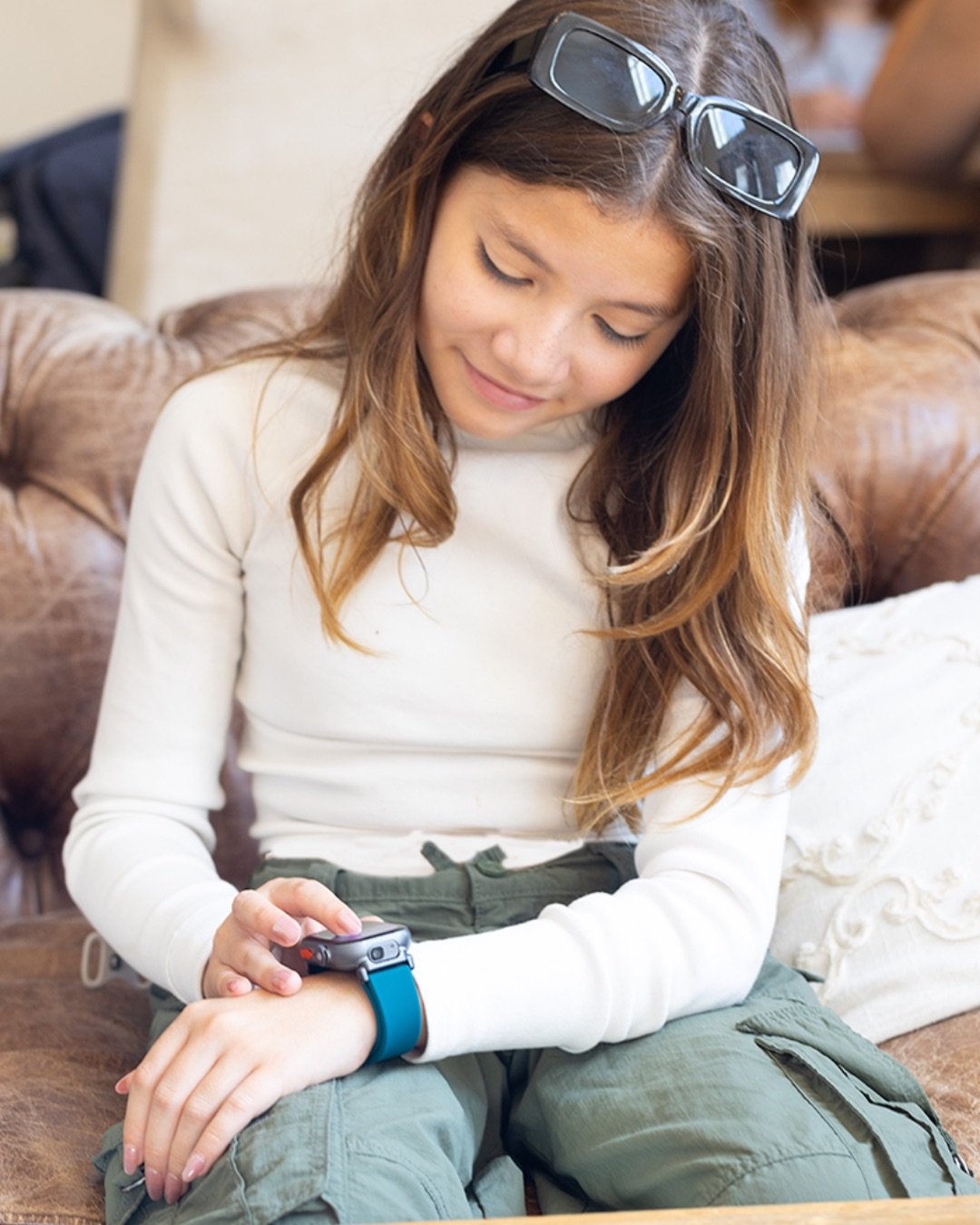
The 2025 lineup added the Pinwheel Watch, a 4G LTE kids' smartwatch with calling, texting, and GPS that debuted at CES. Priced around $159 plus a monthly LTE plan through AT&T, it earned a hands-on from Tom's Guide that compared its build to an Apple Watch Ultra - notable praise for a device from a 60-person Austin company. A home-phone product, Pinwheel Home, rounds out an ambition to own the entire kid-safe hardware shelf, from the wrist at age six to the pocket at age twelve.
The Money04Small round, real revenue, quiet profit
Pinwheel did not raise a blockbuster war chest. It closed roughly $3.5 million in total seed funding - backed by Drumbeat Ventures, Circadian Ventures, and the Central Texas Angel Network among others - and used it to fund features and growth rather than a cash bonfire. The business model does the heavy lifting: families buy the device, then pay a monthly plan (roughly $10 to $30 depending on carrier and data) that bundles the Caregiver Portal and device software. PinwheelGPT adds a free tier plus paid premium.
The math worked. In 2024, Pinwheel landed on the Inc. 5000 as one of the country's fastest-growing private companies - and the fastest-growing in its own category. By 2026 it describes itself as profitable, a rare posture for a consumer-hardware startup and a pointed contrast to peers that chase scale before sustainability.
You do not hand a 10-year-old the keys to a Ferrari - you teach them to drive with supervision, then let go by degrees. — Pinwheel's framing of staged, parent-controlled unlocksThe Competition
05Not a dumb phone in a costume
The safe-phone aisle is crowded. Gabb Wireless, the Bark Phone, and Troomi Wireless all chase the same worried parent, and locked-down iPhones with Screen Time controls hover as the free alternative. Pinwheel's wedge is a philosophical one: most rivals start from a stripped device and add a little back; Pinwheel starts from a full smartphone and dials it down. That means a Pinwheel can grow with a kid for years - the same device that only makes calls at age nine can carry Spotify and Maps at age thirteen - rather than being outgrown and replaced.

Witbeck's background helps explain the discipline. Before Pinwheel he founded Meshify, an insurance-tech startup acquired by HSB/Munich Re, and he was named to Georgia Tech's 40 Under 40 in 2021. This is a second act built by someone who has already sold a company - which may be why the growth story reads less like a rocket and more like a business.
The Road So Far06Seven years, one idea
The bet underneath all of it is simple and a little stubborn: kids will get phones eventually, so the useful thing is not to fight that but to make the first one good. Pinwheel is building the whole stack - watch, phone, AI app, home phone - around that one conviction while the cultural moment is still on its side. Whether the panic about screens is a phase or a permanent fixture of parenting will decide how big this gets. For now, the company that says no to social media keeps saying yes to growth.