The Company Selling a Phone That Refuses to Be Interesting
Chris Kaspar took a foster caseworker's warning and turned it into a $399 smartphone with no browser, no feed and no app store. Techless is betting that the most valuable feature a phone can have is the stuff it leaves out.
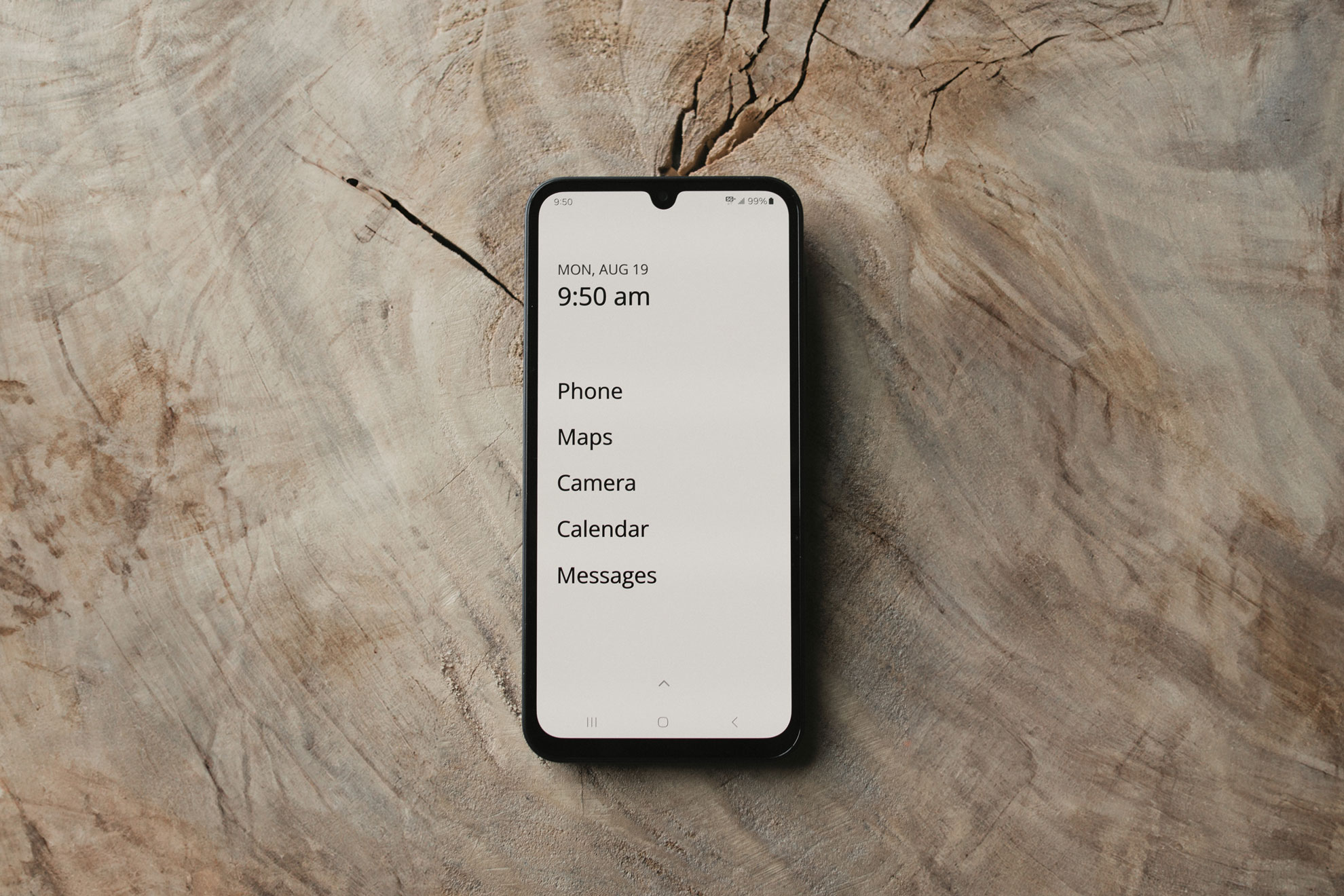
The first thing you notice about a Wisephone is what happens when you look for something to do on it. There is no browser to open. No app store to browse. No feed to pull down and refresh. The home screen is a short list of plain text on an off-white background - phone, messages, maps, camera - and then it stops. Techless, the company that makes it, considers that the entire point.
Founded in 2019 and run out of Plano, Texas, Techless builds hardware for people who have decided their phone is doing too much. Its flagship, the Wisephone, is a smartphone with the addictive parts removed: no social media, no games, no web browser, no email client, no store to add any of it back. The company's second-generation device, the Wisephone II, sells direct for $399 plus a $39 activation fee. The pitch is unusual for a consumer electronics firm - buy this, and use your phone less.
A caseworker's warning, not a spec sheet
The origin story is not a lab or a garage. Founder Chris Kaspar came from a family with roughly 120 years of business history - a lineage that reportedly began with wire baskets made from scrap smooth wire - and spent six years running the family ad agency as president and creative director. He holds a master's in studio art and theory, a detail that shows up later in how the company talks about design.
The turning point came through foster care. After filming a commercial for a foster-care ministry, Kaspar and his wife began fostering, and two teenage sisters arrived with a specific warning from their caseworker: do not give them smartphones, given their past experiences online. Instead of an iPhone, the girls got an Amazon Alexa, which they used safely. That contrast - a connected device that couldn't lead anywhere harmful - became the seed of the product.
Kaspar has said he evaluated around 20 business ideas over roughly nine months - multifamily housing and a flex co-working space among them - before choosing the hardest one on the list. His reasoning was blunt: "Everyone's complaining, but nobody is creating. We're working to solve a real problem."
Android, with the exits sealed
Here is the part that surprises people: the Wisephone II is not a novelty gadget with a custom chip. It is a real Samsung A16 5G running a locked-down version of Android 16 that Techless calls WiseOS. The hardware is unremarkable in the good sense - 5G, a 6.7-inch FHD+ AMOLED screen, a 50MP camera, 128GB of storage expandable by microSD, and multi-day battery life. What is engineered is the restraint.
WiseOS blocks browsers, social media, games and adult content at the operating-system level, so the discipline isn't something the owner has to maintain with willpower or a screen-time setting they can toggle off at 11pm. The device ships with built-in tools - phone, messages, maps, music, camera, photos, clock, notes, calendar and a two-factor authenticator - and a curated "Tool Drawer" that lets in a vetted shortlist such as Signal, Spotify, Venmo, Uber, WhatsApp and 1Password. It will not let in a web browser or a social app, ever.
What WiseOS keeps
- Calls & messages
- GPS maps & navigation
- 50MP camera & photos
- Music, clock, notes, calendar
- Curated tools: Signal, Spotify, Venmo
What it removes
- Web browser
- Social media apps
- App store
- Games
- Doomscroll & adult content
Figure 1 - The Wisephone's design decisions, sorted into two columns.
Who actually buys a boring phone
Two groups, mostly. The first is parents - the ones Kaspar points to when he cites the statistic that "91% of parents are greatly concerned about their kids' smartphones." For them, the Wisephone (and Techless's kid-oriented offerings) is a first phone that keeps a teenager reachable without handing them the open internet. The second is adults trying to claw back their own attention: people in recovery from compulsive scrolling, or simply choosing a more intentional relationship with their devices.
Techless doesn't publish exact unit numbers, describing its traction in terms of "lifehours" reclaimed for thousands of users. The company sells direct through techless.com and wisephone.com, often in family bundles, and pledges never to sell or share customer data - a pointed contrast with the ad-funded platforms it is designed to keep out.
The money behind restraint
Selling a product people are meant to use less is a strange foundation for a hardware company, and the funding reflects a patient, mission-aligned investor base rather than a growth-at-all-costs one. Techless has raised roughly $3.18 million across six rounds, including a convertible note in late 2024 and a Wefunder community round pitched at about a $10 million valuation. Backers include Praxis, Eagle Venture Fund, Capital Factory, Cistern Capital and Crescent Ridge.
The business model is straightforward direct-to-consumer hardware: device revenue at $399, plus the $39 activation fee, with no advertising layer and no data resale to prop up margins. It is a model that only works if the product is good enough that people pay premium-adjacent prices for a phone whose headline feature is subtraction.

A crowded corner of a market big tech avoids
Techless is not alone in the "less phone" category, and that is arguably good news - it means the problem is widely agreed on. On the minimalist-adult side it shares shelf space with the Light Phone, Punkt, Mudita and the newer Minimal Phone. On the kid-safe side it competes with Gabb, Troomi, Pinwheel and monitoring tools like Bark. What sets Techless apart is the combination: premium Samsung hardware, an OS-level lockdown rather than a parental-controls overlay, and a curated middle path that keeps a handful of genuinely useful apps instead of stripping the device down to calls and texts alone.
The larger competitor, of course, is the default. Apple and Google build phones designed to be engaging; Techless builds one designed to be forgettable. That is a niche the biggest players have little incentive to fill, which is exactly the opening a 19-person company can walk through.
Beyond the one phone
Techless has widened its lineup around the same idea: Sage and Techless Mobile, kid-friendly devices with parental safety controls (including a push toward UK and European families); Town Detox, a community initiative for groups resetting their screen habits; and Doomscroll, a podcast and content series on intentional tech use. It is a lineup that markets on Instagram and YouTube - platforms the company's own phone will not let you scroll.
The art-school tell
The design language is where Kaspar's studio-art background surfaces. "Art brings meaning. It brings rest," he has said. "So, we wanted to infuse these traits into our brand." That explains the deliberately quiet interface - the plain text, the off-white background, the absence of the color and motion that other phones use to pull the eye back. On a Wisephone, nothing is fighting for your attention, because the company decided attention was the thing it was selling back to you.
Whether Techless can scale a hardware company on that premise is the open question. Hardware is hard, margins are thin, and the audience is by definition people who don't want to be marketed to constantly. But the company has shipped two generations of a working product, built its own restrained operating system, and found investors willing to fund a slow, deliberate version of growth. In a market where nearly everyone else competes for more of your time, Techless has staked out the strange, uncrowded position of asking for less of it.