A transformer can look perfectly healthy while a nut inside it is working loose. In a case documented by Qualitrol, an American utility’s transformer had operated for two years before rising dissolved gases betrayed a developing fault. Engineers took it offline 28 hours after the first gas elevation. Inspection found a loose nut; damaged threads had prevented proper tightening. The machine announced its distress in chemistry.
- Tools for electronics, utilities, and defense.
- Tektronix, Qualitrol, PacSci EMC, and more.
- 2025 spin-off. Write-down. 2026 recovery.
That episode predates Ralliant’s independence, but it explains the company better than a corporate slogan. Qualitrol is now one of its businesses. Across the group, the product is often a way of discovering something consequential before the consequences arrive: a suspect signal, an overheating component, a change in pressure. The interesting question is how much a customer will pay to know sooner.
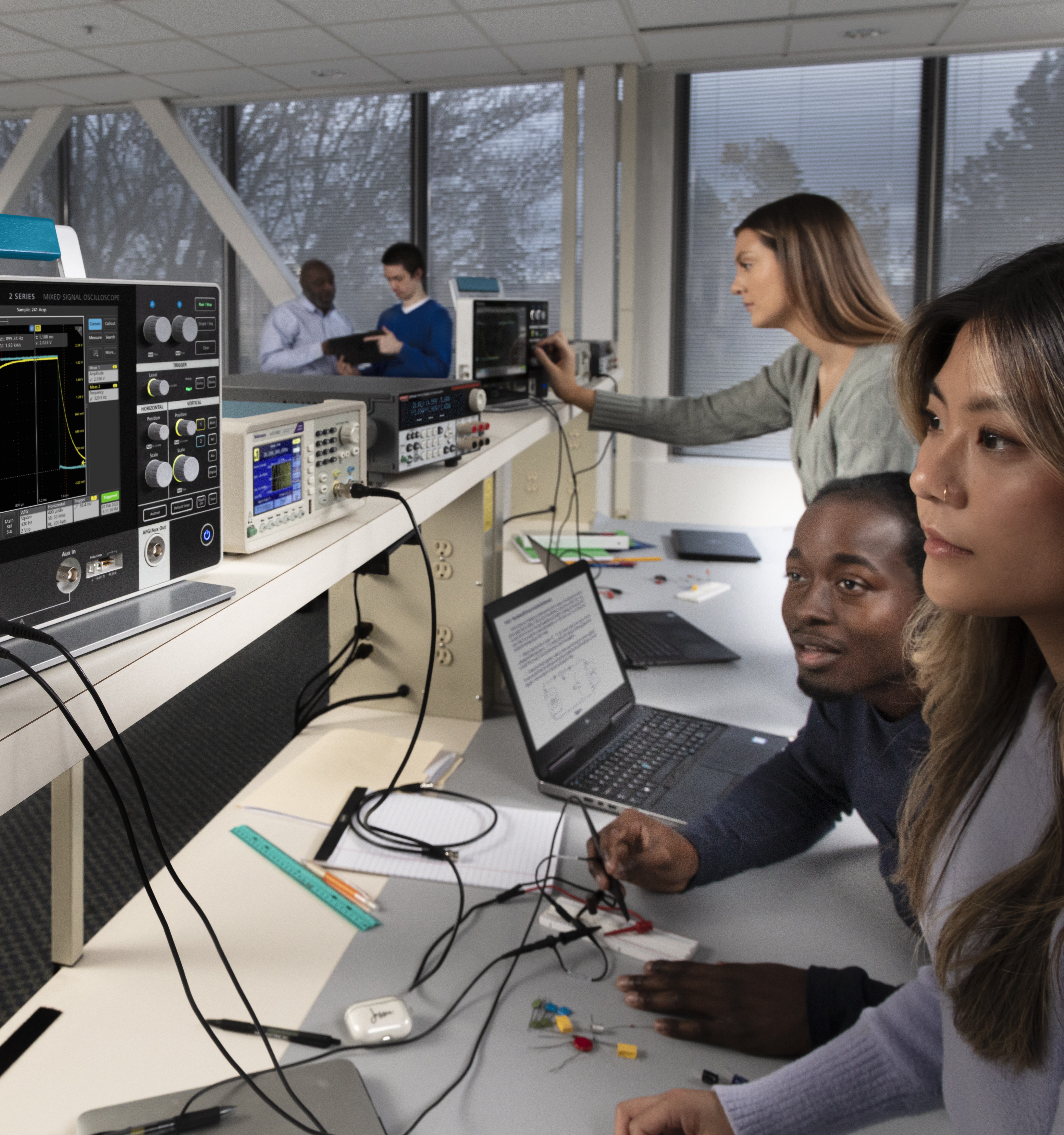
01A new name, an old workbench
Ralliant became independent from Fortive in June 2025. It inherited operating businesses rather than starting with a prototype and a fundraising deck. Tami Newcombe, previously president of Tektronix and a Fortive segment leader, became president and CEO. The corporation was incorporated in 2024; the engineering inside it is considerably older.
The portfolio has two halves. Test & Measurement includes Tektronix, with oscilloscopes, semiconductor testing, power supplies, software, and services. Sensors & Safety Systems includes Qualitrol, Gems Setra, Hengstler-Dynapar, Anderson-Negele, and PacSci EMC. Between them sit transformer monitoring, liquid and pressure sensing, motion measurement, hygienic process instruments, and energetic safety devices for aerospace and defense.
These are different specialties with a common buyer problem: a measurement or action must be dependable under demanding conditions. A food processor needs sanitary instrumentation. An electronics engineer needs to see a signal accurately. A utility needs evidence about an asset’s condition. Ralliant’s niche is supplying the equipment and expertise behind those decisions.
02The customer buys a smaller uncertainty
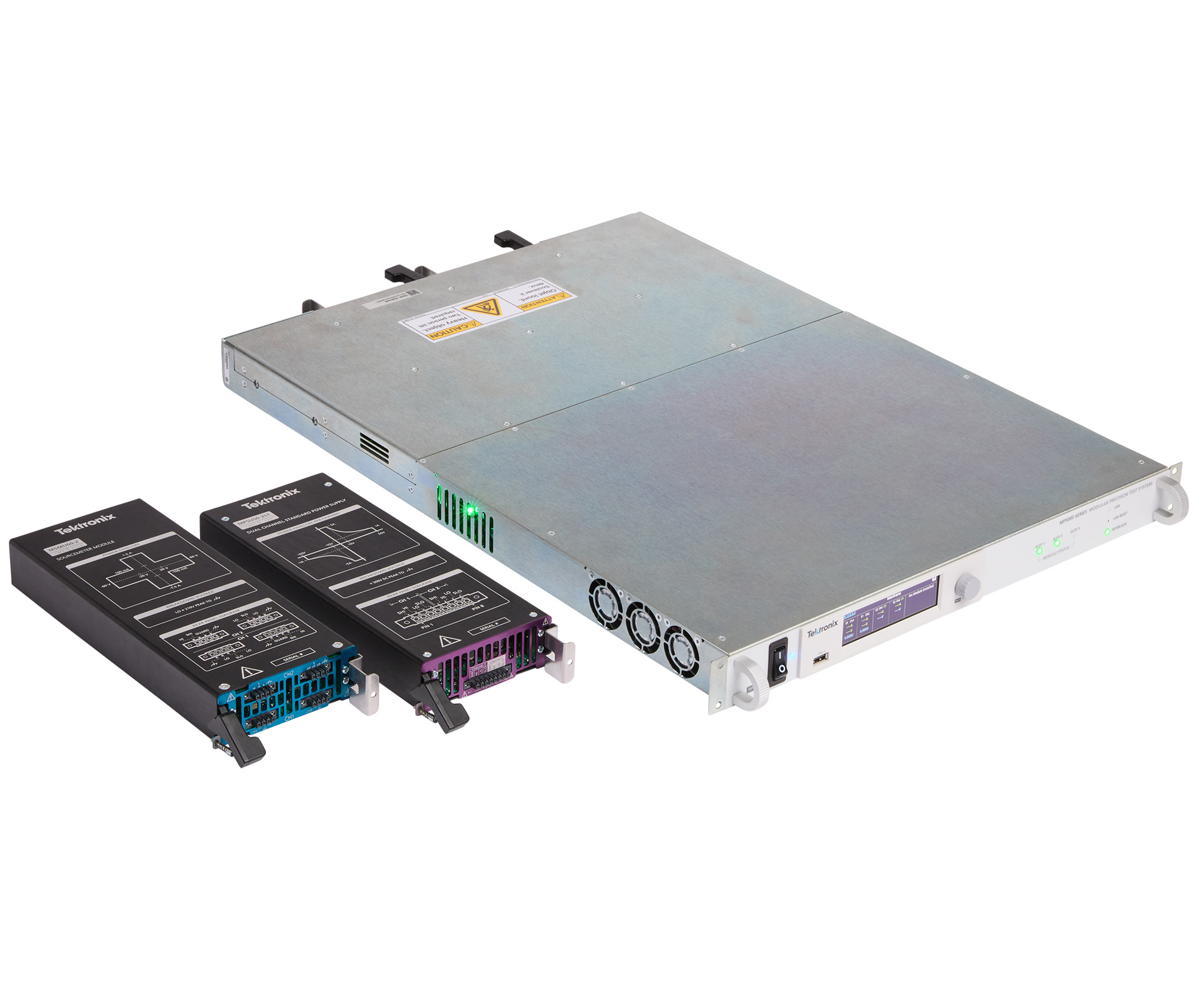
Consider the Tektronix MP5000, introduced in 2025 alongside the 7 Series DPO oscilloscope. The oscilloscope captures and analyzes electronic signals. The MP5000 puts interchangeable power-supply and source-measure modules into a test platform. An engineering team can change the test configuration as its device changes, instead of rebuilding the setup around a fixed instrument.
There is a concrete price attached to that idea. Tektronix lists the MP5103 mainframe at US $4,750, with modules priced separately. A listed $2,100 power-supply module takes that combination to $6,850 before taxes, accessories, or other requirements. Buyers should also check software compatibility: the MP5000 uses TSP commands and does not support SCPI. Flexibility still has an integration cost.
Ralliant sells instruments and engineered components, plus associated software and services, through its businesses and distribution channels. Its customers include manufacturers, research institutions, and governments. This is business-to-business infrastructure, purchased to develop products, operate equipment, or fit into another manufacturer’s system. The buying decision belongs near the application, not in a general-purpose shopping basket.
Competition is correspondingly specific. Keysight and Rohde & Schwarz are alternatives in test and measurement; Endress+Hauser and other specialist suppliers compete in sensing. Ralliant’s argument is its application knowledge and engineer-to-engineer relationships across established brands. That is a positioning claim, not proof that one instrument wins every specification sheet.
03Precision met a forecast it could not measure
Independence came with a bill. Ralliant borrowed $1.15 billion in June 2025 to fund payments to Fortive connected with the separation. That was debt financing for a corporate transaction. It was not a venture round, and it was not the price of inventing an oscilloscope.
The early strain showed up in Test & Measurement. In its second-quarter 2025 report, the company described lower volume, higher compensation, tariffs, and the cost of operating independently. It launched a savings program initially targeting $9 million to $11 million in annualized savings to address spin-related dis-synergies. The unglamorous work of becoming a separate company mattered immediately.
Then came the bigger correction. Ralliant recorded a $1.44 billion non-cash goodwill impairment in 2025, primarily driven by revised expectations for EA Elektro-Automatik. Slower-than-anticipated EV adoption and reduced industry forecasts changed the valuation assumptions. The correction concerned market expectations embedded in the accounts, which had become too optimistic.
The distinction matters. A write-down acknowledges that an asset’s recorded value is too high; it does not mean $1.44 billion left the bank that quarter. But it is a sharp reminder that a business can help customers measure the physical world while still misjudging the speed of a market. Electrification can be a durable trend and an awkward investment timetable.
Separation-related borrowing for Fortive payments
June 2025 · financing
Test & Measurement goodwill impairment
FY2025 · accounting charge
04The useful habit behind the acronym
Ralliant’s proposed connective tissue is RBS, the Ralliant Business System: shared practices for operations, innovation, commercial work, and leadership. Its public culture emphasizes experimentation, customer feedback, and continuous improvement. The useful idea to copy is modest: give teams a common way to identify a problem, test a change, and check whether the improvement lasts. An acronym cannot do that work for them. For a smaller manufacturer, the transferable move is to pick one recurring defect or delay, agree on the measure of success, and revisit the result after the initial excitement. Start with the queue that keeps growing or the inspection that keeps finding the same fault. Give the proposed fix an owner and a review date. The discipline lies in keeping the feedback loop open.

By July 2026, the company reported a clearer recovery. Second-quarter revenue reached $568 million, up 13% year over year, with double-digit growth in both segments. Net earnings were $57 million. Management raised its full-year outlook and said its enterprise productivity program remained on track for $50 million to $60 million of annualized run-rate savings by 2028. Those savings are a target, not a completed result.
There are tangible investments behind the strategy too. In May 2026, Ralliant highlighted a $27.3 million Defense Production Act funding award to PacSci EMC to expand production of an Arm Fire Device used in solid rocket motors. Government-backed capacity expansion has a different rhythm from a laboratory’s instrument purchase. The portfolio spans both.
The lesson from the transformer is conditional. Early detection helps when the signal is meaningful, someone interprets it, and a team can act in time. A monitor alone cannot repair a loose nut. Likewise, better operating routines cannot make customers buy on schedule. Ralliant’s opportunity lives in that practical gap between learning something and doing something about it.
“At Ralliant, we believe enduring success comes from pairing innovation with disciplined execution.”
Tami Newcombe · September 2025