A transformer can be sick before the lights go out. The interesting question is how to tell. In 1920, Frank C. Doble founded a company that developed equipment for the young electric utility industry. Its early breakthrough was a portable insulation test that helped assess bushings before they failed. A rather specific problem. Also an excellent place to begin understanding ESCO Technologies.
Today, Doble sits inside ESCO alongside businesses that make aircraft components, quiet naval equipment, and build rooms that control electromagnetic interference. The list can sound like the contents of an unusually demanding engineer’s shopping basket. Look at the customer’s problem, though, and a pattern emerges: somebody needs to understand or control a physical condition before it becomes expensive.
- Three businesses: aerospace and defense, utility solutions, and RF test and measurement.
- The buyer: utilities, equipment manufacturers, defense programs, and engineering labs.
- The latest move: Megger joined the utility group on October 1, 2026.
The warning before the outage
Doble’s proposition goes beyond putting a reading on a screen. It supplies instruments, monitoring, software, laboratory analysis, and consulting for power equipment. A utility can test a transformer, investigate its condition, and ask what the result means. That last step matters. An unexplained measurement can leave an engineer with a more precise version of the original uncertainty.
Doble’s history page describes 5,500 customers and 55 million test-data points covering more than a million pieces of electrical apparatus. Treat those as the subsidiary’s published scale markers. They explain something about its appeal: a measurement becomes more useful when an engineer can compare it with accumulated experience.
There is a pleasantly old-fashioned mechanism behind that knowledge. Doble held its first customer conference in 1934. Utilities could exchange results and discuss problems with one another and the company. Long before the modern enthusiasm for customer communities, people responsible for keeping the power on were getting together to compare notes.
A room that minds its own signals
At ETS-Lindgren, another ESCO business, the environment around the measurement becomes part of the product. Wireless equipment has to be tested without outside signals muddying the result. Shielding excludes interference; absorptive material reduces reflections. Those conspicuous pointed surfaces have work to do. The room helps engineers isolate the behavior they actually want to study.
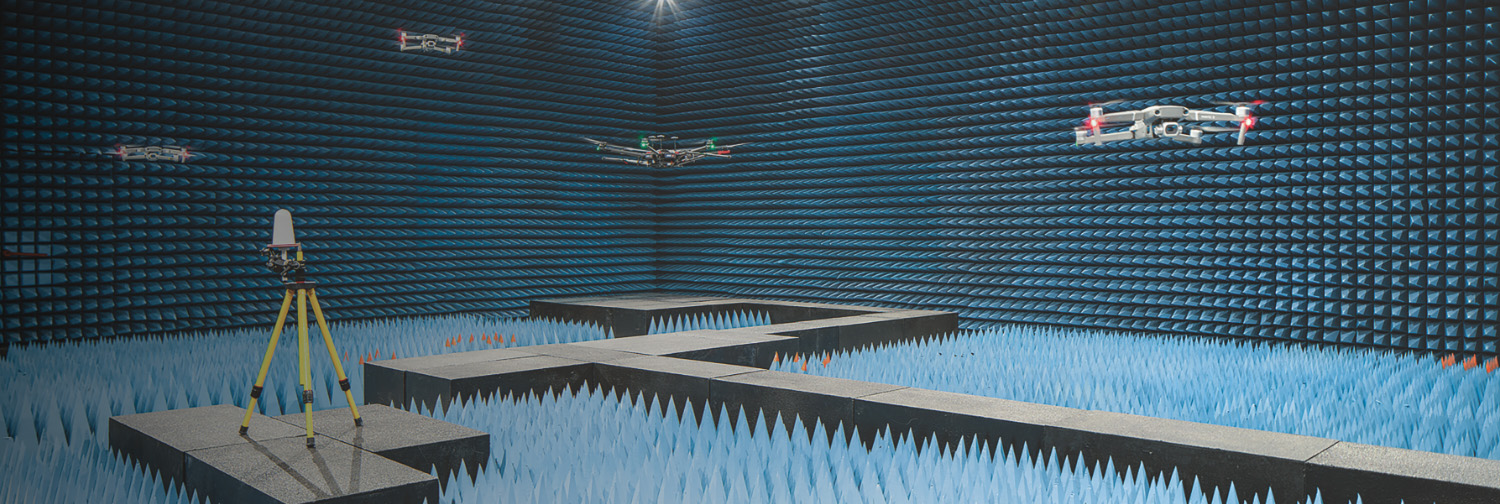
A concrete example arrived in April 2025. ETS-Lindgren designed and installed a customized RF-shielded anechoic chamber for VIAVI’s VALOR facility in Chandler, Arizona. The project supports over-the-air testing of Open RAN equipment, including Massive MIMO performance. Instead of relying solely on cable connections, engineers can examine wireless behavior inside a controlled space.
The commercial offering includes the chamber, components, measurement software, and integration expertise. That makes ETS-Lindgren a supplier to the engineering process itself. A wireless vendor needs evidence that its equipment works; a medical customer may need shielding; a defense customer may need electromagnetic protection. The underlying physics travels across those markets.
Small parts, unforgiving jobs
ESCO’s aerospace businesses bring the same attention to narrower pieces of a larger system. PTI and Crissair supply filtration and fluid-control products. Mayday makes precision components used in assemblies such as landing gear and flight controls. Customers buy against engineering requirements, with quality and delivery carrying consequences well beyond the component’s size.
The naval side is concerned with what a vessel reveals about itself. Globe supplies signature-reduction products. ESCO Maritime Solutions adds magnetic and electric signature management and power technologies for naval applications. A ship can announce its presence through more than sound. Reducing those clues is a specialized engineering assignment with a specialized customer.
Continuing operations. Excludes VACCO. Megger had not yet joined ESCO.
A $2.35 billion change of emphasis
ESCO began as an Emerson spin-off in 1990. Its present shape reflects repeated decisions about which technical businesses belong together. Bryan Sayler, president and CEO since January 2023, previously led the utility group. Under his leadership, the portfolio has moved through some sizable transactions.
In April 2025, ESCO acquired Ultra’s Signature Management & Power business, now Maritime, for approximately $472 million net of acquired cash. That July, it completed the sale of VACCO to RBC Bearings. The final annual filing reports approximately $270 million in net sale proceeds. Management described the sale as part of a shift toward selected markets with stronger growth and margin potential.
Megger raised the stakes. The April 2026 agreement valued consideration at approximately $2.35 billion, using cash and ESCO equity. The acquisition closed on October 1. Megger brings electrical testing, monitoring, and analytics across batteries, cables, relays, transformers, and other assets, widening the utility group’s products and international reach.
“This transformational transaction will expand our scale and international reach”
Bryan Sayler / Megger announcement / April 2026
The announcement targeted approximately $60 million in cost synergies within three years of closing. That remains a target. For perspective, ESCO’s entire fiscal 2025 continuing-operations sales were $1.095 billion. The Megger deal asks a much larger organization to deliver on the familiar promise of specialized products backed by technical knowledge.
The customer still has to spend
The demand picture is uneven. In fiscal 2026’s third quarter, Doble sales rose 17 percent while renewable-energy measurement business NRG’s sales fell 29 percent. Management linked weaker NRG orders to expiring U.S. renewable tax credits. Useful equipment cannot make a customer’s project economics disappear.
Competition also varies by job: OMICRON in utility diagnostics, for example, or Microwave Vision Group in RF testing. Buyers should compare technical fit, interpretation support, installation needs, and ongoing service. ESCO’s breadth offers options; the purchasing decision still happens at the application level.
For another business, the copyable idea is practical: stay close enough to the customer’s problem to sell understanding alongside equipment. It works where failure is costly and evidence is valuable. It offers less protection when budgets freeze or products become interchangeable. ESCO’s opportunity begins with the quiet question a customer asks before anything dramatic happens: what is this machine telling us?