A detector inside the James Webb Space Telescope has about four million pixels. It does one narrow job: register near-infrared light. NASA identifies its maker as Teledyne. The pictures eventually reach the rest of us as galaxies and stars; inside the instrument, the work begins with a material engineered to notice something our eyes cannot.
That small distinction explains a surprisingly large company. Teledyne sells ways to observe the world when looking harder will not help. Its catalogue stretches from thermal cameras to ocean instruments. The common customer problem is uncertainty: something important is happening, and nobody can yet measure it well enough to act.
- Specialist sensors turn heat, light and physical signals into usable information.
- Customers range from equipment makers and researchers to marine operators and defense agencies.
- Acquisitions expand the toolkit. FLIR cost approximately $8.2 billion including net debt.
- The limits are real: industrial cycles still bite, and some products get withdrawn.
Four million pixels, one narrow job
Webb’s H2RG detectors use mercury-cadmium-telluride. Altering the material’s composition changes which wavelengths it detects. This is a useful reminder that a camera’s intelligence begins before the software. Someone has to make the physical surface that notices the light.
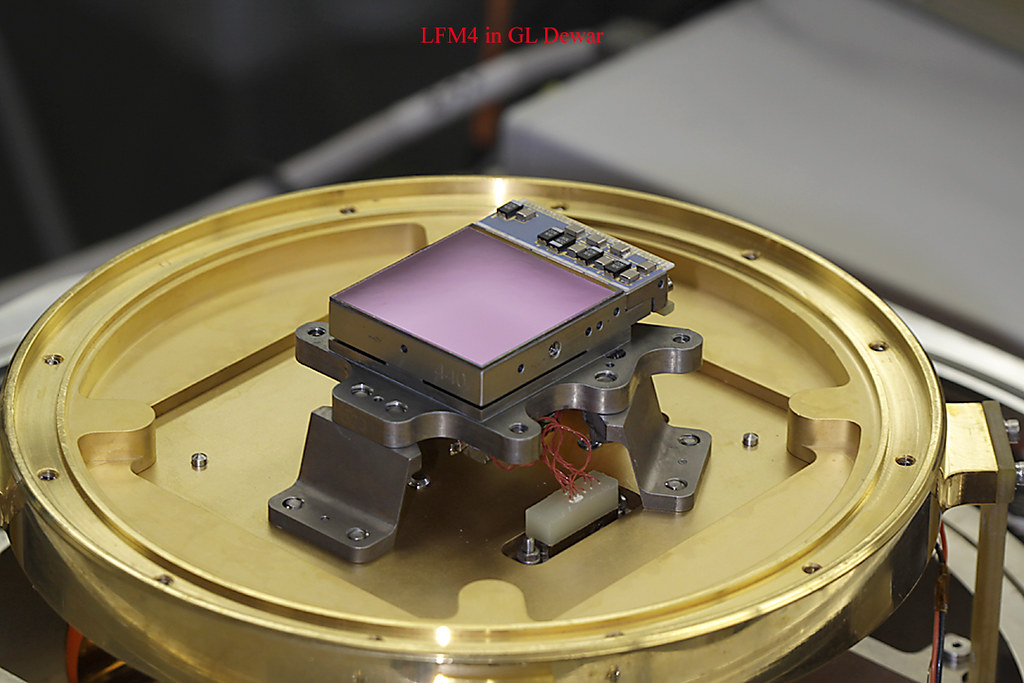
Teledyne supplied Webb’s near-infrared arrays; Raytheon supplied its mid-infrared detectors. Even this celebrated telescope contains a division of labor. Expertise has edges. A buyer needs the right wavelength, sensitivity and operating conditions, rather than a company that promises to see everything.
A telescope. A glider. The same question.
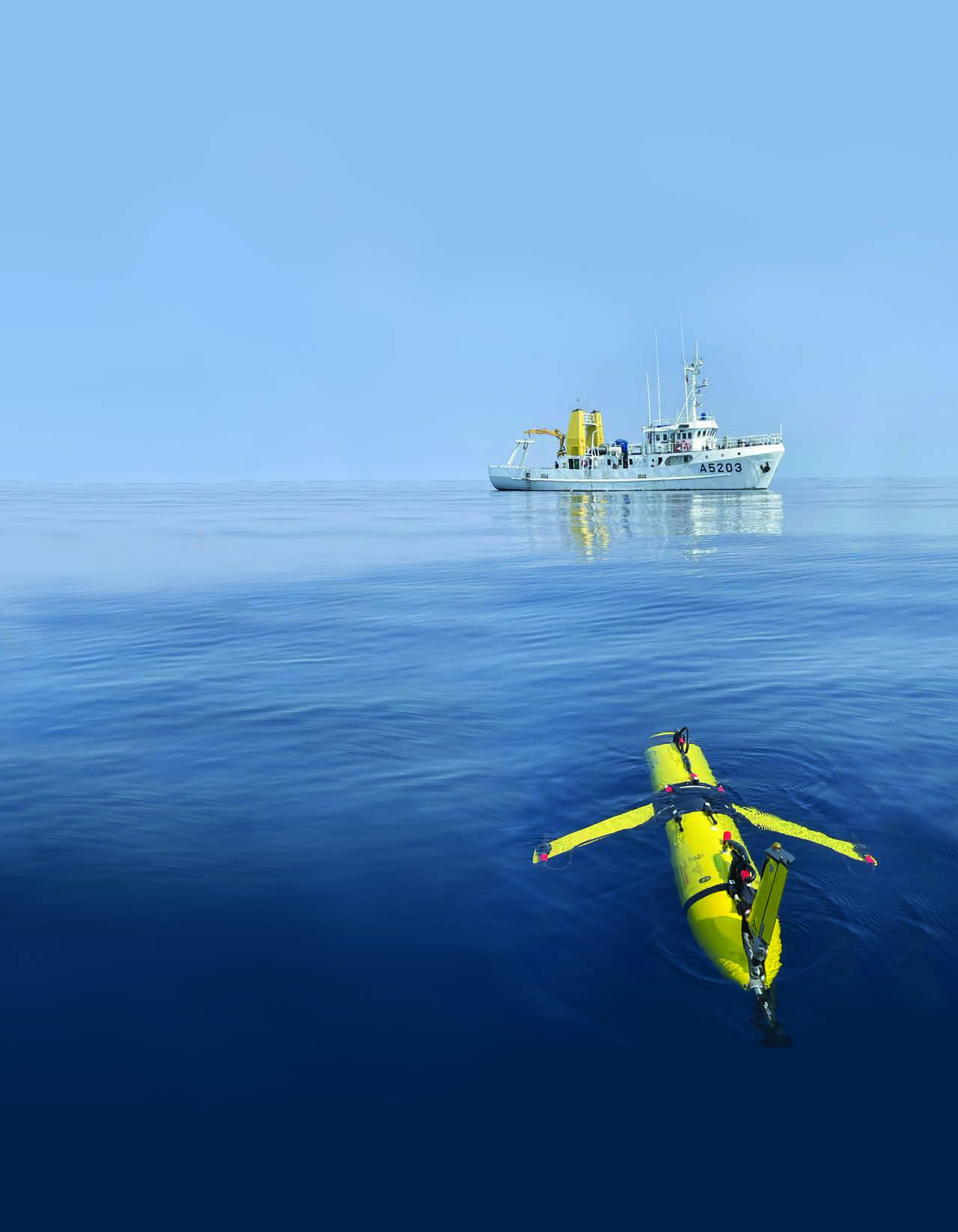
Now move underwater. Teledyne Webb Research’s Slocum glider changes its buoyancy to travel through the water, carrying instruments that sample the ocean. It surfaces to transmit data and receive instructions. Modular payloads let operators configure the measurements for their mission.
The attraction is persistence. A research vessel needs people, fuel and time at sea. A glider can continue collecting observations between visits. Its endurance depends on batteries, sensors, sampling and communications; the engineering trade is how much information to gather for the energy available.
Closer to home, FLIR’s Edge Pro connects a thermal camera to a smartphone for inspection work. A technician can examine equipment or a building through temperature differences. The customer is buying help with a maintenance decision. The camera is the route to that answer.
Those examples explain Teledyne’s market position better than the label “information technology.” It supplies physical instruments and components, alongside software and services. Manufacturers can build its sensors into their equipment. Scientists can collect observations. Operators can investigate conditions that ordinary visual inspection misses.
In July 2026, Teledyne FLIR Marine announced a five-year partnership with the Royal National Lifeboat Institution to put thermal imaging on multiple vessels. Here, the measurement problem becomes immediate: helping crews detect people and vessels in darkness or fog. The same broad technology used in inspection work serves a very different decision at sea.
The $8.2 billion addition
There are two beginnings to this story. Henry Singleton and George Kozmetsky founded the predecessor Teledyne in 1960. Today’s Teledyne Technologies became independent through a 1999 spin-off from ATI, with Robert Mehrabian as its first chief executive. Confusing the two loses the corporate reset.
The modern company has grown by developing products and buying complementary businesses. Its May 2021 purchase of FLIR carried announced consideration of approximately $8.2 billion including net debt. FLIR brought thermal imaging products and customers that complemented Teledyne’s existing sensor technologies.
FLIR transaction consideration, including net debt. This is the acquisition price, not annual revenue.
The financing matters. Teledyne issued $3 billion of investment-grade notes and arranged a $1 billion term loan; at closing, it said its permanent cash financing carried a weighted average borrowing cost below 2%. Anyone borrowing this strategy has to borrow its arithmetic, too. Cheap capital was part of the setting.
The portfolio is broader than cameras. Teledyne also sells monitoring instruments, aerospace and defense electronics, and custom engineered systems. It competes against specialists in individual markets: Cognex, for example, offers factory vision systems and software. Teledyne’s distinguishing feature is the range of measurement capabilities assembled under one owner.
The forecast met the factory floor
Variety helps when customers stop ordering. In April 2024, Mehrabian explained that industrial automation and test-and-measurement markets had weakened beyond expectations. Management had assumed no full-year growth in those product families. It now expected meaningful declines, with marine, aviation and certain defense businesses helping offset them.
“those markets weakened more than planned in the first quarter”
Robert Mehrabian / April 2024
A forecast was what broke first in this episode. The response shows the practical value of serving customers with different spending cycles. Diversification provides some room to maneuver; it does not persuade a factory to buy a camera it no longer needs.
Another boundary appeared in 2025. Teledyne FLIR OEM ended SIRAS professional drone sales effective August 31, shifting attention toward infrared imaging and decision-support software. Its product notice promised continued support through September 2027. The published explanation describes a change in priorities, without establishing that a technical failure forced it.
Sell the answer, earn the order
The lesson a smaller business can copy is to define its product around an expensive unanswered question. Then add adjacent capabilities that help answer it. Teledyne Controls’ recruitment material emphasizes accountable teams and long customer relationships - an operating preference consistent with instruments that must work beyond the demonstration.
This approach needs customers who value precision, integration and support. Where an inexpensive standard component already does the job, specialist engineering may have little room to earn its keep. Acquisitions also need financing and a defensible fit; a larger catalogue alone proves very little.
Teledyne reported $1.685 billion in third-quarter sales on October 21, 2026. Its proposed roughly $1.1 billion Varex Imaging purchase remained pending, aimed at adding X-ray capabilities. The next expansion follows a familiar question: which missing measurement is valuable enough for someone to pay to obtain it?