A can of Rust-Oleum and a commercial roof do not look like close relatives. One belongs beside a half-finished weekend project. The other belongs in a facilities budget. Follow their corporate family tree, however, and both lead to RPM International. The connection reveals something useful about this business: its products tend to become interesting precisely when something else starts going wrong.
- The work: coatings, sealants and building systems that protect, repair and finish.
- The customers: DIYers, contractors, manufacturers and people responsible for keeping buildings usable.
- The business lesson: preserve a brand’s expertise, then examine what its independence costs.
Rust. A leaking joint. A floor that cannot tolerate its next chemical spill. RPM occupies the space between buying an asset and replacing it. That makes the company less conspicuous than many of the things its products protect. It also gives its portfolio a certain coherence. The labels change; the customer’s wish to postpone an expensive failure persists.
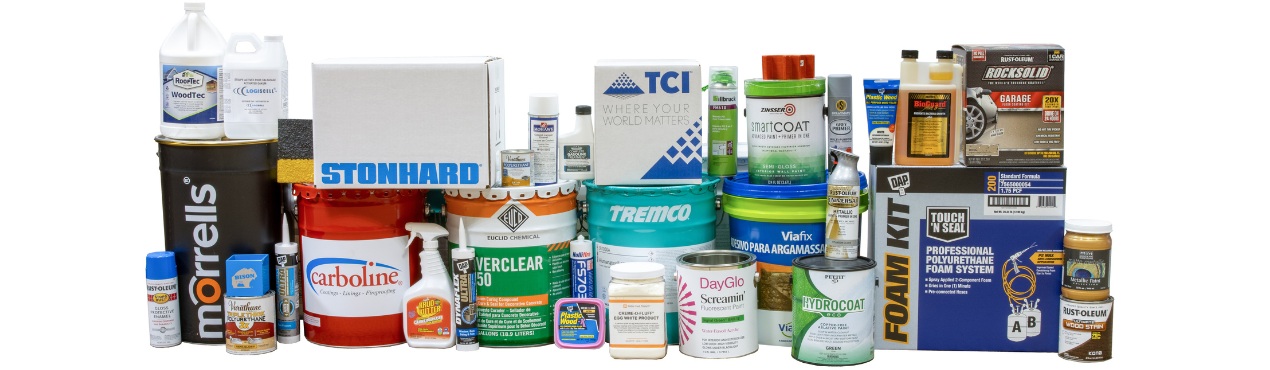
The name you buy is rarely RPM
The parent sells through its subsidiaries. Rust-Oleum supplies paints, primers, wood finishes and concrete coatings. DAP supplies caulks, adhesives, insulating foams and repair materials. These products reach professionals and householders through retail and distribution channels. For a reader with a project, the practical starting point is the relevant brand and its application instructions.
The industrial side changes the scale of the question. Carboline makes protective coatings, linings and fireproofing. Stonhard manufactures seamless epoxy and urethane flooring systems for demanding commercial and industrial environments. Tremco Roofing combines roofing products with restoration, replacement and building services. Here, expertise includes choosing a system and helping deliver the finished job.
That service element matters. A purchasing manager can compare material prices, but a facility must also consider installation, downtime and maintenance. RPM competes across overlapping markets with companies such as Sherwin-Williams, PPG and Sika. Its particular proposition is the combination of specialist brands, technical knowledge and routes to market. No single rival mirrors every part of the portfolio.
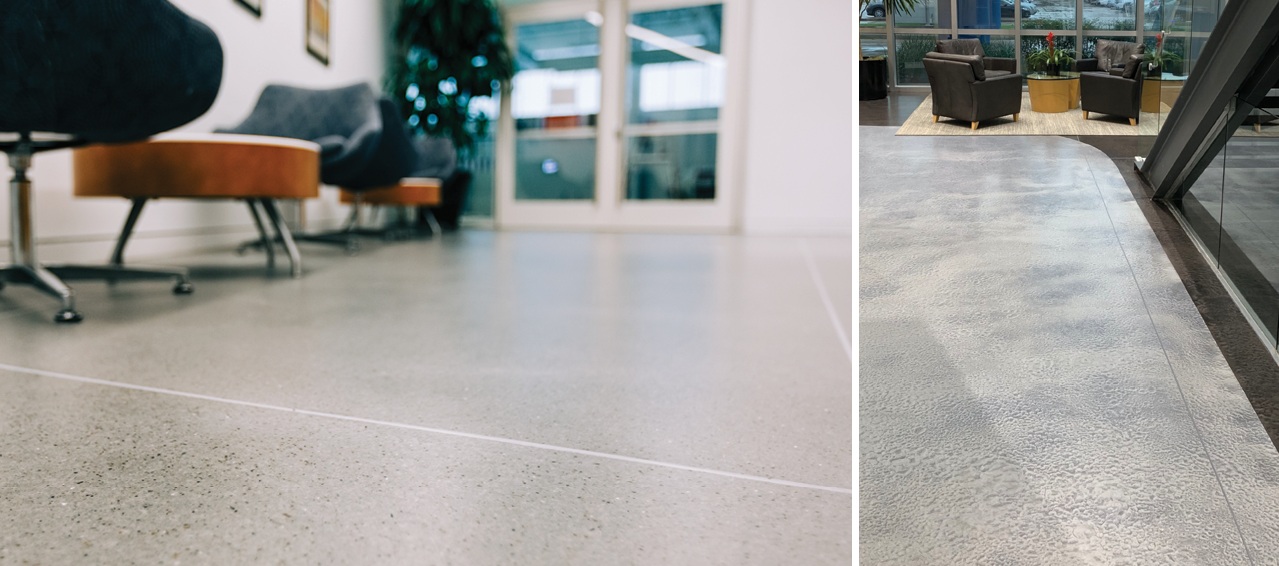
This also explains why browsing the parent company is only the beginning of a buying decision. A homeowner sealing a bathroom and an engineer specifying corrosion protection need different evidence. Product instructions, technical data and the intended surface matter more than the breadth of the corporate portfolio. The useful question is which subsidiary understands the job.
Buy the company. Keep the name.
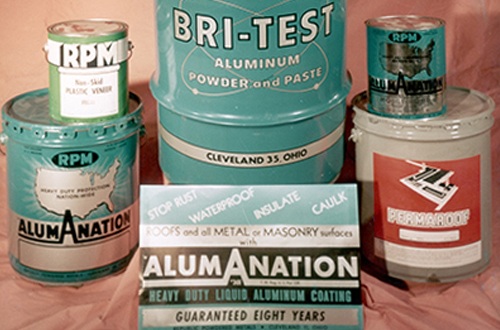
RPM began in 1947 as Republic Powdered Metals, founded by Frank C. Sullivan. Its original Alumanation roof coating remains in the portfolio. The current chairman and CEO, also Frank C. Sullivan, is the founder’s grandson. Between those two Franks sits an acquisition strategy that turned one coatings business into a collection of specialists.
The costs could be substantial: Tremco’s 1997 purchase carried a $236 million price. RPM offers acquired businesses capital, distribution and connections while emphasizing entrepreneurial continuity. The appeal to a founder is understandable. A buyer can finance the next stage without immediately erasing the identity that made the business worth buying.
But an acquisition brings its own machinery: suppliers, warehouses, accounting practices and software. Multiply that arrangement and the question becomes whether independence is protecting customer knowledge or preserving avoidable duplication. RPM’s story becomes especially instructive at the point when management started measuring that distinction.
Seventy-five systems walk into a company
A 2018 investor presentation counted 75 ERP systems, 155 plants and 218 warehouses. It described purchasing without formal centralized procurement or reporting, and participation in group purchasing was not mandatory. This was the visible weakness in the model: the businesses shared an owner, but their operating arrangements did not consistently capture the benefits of that ownership.
The documented turning point was an agreement with activist investor Elliott Management. RPM added directors, created an operating improvement committee and engaged AlixPartners. The ensuing MAP to Growth program pursued shared purchasing, manufacturing improvements and administrative alignment. The change was concrete: decisions about common operational needs would receive more coordination from the center.
in the 2018 review
at fiscal 2021 completion
At the conclusion of fiscal 2021, RPM reported $320 million in annualized savings. That figure describes a recurring savings rate; it should not be read as a pile of cash collected without expense. Facility closures, severance and implementation require resources. A later program, MAP 2025, still generated $18.2 million of restructuring expense in fiscal 2026 alone.
“Across RPM, we are collaborating more than ever.”Frank C. Sullivan / 2022 shareholder letter
RPM gives its culture an unusually numerical expression: the Value of 168, named for the hours in a week. The underlying idea is to use limited time wisely, with trust and respect for the people contributing it. That makes an interesting companion to the operating program. A company can celebrate initiative while asking its businesses to share information and resources.
A useful model still needs maintenance
The latest numbers resist an entirely tidy ending. RPM reported fiscal 2026 sales of $7.86 billion and net income of $661.4 million. In the quarter ended August 31, 2026, sales rose 4.8% to $2.22 billion. Yet construction products suffered an organic sales decline as healthcare and education projects slowed and some raw materials became harder to obtain.
That quarter also included a customer bankruptcy and a warranty charge at a small European business under review for closure. Diversification can soften a problem; it cannot remove the consequences of a particular customer, formulation or market. More efficient factories still need orders, available ingredients and products that perform as promised.
The lesson a reader can copy is organizational: identify where independence creates customer value, then measure where it creates duplicate cost. Shared purchasing is useful when businesses buy comparable inputs. Imposing uniformity on genuinely different technical requirements can destroy the expertise an acquisition was meant to secure. The boundary takes work. A sensible first step is to compare purchasing categories and operating data before deciding which decisions should move to the center. The diagnosis should precede the reorganization.
There is a smaller version of that lesson on the shelf. Rust-Oleum’s Custom Spray 5-in-1 lets users select different spray patterns, but its instructions still require surface preparation and exclude galvanized metal. A recognizable label does not suspend the conditions of a job. RPM’s brands earn their place when the product, the application and the problem fit together.
Explore RPM, Rust-Oleum, DAP and Tremco Roofing. Keep up through the newsroom, LinkedIn and X. Watch RPM’s videos or Rust-Oleum’s demonstrations.