In August 2021, Vulcan Materials bought U.S. Concrete. The transaction brought quarries, concrete operations and a management team into the Birmingham company. Among the arrivals was Ronnie Pruitt, the acquired business’s president and chief executive. On January 1, 2026, he became chief executive of the buyer. Some acquisitions take a while to reveal everything that came in the package.
The intervening years matter. Pruitt first took responsibility for Vulcan’s Southwest and Western divisions and U.S. Concrete operations. In September 2023, he became chief operating officer. By the time the board chose him to succeed Tom Hill, he had spent years working inside the business he would lead. The succession had an acquisition in its backstory, followed by a substantial period of doing the work.
His career offers a view of an industry whose products are easy to overlook. Sand, gravel and crushed stone have little interest in looking sophisticated. Getting them produced, sold and delivered profitably requires considerably more sophistication than their appearance suggests. Pruitt has approached that problem from production, sales and operations, across several employers and two CEO appointments.
Before the corner office, both sides of the business
Pruitt holds a bachelor’s degree from the University of Texas at Arlington. His earlier responsibilities at Texas Industries included vice president of cement production and vice president of sales and marketing. Before joining U.S. Concrete, he served as vice president of cement sales at Martin Marietta Materials. His résumé puts the making and the selling of materials alongside each other.
That combination is useful context for the next step. He joined U.S. Concrete as senior vice president and chief operating officer in October 2015. By April 2019, William J. Sandbrook, then chairman and CEO, was expanding Pruitt’s remit again, promoting him to president and COO and adding corporate functions supporting the operating businesses.
Sandbrook pointed to a particular piece of work: integrating Polaris Materials. U.S. Concrete had completed that acquisition in November 2017, paying approximately C$309 million in equity value. Polaris brought a Canadian aggregates business and a route into West Coast construction markets. An acquisition announcement describes what a buyer hopes to gain. Integration is the less photogenic part, when the businesses must actually work together.
Polaris’s coastal access allowed aggregates to move by sea. Its value involved both the material and the means of getting that material to customers. In Pruitt’s subsequent career, this pairing keeps returning: a resource, a market and the operating connection between them.
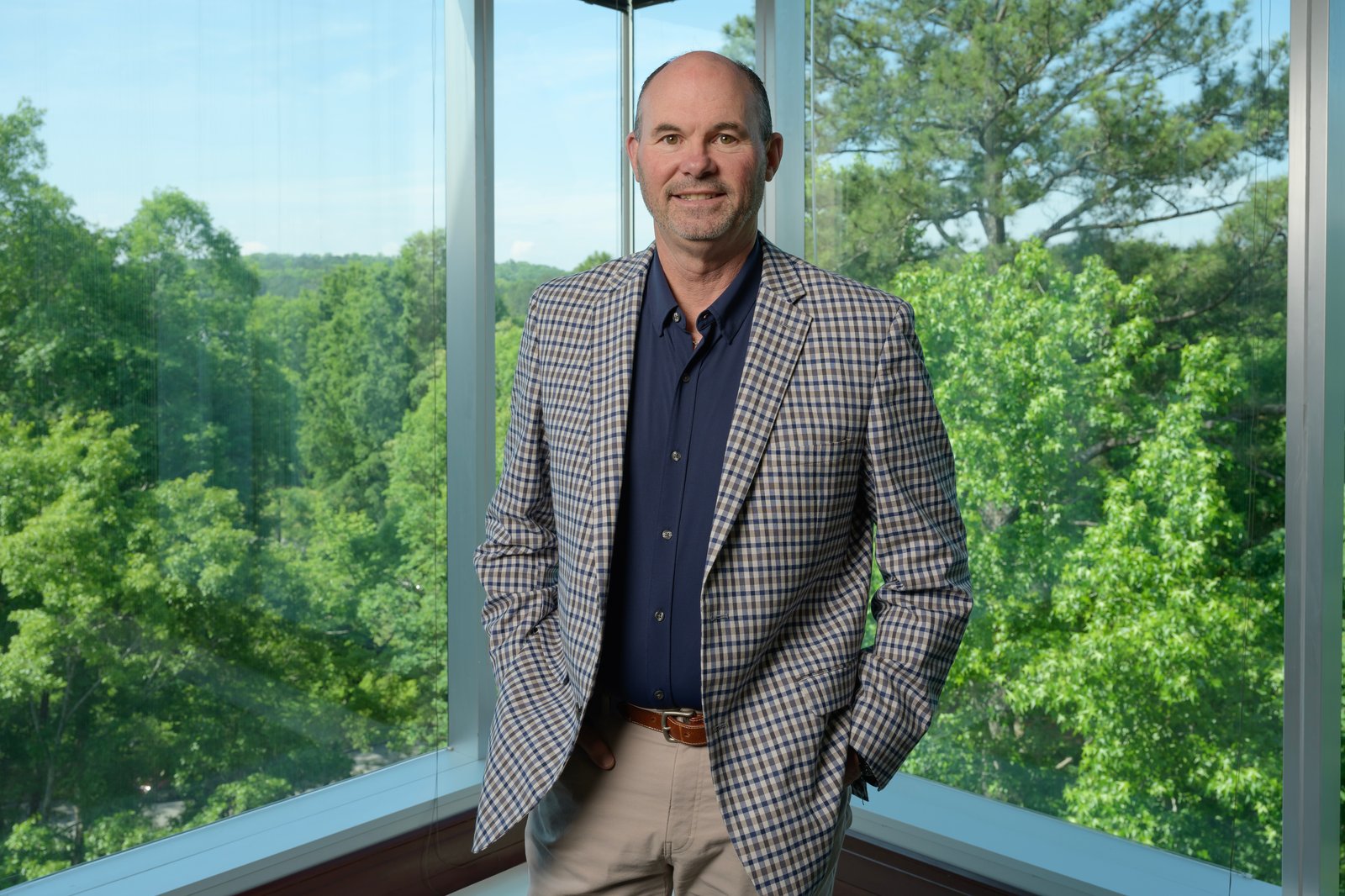
A stone-age joke, with a spreadsheet behind it
Pruitt succeeded Sandbrook as U.S. Concrete’s president and CEO on April 3, 2020. Sandbrook remained involved through a planned transition, including a consulting arrangement. The promotion followed the previous year’s expansion of Pruitt’s duties. He was taking over an organization whose operations he already knew.
On an earnings call that August, Pruitt supplied a glimpse of how he thought about running it. Asked about visibility into future business, he described the customer relationship management system associated with the company’s WheresMyConcrete technology. He wanted to follow customer trends, distinguish residential, commercial and infrastructure activity, and use that information to plan resources.
“backlog to us was stone age”
Ronnie Pruitt, U.S. Concrete earnings call, August 2020
It was a good line for an executive selling rocks. The argument behind it was practical: customer-level information could help with labor, assets and capital spending. A total backlog figure offered a broad picture; Pruitt wanted more detail about what customers were likely to do next. His interest in software was attached to decisions about the physical business.
U.S. Concrete’s full-year 2020 results subsequently reported record annual activity in its aggregates segment and increased profitability from cost containment. Pruitt credited the team’s adaptability and the work already done to change the business. These were company results, produced by many people. They also show the operating subjects occupying his first year as CEO: the mix of businesses, the cost base and execution.
The long way round to the buyer’s chair
Vulcan announced its agreement to acquire U.S. Concrete in June 2021. The agreed cash price was $74 per share, with a total equity value of approximately $1.294 billion. Hill praised Pruitt and his team’s work growing and operating the business. The two companies were already connected commercially: U.S. Concrete was an important Vulcan customer in several markets.
The acquisition closed on August 26. U.S. Concrete’s shares stopped trading on Nasdaq, and the company became a wholly owned Vulcan subsidiary. Pruitt’s next chapter took place inside a larger organization, with responsibility across major regional operations. For an executive who had helped integrate Polaris, the perspective had changed. His own company had become the acquired business.
The September 2023 COO promotion widened his responsibility to profitability across product lines, continuous improvement and expansion. Vulcan’s operating and selling disciplines were part of the brief. This placed him close to the machinery of the company’s strategy before he became its public face.
The board announced the CEO succession in October 2025. Hill would become executive chairman; Pruitt would also join the board when he took over. The arrangement preserved a working relationship between the two executives. Pruitt inherited a strategy he had helped put into practice, along with responsibility for its next results.
The distance a stone can afford to travel
A June 2026 interview explained one of his operating principles. Corporate functions were anchored in Birmingham, while execution belonged close to individual markets. Pruitt connected that structure with the cost of transporting heavy materials. Most operations, he said, served customers roughly 30 to 40 miles from a quarry.
“We’re one company, but we’re locally led.”
Ronnie Pruitt, June 2026
A national footprint consequently consists of many local relationships. The location of the rock, the location of the customer and the cost of the journey shape the opportunity. Headquarters can allocate capital across the map; the local operation still has to deliver. Geography has an unusually direct way of joining the management discussion.
His earlier remarks at U.S. Concrete had similarly linked opportunity to population and customer activity. The continuity is visible: an operating business needs to understand the demand around its assets. A promising national construction forecast still has to become an order that an individual operation can serve.
Knowing what to let go
There is an interesting turn in Pruitt’s story. A former U.S. Concrete CEO now leads a company concentrating its portfolio on aggregates. Familiarity with a product does not oblige an executive to keep every operation that makes it. In June 2026, Vulcan completed the disposal of its California ready-mixed concrete business.
At the same time, it bought southern Colorado and Dallas-Fort Worth operations from Brannan Sand & Gravel. The assets included a rail-connected quarry with long-term reserves in Lamar, Colorado, and a new distribution yard in Dallas-Fort Worth. The transactions put specific locations and equipment behind the language of expanding a geographic footprint.
They also bring the transport question back into view. A quarry adds supply. A distribution yard adds a point from which customers can be served. Together, these decisions reveal how portfolio management reaches into the daily business of moving material. Pruitt described them as aligned with Vulcan’s aggregates-led growth strategy.
Aggregates cash gross profit reported for Q2 2026. This company-defined operating measure is different from net income.
In July, Pruitt reported second-quarter aggregates cash gross profit above $12 per ton despite energy inflation and disruptive weather. Vulcan reaffirmed a full-year adjusted EBITDA outlook of $2.4 billion to $2.6 billion. The outlook remained a forecast. The results supplied an early measure of execution during his tenure, under conditions he could influence only in part.
There is room in this story for a fishing rod
Pruitt’s public activity also leaves space for less financial subjects. On LinkedIn, he praised an employee fishing tournament at Lake Hartwell, a long-running gathering for Vulcan’s North Carolina and South Carolina teams. He highlighted the company tenet “Making it Fun” and thanked the people helping create lasting family experiences.
Alongside corporate milestones, he chose to celebrate an employee tradition. A company gathering gave him an occasion to thank the people making it happen. In a career that has crossed multiple organizations, the people continuing to work together deserve some room in the frame.
In his first annual-report letter as Vulcan CEO, Pruitt acknowledged Hill’s leadership and continued guidance. He emphasized training, technology and the people carrying out the company’s strategy. Those priorities give continuity practical content. Existing operations must keep improving, new assets must fit, and teams must understand what is expected of them.
Vulcan bought U.S. Concrete in 2021. Pruitt’s subsequent rise gives that transaction a second place in the company’s history, as the arrival of a future chief executive. The next judgment will come through the work: which operations improve, which investments make sense and how effectively the company serves its customers. There is plenty to occupy him. Even the rocks have somewhere to be.