Consider the hotel breakfast. The coffee must be ready before the guests are. Someone has to buy it, store it, measure it and persuade a machine to turn it into something familiar. A failed brewer can undo every careful decision about the beans. Royal Cup has spent decades making those surrounding jobs part of its business.
- The offer: coffee and tea, plus the equipment, delivery and support to serve them.
- The buyer: hotels, restaurants, offices, convenience stores and other beverage businesses.
- The change: new ownership in 2025, followed by the Farmer Brothers acquisition in 2026.
That makes this Birmingham company an interesting study in what customers actually purchase. Flavor matters. So does having a working dispenser when breakfast starts. Royal Cup connects the two, making its place in the market easier to understand through a loading dock than a cafe counter.
The grocers who were left waiting
Its origin is suitably picturesque. Henry T. Batterton began selling coffee from a horse-drawn wagon in 1896. But the revealing episode in the company’s history comes during World War II. Coffee was scarce. Batterton Coffee Company concentrated supply on several large customers. Neighborhood grocers were left without it, and the relationships suffered.
When an investor group led by William E. Smith bought the business in 1950 and renamed it Royal Cup, winning those grocers back became a deliberate task. The company’s own account preserves the mistake. It is an unusually useful detail in a corporate history: allocation decisions have consequences long after the shortage ends.
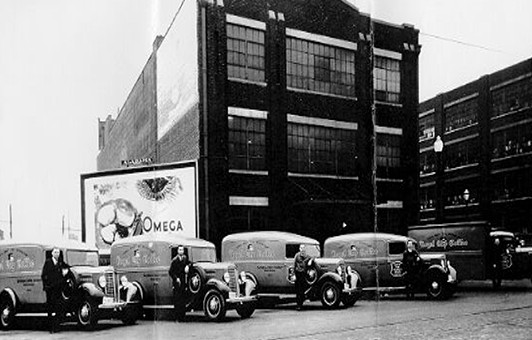
A dedicated hotel-and-restaurant route followed in 1954; an office coffee route arrived in 1968. Those steps moved Royal Cup closer to places where coffee is part of another business’s promise. The guest remembers breakfast. The hotel has to remember the delivery schedule.
A bag of beans has a lot of dependencies
Royal Cup calls its integrated approach Blended Solutions. The components are straightforward: products, equipment, distribution and service. It supplies beverages and accompaniments, helps select brewing equipment, gets orders to customers and supports the program. Staff training and account management sit alongside equipment maintenance.
The catalog makes room for different economics. Prideland is the value-focused range, with formats including portion packs, larger urn packs and liquid concentrate. Signature provides adaptable coffee and tea selections. H.C. Valentine supplies small-batch coffees. ROAR addresses single-serve preparation. A banquet and an office kitchen can call the same company while ordering quite different things.
The distinction is useful when comparing suppliers. A local roaster may provide the taste and personal relationship an independent cafe wants. An integrated supplier becomes more attractive when a buyer needs beverage supply, equipment support and delivery across multiple locations. Royal Cup’s proposition is the coordination of those jobs.
Its hospitality motto is compact:
“Serve Them Well.”Royal Cup’s hospitality motto
That language also describes the work. The company’s lodging offering includes hands-on training and customized marketing support. In offices, its published case-study menu addresses problems such as multiple vendors, inconsistent quality and administrative strain. These are procurement headaches with coffee attached.
Two million pounds, same familiar taste
Contract manufacturing reveals another side of the company. In one published case, an unnamed coffee-shop chain had grown beyond its own roasting capacity. The product was already successful. The immediate bottleneck was producing enough of it.
Royal Cup brought samples into its lab, worked on matching beans and roast settings, and arranged sourcing and packaging. Its plant accommodated an additional two million pounds of coffee. Deliveries were prepared for the customer’s designated carriers. The assignment was to reproduce a familiar flavor at greater volume.
Additional coffee roasting and packaging accommodated for an unnamed customer.
For a growing brand, outsourcing production can postpone the need to build a larger plant. The tradeoff is dependence on another manufacturer’s execution. Matching the blend, agreeing on specifications and checking repeatability become central buying decisions. A successful first tasting is only the beginning of that relationship.
The same attention to the work behind the drink appears in Royal Cup’s expanded cold-brew range, announced in March 2026: five flavors in eleven-ounce cans, from black coffee to flavored lattes. A hotel can stock a grab-and-go refrigerator; an office can offer cold coffee without adding another brewing routine.

The next route comes with a balance sheet
The Smith-family era now has a successor. Braemont Capital completed its acquisition of Royal Cup in November 2025. In May 2026, Royal Cup completed its own purchase of Farmer Brothers, bringing another coffee roaster, distributor and equipment-service business into the group under chief executive Chip Wann.
The merger filing put aggregate consideration for shares and equity awards at approximately $28.3 million, or $1.29 per share. Separately, June’s financing announcement described a $192 million senior secured credit facility: a $155 million revolver and a $37 million term loan, supporting the acquisition and working capital. Credit capacity and the price paid to shareholders measure different things.
The operating logic is route density: more customers within a delivery area can make the infrastructure work harder. That is a rationale for combining businesses, rather than proof that savings have arrived. Integration still has to preserve the service customers bought.
Buy the breakfast, then choose the coffee
The practical lesson travels beyond beverages. Look at what customers must do before your product becomes useful. Royal Cup has made several of those tasks part of the offer. Buyers can copy the method by comparing the full operating job: consumption, preparation time, delivery reliability and repair arrangements.
That calculation changes with the setting. A cafe built around its own roasting identity may prefer tighter control. A low-volume office may need a simpler arrangement. A hotel should ask whether the proposed equipment and service coverage fit its actual breakfast traffic. The coffee earns its place one cup at a time; the surrounding operation has to earn its place every morning.