The first thing Bäckerhaus Veit sold was bread. The more important thing it eventually sold was time. A grocer could thaw a loaf and put it in the deli. A restaurant could finish a roll near service. A distributor could move something with a useful shelf life rather than race a clock that began the moment it left the oven. The customer got crust, aroma and a story about European craft; the operator avoided staffing a miniature bakery.
That trade is the heart of the Mississauga company. Bäckerhaus Veit makes sandwich breads, craft loaves, buns, rolls and soft Bavarian pretzels for retail and foodservice customers across North America. Some products wear its name. Others appear under a customer's label. They can arrive frozen, par-baked or fully baked, depending on where the final bit of theater should happen.
The umlaut and old-world recipes make for good packaging. But the business is less romantic and more interesting: a specialized manufacturer sitting between the industrial loaf and the local baker, using cold-chain logistics to make “artisan” repeatable.
The week that wouldn't behave
Sabine Veit founded the Canadian business in 1987, when she was 26. Her family had baked in Germany for generations. The first setup included retail shops and a 7,000-square-foot plant making European breads, cakes and pastries for fresh delivery to local retailers. Demand came quickly. So did the operating headache.
Veit later described producing roughly one-third of the week's volume near the beginning and two-thirds toward the end. Fresh bread made the imbalance unforgiving. Labor, ovens and routes had to stretch for the peak, then sit looser at the trough. Growth was not fixing the model. It was making the model's least friendly feature larger.
“I decided I needed a shelf life for our products and researched the frozen end of it.”Sabine Veit, founder
That was what failed first: not the bread, and not demand, but fresh delivery as the vehicle for Veit's ambition. She moved toward wholesale in the early 1990s and built a roughly 34,000-square-foot frozen facility in 1993. The company also pruned its menu. Croissants and danishes went. Bread, rolls, buns and pretzels stayed. The decision was both a manufacturing simplification and a positioning bet.
How to put a bakery in a box
Frozen and par-baked bread solved two problems at once. For Bäckerhaus Veit, it smoothed production and opened a much larger map. For buyers, it moved the final decision about freshness closer to demand. An in-store bakery could thaw and display. A cafe could finish smaller batches. A hospital kitchen or restaurant could offer a distinctive roll without recruiting, training and scheduling bread specialists.
Mix, ferment and shape with a controlled recipe.
Freeze or par-bake before the freshness clock wins.
Distribute across a continent, not a morning route.
Thaw, display or bake close to customer demand.
There is a useful distinction here. Bäckerhaus Veit did not need to automate the customer's perception of craft. It needed to standardize the invisible work around it. Trade coverage described semi-automated bread lines beside a handmade line. The facility could deliver consistent output while trained bakers retained control over products where shaping and method were part of the value.
By 2015, after a reported $20 million capital investment, the company moved from a 50,000-square-foot Woodbridge site into a renovated 150,000-square-foot facility in Mississauga. The cost bought capacity, freezers, food-safety systems and the ability to serve larger customers. The more decisive investment, however, had been made years earlier: choosing a format that could travel.
The customer is not a bread tourist
The typical buyer is an operator with a practical problem. A supermarket wants its deli to feel more premium. A burger chain wants a bun customers notice. A cafe wants dependable ciabatta. A restaurant wants a soft pretzel without making dough at dawn. Bäckerhaus Veit supplies the object, but its economic pitch is lower labor, less waste, consistent portions and a shorter path from freezer to sale.
That explains the private-label model. Instead of insisting that every loaf advertise the manufacturer, the company helps retail and foodservice clients develop products, packaging and merchandising under their own brands. In one sense, Bäckerhaus Veit disappears. In another, it becomes difficult to remove: the recipe, production plan, packaging and supply rhythm are now part of the customer's offer.
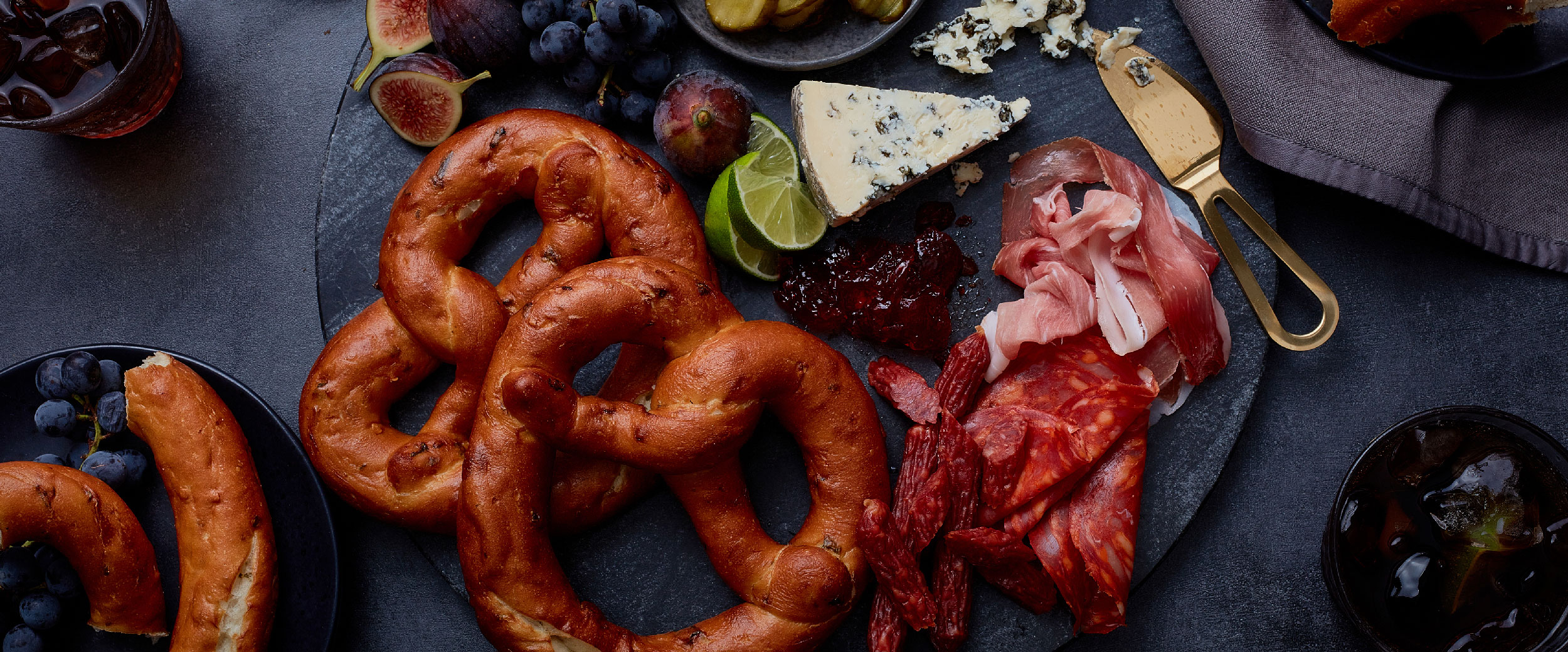
Its named catalog covers sourdough and multigrain sandwich loaves, pumpernickel boules, potato-scallion bread, ciabatta rolls and bistro buns. Pretzels perform several jobs - twist, bite, hamburger bun, finger roll and demi-baguette. The variety lets buyers create menu differentiation without creating a new production system for each idea.
The certifications are part of the product, too, even though nobody eats the paperwork. The company publicly lists kosher and vegan credentials and has promoted repeated top-tier BRC food-safety ratings. For a national buyer, those marks reduce the number of questions that must be answered before a loaf can enter a planogram or a hospital menu. They also make one production partner usable across more dietary programs. A neighborhood bakery may win on intimacy; a certified wholesale plant wins by being legible to procurement.
Two owners and a strategic pretzel
In 2018, the same year Bäckerhaus Veit was named one of Canada's Best Managed Companies, Swander Pace Capital acquired it for an undisclosed price. The investment firm later said the bakery expanded its products and distribution, refreshed branding and packaging, and reinvested in manufacturing during its ownership.
The most legible move came in 2019: Bäckerhaus Veit acquired Prop & Peller, a specialist in authentic Bavarian soft pretzels for foodservice. It was not a random extension into snacks. It deepened a product the bakery already understood and strengthened a channel it already served. Same buyer, adjacent freezer space, more reasons to open the catalog.
PNC Riverarch Capital bought Bäckerhaus Veit from Swander Pace in January 2023, again without disclosing terms. The bakery joined a portfolio that included Costanzo's Bakery, a Buffalo wholesale bread-and-roll supplier. The attraction is easy to infer: complementary products, neighboring geography and overlapping retail and foodservice routes. Today, Bäckerhaus Veit remains privately held and sells across North America.
The playbook worth stealing
First, find the constraint that turns healthy demand into bad operations. Veit's early problem was not too few orders; it was too many orders arriving in the wrong shape across the week. A longer-lived format converted a scheduling problem into distribution reach.
Second, focus before expanding. Removing pastries narrowed the production puzzle and made “European-style bread and pretzels” a clearer reason to call. Only after the core traveled well did the catalog stretch across dozens of formats.
Third, let customers own the visible brand if that reduces their risk. Private label gave retailers a differentiated bakery program while Bäckerhaus Veit supplied the hard-to-copy infrastructure. This is a useful model anywhere the buyer values control of the shelf more than the supplier values fame.
Finally, preserve craft where the customer can detect it. Time, temperature, fermentation, shaping and finish matter. Repetitive movement, packaging and freezing can be systematized. The line is not philosophical. It is sensory.
Copy this when…
- Demand is uneven but predictable in aggregate.
- Your product can survive a pause without losing its promise.
- Customers lack skilled labor or production space.
- Private label opens distribution faster than brand building.
Skip it when…
- The cold chain costs more than the margin can carry.
- Local, same-day freshness is the entire reason to buy.
- Volume is too low for dedicated manufacturing.
- Freezing damages the texture customers are paying for.
Where the loaf lands
Bäckerhaus Veit occupies a busy middle of the bakery market. It competes with multinational frozen-bakery groups, branded artisan suppliers, regional wholesalers and the option of baking in-house. It cannot win every contest. A neighborhood bakery can be fresher and more local. A giant manufacturer can be cheaper. A restaurant with skilled bakers can make something more singular.
Its advantage appears when a customer wants several things at once: a European cue, consistent quality, customization, food-safety credentials, continental distribution and manageable labor at the point of sale. Kosher and vegan certifications widen the usable menu. Retail-ready formats reduce handling. Private label makes the buyer look like the hero.
There is tension in that position. “Artisan” becomes suspicious when the building is 150,000 square feet, and industrial consistency can sand away the irregularities that make bread feel made rather than issued. Bäckerhaus Veit's answer is not to deny the machinery. It is to divide the job: automate the volume, retain trained baking judgment, and give customers enough finishing control to restore immediacy. Whether that balance works is ultimately decided at the cut face - crumb, crust and aroma are harder to spin than a label.
The business began with a family recipe, but recipes are rarely moats on their own. Bäckerhaus Veit's more durable knowledge is knowing how fermentation, freezing, packaging and final bake interact - and how to translate that system into something a deli manager or chef can actually use. The crust gets the photograph. The operating model earns the reorder.
Go deeper