If you have eaten peanuts from a familiar blue tin in Canada, scooped trail mix from a bulk bin, or picked up a supermarket snack wearing the store’s own label, there is a decent chance Johnvince has been somewhere in the chain. The Toronto company is easy to miss because it often succeeds under somebody else’s name. It sources ingredients, roasts and seasons nuts, develops recipes, packs products, tends brands and moves the finished bags, jars, tubs and tins into stores.
That invisibility is not a branding problem. It is the strategy. Johnvince does not have to make one logo famous enough to support the whole enterprise. It can sell an iconic licensed brand, build its own labels, manufacture a retailer’s private brand, fill a bulk department and supply foodservice customers - all while sharing the expensive machinery underneath.
A roasting pot with an unusually long shadow
The story begins in early-1970s Toronto, where Vincenzo and Irma Pulla roasted nuts at home. The company dates its formal founding to 1973 and says it introduced Canadian shoppers to the bulk-food concept the following year. That idea sounds ordinary now. At the time, letting people choose exactly how much they wanted was a genuine retail format innovation: more variety for the store, less packaging, and a flexible ticket for the shopper.
Their son Joe learned the business young, helping at a weekend market, then joined full time after high school. By the late 1980s, Johnvince had expanded from retail into wholesale distribution. The move mattered because it changed the ceiling. A successful shop can serve a neighbourhood; a distribution network can serve every shop that wants the category.
The company’s quiet trick was to turn every new capability into another way for a customer to buy.From retail to wholesale, brands, private label and foodservice
Then came the brand deal. In 1995, Johnvince secured the Canadian Planters business from Hershey, giving the company exclusive rights to an old, widely recognized snack name. Public descriptions now call those Canadian rights exclusive and perpetual. Johnvince was no longer simply the operator behind a bin. It was also the steward of Mr. Peanut north of the border - responsible for making the product, protecting the familiar experience and keeping a century-old brand useful to modern retailers.
The real product is optionality
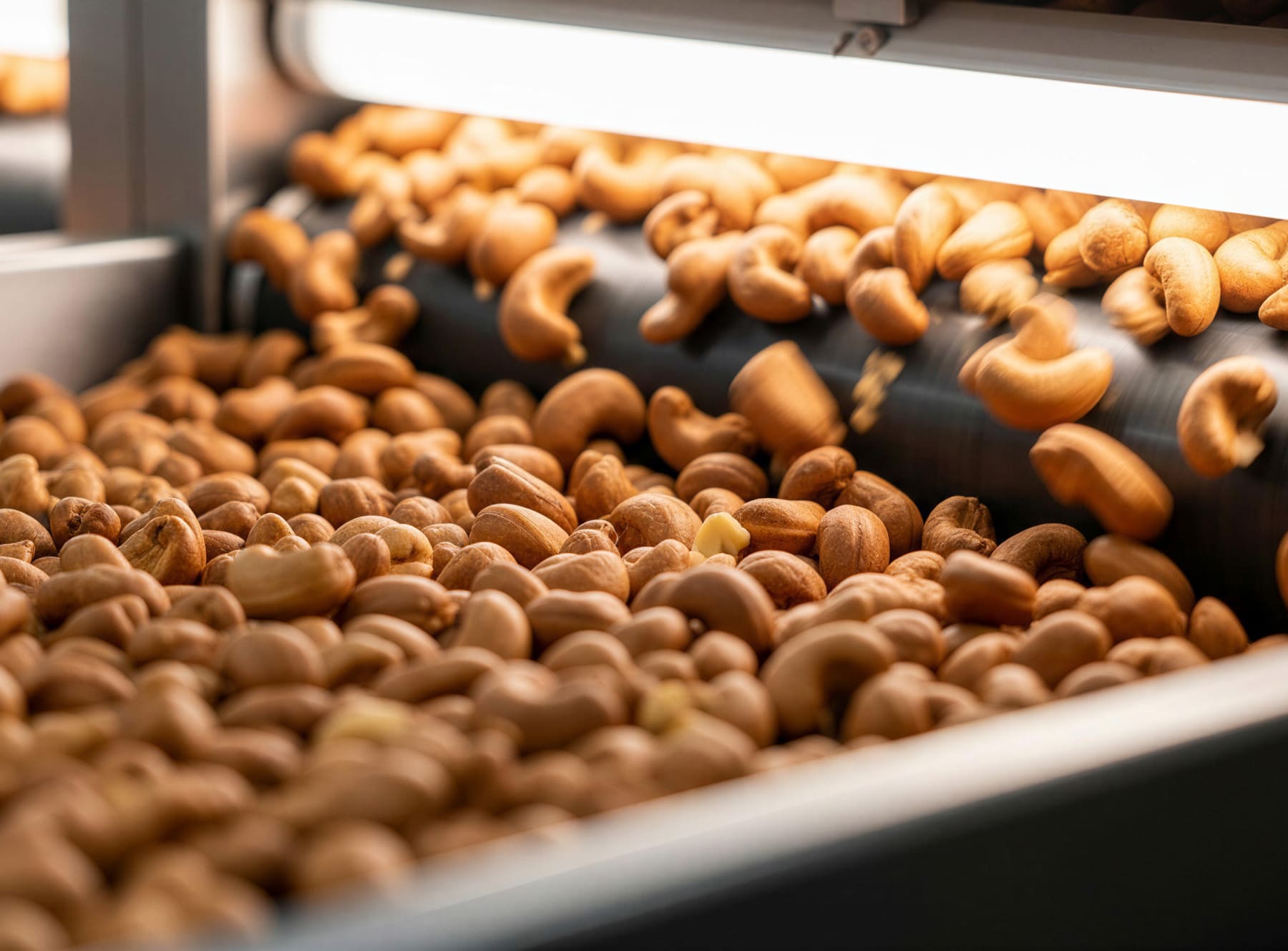
Johnvince today describes a network of 10 facilities across Canada and the United States, more than 100 packing lines and roughly 1.7 million square feet. Its Toronto flagship alone covers about 880,000 square feet. Other sites specialize: chocolate production in Belleville, candy in Cobourg, processing and packing in Mississauga, and U.S. operations in Ohio, Dallas and Comanche, Texas.
Scale alone is not the point. A giant plant that does one thing is a large bet on one thing. Johnvince’s network is built around formats and categories that touch each other: nuts and salty snacks, candy, chocolate, fruit bites, popcorn and brittles. The package can be a bulk bin, tub, bag, jar or seasonal tin. The label can belong to Johnvince, Planters, the retailer or another customer. That creates an industrial version of optionality.
For a grocery buyer, the problem being solved is coordination. Launching a private-label snack can otherwise mean juggling an ingredient supplier, product developer, food-safety team, co-packer, package vendor and distributor. Johnvince offers to compress those handoffs. Its public pitch is end-to-end: insight, formulation, sourcing, processing, packing and logistics. The buyer gets fewer calls to make and one party accountable for more of the result.
For consumers, the benefit is less visible: familiar quality, broader selection and products shaped for specific shelves or dietary requirements. Certifications vary by facility and item, but the company lists peanut-free and gluten-free options, plus halal, kosher and organic capabilities. It also points to traceability, automated sorting and a chemical-free pasteurization process. In food manufacturing, those details are not brochure garnish. A retailer’s appetite for novelty ends exactly where recall risk begins.
A house with more than one front door
Planters may be the best-known name, but Johnvince’s house includes Royal Nuts, Saxon Chocolates, R2-Delix, Reddi Snack, Donini, David Roberts, Candy Kingdom and others. The portfolio covers a useful price-and-occasion ladder: everyday jars and grab-and-go mixes, peanut-free premium nuts, colourful candy tubs, giftable chocolate and the products that carry no Johnvince branding at all.
This is where the company differs from a conventional consumer packaged-goods player. A pure brand owner wins through demand and outsources much of the factory. A pure contract manufacturer owns the factory and remains largely invisible. Johnvince sits in the middle. It can learn from its own brands, apply that knowledge to customer programs and keep equipment busy across multiple channels. Retail relationships generate information; manufacturing turns information into products; distribution gets those products back to retail.
TorQuest Partners invested. Joe Pulla and senior management stayed in charge and remained significant shareholders.
The 2022 TorQuest investment was the clearest public signal that Johnvince wanted a larger map. TorQuest invested from its fifth fund, Joe and his management team continued to run the company, and they remained significant owners. This was growth capital paired with continuity, not a public handover of the keys.
The next moves followed in 2023 and 2024. Johnvince says it acquired David Roberts Foods in Canada and two established Texas businesses, Durham-Ellis Pecan and Hines Nut Company. Durham-Ellis traces its roots to 1928 and processes pecans, dried fruit, candy and mixes in Comanche. Hines, founded in 1925, supplies nuts and dried fruit from Dallas. The acquisitions added customers, category knowledge and U.S. production rather than a random new aisle.
From family company to family-founded platform
Johnvince’s history reads less like a dramatic pivot and more like a chain of expanding constraints. A home roaster needs customers. A retailer needs supply. A wholesaler needs scale. A brand steward needs marketing and quality control. A private-label partner needs speed, confidentiality and packaging range. Each stage exposed the next missing piece.
What appears to have changed management’s mind in 2022 was opportunity, not distress. Joe Pulla said it was the right time and TorQuest the right partner to build from what the team had created. The company then crossed from a heavily Canadian footprint toward a more deliberate North American platform. In 2025, it rolled out a new corporate identity that finally said the quiet part aloud: “Johnvince Company” is the house, not merely one food label.
A brand earns attention. Infrastructure earns repeat orders when the attention moves somewhere else.The durable part of the snack aisle
The culture pitch also matured with the platform. Johnvince publishes five values: lead by legacy, obsess over customers, act entrepreneurially and pursue results, own decisions, and win together. Those can sound like standard office-wall nouns until paired with the operational evidence. The company has repeatedly appeared in Canada’s Best Managed Companies’ Platinum ranks and received manufacturing-safety recognition in 2023, 2024 and 2025. In a plant, safety culture is measurable in training, risk assessment, incident prevention and uptime. It is hard to fake for long.
Copy the sequence, not the square footage
The useful lesson is not “buy ten factories.” It is to notice the sequence. Johnvince began with one product capability, found a retail format that made it useful, added distribution, secured a major brand, then broadened into adjacent categories and customer models. Each layer gave the next one a reason to exist.
The Johnvince playbook, pocket-sized
- Start with one repeatable production skill, not a sprawling catalogue.
- Offer the same capability in the formats customers already buy.
- Own an annoying handoff - packaging, compliance or distribution.
- Add adjacent products that reuse customers, equipment and know-how.
- Use brands for demand and private label for capacity and relationships.
A smaller operator can steal the logic. A coffee roaster might add office subscriptions, hotel formats and retailer private label before buying unrelated beverage companies. A skincare lab could offer formulation, compliance and short-run packing before launching its tenth house brand. The question is always the same: which adjacent problem can you solve using assets already paid for?
Customers want variety, production rewards scale, formats share equipment, and reliable compliance is a buying advantage.
Adjacencies require unrelated factories, shelf life is too short, demand is tiny, or complexity grows faster than shared capability.
This model is not invincible. Commodity inputs swing in price. A broad portfolio can become operational clutter. Retailers hold bargaining power, private labels can pressure margins, and acquisitions can create a patchwork of systems. The very network that makes Johnvince useful also demands exacting food safety, traceability and quality control. A single weak plant can damage trust earned elsewhere.
But the market position is coherent. Johnvince sits between global ingredient supply and the North American snack shelf, serving brands, merchants and eaters without depending on only one of them. Its competitors include private-label specialists, bulk suppliers, branded giants and retailers willing to manage sourcing themselves. Its defense is the cost and patience required to reproduce the whole loop.
Fifty years after that first roasting pot, the most interesting thing about Johnvince is still not the nut. It is the number of useful jobs the company has learned to do around it - and how rarely the person opening the bag needs to know.