A grown man walks into a coffee shop and orders a Teddy Bear. Bob Fish considers this a small victory. In the business he helped build, the menu was supposed to make people smile before the caffeine had a chance. A customer should be able to buy a drink without feeling that he had failed an oral examination in Italian.
Fish understood the appeal of a friendly counter. He and Mary Roszel opened their first East Lansing coffee shop in March 1995, in a former Arby’s. He made drinks himself. Decades later, his attention has travelled in the opposite direction from the customer queue: back through the roaster, the exporter and the mill, to the person growing the coffee.
That journey has given the BIGGBY COFFEE co-founder and co-CEO a second enterprise, One BIGG Island in Space, co-founded with his wife, Michelle. It has also given him a deadline. The aim is for BIGGBY’s coffee to be entirely Farm-Direct by 2028. Getting there involves visiting farms, agreeing prices and building relationships sturdy enough to survive the coffee market. Some have survived. Some have ended. The Teddy Bear business has become considerably more complicated.
Pancakes before the first pour
Fish’s route into coffee ran through restaurant work. Originally from Augsburg, Germany, he attended the American School in London before studying hospitality at Michigan State University. In Michigan, he worked at a breakfast restaurant to help pay for college, eventually managing it and acquiring an ownership stake. Before he had a coffee brand, he had the education that comes with getting other people’s breakfast right.
In 1993, specialty coffee caught his attention. He and Roszel sold their restaurant interests and went to Seattle to investigate the business. The opportunity was something they could bring home: a café in a college town, with good coffee and a welcome that did not require advance knowledge of café etiquette.
Roszel belongs at the beginning of this story. She helped conceive the brand, opened the first shop with Fish and worked behind its counter. When she retired in 2012, Fish praised the hours and work she had put into it. The familiar shorthand of a founder’s journey can make the first counter look lonely. This one was shared.
“You can’t order a drink like that without smiling.”
Bob Fish, on ordering a Teddy Bear
The joke had a business purpose. An approachable menu invited people to participate. Fish was building a place where knowing what you liked mattered more than knowing what to call it. A little silliness was useful. Coffee could remain a serious product without turning every transaction into a solemn occasion.
The job interview that went for a walk
Michael McFall entered the company as a barista at the first store. When Fish needed a manager for the next stage of the business, Roszel suggested interviewing him. Fish and McFall began talking, then went walking through East Lansing and Michigan State’s campus. The conversation expanded well beyond the job description.
They returned with the beginnings of a partnership. The company’s current account places the walk in 1997. Its appeal as a founding anecdote is easy to understand: an interview for a management job became an agreement to build a business together. There are worse outcomes for an afternoon stroll, although few require quite so much subsequent paperwork.
The expansion acquired a formal structure in June 1998, when Fish, Roszel and McFall formed the franchising company, Global Orange Development. The first franchise opened in Okemos, Michigan, on August 9, 1999. Fish also sought advice from Mary Ellen Sheets, whose Two Men and a Truck business had shown that a franchise system could grow from East Lansing.
Fish and Roszel open the first café.
The first franchise opens in Okemos.
Bob and Michelle establish OBIIS.
The target for 100% Farm-Direct coffee.
Franchising spread the work among local owners. It also multiplied the consequences of purchasing decisions. A change in the way coffee reached the company could eventually affect far more than the stockroom of the original shop. The same system that helped repeat a familiar customer experience would give Fish a way to repeat a different relationship with growers.
A planet-sized name, a farm-sized task
One BIGG Island in Space began in 2018. Its name looks upward, to the view of Earth associated with the Apollo 8 mission and William Anders’s Earthrise photograph. Its daily work looks down: at land, coffee plants and the conditions under which people produce the beans. The cosmic title comes with a decidedly terrestrial itinerary.
Michelle is a co-founder and a central storyteller in the project. In 2023, she described beginning without knowing exactly how they would accomplish the mission. That admission matters. Years of selling coffee did not automatically equip them to redesign its purchase. The couple had to learn from producers, visit prospective partners and revise their understanding along the way.
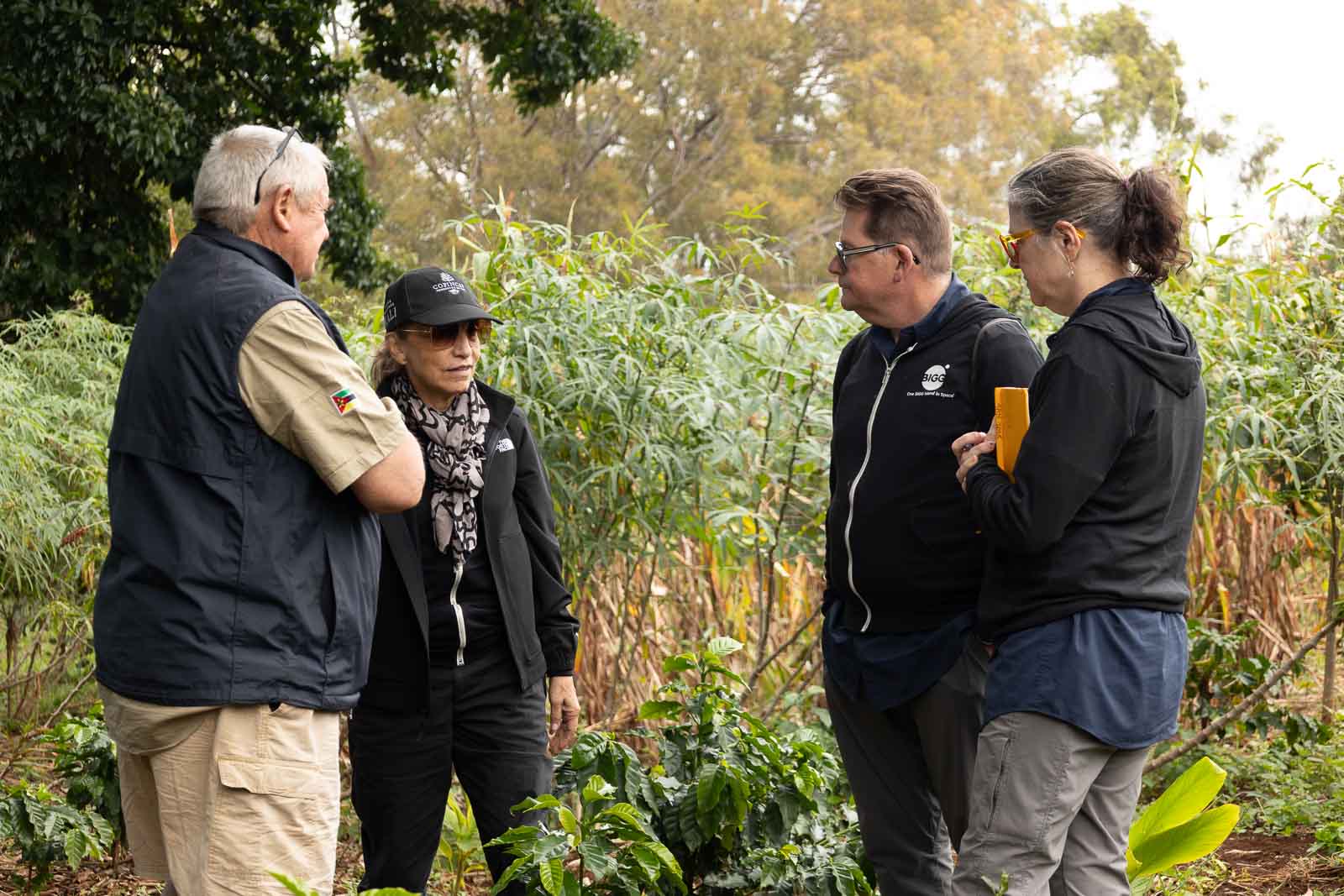
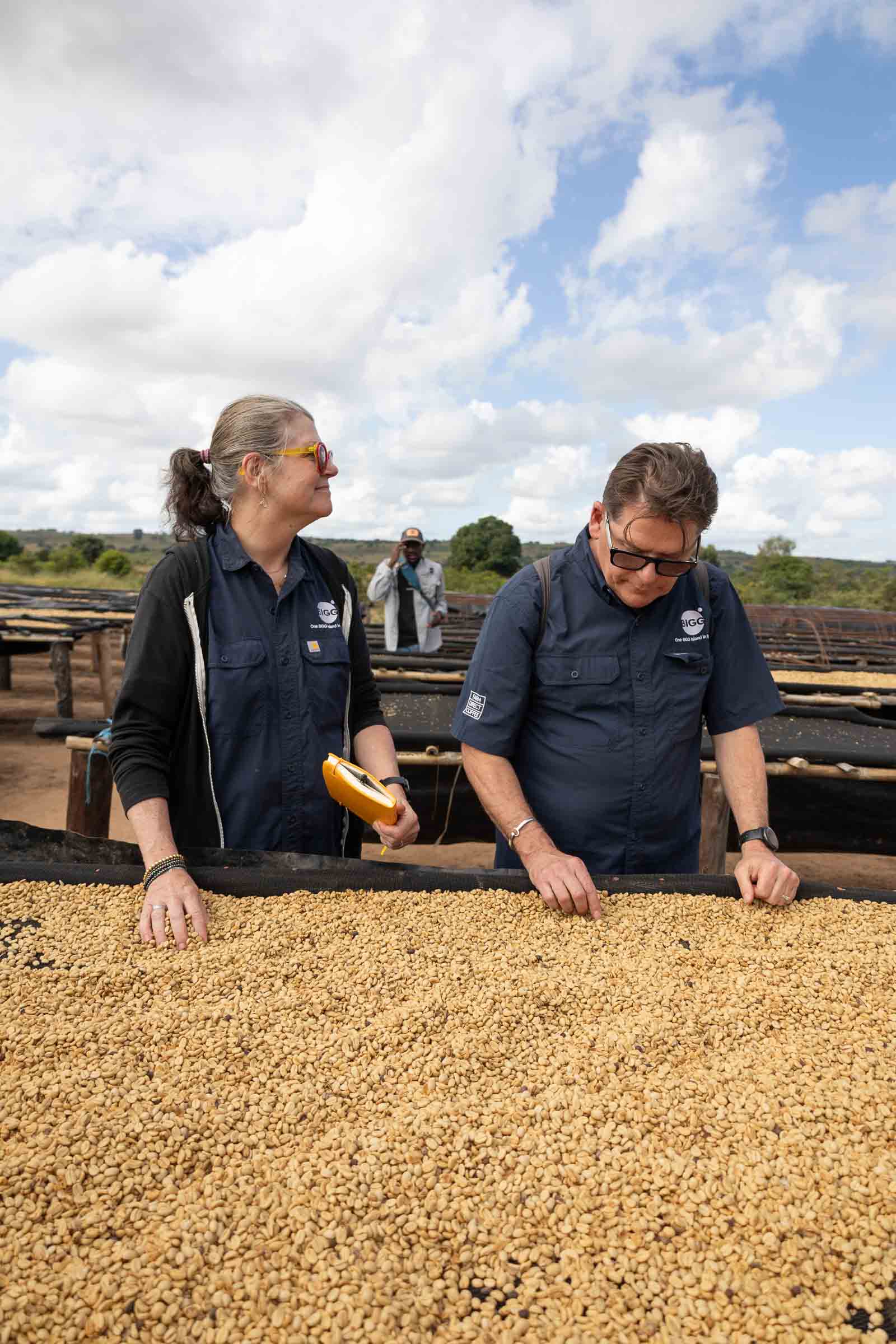
They describe a process that can involve several visits before a partnership takes shape. They ask about workers, land management and community investment. They stay on farms when possible, share meals and look at living conditions. The proposed relationship has to make sense before the coffee itself becomes the deciding question.
This is an unusually personal assignment for a retail founder. A broker’s order can be placed from a desk. Understanding a farm requires accepting that the people there know things the buyer does not. Fish’s experience gives him a marketplace to offer; it does not give him the farmer’s understanding of the field.
The arithmetic behind the handshake
The scale of the purchasing task is visible in Fish’s own figures. In 2018, the system bought two million pounds of green coffee, with none Farm-Direct. By 2024, purchases had reached three million pounds, with 47 percent Farm-Direct. He reported passing the halfway mark in 2025. More coffee was entering the system while its sourcing was changing.
Share of green coffee bought Farm-Direct
Fish credits a wider cast for that progress: franchisees, baristas, the home office, farm partners and Paramount Coffee, the roasting partner involved in implementation, financing and logistics. Farm-Direct still requires a working route from growing country to café. Making the producer more visible does not make shipping containers, roasting or bills disappear.
“We ask questions, we listen, we learn, and then we ask for critique.”
Bob Fish, describing the Farm-Direct effort
In an October 2026 essay, Fish set out the pricing principle more precisely. He said OBIIS examines a producer’s cost of production and seeks a mutually agreed farm-gate price at least ten percent above it. That is the model he advocates. It makes the grower’s costs part of the conversation rather than assuming that a market quotation can explain an individual farm.
When the growers come to Michigan
A visit can run in both directions. Through the Full Circle program, producers come to Michigan to see the cafés, meet the people selling their coffee and take part in discussions. In September 2024, three small producers from Chiapas, Mexico, travelled to the BIGGBY NATION SUMMIT: Salomon Demeza, Martha Vazquez and Miguel Angel Cruz.
The trip took more than two years to arrange. Their connection ran through Finca La Fortaleza and its partners Pascual Castillo and Maria Esther Saut. For growers accustomed to seeing coffee leave their farms without seeing its final destination, a café visit supplied the missing end of the story. For the people serving it, the growers acquired names and voices.
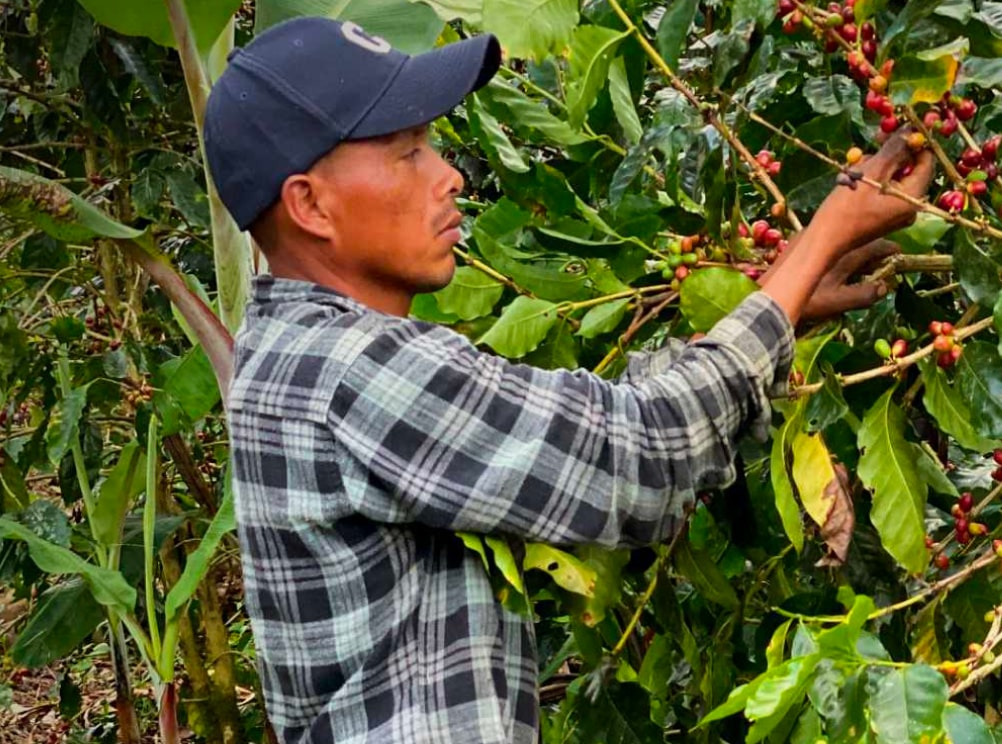
There is a practical courtesy here. Buyers get to inspect farms. Producers get to inspect the business buying their crop. Hospitality, which Fish studied long before opening the first café, becomes a way of conducting a commercial relationship. The welcome has travelled a considerable distance from Grand River Avenue.
The partnerships that could not continue
Good intentions have not made the arrangements immune to prices. In July 2025, Finca Terrerito’s Leticia Hutchins explained that rising coffee prices and import costs had made agreement with BIGGBY and OBIIS impossible. The parties had tried to negotiate, but could not settle on a price that worked for everyone. They ended the Farm-Direct partnership for the time being.
Fish shared that account publicly. He described the loss as personally difficult and argued that transparency had to include setbacks. It is a revealing test of the project’s language. A relationship can be warm, values can align, and the purchase can still fail. The invoice retains a rather unromantic power of veto.
Another account arrived in July 2026 from El Recreo Estate in Nicaragua. Hector and Miriam Morales described a relationship that began after meeting Bob and Michelle in 2019 and became a Farm-Direct partnership in 2020. They credited stable prices with improvements to housing, wages and school support. They also explained that displacement of family members, remote management and regional difficulties had changed the conditions needed to sustain the arrangement.
Those accounts complicate any simple march toward a percentage target. They show benefits that producers themselves describe, alongside arrangements that could not continue in the same form. Fish’s ambition has to work inside that uncertainty. A purchasing system is made of individual agreements, each exposed to circumstances beyond a buyer’s enthusiasm.
One more question before the next cup
Fish has described a personal ambition to change one million lives in a positive way across generations. It is a large number. His more revealing habit may be the smaller one: returning to ask questions. He has spent a career moving from breakfast service to a coffee counter, from a campus walk to franchising, and from selling drinks to examining how their ingredients are bought.
The 2028 deadline remains ahead. Meanwhile, the work has names attached: Michelle, Mike, Mary, the growers and the people running the cafés. For someone whose menu made room for a Teddy Bear, there is a fitting continuity. Fish keeps trying to make the person on the other side of the transaction easier to see.
Follow the coffee
More from Fish, the farm partners and the people around the counter.