George Azih wanted to become less powerful. This is an unusual ambition for someone who had gone to the trouble of founding a company. The phrase he used was “the least powerful CEO in Atlanta,” a job description unlikely to appear in a recruitment advertisement. He wanted managers to make decisions. He wanted a business that could move without forming an orderly queue outside his office.
There is a practical argument underneath the joke. A founder has only so many hours, however much affection he feels for the product. Azih had plenty. Lease accounting had occupied his working days, his spare time and, by his own account, his dreams. Learning to build around that obsession was one task. Learning to let other people act on it was another.
Today, the founder and executive chairman of FinQuery has taken that question into a different business. In San Juan, where he lives, he is a founder of Azul Restaurant. Software customers and dinner guests ask different things of a company. Both eventually discover whether the person standing in front of them has permission to help.
Eighteen months before the code
Azih’s professional training was in accounting. He graduated from the University of Georgia’s Terry College of Business in 2003. His career included senior auditing work at Porter Keadle Moore and accounting research at Graphic Packaging International. Before FinQuery, there was also College Medium, a venture connecting students with their communities that he co-founded and led until its sale in 2007.
By 2008, he was working in technical accounting at a Fortune 500 company. An audit exposed errors in its treatment of leases. He went looking for software to help correct them. The search left him dissatisfied. There were tools for managing leases, but he could not find the accounting solution he needed.
The distinction mattered. Knowing where a company rents space is one assignment. Knowing how its agreements should appear in the accounts is another. Azih was already building elaborate spreadsheets. The prospect of more complicated accounting requirements made that arrangement look increasingly uncomfortable. A spreadsheet can be remarkably accommodating, right up to the moment somebody asks it to explain itself.
He spent a year and a half researching the problem and documenting requirements before development began. He also wrote technical blog posts to attract prospective customers. The preparation was detailed and unglamorous. It gave him a way to describe what developers would need to build, including the situations an attractive demonstration might conveniently leave out.
Research and requirements before the first line of code.
That beginning helps explain his attachment to the product. He knew the work from inside an accounting department. The software had to be useful to someone facing the same sort of problem he had faced. The business now called FinQuery dates its founding to 2011.
The restaurant was only the beginning
The first customer check was for $500. It came from Fresh To Order, the restaurant chain based in Alpharetta, Georgia. For a business concerned with leases, restaurants looked like sensible customers: multiple locations, multiple agreements, plenty to keep track of. Azih concentrated on finding more of them.
He later recognized how much that first customer had narrowed his view. Companies lease vehicles, equipment, planes and other assets as well as buildings. The accounting problem crossed industry boundaries. A restaurant had proved that somebody would pay; it had also encouraged an incomplete picture of who else might buy.
This is the sort of error that can survive because it contains a sensible observation. Restaurants do have leases. The trouble begins when a true statement becomes the boundary of the search. Azih’s eventual adjustment widened the market he could see without requiring him to invent a different problem.
His university years supplied another consequential connection. Chris Ramsey, his former UGA roommate, brought enterprise sales experience to the business and helped build its sales organization. Azih understood the accounting. Ramsey knew a different part of the job. Friendship had supplied an introduction; complementary experience made the relationship useful at work.
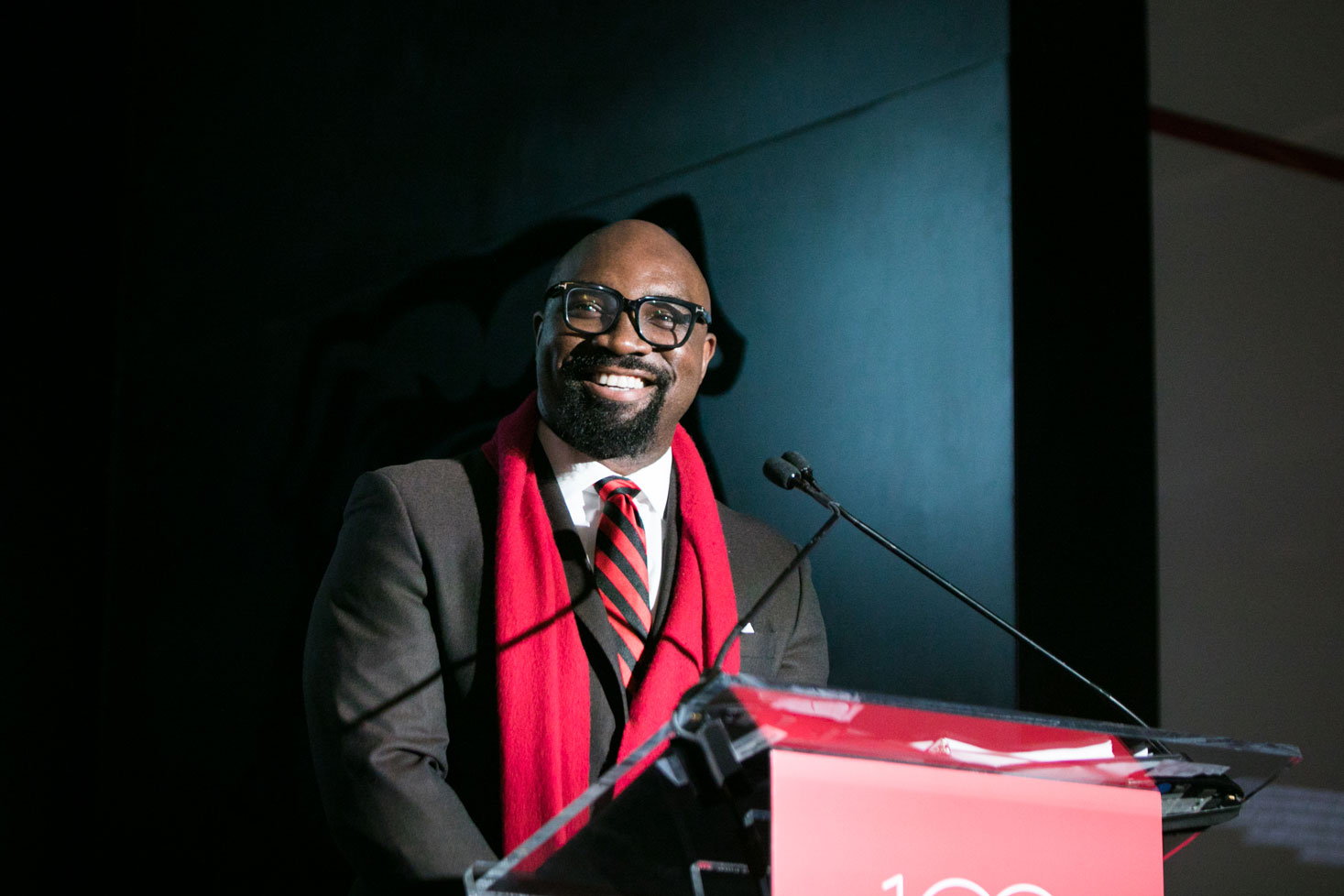
In 2020, LeaseQuery ranked first in the Bulldog 100, which recognizes growing businesses owned or operated by University of Georgia alumni. It returned to first place in 2021. The recognition carried a particular meaning for a company whose sales leadership owed something to a college roommate. Azih had already been named to the university’s 2019 class of 40 Under 40.
A founder needs people who can disagree
The business also needed people who could question its founder. Azih joined the Endeavor network in 2018, following its selection panel in Louisville. He has described the value of an advisory board assembled through the organization: people with experience building companies, willing to examine decisions from outside the daily rush.
Bootstrapping had given him freedom. It also made it possible to go without the scrutiny that accompanies a formal board. He recognized both sides of that bargain. Another experienced person could ask a question the founder had never thought to ask. Being accountable to nobody can be an efficient way to preserve a bad assumption.
His account of Endeavor includes conversations during a long hike and encounters with other entrepreneurs whose businesses made his own feel smaller. The setting is revealing. Advice did not have to arrive across a conference table to be useful. Distance from the office could make room for a more candid assessment of what was happening inside it.
“I want to be the least powerful CEO in Atlanta.”
George Azih
When Azih discussed delegation with leadership interviewer Gene Hammett, his reasoning was direct: if he remained responsible for every decision, he would become the constraint on growth. Employees needed to know their leaders could speak for him. Authority had to survive his absence from the conversation.
That changes the everyday experience of a company. A manager whose judgment always requires confirmation has a title and a waiting period. Giving that manager room to decide makes responsibility more concrete. It also leaves the founder to handle the decisions that genuinely require the founder’s attention.
Listening could require reversing a decision, too. In a 2021 leadership interview, Azih recalled preparing a parenting policy and realizing that LGBTQ perspectives had been left out. He sought feedback. The team then discarded the plan and produced another. The episode gives his interest in other viewpoints a practical consequence: a policy changed before it was issued.
There is little ceremonial about that kind of inclusion. It asks an organization to accept that a plan can look fair to its authors and still be incomplete. The useful moment comes when someone decides the missing perspective is worth the inconvenience of starting again.
A bigger company, a different chair
LeaseQuery grew for years on customer funding before taking institutional capital. In November 2019, it announced a $40 million Series A investment from Goldman Sachs’ merchant banking division. The announcement put the customer base at nearly 1,000 organizations, up from 500 at the end of 2018.
For Azih, choosing an investor also meant considering the people buying the software. Accountants, controllers and finance executives were being asked to trust a relatively young company with consequential work. A familiar financial institution brought credibility as well as capital. The choice of backer became part of the argument the business could make to a cautious customer.
By February 2024, the company had outgrown the precision of its original name. LeaseQuery became FinQuery, reflecting a wider interest in contracts, software subscriptions and spending. Its 2023 acquisition of Stackshine had already extended its work into software management. A further $25 million minority investment was announced in April 2024, led by Periphas Capital with support from Lavelle Capital.
Then Azih changed chairs. On January 22, 2025, Joe Schab was promoted to CEO and Azih became executive chairman, retaining a role in strategic guidance and growth. The announcement also expanded CFO Justin Smith’s responsibilities to include chief operating officer. The company was distributing its senior responsibilities as its product range expanded.
In October 2025, TA Associates announced a majority growth investment. FinQuery then reported serving more than 8,700 companies and organizations. The stated plans included new capabilities, product development and acquisitions. For a founder who had begun with a narrowly understood accounting problem, the scope had become considerably wider.
Dinner is a new kind of deadline
Azih’s San Juan ventures bring an older part of his working life back into view. During college, he worked at Waffle House. A 2026 interview describes waffle-themed names in his office, a small reminder that an executive career can preserve its early shifts as well as its later titles.
Before Azul, he owned George Music Lounge on Paseo Caribe. Azul, developed with co-founder Meg Kapsimalis, occupies the former Hard Rock Cafe space in Condado. Chef Whitney “Whit” Thomas leads the culinary program, while Yuri Oliveira serves as general manager. August 2026 coverage described the restaurant’s dining room and Verde Lounge as operating.
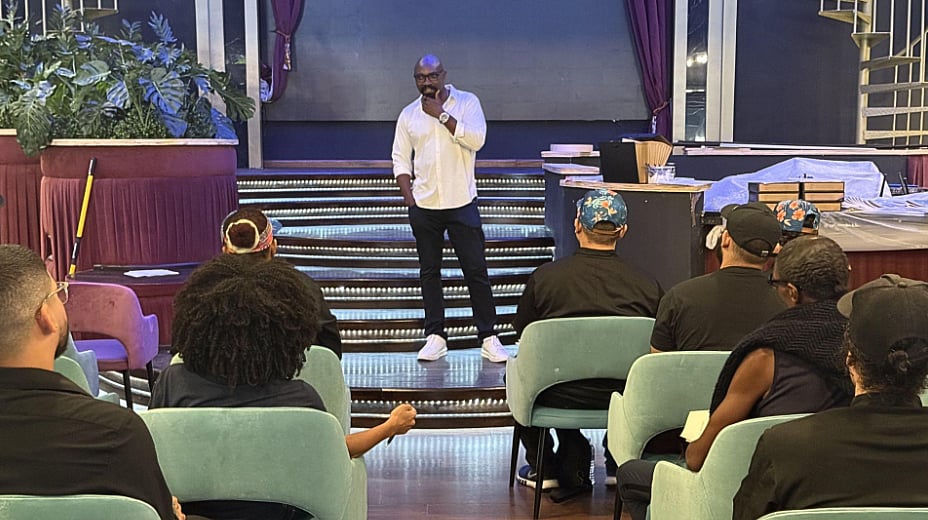
His ambitions there include strengthening connections within Puerto Rico’s hospitality community. The setting is new, but the management instinct is recognizable. He described allowing restaurant leaders to own hiring decisions rather than personally interviewing the staff. People expected to deliver an experience would have a hand in choosing the team that delivers it.
A restaurant will test that belief in public, one table at a time. Guests experience the decisions made around them, usually without knowing who made them. For Azih, who once had to learn that other people could carry the business forward, there is a certain fitness to the arrangement. The founder can explain the vision. Eventually, someone else has to bring dinner.