Kyle Porter gave a software product a funeral. There was a tombstone. There was “Dust in the Wind.” There was also the small matter of several million dollars in annual recurring revenue attached to the departed. Most businesses would have sent that product flowers while keeping it very much alive.
The product was Prospector, a tool for assembling lists of potential buyers. It had worked, in the ordinary commercial sense: customers paid, revenue grew, and Salesloft had something to sell. Porter had a less comfortable question. What were those customers doing with the lists?
Too often, they were feeding them into bulk email campaigns. Porter wanted salespeople to approach buyers with care and useful information. His software was helping them produce more noise. The conflict had become difficult to explain away, even with a healthy revenue line doing its best to assist.
In 2015, he began making the case for a different direction. Salesloft would concentrate on Cadence, a much smaller product built around the sequence of calls, emails, and other interactions that a thoughtful salesperson might use. The funeral made the decision memorable. The decision made the funeral possible.
Porter’s retrospective account. The shift was announced when the old product was at about $4m ARR.
A briefcase full of He-Man
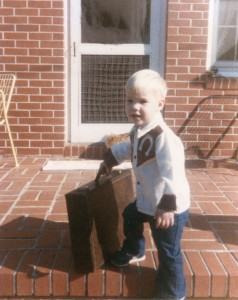
Porter’s interest in selling preceded software by some distance. As a child, he traded toys, baseball cards, comic books, Beanie Babies, and pins from the 1996 Olympics. A photograph from those years shows him with a briefcase full of He-Man figures. Every profession has its early inventory.
He remembered enjoying the look on a buyer’s face when he delivered something that person wanted. There was the arithmetic of buying low and selling higher, certainly. But his account of the experience kept returning to the person across the transaction. Satisfaction was part of the attraction.
He attended Georgia Tech from 2000 to 2004. Before Salesloft, he served as vice president of marketing at NanoLumens, helping build its sales and marketing operation. The work put him close to the practical business of finding customers, understanding their needs, and persuading them to take a chance.
For his own company, Porter sought out David Cummings, the Pardot entrepreneur. Their beginning was unusually direct: Porter wanted to start a business and wanted Cummings involved. Salesloft launched in 2011 and joined Techstars in 2012. The promise of a company had arrived before the certainty of what it should make.
The customer’s chair
Early Salesloft went through changes before the business found its footing. Its later success can make that period look like a tidy preparation for the main event. It was a search. A company can gather attention while still struggling to make something customers will pay to use.
The useful work happened at closer range. Porter sat beside more than 30 prospects and customers in the early days, watching how they worked. That is a rather less glamorous research method than delivering a keynote. It also offers fewer opportunities to mistake your own enthusiasm for someone else’s need.
A sales representative’s day involved a succession of small decisions: whom to call, what to say, when to follow up, and how to remember the last conversation. Cadence gave those actions a repeatable structure. The attraction was practical. A seller could organize the work without treating every prospective buyer as interchangeable.
John Barrows, the sales trainer, got to know Porter after one of Barrows’s trainees sent him an email that caught his attention. Porter wrote about it; Barrows followed up. Porter did not buy training then, but a relationship began. It was a useful demonstration of the behavior Salesloft wanted to encourage: a message that earned a response rather than merely joining a queue.
The challenge remained delicate. Software makes repetition easy. Consideration takes effort. A sequence of emails can support a relationship, or exhaust the patience of somebody who never asked for one. Porter was building in that gap, where efficiency and attention have to learn to share the same desk.
“Focus on the customer first.”
Kyle Porter, 2013 leadership interview
Seven million reasons to hesitate
By Porter’s later account, the old product had reached about $4 million in annual recurring revenue when the shift was announced. It rose to roughly $7 million before it was finally retired. The revenue was evidence of demand. It also made the decision increasingly expensive to contemplate.
His objections extended beyond how the lists were used. He saw limits in the underlying technology and in customers’ tendency to stay with the product. Cadence offered a business he believed Salesloft could own more fully and develop further. Principle and commercial judgment were working on the same problem.
That combination matters. This was an operating decision with consequences for customers and employees, rather than a harmless statement of taste. Barrows recalled that getting the internal team to accept the change was the hardest part. A ceremony helped mark the break; it could not do the work that followed.
Porter later described sales organizations as caught between wanting a buyer to feel special and needing a process that scales. The contradiction had been there from his childhood trading days: deliver what someone wants, then work out how to do it again. Salesloft’s new direction made that tension the center of the product.
The company’s eventual size can make the choice seem obvious in retrospect. At the time, one product had substantial revenue and the other had a future that still needed proving. The spreadsheet could report what already existed. Porter had to decide how much authority to give it.
Atlanta, with the volume turned up
Porter’s style could be exuberant. After Atlanta United won the MLS Cup in 2018, Jon Birdsong was contemplating home amid freezing rain and departing crowds. Porter wanted to know where they should celebrate. Soon they were in a German beer garden with other supporters. Going home was apparently a negotiable proposition.
His business relationships had a similar local attachment. When Salesloft raised its $15 million Series B, Cummings proposed leading the round with a personal $10 million commitment. Porter welcomed the ability to work with people who knew the business, keep the board intact, and return quickly to customers. Atlanta supplied more than an address.
At a 2022 fireside chat with Cummings and Kathryn O’Day, Porter urged founders to make their values memorable. Salesloft’s included putting customers first, a glass-half-full outlook, a bias toward action, team over self, and a focus on results. Such phrases invite an obvious test: what happens when following them becomes inconvenient?
The product retirement supplied one answer. Porter’s appetite for publicity supplied another kind of character evidence. He later recalled hiring a Marc Benioff lookalike at Dreamforce and experimenting with a drone carrying a banner. The drone crashed during a test on the Atlanta Tech Village roof. Some ideas achieve lift only in the meeting.
There were also money guns loaded with two-dollar bills near a Jim Cramer broadcast. These were theatrical ways for a young company to get noticed. They complicate the portrait usefully: the founder preaching sincerity in selling was perfectly willing to make a spectacle of marketing. Attention was welcome. What the company did after attracting it was the larger question.
- 2011A company begins
- 2015A product changes
- 2021$2.3bn valuation
- 2023A CEO hands over
The numbers arrive; the chair changes
In January 2021, Salesloft announced a $100 million financing at a $1.1 billion valuation. By early summer it had passed $100 million in annual recurring revenue. In December, a strategic investment from Vista Equity Partners valued the company at $2.3 billion. The business had grown well beyond its early experiments.
Those figures describe Salesloft. They do not describe Porter’s personal wealth. More revealing for this story is what he chose to do after the company reached that scale. On February 13, 2023, David Obrand became CEO, and Porter remained on the board. At the handoff, Salesloft reported more than 4,500 customers worldwide.
Porter praised Obrand’s breadth as an operator and his attention to customers. A founder handing over the job has to make room for someone else’s judgment, including experience he does not possess himself. The company’s next phase would be led by a different person, even while Porter remained connected to it.
Family entered his explanation of the change. His wife, April, had a mission in Florida’s citrus industry, and he wanted to help her pursue it. He also wanted more time with their three children. Tangerines might seem an abrupt departure from enterprise software. They had been in his life for years: he mentioned his farm among his interests back in 2014.
When he discussed the transition in 2025, the citrus work was still part of his next chapter. The handoff changed the distribution of his attention. A company he had built for more than a decade could continue without occupying the whole of his working life. Someone else’s ambition could have more room.
“I believe that synonymous with the word leadership is the word service, and that is core to what I do.”
Kyle Porter, Atlanta fireside chat, January 2022
Familiar people, a different problem
Porter has since described investing and supporting a new generation of founders as priorities. His current work includes co-founding Fastlane AI. The leadership list has familiar names: Rebby John as CEO, with Porter, Rob Forman, and Cummings as co-founders. Relationships built around one company have become ingredients for another.
Fastlane works on AI roadmaps, employee training, and agents for business tasks. Its premise begins with executives who know they need to consider AI but are unsure where to start. That puts the work close to a recurring concern in Porter’s career: turning a broad promise about technology into something useful during an ordinary working day.
Salesloft has continued changing too. It completed its merger with Clari in December 2025, with Steve Cox appointed CEO of the combined organization. Porter’s founder story now sits within a business whose development extends beyond his tenure. That is part of what a handoff permits.
The childhood briefcase, the product funeral, and the move toward citrus belong to different periods, but they share a question about what deserves his effort. Money was present in each decision. So were customers, colleagues, and family. The interesting moments came when those interests refused to line up neatly.
Prospector’s farewell remains an unusually vivid episode in a software career. A tombstone is a blunt way to announce that the plan has changed. Porter gave the old product its ceremony, then asked the company to build again. Years later, he made another departure possible by leaving the CEO’s chair available for someone else.
Continue the conversation
Visit Fastlane AI and Salesloft, or follow Porter on LinkedIn and X.