Consider the least glamorous moment in recruiting. The candidate has hung up. Someone must now record what was said, update a database and remember the next step. The telephone did its job. The recruiter has acquired another job. Ringover North America sells into that small interval, where a perfectly good conversation can become an imperfect record.
- Cloud calling and messaging, connected to the tools teams already use.
- A North American emphasis on staffing, where candidates and clients both need attention.
- AI for rehearsal, live guidance and reviewing conversations.
The distinction matters. A business can buy a better dialer and still drown in clerical work. Ringover’s case is that the call, its history and the action it produces belong together. That is a fairly modest proposition. In a busy staffing office, modest propositions have a way of consuming the afternoon.
A recruiter sells twice
A salesperson usually has one side of a transaction to persuade. A recruiter has two: the employer with a vacancy and the person who might fill it. Both can change their minds. Both need follow-up. A conversation with either becomes more valuable when the next employee can see what happened.
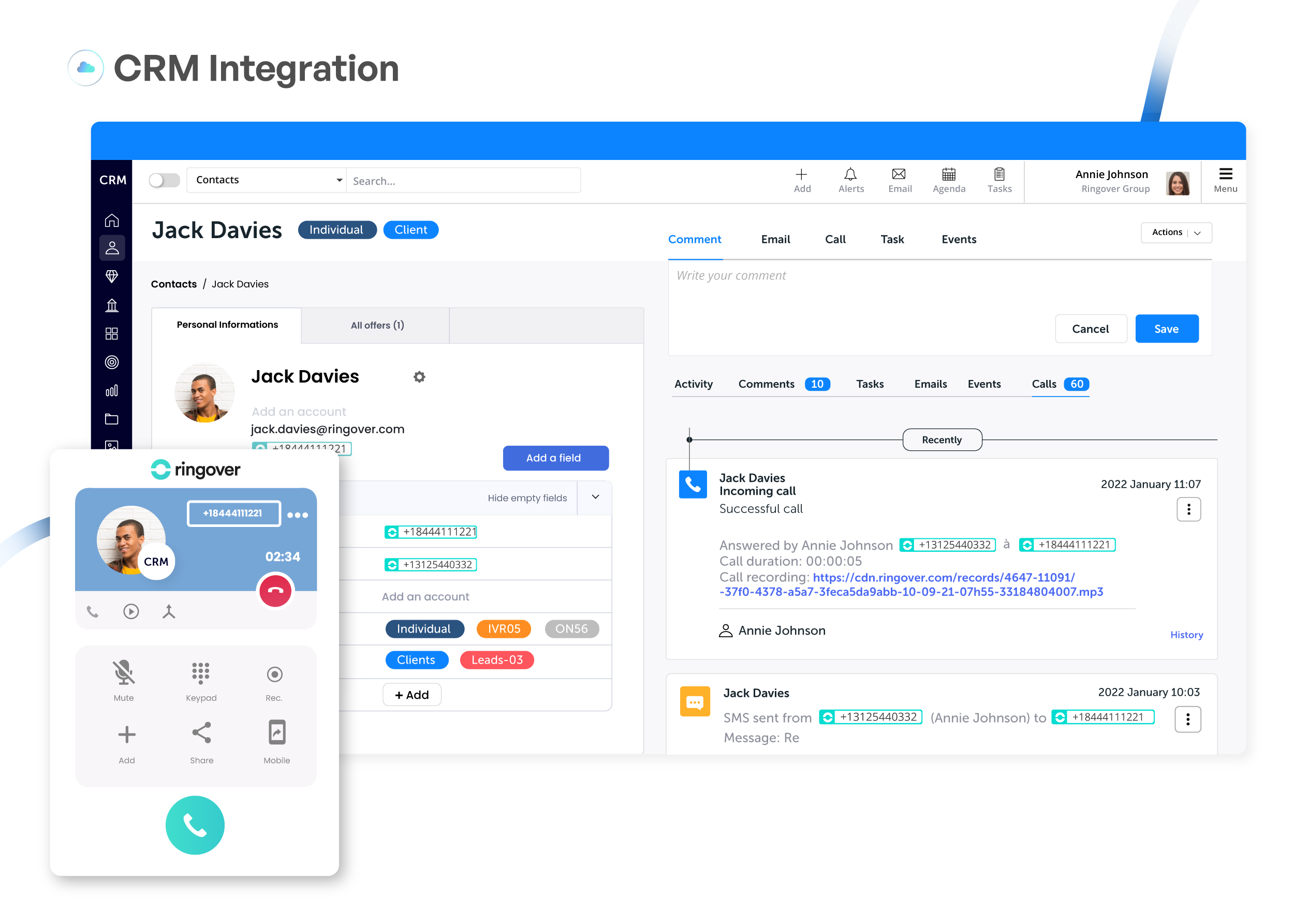
Ringover supplies internet-based business calling, routing, recordings, SMS and analytics. Its distinctive emphasis is the surrounding workflow. In Bullhorn, an applicant tracking system, its integration supports click-to-call, automatic communication records and two-way candidate-data synchronization. The phone becomes an extension of the database rather than another place to search.
“We realized recruiters are essentially salespeople with a different title.”
Ginelle Bell, Ringover partnership marketing manager
The company’s published customers include North American staffing businesses CCS Construction Staffing, Pro Resources and Lead Health. Sales and customer-service teams also use the platform. Staffing gives the American pitch a recognizable setting: frequent calls, dispersed employees and a considerable appetite for accurate notes.
The caller who left no message
At Indiana staffing firm Pro Resources, the awkward problem was the call that left no voicemail. Without a useful record, an inquiry could disappear. Its Ringover case study describes integrating the phone platform with Avionté, capturing missed callers and giving recruiters a way to follow up.
The firm reported its overall service rate rising from 60% to 96%. That measure includes capturing and following up on missed inquiries; it should not be read as a live-answer rate. The lesson is wonderfully unromantic: a caller need not leave a message to deserve a return call.
Customer-reported measure, including missed-inquiry follow-up.
CCS Construction Staffing had a different mess: support-desk phones, corporate mobile phones and manual entries in Bullhorn and HubSpot. After deploying Ringover to more than 70 users, it reported 50%-70% less manual CRM and ATS logging and a 25% increase in call activity. These are vendor-published customer accounts, useful evidence of a workflow change, rather than promises of what every buyer will achieve.
Paris brought the phone. Atlanta brought the test.
Ringover’s roots reach back to 2005, when Jean-Samuel Najnudel and Renaud Charvet developed communications services including internet fax and virtual switchboards. The modern platform arrived in 2018. Fellow cofounder Ludovic Rateau, a networks specialist, had proposed a business phone suited to mobility and changing work habits.
The group’s first outside investor, Expedition Growth Capital, put in €10 million in January 2021. A further €5 million financing followed that year. In 2023, Orange Ventures, Bpifrance Large Venture and Expedition backed a €20 million Series B, supporting AI development and international expansion.
Charvet moved to Atlanta in August 2022, according to contemporary reporting. A cofounder crossing the Atlantic made the expansion unusually personal. By February 2026, Ringover announced more than $50 million in group annual recurring revenue. That figure describes the global subscription business, not American revenue or audited annual sales.

A rehearsal room inside the phone bill
The newer products arrange themselves around the conversation. Pitch Room lets employees rehearse with an AI counterpart. AIRO Coach offers guidance while a live call unfolds. AIRO Voice handles routine incoming inquiries and passes more complicated ones to people. Empower supplies transcripts, summaries and analysis afterward.
In March 2026, Ask Empower 2.0 extended the assistant’s scope from a single call to historical conversations across voice and video. The interesting change is the unit of attention. A manager can ask about a relationship or a team, rather than opening recordings one at a time.
Aircall, RingCentral and Dialpad occupy overlapping territory. Ringover’s useful distinction is its combination of calling, conversation tools and staffing integrations. Its advertised 100-plus connections are a starting point for comparison; the decisive question is whether your particular record, field and follow-up survive the journey.
The seat price is the opening bid
On the U.S. pricing page checked in October 2026, Business displays an annual-rate price of $47 per user per month, excluding taxes, with a three-user minimum and a 12-month commitment. Empower is listed separately at $39 per license per month.
10 × ($47 Business + $39 Empower)
Before taxes, usage and other add-ons.
That illustration annualizes to $10,320; it is arithmetic, not a customer quote. Messaging add-ons, usage and contract details can change the bill. A team making occasional calls may struggle to justify the bundle. A busy agency spending hours copying notes has a more plausible calculation.
Follow one call all the way home
The practical thing to copy is a method: trace one conversation from the incoming number to the candidate record and the next action. Pilot the workflow with a small team. Measure missing records, manual work and follow-up before counting extra calls as success.
Reliable internet, correct integration settings and human review of AI notes remain part of the bargain. Coaching tools also need somebody willing to coach. June 2026 updates added Bullhorn caller identification and more precise Odoo activity logging. Small changes, perhaps, but well aimed. The grand business of customer relations often depends on whether the next person can find the last conversation.