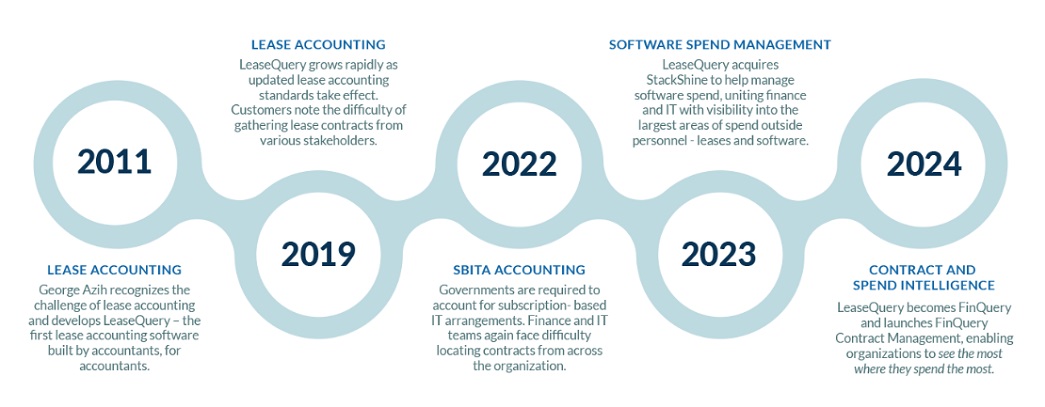
The company now called FinQuery began with the sort of office disaster that rarely earns a movie treatment. George Azih was doing technical accounting at a large corporation when new auditors examined its leases. They sampled ten. All ten were wrong. They tried ten more. Those were wrong too. Azih knew the rule makers were preparing to make lease accounting more complicated, which produced a bleak little equation: if a multibillion-dollar company could not manage the easy rules, what happened when the hard ones arrived?
Azih went shopping for software and found a mismatch. Existing systems were generally built around property administration, not around the calculations, controls and disclosures accountants had to defend. So he did something unfashionably slow. For roughly 18 months, he wrote requirements, mapped edge cases and published technical explanations before developers wrote the first line of code. LeaseQuery was founded in 2011. Commercial selling began in earnest in 2015, as the new standards moved from distant possibility to deadline.

A product born before the market was ready
The first failure was not LeaseQuery's software. It was the accounting process around it: spreadsheets, inconsistent inputs and a task that ate most of Azih's time despite being one item on a much longer close checklist. His employer told him to stop tinkering and return to his assigned work. Fair enough, he later said. The problem was important, but not yet urgent.
That timing explains the strange early rhythm. Azih saw the opening in 2010, but the final US lease standard did not arrive until 2016. The company survived the gap by going deep rather than broad. Technical articles attracted accountants searching for answers. Sales demos doubled as lessons. Early customer-facing teams included actual accountants, a useful trick in a category where credibility can disappear with one misplaced decimal.
“If I spend nine hours talking about the problem, I only need to spend 30 minutes talking about a solution.”George Azih, founder
The first check was only $500, from Atlanta-area restaurant chain Fresh To Order. Azih personally visited each of the first 15 customers and says he closed every one. He initially assumed restaurants would define the market because they operate many leased locations. Customers changed his mind. Companies lease trucks, copiers, medical equipment, aircraft, ATMs and casino machines too. “I focused on a few trees,” he later observed, “and it gave me a very wrong impression of the forest.”
What the software actually does
FinQuery sits between source documents and the general ledger. A team loads or forwards a lease, contract, invoice or statement of work. The platform extracts terms, creates schedules and records, applies accounting logic, generates journal entries and reporting, and keeps a trail back to the original document. The ERP remains the financial system of record; FinQuery handles specialized lifecycles that broad ERP modules and heroic workbooks often treat awkwardly.
INVOICE
CONTRACT
TERMS
ENTRIES
CONTROLS
REPORT
AUDIT
LeaseQuery remains the flagship. It supports private and public companies, governments and international reporting regimes across ASC 842, IFRS 16, FRS 102, GASB 87 and 96, and SFFAS 54. It produces amortization schedules, entries and disclosures, handles modifications and multiple currencies, stores documents, locks periods and gives auditors read-only access. LeaseGuru serves tiny portfolios with a simpler self-service version.
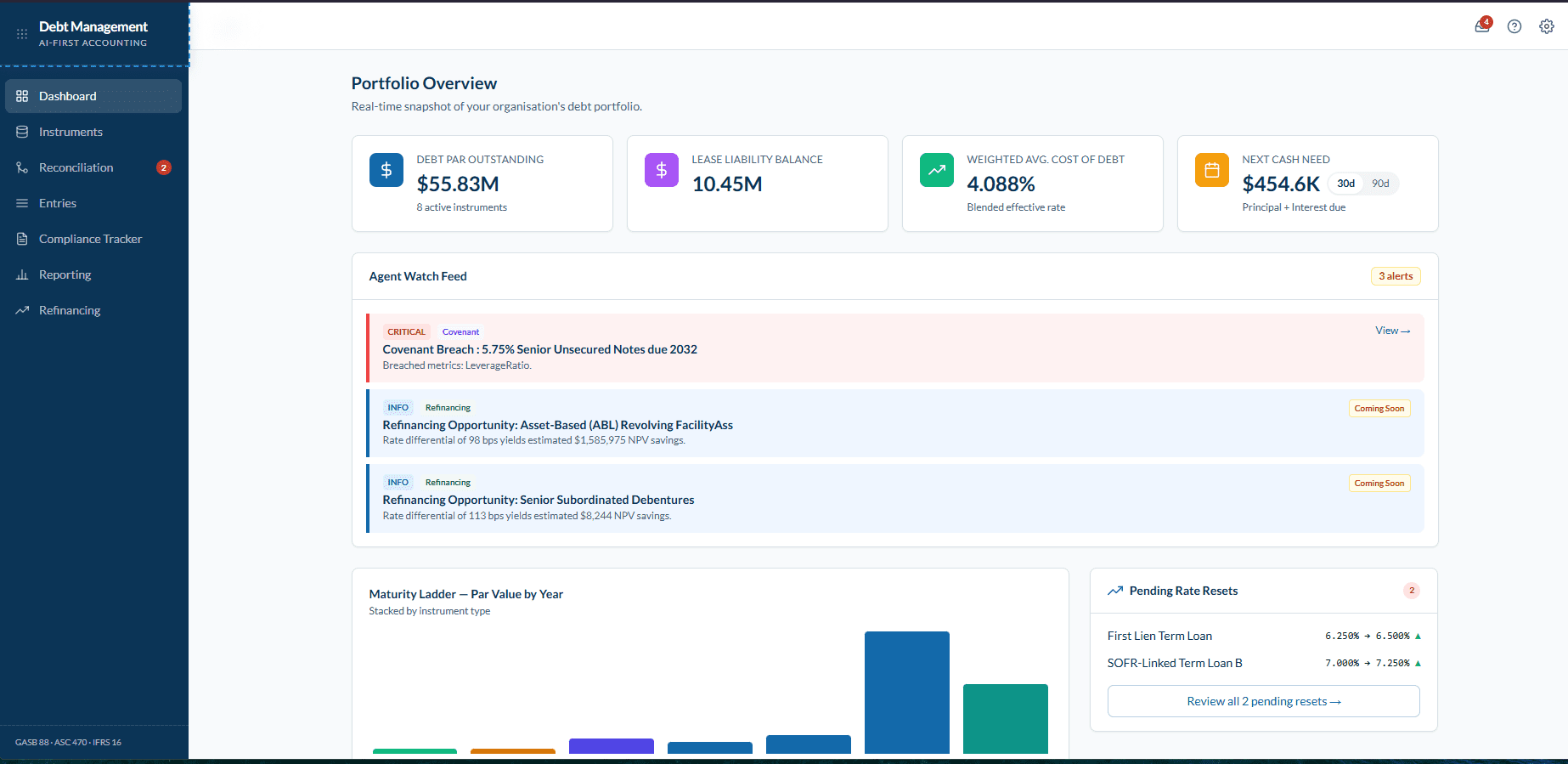
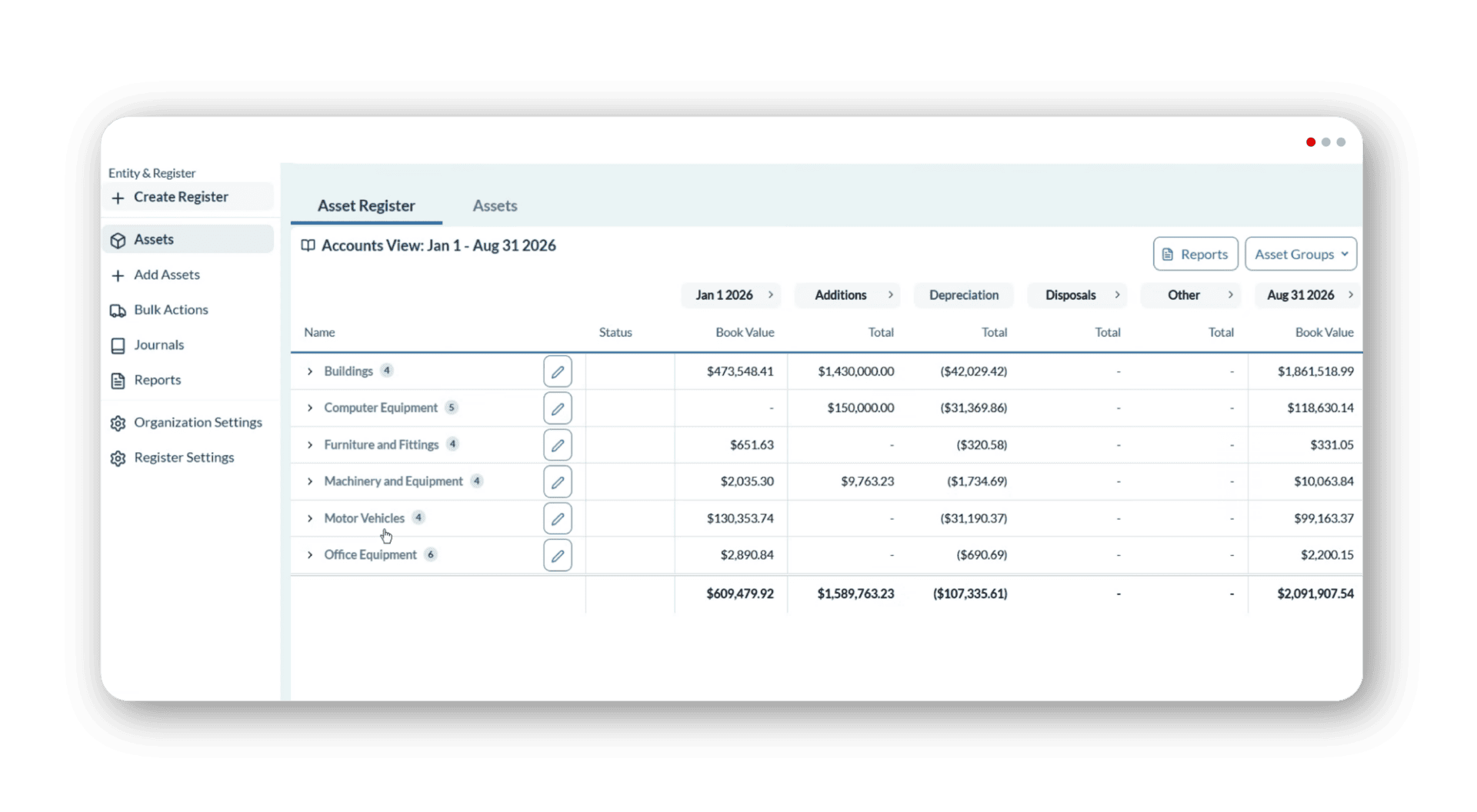
The wider FinQuery platform now adds prepaid and accrued expense accounting, fixed assets and debt management. Accruals & Prepaids matches expected payments against actual ERP spend, calculates true-ups and creates rollforwards. Fixed Assets manages depreciation books, components and disposals. Debt Management monitors covenants and automates technical debt accounting. All three reuse the original idea: read the agreement, build the accounting, preserve the evidence.
From a wedge to a wardrobe
LeaseQuery became FinQuery in February 2024. The old name had earned trust, but it described one drawer in a growing cabinet. The company had acquired SaaS spend-management startup Stackshine in 2023, and its own market research found that more than 80 percent of surveyed CFOs, controllers and finance directors wanted storage for non-lease contracts. The rebrand was an admission that the customer problem had widened.
This is also where the story gets risky. Lease accounting has crisp regulations, obvious deadlines and a buyer who knows the pain. “Intelligent subledger” is a bigger category with fuzzier edges and stronger neighbors. FinQuery competes with Visual Lease, Trullion, LeaseAccelerator, Nakisa and Netgain in leases; with ERP modules and spreadsheets everywhere; and with specialized close, fixed-asset and accounting-automation tools as it expands. The company's defense is not merely AI extraction. It is accounting expertise plus traceability - a claim that every automated output can be followed back to source.
Who buys it - and what it costs
The natural buyer is a controller or senior accounting leader with enough leases, entities or reporting complexity to make manual work dangerous. Treasury teams fit the debt product; CPA firms use the platform across clients; public agencies need GASB and federal standards. FinQuery says it supports more than 8,700 organizations in over 85 countries. Customer materials name Southern Illinois University, BlueLinx, Middleby, PT Solutions, IMEG and Ruoff Home Mortgage, among others.
The price is a staircase, not a sticker
Enterprise LeaseQuery and multi-module deployments are quote-based. Public anchors exist: LeaseGuru lists a free tier and annual plans from $850 to $2,750 for small multi-company portfolios, while an SAP marketplace listing has shown $5,460 per year for a 40-record plan. Implementation, integrations, lease count and modules can move the actual contract substantially.
The business model is annual B2B SaaS, supplemented by implementation, migration, education and customer support. The company offers daily office hours and a free continuing-education hub, making expertise part of retention as well as acquisition. That matters because the alternative is often not another vendor. It is an accountant deciding that one more workbook is cheaper.
The capital rule that finally bent
LeaseQuery was profitable and customer-funded for years. Azih's rule was simple: do not raise until the lack of capital impedes growth. In 2019, after the company had grown from roughly 20 people to more than 100 in a year, that condition arrived. Goldman Sachs' merchant-banking arm invested $40 million in the company's first formal outside round.
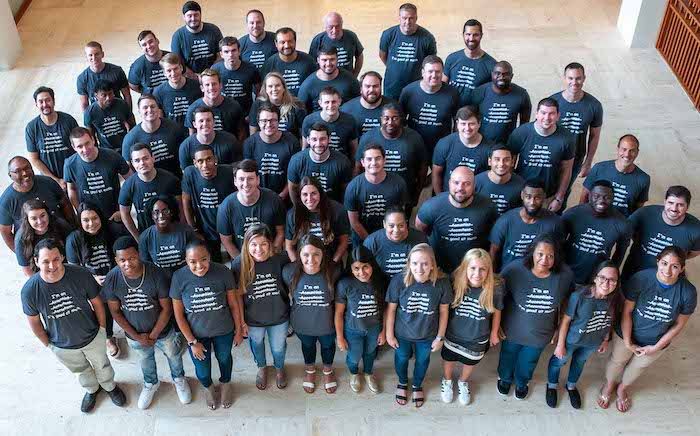
The next turn was more consequential. Joe Schab became chief executive in January 2025, while Azih moved to executive chairman. In October, TA Associates made an undisclosed majority growth investment, with management investing alongside it. The stated use is product expansion, scale and possible acquisitions. FinQuery now has the capital structure of a platform company and the obligation to prove the platform is more than a rebrand.
“Leases were the wedge; total financial obligations are the market.”Ryan Grace, chief revenue officer
What a founder can steal
The copyable bits
- Start with an expensive error. “Better workflow” is soft. Twenty failed audit samples is a sales argument.
- Write the manual before the machine. Azih's technical content attracted buyers and forced product clarity.
- Use experts in the revenue loop. Accountants teaching accountants produced trust that generic demos could not.
- Do the first sales in person. Fifteen founder visits exposed the language, objections and adjacent use cases.
- Expand along the same data path. FinQuery moved from leases to other obligations that also begin as documents and end as entries.
There is a charming severity to this playbook. It does not depend on a viral loop, a charismatic category launch or a magical model. It depends on knowing the customer's ugly task better than the customer, then encoding that knowledge without erasing the audit trail. FinQuery's 2025 update said more than 70 percent of contracts that once required manual entry were being handled automatically. The interesting number is not 70. It is the remaining 30, where exceptions, judgment and controls still earn their keep.
A tiny company with two simple leases may rationally prefer the free tool or a spreadsheet. The switching and implementation cost can outweigh automation.
Poor source documents, unusual policies, weak ERP mapping or a team unwilling to redesign its close will preserve the mess inside nicer software.
Nor is the strategy automatic outside regulated accounting. Lease standards created a deadline and a common grammar. Markets without those conditions may not reward 18 months of specification or expert-led selling. And broadening too fast can make a company famous for one thing sound generic at six. FinQuery's test is whether “everything you lease, own and owe” feels like one controlled workflow to buyers, rather than three new products sharing a login.
Still, the company's path has a useful restraint. The name changed only after the problem did. Capital arrived only after its absence became costly. And AI entered a product already built around evidence. The founder who once watched 20 calculations fail is now betting that the same intolerance for untraceable numbers can travel far beyond leases. Accountants, fittingly, will want to see the reconciliation.