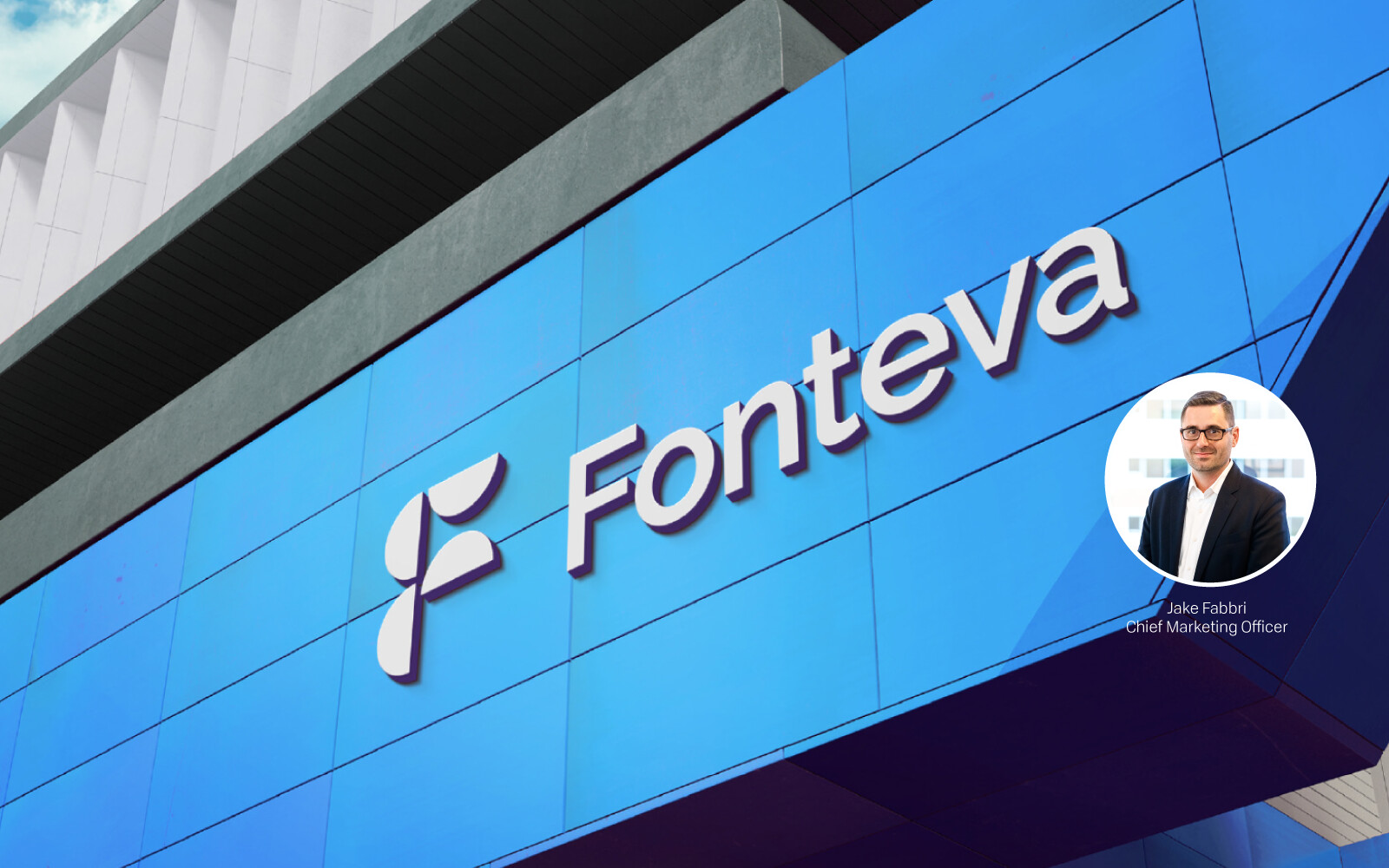
Jacob Fabbri was supposed to be taking a break. He had just finished five years as chief marketing officer at Togetherwork and more than a decade tied to Fonteva, the association-software company where he built a marketing department, helped launch a user conference and eventually joined the board. His January farewell spoke of recharging before whatever came next. The sensible next move was no move at all.
Then accounting software ruined the sabbatical.
FinQuery made its case with the sort of ingredients that tempt an operator more than a holidaymaker: product-market fit, visible momentum, an appealing team and fresh backing from TA Associates. Fabbri was not actively looking. He joined anyway, becoming chief marketing officer with a mandate that is easy to say and rather harder to perform. He must teach the Office of the CFO a new category while building the demand system that makes the category travel.
The name is “Intelligent Subledger.” It sounds like something a machine might whisper to another machine after the humans have gone home. The problem underneath it is pleasingly concrete. Leases, prepaid expenses and accruals produce business agreements, calculations, journal entries, deadlines and audit questions. Traditional enterprise resource planning systems do not elegantly handle all of that detail. Spreadsheets volunteer. Accountants lose hours. Risk enjoys the arrangement.
The category Fabbri is explaining
Leases · invoices · contracts
Automate · calculate · control
Entries · close · audit trail
The positioning move: put a controlled layer between messy source documents and the general ledger.
01 / Category before campaign
The useful enemy is manual toil
Fabbri's language for FinQuery rarely begins with a feature. It begins with “toil,” spreadsheet risk and the awkward jobs an ERP leaves behind. This is category design by irritation: identify the work a customer has accepted as normal, make its cost visible, then give the alternative a name. The phrase Intelligent Subledger is not meant to decorate the product. It is meant to create a place for it in the buyer's mental architecture.
“We aren't just building software to automate tasks; we are defining the Intelligent Subledger category.”Jacob Fabbri, on joining FinQuery
This approach fits the career that preceded it. Fabbri entered association technology when the internet was emerging and web marketing still looked like a side alley. By learning it early, he made himself useful while the alley became the main road. He worked at Advanced Solutions International and later directed marketing at BroadPoint Technologies. The niche was association management software, an unglamorous label for a deeply social job: helping organizations manage members, events, payments and the small acts that keep a professional community alive.
His education supplied two complementary ways to look at that work. He earned a business and marketing degree from The Catholic University of America and a master's in information systems technology from George Washington University. Before either settled into a career, there was a detour. Fabbri spent two years as an architecture major, a consequence, he later wrote, of a childhood obsession with LEGO bricks and building things.
02 / Make it physical
A tower, a trade show and 50,000 tiny decisions
The architecture training never entirely left. In 2020, Fabbri told the story of a six-foot replica of Salesforce Tower made from approximately 50,000 LEGO pieces. The model took about 180 hours to build and even included its own miniature Salesforce Park. Fonteva, whose products ran natively on Salesforce, planned to bring it to trade shows.
It was an absurdly labor-intensive way to say “we belong in this ecosystem,” which is precisely why it worked. A platform relationship that would die on slide 14 became a physical object people could see, photograph and discuss. The tower did not simplify Fonteva's technology. It gave the relationship a silhouette.
There is a useful contradiction here. Fabbri has spent a career in marketing automation, demand systems and measurable pipeline. Yet one of his most revealing artifacts is a giant handmade toy. The lesson is not that every SaaS company needs a brick budget. It is that a market remembers a concrete idea more easily than a cloud of claims. The best visual metaphor sometimes requires a loading dock.
03 / Customers as the medium
Build the room, then let people tell the story
Fabbri joined Fonteva before 2018 and built its marketing team and operations from scratch. As senior vice president, he led global demand generation and helped launch the go-to-market plan for its membership and events products. By 2018, the company was reporting annual revenue growth above 50 percent. His team received Web Marketing Association and MARCOM recognition, while Fabbri was named to BizBash's 40 Under 40 and received a DCA Live CMO honor.
The accomplishment he chose to emphasize was not an award. It was the team. His specific improvement was not an ad campaign, either. It was FUNcon, an annual customer conference named after the Fonteva Users Network. Attendance doubled in its second year and was projected to double again. The acronym may be a little too pleased with itself, but the strategy was serious. Put customers, employees and partners in the same room, and a product story becomes a set of relationships.
“Our customer-first approach is what helps us deepen relationships with each of the organizations we serve.”Jacob Fabbri, 2019
That philosophy also shaped how Fonteva approached its 2021 acquisition by Togetherwork. Fabbri described a culture that would “run to the fire” for customers and argued that the best marketing was a successful customer telling the story. In podcast conversations around the deal, he spoke about organizational culture as part of operating a successful software company. The acquisition was not merely a transaction to announce. It had to feel like a credible home for people who had invested their work and trust in the product.
04 / A wider canvas
From one community to a portfolio
Togetherwork widened Fabbri's job. Instead of one association-software company, he led marketing across an assortment of integrated software and payments businesses serving groups. The portfolio included products for associations, sports leagues, cultural institutions and other communities. The intellectual problem changed from making one specialized company legible to finding coherence across many of them.
He stayed for five years. When he left at the start of 2026, he called Togetherwork only the fourth company of his career and described his separation from Fonteva after more than ten years as the heavier part of the goodbye. The phrasing suggests a career built in chapters long enough for colleagues to become witnesses. Public recommendations from former team members describe a steady leader who delegates, removes roadblocks and invests in people's growth. Those are testimonials, not laboratory measurements, but they match his own recent hiring language.
At FinQuery, Fabbri advertised for a vice president of demand generation and growth marketing by asking for a builder, not merely a campaign operator. The remit stretched across inbound, outbound, account-based marketing, field, partners, customers and international expansion. He wanted someone who had built operating models and who developed people as fiercely as strategy. The list reads like a map of modern demand generation. The emphasis on people keeps it from reading like plumbing.
FinQuery gives that team an unusually measurable story. The company says it serves more than 40,000 accounting and finance professionals at over 8,700 organizations. Its platform handles more than 70 percent of contract data entry through AI-assisted workflows. The marketing challenge is to connect those numbers to a buyer's daily life without turning artificial intelligence into seasoning sprinkled over every sentence.
05 / The return loop
Community was never a former industry
In August 2026, while remaining FinQuery's CMO, Fabbri joined Tradewing's advisory board. The appointment returned him to association technology from a different seat. Tradewing is exploring how AI and member data can help associations build stronger relationships. Fabbri's stated reason for joining was familiar: associations do important work, and he wanted to help them build stronger communities for their members.
It completes a neat loop without closing anything. The young marketer who learned the web because few colleagues cared about it is now advising on AI. The former architecture student is constructing a category between contracts and ERPs. The executive who built a customer conference now helps a community platform think about its next chapter. Technologies change; his preferred unit of progress remains the same. Make the system clearer, make the customer more capable and give people a reason to talk to one another.
Outside work, Fabbri has described adult recreational sports as an outlet for his competitive side and mountain biking as a source of speed and thrill. Those details rescue him from the tidy boxes of an org chart. So does the abandoned sabbatical. Rest was the plan until a building problem appeared.
FinQuery now asks him to make a market notice what accountants have quietly tolerated for years. The spreadsheets are still there. The close still arrives. The leases do not become charming. Fabbri's wager is that none of this needs charm. It needs a name, a system and a story sharp enough to make old toil look newly optional.