The origin story of Campfire begins with a finance executive, an acquisition, and the sort of spreadsheet sprawl that behaves nicely until somebody asks a precise question. John Glasgow was running finance at Invoice2go when Bill.com acquired the company. The process generated more than 500 diligence requests. Revenue accounting, consolidations, prepaids and SaaS reporting still leaned on spreadsheets around QuickBooks. Answers were possible, but they arrived through long nights and weekend work.
The first thing to fail was not the accounting team. It was the gap between what the team knew and what its software could produce on demand. Glasgow had spent more than a decade in finance. He knew the books were there. He also knew that extracting the story from them felt like digging out a car after a snowstorm.
That pain changed his mind about where the startup opportunity lived. Corporate cards, payroll and banking had become polished software categories. The general ledger - the system expected to remember everything - often looked and behaved as if the internet had been a late-breaking requirement. In 2023, Glasgow and engineer Fernando San Martin entered Y Combinator and started Campfire.
01 / The wedge
Start with the spreadsheet everyone fears touching
Campfire did not begin by announcing every module in an ERP. Its first product automated revenue recognition and reporting, work that many Series A and later technology companies still managed in spreadsheets. That was a useful wedge: recurring, rules-heavy, close to the money, and painful enough that a finance leader could measure the hours returned.
From there Campfire expanded into Core Accounting, a cloud general ledger with multi-entity consolidation, multi-currency support, financial reporting, accounts payable and receivable workflows, and close management. Revenue Automation handles contracts and recognition for subscription, usage-based and mixed billing models. The newest layer is Accounting Intelligence, which connects to transaction sources and helps categorize, match and reconcile activity.
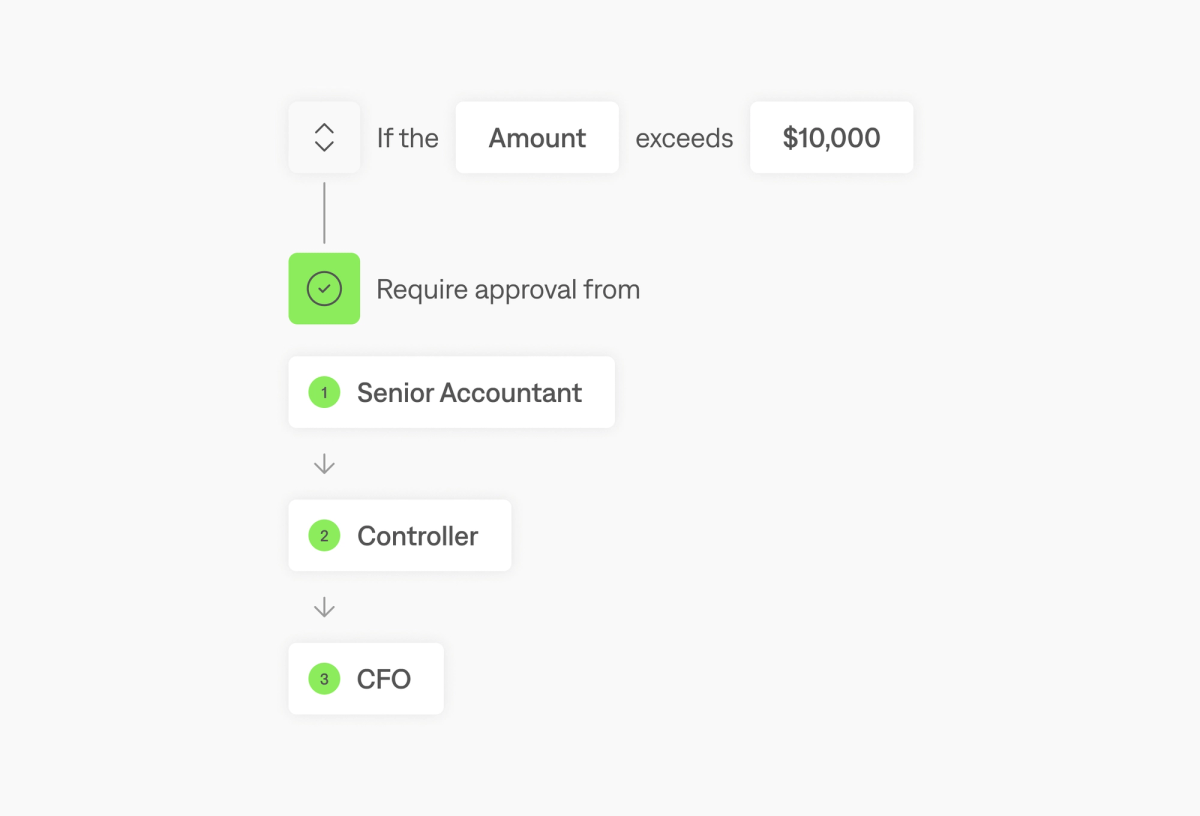
The visible mascot in this stack is Ember, Campfire's AI assistant and agent layer. A user can ask questions in ordinary language, generate analysis, draft journal entries, investigate variances, prepare reconciliations, or turn a recurring task into an agent workflow. Campfire says the output includes context and traceability. Crucially, Ember does not sign off or post on its own. It drafts and flags; authorized people review and approve.
“No one asked an accountant when designing the currently available general ledger software.”John Glasgow, co-founder and CEO
That boundary is more interesting than the chatbot. An ERP is not a blank page where a plausible answer will do. A journal entry must tie, permissions must hold, and an auditor must be able to follow what happened. Campfire is selling acceleration with a brake pedal. In a category where confidence is earned one close at a time, that is sensible product design.
The plumbing matters as much as the intelligence. Campfire advertises native connections to systems such as Ramp, Rippling, Salesforce, Stripe and Snowflake, plus more than 100 API endpoints for custom workflows. This is not decorative integration work. An accounting platform is only as current as the data it can collect, and every CSV passed between systems becomes another place for a period, currency or customer code to wander off. The product promise is to bring bank, billing, payroll, expense and CRM context close enough to the ledger that a variance can be explained rather than merely spotted.
The operating loop
02 / The customer
Too complicated for the starter kit, too impatient for the old suite
Campfire's natural customer is a company whose operational complexity has outrun its finance headcount. It may have several legal entities, currencies, billing models and data sources, while the accounting team remains lean. QuickBooks or Xero is straining. NetSuite, Sage Intacct, SAP or Microsoft Dynamics is on the shortlist, but the buyer dreads a consultant-heavy rollout and another interface that colleagues avoid.
Public customers include Replit, PostHog, Decagon, Fora Travel, Boulder Care, Flex, Advisor360, Midi Health, Coder and Trust & Will. The range is revealing: developer tools, healthcare, travel, financial services and AI companies. Their common trait is not industry. It is velocity plus financial complexity.
Campfire's expertise comes from pairing software builders with people who have operated finance systems. Glasgow led finance and partnerships through Invoice2go's growth and sale. San Martin previously led back-end engineering at treasury platform Trovata. The company also employs accountants in implementation and customer-facing roles. That mix is easy to dismiss as a recruiting detail, but it shapes the product. Accountants care about dimensions, reversals, period locks and whether a report can be traced to the transaction. Engineers care about data models and repeatability. An ERP needs both obsessions in the same room.
The 15-to-3-day result was reported by Campfire's CEO for one customer that replaced NetSuite. It is a case result, not a guarantee of typical performance.
Fora Travel says Campfire improved overall accounting efficiency by 33 percent and removed two days from its close while managing more than $2 billion in bookings. Boulder Care says its first month moved the close from 20 days to six. These are vendor-published stories, but they reveal the sales unit Campfire cares about: days, headcount and workflows, not the number of AI adjectives on a slide.

03 / The business
The price is private; the category is expensive
Campfire sells cloud software by subscription, with pricing supplied after a sales conversation. There is no public rate card. That makes a glib answer to “what did it cost?” impossible, but it also tells buyers how to evaluate the purchase. The comparison is not just one annual license against another. It is software, migration, implementation and internal change weighed against consultant bills, manual reconciliations, delayed reporting, added hires and the cost of a wrong answer.
Migration is the moment the attractive demo meets the old chart of accounts. Historical balances must be mapped, opening figures must tie, integrations must be tested, roles must be rebuilt, and the first close must survive contact with reality. Campfire markets automated data migration and faster implementation than legacy suites, and its customer stories describe moves from QuickBooks, Xero, NetSuite, Sage Intacct and SAP. A buyer should still insist on a written reconciliation plan: which periods move, who signs the tie-out, how exceptions are resolved, and what happens if the new and old systems disagree. “Fast” is valuable only when the trail remains intact.
The company itself has cost investors $103.5 million across a $3.5 million seed, a $35 million Series A led by Accel, and a $65 million Series B co-led by Accel and Ribbit Capital. Y Combinator, Foundation Capital and Capital 49 have also backed it. Campfire said revenue grew tenfold in the ten months before its Series A announcement. It has not published audited revenue, so the better public signals are named customers, migrations and product releases.
Its alternatives sit in three groups. NetSuite, Sage Intacct, SAP and Dynamics are the established suites. QuickBooks and Xero remain the lower-cost starting points. Rillet, DualEntry and Everest form the AI-native challenger set. A fourth option is to keep the ledger and bolt on close, reconciliation or revenue tools. Campfire's difference is the attempt to combine the ledger, revenue workflows and AI agent layer in one system.
That puts Campfire in the awkward middle of the market, which is also where the opportunity sits. It must feel easier than an incumbent while proving it can handle grown-up controls. It must move faster than a suite while resisting the temptation to ship accounting shortcuts. And it must persuade a controller that one connected platform is safer than a familiar ledger surrounded by specialist tools. The winner will not be decided by who writes the liveliest variance commentary. It will be decided during migrations, audits and the last two days of close, when edge cases stop being edge cases.
04 / The steal
Automate the preparation before the judgment
There is a clean playbook here for operators building less glamorous software. First, interview the person doing the repetitive work, not only the executive buying the platform. Second, locate the recurring spreadsheet with the most rules and the most dread. Third, automate a draft before automating the decision. Fourth, preserve the approval chain. Finally, sell the measurable result: days removed from close, reconciliations cleared, reports produced, hires deferred.
Campfire also shows how to enter a system-of-record market. Begin with a painful edge workflow, earn access to real data, and expand only after customers trust the output. Revenue recognition opened the door. Core accounting made Campfire the ledger. Ember and Accounting Intelligence now try to turn that ledger into an active colleague rather than a cabinet where transactions go to sleep.
Likely fit
- Multiple entities or currencies
- Complex or usage-based revenue
- Lean finance team at growing scale
- A close trapped in spreadsheets
Proceed carefully
- Simple single-entity books
- Deep manufacturing or supply-chain needs
- No owner for migration and controls
- A team unwilling to review AI output
Where the fire goes out
The approach will not work everywhere. A tiny, single-entity business with ordinary billing may be buying complexity it does not need. A manufacturer whose hardest requirements are production planning, inventory and shop-floor operations should test those modules rather than assume finance depth equals full operational depth. A multinational with years of custom controls must inspect every migration mapping, permission and integration. And a team hoping AI will replace accounting judgment is shopping for the wrong thing.
Youth is the other tradeoff. Reviewers praise Campfire's interface, support and shipping pace, while some note basic features still maturing, report-formatting gaps and a learning curve. Fast product development can fix missing polish. It can also create change-management work for the people closing the books. Buyers should ask for a sandbox, migration tie-outs, reference calls from a company of similar complexity, and written clarity on implementation, support and AI permissions.
Campfire is making a grounded bet beneath the bonfire branding: modern finance teams will switch their financial spine if the new system can prove the numbers, shorten the close and avoid treating accountants like data-entry peripherals. The company does not need to make accounting exciting. It needs to make it less surprising. For a controller on day fourteen of month-end, that may be the more persuasive promise.