On an old Envoy photograph, Micha Hershman is sitting at a desk, hands clasped, studying a monitor crowded with pictures of cats. The image is too deliberate to be candid and too silly to be corporate. It is a useful introduction. Hershman has spent a quarter-century making serious systems work, while refusing to confuse seriousness with a straight face.
Today he has two rooms to run. In one, as chief marketing officer of JumpCloud, he leads the marketing operation of a cloud identity and device-management company. The work involves pipeline, positioning, global growth, and a new population wandering into the enterprise: AI agents with access to data, tools, and decisions. In the other room, at Forge Krav Maga in San Francisco, he teaches self-defense. The students there also meet uncertainty, but it arrives with gloves on.
The pairing sounds like an executive's eccentric side quest. Look closer and it resembles one long career conducted in different clothes. Hershman likes systems, useful limits, repeated practice, candid measurement, and people who can stay adaptable when the rehearsed sequence breaks. He also likes mischief. Structure, in his telling, should make people freer to act. It should never turn them into furniture.
Chapter one · The shelfBefore the funnel, there was the graphic-novel aisle
Hershman's route to enterprise software began at Borders, where he worked as a buyer, category manager, and merchandising director. In 2003, while critics and booksellers debated where graphic novels belonged, he offered a clean retail answer: the graphic novel was a format. On a store floor, categorization is not academic housekeeping. A shelf tells shoppers what an object is, what belongs beside it, and whether they should stop.
That is positioning before anyone opens a slide deck. It also explains why a bookseller could travel naturally into marketing. Both jobs study attention under constraints. There is finite space, a distracted audience, and a product hoping to be understood before the customer walks past.
At Dark Horse Comics, where Hershman rose to vice president of marketing, the constraints became contractual. Work involving names such as Star Wars and Harry Potter came with global partners and precise boundaries. Hershman later remembered those limits as part of the education. Famous worlds could attract enormous attention, but affection did not grant license to improvise carelessly.
Numbers, clarity, and structure expand our ability to be creative.Micha Hershman, on leading creative teams
His favorite illustration is less glamorous than a galaxy far away. Taco Bell, he once observed, keeps inventing products from a stubbornly limited set of ingredients. The joke contains the method. Creativity does not require an infinite pantry. Often it needs a boundary sharp enough to push the cook toward a better combination.
A demand engine with a human in every cylinder
The software years added scale. Hershman led demand-generation work at Eventbrite and helped develop the global engine around its 2018 public offering. He joined Envoy in 2019 to lead marketing and brand design, then became Heap's CMO in 2022. JumpCloud hired him in February 2024 after Heap's acquisition by Contentsquare.
Press releases render this kind of movement as a smooth climb: growth, category, platform, acquisition. Hershman's own advice is less polished. There is no single linear path into demand generation, he has said. Early careers reward hard skills such as analytics. Later ones demand a shift toward soft skills - the ability to align people, translate strategy, and understand the humans required to execute it.
He is unusually enthusiastic about one unloved instrument of that alignment. Hershman loves meetings. His ideal weekly staff session has a purpose, constructive feedback, education, and the whole team in the work. Calendar bloat deserves its reputation, but a well-built meeting is closer to choreography: a place where separate functions learn the same count.
Former colleagues describe a leader who pairs direct expectations with restraint, asks teams to understand the reason behind a process, and gives writers room to debate what makes writing effective. That balance matters. A demand engine can have immaculate plumbing and still produce prose that sounds as if the plumbing wrote it.
Innovate where it matters. Everything else is excellence in execution.Micha Hershman
At JumpCloud, the machine is distributed. Hershman has spoken about leading a remote global team, integrating sales development with marketing, and using explicit agreements between sales and marketing. The point is not bureaucracy for its own sake. Distributed work removes hallway osmosis. Expectations have to travel on purpose.
Plain questions for an AI agent.
Visibility, ownership, scoped access, and a reliable way to revoke it. Hershman's current AI argument is mostly a demand for a good attendance sheet.
The confidence problem hiding inside the AI boom
By 2026, Hershman's writing had turned toward non-human coworkers. His marketing team was using AI for brand strategy and connecting sales-call data through new tools. Then he tried a basic audit. Could he list every agent in the stack, name its owner, describe what it could touch, and explain how to shut it down?
He could not. The confession is more instructive than a declaration of mastery. Hershman's concern is that executives may mistake familiarity with AI for control over it. A team can use agents every day and still lack an inventory. It can have a policy document and no quick revocation path. Confidence is comfortable precisely when an audit would be useful.
Can you see it?
Maintain a real inventory, including agents created outside formal procurement.
Who owns it?
Name a human who remains accountable for the agent's behavior and lifespan.
What can it touch?
Scope permissions to the job instead of inheriting every nearby privilege.
Can you stop it?
Keep a fast, tested path for revoking access when the work or owner changes.
This is marketing leadership dragged into identity architecture by practical necessity. An agent operating in a campaign stack may touch customer records, pipeline information, creative assets, and the brand's voice. The blast radius does not respect the old line between CMO and CISO. Hershman's framework makes that shared responsibility legible without turning it into a science-fiction sermon.
He also treats unauthorized AI use as information. Employees reaching for unapproved tools may be showing that the approved route is too slow or too weak. Trust, however, is not permission without memory. A useful system lets people move while preserving ownership, visibility, and the ability to intervene.
Chapter four · The matAfter the dashboard, pressure testing
In January 2025, after more than fourteen years training under instructor Danny Zelig, Hershman took over the San Francisco school where he had been a senior student. It reopened as Forge Krav Maga. His training also includes Pekiti Tirsia Kali and Brazilian Jiu-Jitsu. Forge's principles read like an operator's marginalia: pressure testing matters; coaches should stay students; adaptability beats memorization; intensity can exist without ego.
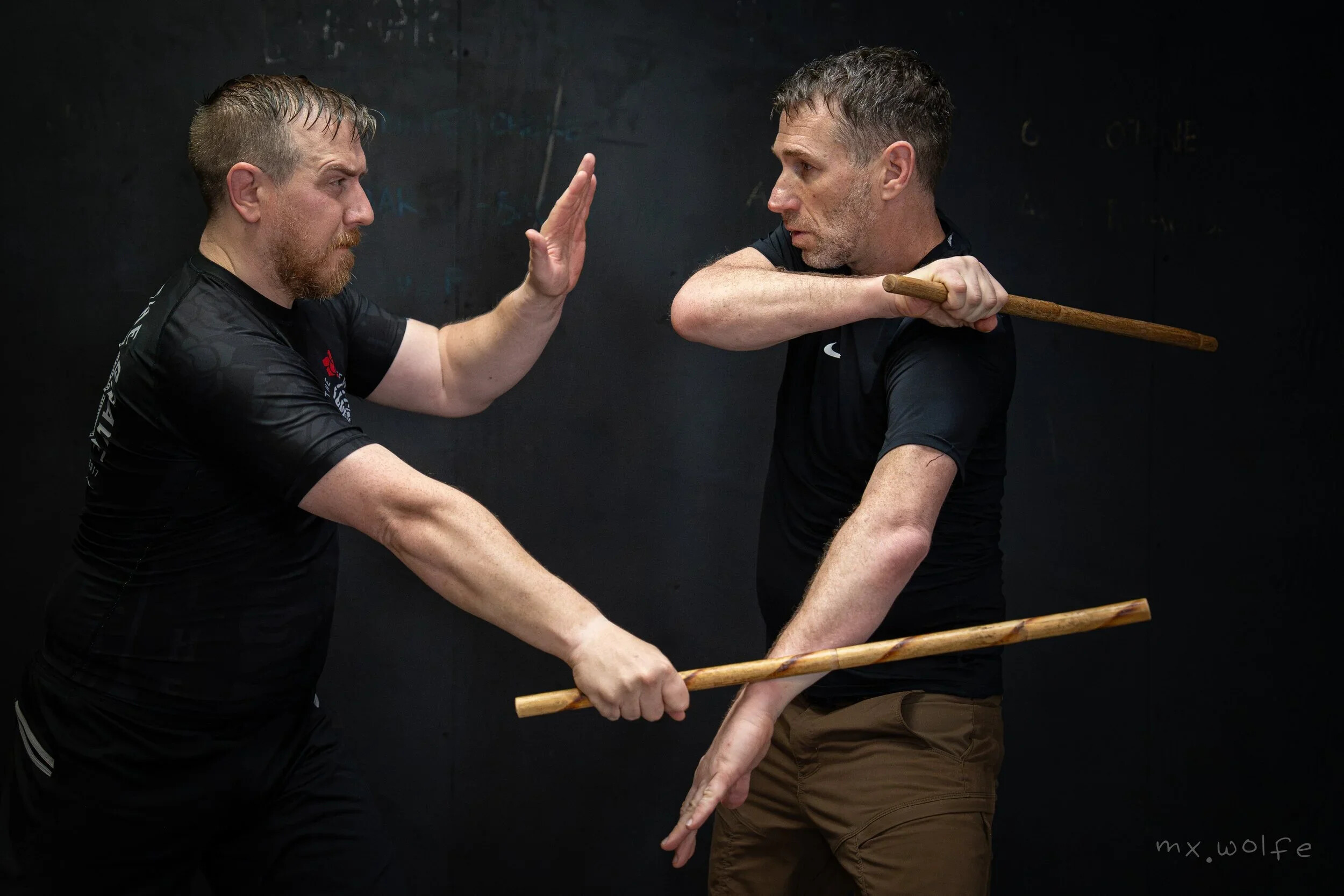
A martial arts school can be marketed with theatrical toughness. Forge chooses a quieter proposition: serious training for ordinary people, in a welcoming room, with the goal of going home safely. That language fits Hershman's leadership record better than any superhero result.
The word forge earns its keep here. It suggests heat and force, but also repetition and shaping. Nobody becomes dependable through one dramatic swing of the hammer. Hershman's public ideas about employee development follow the same rhythm. Set a demanding plan, return to it, measure honestly, and keep the person involved in understanding why the work matters. The method is patient even when the expectations are not. On a marketing team, the repetitions are briefs, reviews, campaigns, and conversations. On the mat, they are movements practiced until panic no longer gets the first vote.
That does not make a dojo a management metaphor with wall padding. The consequences and skills are different. The resemblance lives in the posture toward learning. Expertise is treated as something maintained through contact with reality. A coach keeps training. A leader keeps listening. A plan earns confidence only after someone has tried to break it.
There was a superhero result, of course. Hershman once said he wished he were Batman: prepared, determined, competent. An internet quiz assigned him the Hulk. A colleague proposed Loki, citing the low-level mischief that always seemed to be brewing. Hershman accepted the third answer. It is hard to imagine Batman placing a screen full of cats in his executive portrait.
The joke works because the discipline is real. Hershman speaks about investing deeply in employee development, measuring work honestly, and never allowing process to become an altar. At Forge, coaches remain students. At JumpCloud, a CMO publicly audits his own agent inventory and admits the list is incomplete. Both gestures reject the brittle pose of the finished expert.
I was confident. Confident was worth nothing. The list was worth everything.Micha Hershman, after auditing his AI stack
From the graphic-novel shelf to the SaaS funnel to the training mat, Hershman's work keeps returning to the same bargain. Name the category clearly. Build the system carefully. Test it against reality. Keep a human accountable. Leave enough room for someone to surprise you.
It is an appealing operating philosophy for an agentic age because it is not especially futuristic. The tools may be new; responsibility is old. A good system does not eliminate uncertainty. It gives people a way to meet uncertainty without freezing, bluffing, or kicking over the furniture. If the weekly meeting can accomplish that, Hershman will probably be delighted to schedule one.