The modern office is remarkably talkative. It clicks every time someone books a desk. It sighs through a half-empty conference room. It leaves clues in badge swipes, work orders, visitor logs and the mysterious migration of everyone toward the one corner with decent coffee. The problem is not silence. It is translation. Karen Bucks has made a career of that particular art: taking complicated systems, finding the human tension inside them, and turning the result into a decision someone can defend on Monday morning.
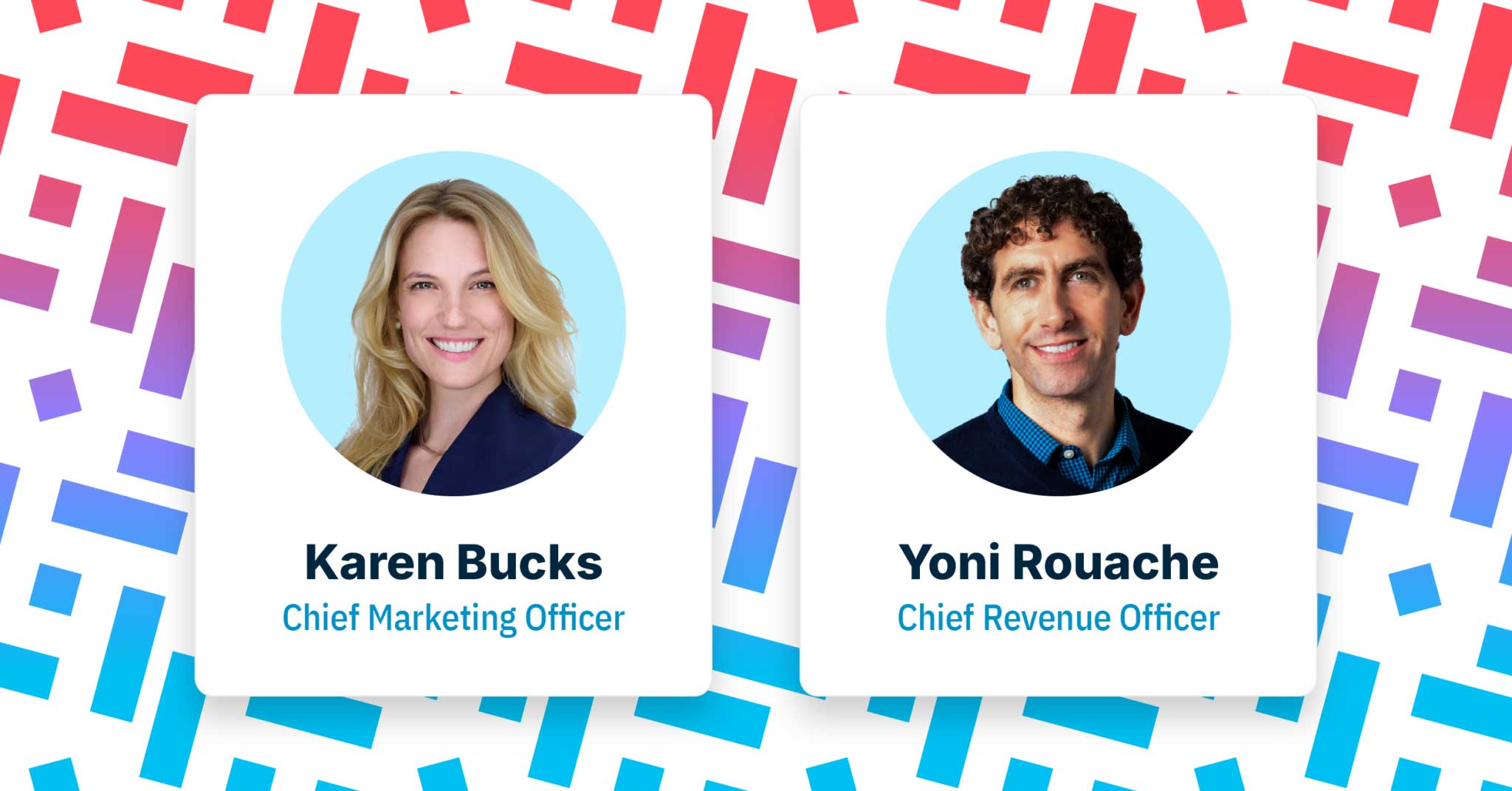
In October 2025, Bucks became chief marketing officer of OfficeSpace Software, leading global marketing and sales development for a company that connects workplace planning, booking, asset management and employee experience. The title makes her the keeper of a large story at an awkward moment. Hybrid work broke the old arithmetic of one employee, one desk, five days a week. Artificial intelligence has promised faster answers while introducing new questions about trust, security and judgment. Meanwhile, executives still want every square foot to explain its existence.
Bucks's answer is not a grand ode to the office. It is a method: connect the information, observe how people actually behave, and make a better case. In her recent writing, she has pointed workplace teams toward the evidence already lying around - reservations, meeting patterns, work orders and collaboration signals. Clean it. Govern it. Then use AI to test assumptions before pouring concrete or moving a department across the building.
“AI as a creative partner, not your boss.”Karen Bucks, on workplace planning
A career built in translation
The instinct predates the C-suite. At Villanova University, Bucks studied finance and minored in Japanese, a pairing that sounds eccentric until you consider her later work. Finance trains attention on consequence. Language trains attention on context. Marketing, when done properly, demands both.
After college she worked as a language instructor in Japan. Then came iCIMS, where she moved from marketing communications coordinator to team lead and marketing manager between 2009 and 2014. At Thomson Reuters, she advanced through marketing management and director roles. These were not glamorous apprenticeship years so much as useful ones: recruiting technology, enterprise buyers, multiple customer segments, and the daily discipline of making software comprehensible.
In 2016, she traded the marketer's seat for the founder's. Oodi was a SaaS platform designed to help marketing agencies manage their operations from end to end. Bucks and her team moved it from idea to platform in less than 14 months. Her published professional biography records more than 135 agency applications in the first five months and 200 percent quarter-over-quarter growth. The figures matter, but the sharper lesson is proximity. Building the thing leaves little room for ornamental positioning. If the product does not solve the job, the customer supplies the edit.
The long scale-up
Bucks joined CentralReach in 2018 as senior vice president of marketing and became CMO in 2022. She spent seven years there, helping broaden the company's market, strengthen its brand and build teams across demand generation, product marketing and communications. OfficeSpace's biography credits her with helping scale CentralReach through transformative growth and a successful exit. Roper Technologies completed its acquisition of the business in 2025.
Recognition followed. NJBIZ named her to its 40 Under 40 class in 2022. She received a Stevie Award for Female Executive of the Year, was named among New Jersey's Top 25 Women in Leadership, and won a Women in IT Young Leader of the Year award. Her response to the NJBIZ honor revealed her preferred direction of travel: she pointed the attention back toward the CentralReach team and its mission.
That reflex appears throughout her public commentary. She speaks about marketing's place beside sales, finance and the CEO, but she does not treat the seat as a ceremonial reward. It is earned through outcomes. In one account of a CentralReach recognition trip, she highlighted a marketer whose team had created or assisted in creating millions of dollars in revenue. Brand and performance were not rival camps. They were parts of the same engine.
Connection, communication and results. Her formulation is concise because each part keeps the other two honest: warmth without delivery drifts, delivery without communication frays, and communication without connection becomes theater.
The office becomes a product story
At OfficeSpace, Bucks joined chief executive Erin Mulligan Helgren, chief product officer Andres Avalos, head of AI Dan Goldstern and revenue chief Yoni Rouache. She described the choice in unusually personal terms. Product and mission mattered, but so did the people. Her first conversation with Helgren sold her on the move; she also noticed their shared links to marketing, New Jersey and Japanese. Category design may sound like an exercise in nouns. Bucks's version begins with colleagues.
The work itself is a category puzzle. OfficeSpace describes its platform as an AI operating system for the built world, connecting people, assets and spaces. The phrase tries to unite two departments that software has often separated: those managing the workplace and those shaping the experience inside it. Bucks's role is to make that union feel less like a product map and more like a necessary response to the way work now behaves.
Her customer visits provide the raw material. After a week with Avalos and Goldstern, she wrote that workplace leaders wanted connected data not only to control costs but to improve culture. Rapidly growing AI companies needed predictive models to evaluate new space. Across OfficeSpace's client base, she saw a shared need for a consolidated view of what was working, what was not and what a long-term decision might cost.
No magic before governance
The most useful part of Bucks's AI argument is the part least likely to appear in a breathless demo. Security comes first. Before a team uploads a CSV or connects a workplace system, she wants agreement with IT and legal on governance, privacy, vendor standards, processing and access. Lose organizational trust at the beginning, she warns, and earning it back is difficult.
Only then does the fun begin. A general AI tool can summarize a forbidding market report, surface patterns in facilities requests or suggest questions about a floor plan. Purpose-built systems can go further into geometry, stack planning, adjacency and scenario modeling. The distinction is not merely about computational muscle. It is about giving the model the structured context of the workplace rather than asking a chat box to improvise a building.
“AI doesn't replace your judgment. It doesn't understand your stakeholders, your culture, or the politics of who sits on the fourth floor.”Karen Bucks
That fourth-floor line is revealing. Bucks is comfortable with the machine, but not dazzled by it. She has described using AI for research, meeting summaries, strategic briefs, packing lists and finding music. She once joked about asking it to calculate percentage change. Yet she keeps perspective and final strategy outside the model. The useful machine accelerates the route to a point of view; it does not own the point of view.
There is playfulness elsewhere too. Clever wordplay plus a brand campaign, she has written, gets her every time. A winter swag post became an excuse to talk cozy merchandise and blame Punxsutawney Phil for six more weeks of cold. This is not incidental to the executive persona. Marketing categories need rigor, but they also need memory. A phrase has to survive the meeting after the deck closes.
What the marketer can steal
Bucks's career offers a compact operating system of its own. Learn the language of money. Get close enough to customers that they can correct you. Treat brand and performance as collaborators. Give awards back to the team. Put governance before spectacle. Use AI for speed, never as an alibi. And when naming a category, begin with a problem buyers already recognize in their bones.
The aspiration behind her current work is larger than more efficient floor plans. Bucks talks about supportive, engaging workplaces and about returning time to facilities and real-estate leaders for more strategic work. That makes the office less a container for employees than a system with consequences: for cost, collaboration, culture and whether a Tuesday commute feels remotely worthwhile.
Her job is to make those consequences visible. The badge swipe becomes a pattern. The pattern becomes a scenario. The scenario becomes a recommendation, carrying enough evidence to cross finance, HR, IT and the executive suite without losing its meaning. This is translation again, only the language now includes square footage and agents.
The office may never explain itself perfectly. It contains too many humans for that, and at least one politically sensitive fourth floor. Karen Bucks is betting that it can become more legible - and that the best technology will leave leaders with more evidence, more time and no excuse to surrender their judgment.