The job interview took four hours. Nobody seems to have minded. In the spring of 1997, Michael J. McFall went for a walk with Bob Fish around East Lansing, Michigan. Fish had a coffee shop and a second location to think about. McFall was a barista who might make a manager. By the time they shook hands, the proposed promotion had become an equal partnership.
There are efficient ways to conduct an interview. This was an unusually productive way to miss the point of one. McFall left his university research position and committed to coffee. The business that became BIGGBY COFFEE acquired a partner whose future would involve franchise owners, books about entrepreneurship, and a stubborn question: what should a company actually do for the people inside it?
The handshake makes an appealing opening. It also threatens to make everything afterward sound easy. McFall’s more interesting contribution to his own success story is his willingness to describe the parts that went badly, including a company culture he helped create and later had to change.
A second store, a different life
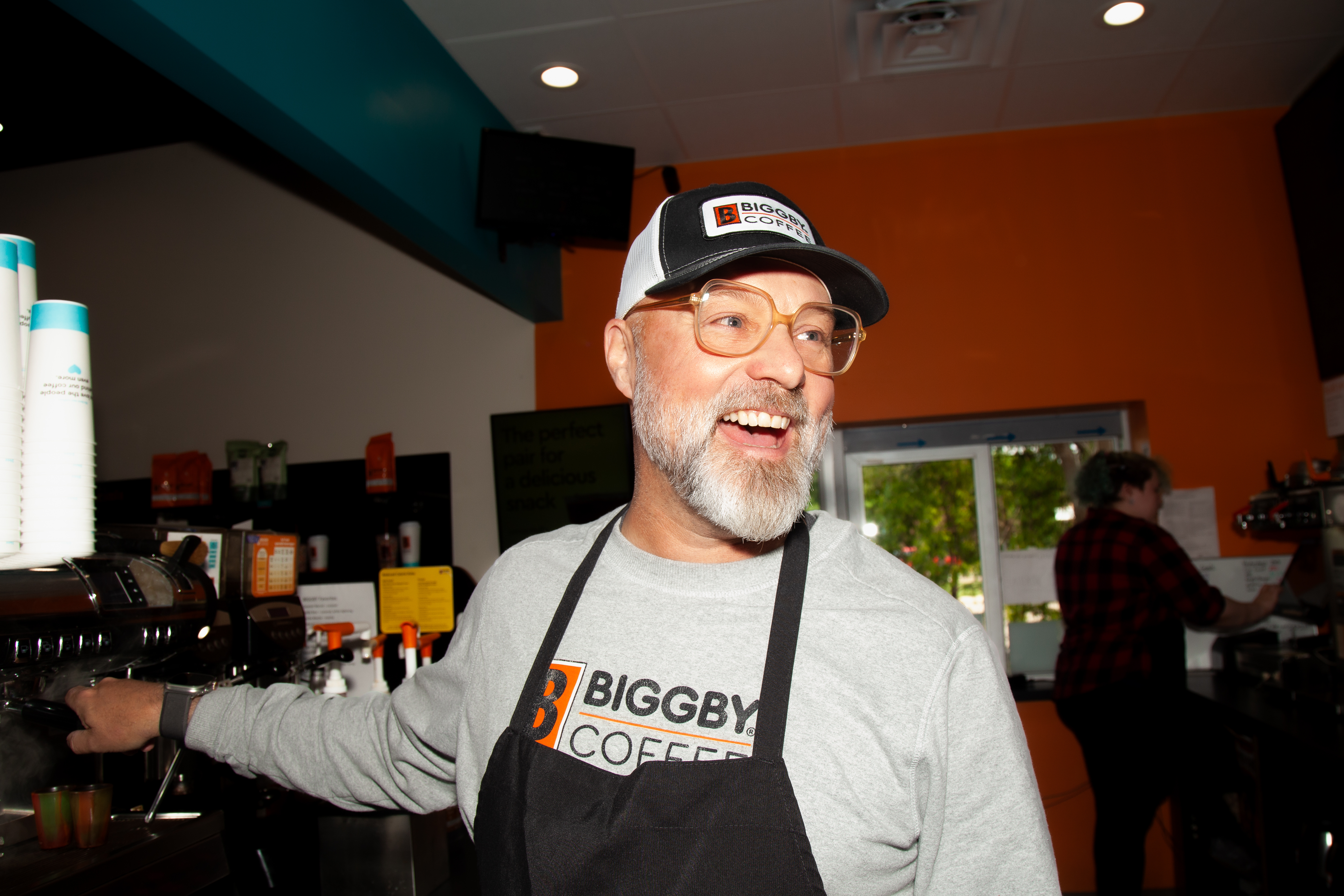
McFall began at the first café in 1996. Mary Roszel, Fish’s business partner, hired him. A person’s career can look inevitable when described backward; his looked considerably less settled going forward. He was preparing for graduate school while working at Michigan State University. Serving coffee occupied the early part of his day. Academia was still a plausible destination.
He found that he liked the effect he could have on a customer’s morning. Someone arrived barely ready for the day; a conversation and a drink could send them away with more energy. He also saw an opening in specialty coffee. Fish brought experience running restaurants and organizing the work behind a counter. McFall could see both the demand and the machinery needed to meet it.
The spring walk gave those observations somewhere to go. The partnership came first; the formal company followed later. That distinction matters. This was a commitment to work together before it was a polished corporate origin story. The question soon became how to help other people operate cafés, turning one working relationship into a franchise business.
- 1996Joins the first café as a barista
- 1997The walk with Fish ends in partnership
- 2019Grind reaches readers
- 2023Grow follows
- 2026Named a Kalamazoo College trustee
Before coffee, a less sheltered classroom
Long before the walk, McFall had been willing to leave familiar ground. At fifteen, he joined Class Afloat aboard the tall ship Pogoria. A school term could include a very long stretch of water between one place and the next. It was an early experiment in living beyond the boundaries of home.
At Kalamazoo College, he studied economics, played on the golf team, and spent part of his education in Sierra Leone. He graduated in 1993. The combination is useful to remember when the barista-to-executive story gets compressed into a slogan: he arrived at the café with experiences that did not come from a café.
After college came commission sales in southeast Texas. McFall has repeatedly recommended that particular education to would-be entrepreneurs. Sell something and earn money; fail to sell and the lesson arrives without much administrative delay. His later advice would retain that insistence on testing an idea against an actual transaction.
Yet his affection for learning never disappeared. Years later, he would return to a classroom through the University of Michigan’s Center for Entrepreneurship. Coffee had interrupted the academic plan without entirely evicting the academic interests.
The trouble with a business that works
Growth gave McFall a problem that opening more shops could not settle. The company was expanding, yet people were leaving. His account of those years includes employees departing without notice. A business could look successful from outside and feel very different to the people coming to work.
He met Nathan Havey on a camping trip in northern Michigan. Conversations about conscious capitalism led to a consulting relationship that lasted years. Fish and McFall worked with Havey on the company’s culture and purpose. The corrective involved looking beyond commercial results to the experience of the people producing them.
Love became part of McFall’s business vocabulary. In his usage, it requires commitment, trust, and the willingness to have difficult conversations. It is a demanding word to bring to work, where even relatively minor promises can be difficult to keep. The practical test is how people are treated when something is inconvenient.
“Speak last, if at all”
Michael J. McFall’s advice to leaders
His advice has the virtue of putting an obligation on the boss. Listening costs the leader an opportunity to perform being the leader. Supporting someone requires finding out what they are trying to do. Both activities become harder when the person in charge assumes the title has already settled who knows most.
Two books, two different jobs
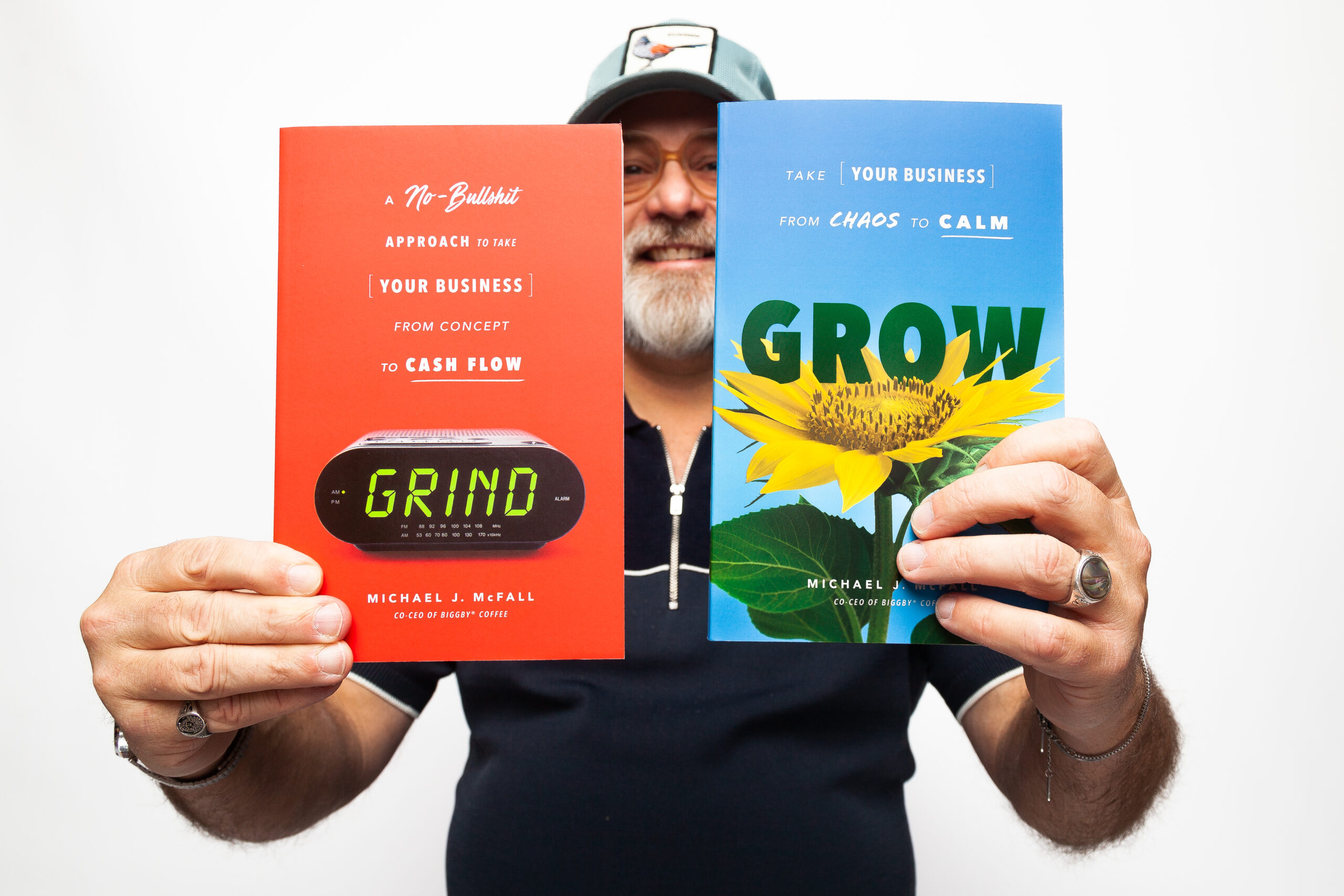
McFall’s books separate problems that entrepreneurs often bundle together. Grind: A No-Bullsh*t Approach to Take Your Business from Concept to Cash Flow, published in 2019, concerns the early work of getting a business to pay its way. Its outlook is practical, impatient with prestige, and interested in what someone will actually buy.
One of its lines makes the point without requiring a motivational poster: “If you need people to think you’re a big deal, start-up life will be a struggle.” The book also uses a cowboy squirrel as an entrepreneurial emblem. The animal’s business credentials are unconventional, but the combination of persistence and indifference to approval suits the argument.
In 2022, McFall launched the GRIND Score, a self-assessment for aspiring entrepreneurs. The premise was that people scrutinize markets, money, and business plans while giving the person starting the venture rather less inspection. Identifying one’s own limitations belongs in the preparation too.
Grow: Take Your Business from Chaos to Calm arrived on June 6, 2023. Here the founder’s problem changes. The person who once needed to touch everything must learn to build a team that can function without constant intervention. Success includes making the business less dependent on its creator.
The second book gives trust a central place. It treats leadership as work that must be learned, even by someone who has already learned how to start a company. Being useful at the beginning does not excuse a founder from changing as colleagues acquire responsibility.
Then his own team asked him to change
In an October 2025 interview, McFall described being reluctant when colleagues wanted to revise the company’s purpose and values. He had invested in the existing formulation. His first response was resistance. Experienced people around him persuaded him that the language was not having the intended effect.
The earlier purpose emphasized helping individuals build lives they loved. The revision put community more explicitly at the center. McFall described learning to accept that work he and Fish had done needed updating as the company moved toward leadership by a professional team.
It is a useful complication in a leadership author’s biography. He had written about loosening the founder’s grip, and then encountered another occasion to loosen his own. The episode gives his argument some friction. Advice about sharing authority is easier to publish than to practice when colleagues are editing something you care about.
Today, BIGGBY describes its purpose in terms of communities where people feel connected, valued, uplifted, and inspired. McFall’s earlier thinking remains recognizable in it. So does the contribution of people who persuaded him to reconsider how that thinking should be expressed.
The long return to Freetown
In May 2025, McFall returned to Sierra Leone with Fish and Fish’s wife, Michelle, through their One BIGG Island in Space initiative. In an essay published in February 2026, he described revisiting his former campus and reconnecting with Kadiatu Allie, a friend from his student years.
The trip joined his education to the coffee business in a tangible way. Fish and Michelle had been working with Allie on a coffee-farm project. McFall visited the community involved and saw the work of preparing seedlings. It was his first farm trip with them through the initiative.
For someone who talks so often about relationships, this was an unusually long view of one. A friendship formed during college had become part of a conversation about coffee, farming, and what the company might help support. Familiar people had acquired unfamiliar responsibilities. The return belonged to his present as much as his past.
A bigger rink, eventually
McFall’s ambitions also include owning the Detroit Red Wings. Hockey has occupied a more immediately accessible place in his life through the BIGGBY Bombers, the beer-league team he joined in 1996. He has described those teammates as close friends and has supported youth hockey as well.
At home in Ann Arbor, he puts family first. His taste for a Volkswagen and a Casio fits the personality he presents in business: approachable, impatient with ceremony, willing to make a point without dressing it up. The Red Wings aspiration does introduce a rather expensive exception to the modest accessories.
Another return became official in August 2026, when Kalamazoo College announced his election to its board of trustees. The economics graduate who had left a research job for coffee had acquired a different responsibility to education. The path had wandered, but several old interests were still in view.
The café partnership began with time spent talking and a willingness to change the plan. Almost three decades later, McFall is still encountering versions of that situation: colleagues with another idea, a friend with a farm project, an institution asking him back. A four-hour interview was good preparation for a career that keeps asking him to listen.
Keep the conversation going
Read Grind and Grow, visit McFall’s website, or explore his Forbes columns.