Tami Newcombe had reached the podium at the New York Stock Exchange when she encountered an unexpected engineering problem: where was the bell? She was looking for brass and a rope. Her host pointed out the digital button. She pressed it, the exchange lit up, and the group laughed. A career spent helping customers adopt technology had delivered one last, rather public demonstration.
Ralliant began trading under the symbol RAL on June 30, 2025, following its separation from Fortive. Newcombe became president, chief executive and a director. For a company whose work includes instruments, sensors and safety systems, the ceremony supplied an unusually cheerful reminder that even familiar procedures deserve a fresh look.
The more interesting beginning, though, happened decades earlier. Before she had a company to explain to investors, Newcombe had hardware to understand, customers to persuade and teams to lead. Her working life has crossed those boundaries often enough to make the boundary itself look slightly artificial. An engineer who learns sales returns with a different set of questions.
The education that continued after engineering school
Newcombe grew up in upstate New York, the daughter of two teachers, and attended Syracuse on a volleyball scholarship while studying engineering. The classroom and the court made a demanding combination. They also offered two ways of testing an idea: work through the problem, then discover whether the team can actually execute.
Her early professional years included IBM, where she held engineering and product roles, followed by Analog Devices. Ralliant’s career record dates her IBM tenure to 1989-1995 and her work as a global client executive at Analog Devices to 1995-1999. These are different vantage points on the same commercial transaction: something must work, and someone must have a reason to buy it.
One remembered episode makes those years less abstract. As a young engineer, she asked to work an evening shift alongside an experienced colleague, learning to test and debug an IBM mainframe. The additional education required asking for access to someone else’s expertise. There is something appealingly practical about that ambition. Find the person who knows. Arrange to be there.
She later earned an MBA from Union College. The sequence matters less than the breadth: engineering, product marketing, customer work, business. None of those disciplines gets to declare victory alone. A technically accomplished product can be difficult to sell; a convincing pitch can become an expensive promise if the engineering cannot support it.
“We all get to write our own movie”
Tami Newcombe, 2020
That was Newcombe’s advice to graduates in 2020. It gives her career a useful frame. The interesting question about a move is what it lets a person learn. A conventional ladder can explain a bigger title. It is less helpful at explaining why someone wants to leave familiar work for a discipline in which she must ask basic questions again.
Eighteen years on the customer’s side of the table
Newcombe joined Cisco in 1999 and stayed until 2017, serving as a vice president of sales from 2009. By the time she left, her responsibilities had included a commercial sales business worth $1.5 billion. The scale is substantial, but the occupation is revealing in its own right. Sales exposes the distance between a supplier’s description of value and a customer’s willingness to pay for it.
Her work there included responding to market transitions and developing channel partnerships. A partner brings reach, local relationships and a separate set of incentives. Making that arrangement useful requires more than a good product demonstration. It requires an understanding of how several businesses make their decisions, and why their calendars rarely line up for anyone’s convenience.
When Tektronix appointed her commercial president in early 2017, she took responsibility for global sales and marketing. Two years later, she became its president. Pat Byrne, the executive to whom she reported, singled out her problem solving and her ability to develop teams focused on customers. The promotion brought the commercial and technical parts of her experience under one roof.
Tektronix occupies an instructive place in the technology economy. Its instruments help engineers examine what their designs are doing. The glamorous finished device gets the photograph; the equipment used to determine whether it works generally waits patiently on the bench. Newcombe had moved into the business of making other people’s technical claims examinable.
- 1989IBM
Engineering and product experience - 1995Analog Devices
Global client executive - 1999Cisco
Sales leadership; VP from 2009 - 2017Tektronix
Commercial president; president from 2019 - 2021Fortive
Group president, then segment leadership - 2025Ralliant
President, CEO and director
Sometimes the prototype is cardboard
At Tektronix, Newcombe described a development process that brought people from several disciplines together around the customer’s workflow. Teams showed prospective users drawings, cardboard prototypes or models made with a 3D printer. The proposition could be questioned before the finished product consumed the full investment.
Cardboard is an excellent material for receiving bad news. It carries little prestige, costs relatively little and is difficult to mistake for a completed strategy. A customer can point to what is inconvenient without feeling obliged to admire months of engineering. For a leader with experience on both sides of product development, that early conversation has obvious value.
She also kept communication on her own annual development plan. By then she was already leading a technology company. Continuing to practise a skill so closely associated with seniority says something about her view of the job: experience supplies material, but it does not automatically supply the ability to make another person understand it.
In the same period, she advised people to assess a role by the skills it would add. That is an unusually durable test. Compensation belongs to a particular job; the ability to solve a new kind of problem travels. Her later responsibilities would demand that portability, across businesses whose products and customers could differ considerably.
A familiar portfolio gets its own front door
Fortive named Newcombe a group president in 2021. She led its Precision Technologies segment from 2022 to 2025. The next move took those accumulated experiences into the creation of an independent public company. Ralliant inherited operating businesses and technical histories, while acquiring a fresh obligation to explain what held them together.
That distinction matters. The products did not begin existing when the stock ticker appeared. Tektronix, Qualitrol, Gems Setra, Hengstler-Dynapar, Anderson-Negele and PacSci EMC already brought their own expertise. A new corporate name had to sit above those identities without erasing the reasons customers trusted them in the first place.
The portfolio is organised into two segments. Test & Measurement includes instruments, software and services for advanced electronics. Sensors & Safety Systems includes power grid monitoring, defense and space technologies, and industrial sensing. Oscilloscopes and grid monitoring equipment may look like distant relatives, but both serve customers who need dependable information about how a system behaves.
For Newcombe, the task combines allocation and translation. Which opportunities deserve investment? What can the businesses share? Which capabilities should stay close to the customer? A collection of established companies cannot answer those questions simply by acquiring matching stationery. The corporate organisation has to earn its usefulness.
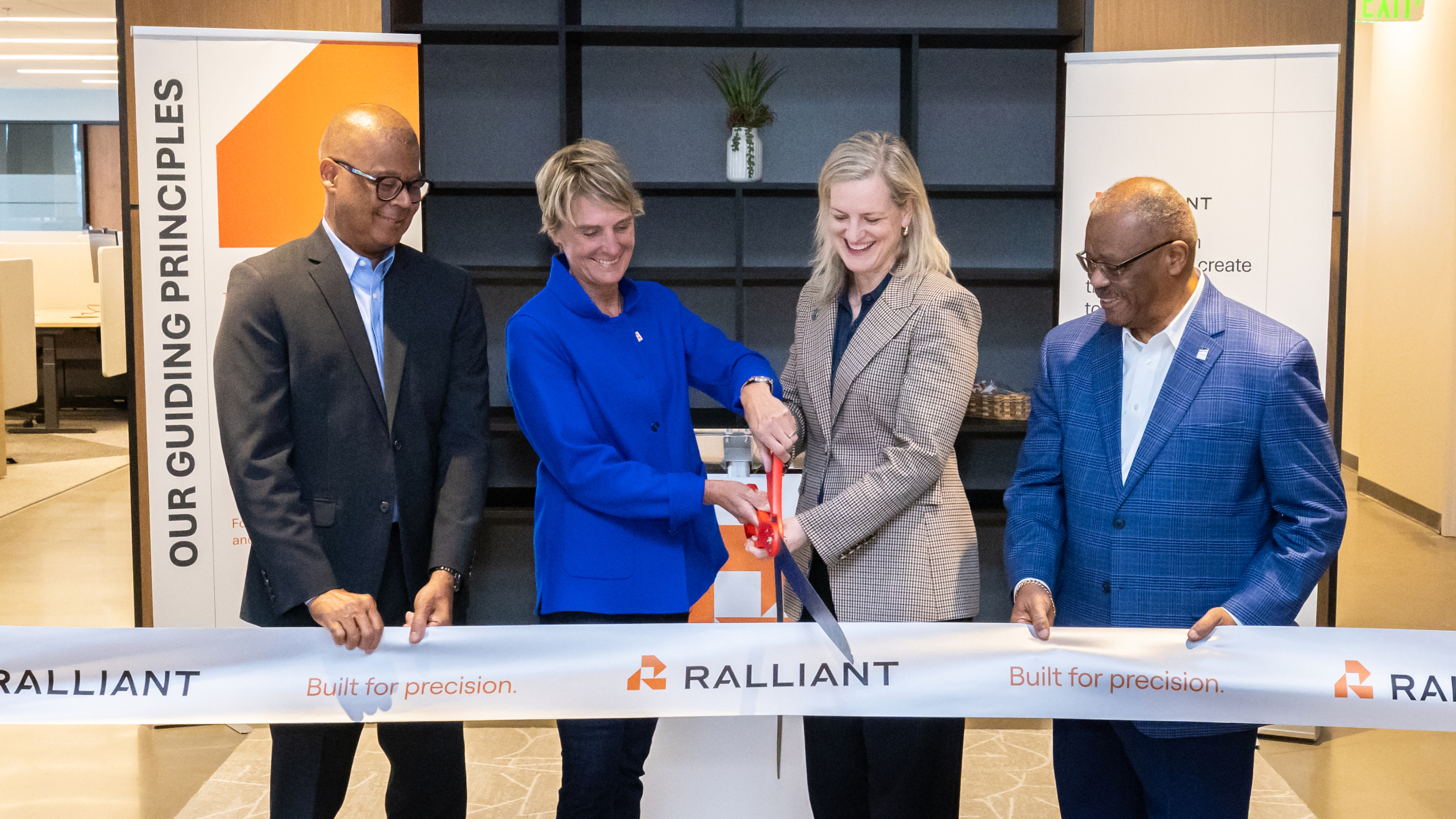
On March 5, 2026, Ralliant officially opened its global headquarters in Raleigh’s North Hills area. Newcombe linked the choice to universities, research institutions, technology partners and access to skilled people. The location gave the new organisation a physical meeting point, alongside the operating sites where much of its expertise already lived.
The first year, measured
The early public-company numbers made the challenge visible. In the second quarter of 2025, Ralliant reported revenue of $503 million, down 6% from a year earlier. Lower Test & Measurement volumes, standalone company costs and tariffs helped pressure margins. Separation arrived with bills attached. Newcombe announced a savings programme aimed at some of the costs associated with the split.
By May 2026, the company had introduced an Enterprise Productivity Program targeting $50 million to $60 million in annualised savings by 2028. Newcombe placed its oversight within the CEO office. A target is a promise to do work over time; putting it there made the responsibility more explicit.
Quarter ended July 3, 2026. Reported July 30, 2026.
The second quarter of 2026 brought $568 million in revenue, with both segments recording double-digit growth. Ralliant raised its full-year guidance. Sensors & Safety Systems contributed $347 million; Test & Measurement contributed $221 million. The figures describe company performance, rather than any one person’s achievement, but they are the public test of the organisation Newcombe leads.
Her recent account of Ralliant’s first leadership conference returned to execution: customers, shareholder expectations and practical examples of improvement, including the combination of the Ralliant Business System with AI. The gathering brought leaders to Raleigh for three days. Its usefulness would be decided later, when those leaders returned to their teams.
There is a consistent preference in Newcombe’s career for learning through the work itself. Ask for the engineering shift. Take the customer’s question seriously. Show the unfinished model. Practise explaining the idea again. The opening bell makes a fine commemorative photograph. The more consequential part comes afterward, when the button has been pressed and everyone has to get on with it.