Mary Barra gave General Motors a dress code that could fit on a name badge. The old policy ran to ten pages. The replacement: “Dress appropriately.” Some managers wanted more instructions. They were comfortable supervising people and substantial budgets; deciding whether someone’s clothes belonged in an office apparently required reinforcements.
Barra, then running human resources, thought the objection revealed something useful. If a manager could be trusted with a department and its money, surely the same manager could handle a conversation about trousers. The wardrobe question had opened a much bigger one: how much judgment were people willing to exercise when the rule book stopped answering for them?
Dress appropriately.
It is a funny story because the stakes seem small. It stays funny only until you consider the company. A carmaker makes decisions about design, engineering, suppliers and factories long before a customer turns a key. Habits of deferral can travel through that system as readily as a part. Ten pages about clothing offered an unusually portable specimen.
Barra would become GM’s chief executive in January 2014, then its board chair in 2016. Her career has since included bold technological promises and expensive revisions. But that earlier encounter with the dress code remains a useful introduction. She has spent much of her working life inside GM, asking people to take responsibility for what happens there.
The car she wanted. The car she bought.
Her attachment to the company began well before she joined its payroll. Barra grew up in Waterford, Michigan, the daughter of a GM die maker. Cars were part of the family’s livelihood. They could also be a neighborhood event: when her father brought a new vehicle home, people came over to inspect it.
At about ten, she fell for an older cousin’s red Chevrolet Camaro convertible. Later, when buying her own car, she put down a deposit on a Pontiac Firebird, then reconsidered the cost and chose a Chevrolet Chevette. Romance had submitted its proposal. The household budget had returned comments.
There is a customer’s education in that small reversal. People can admire a vehicle and still buy something else. They weigh a monthly payment against a shape they love, practical needs against the pleasure of driving. An automobile executive has to hold all those considerations in mind without assuming that enthusiasm will pay the difference.
Barra’s parents encouraged education and hard work. Neither had attended college. Her mother’s confidence in what her daughter could do became a recurring theme in Barra’s public reflections, including her encouragement of young women considering ambitious careers. The factory supplied a living; her parents supplied permission to imagine a different job inside it.
An apprenticeship with several departments
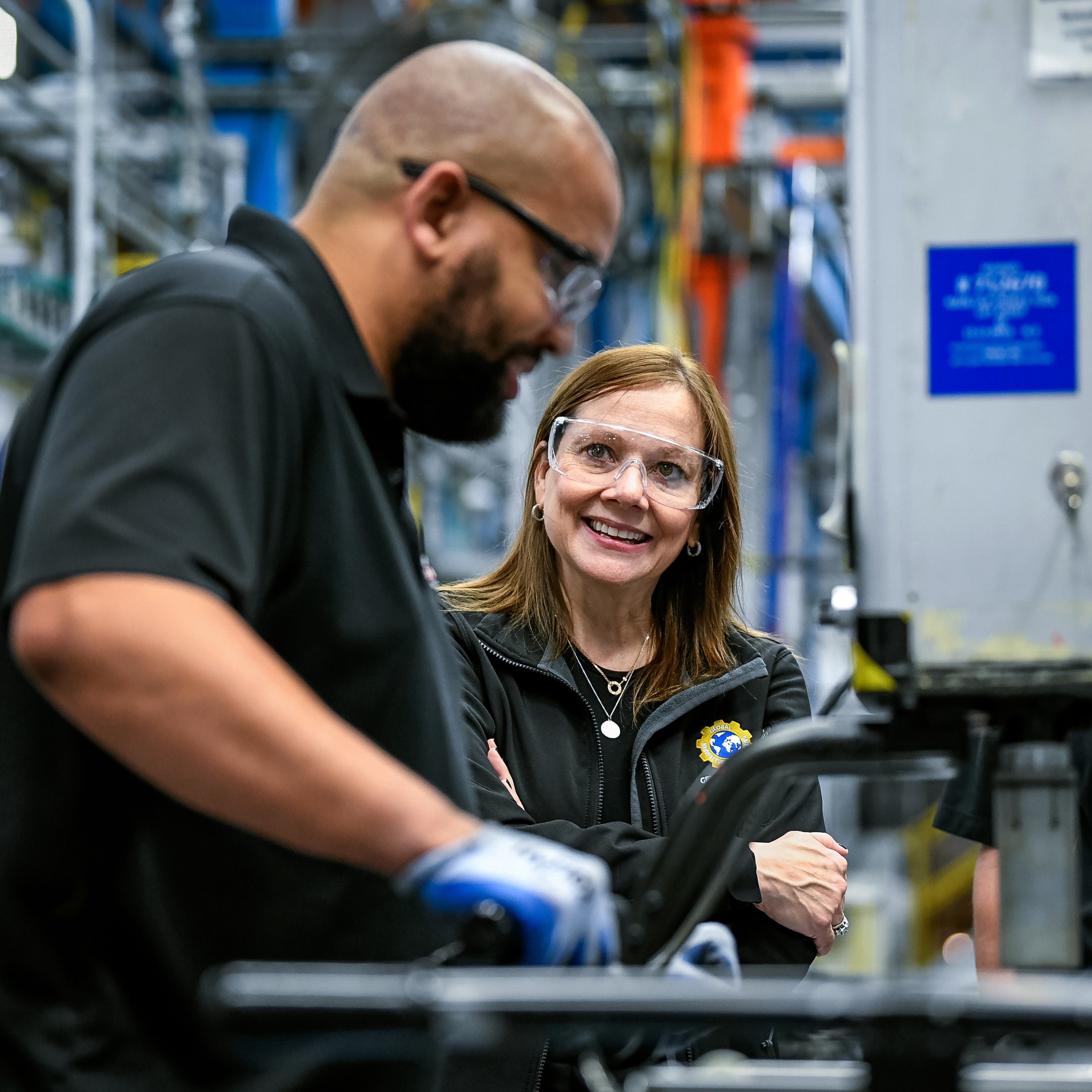
In 1980, at eighteen, Barra began at GM as a cooperative education student through General Motors Institute, now Kettering University. Her first assignment was quality inspection on the Pontiac assembly line. She later described that assignment as her big break. It gave her a close view of how much depended on each step of building a car.
The co-op rotations moved her through different functions in assignments lasting six to twelve weeks. Pontiac then had its own collection of departments, from purchasing to manufacturing. Before her career acquired a direction, she could see how many directions a career within one company might take.
She earned her electrical engineering degree in 1985 and an MBA at Stanford in 1990, supported by a GM fellowship. The business education widened the field beyond engineering. Accounting, entrepreneurship and corporate culture added different ways to examine the organization she already knew from the plant floor.
Her later jobs crossed boundaries that corporate biographies often compress into a list: plant management, manufacturing engineering, human resources, global product development, purchasing and supply chain. Each involved a different kind of dependency. A design needed a production process; a production process needed people; people needed managers who could make a decision.
Long tenure can suggest someone who has never left the same room. Barra’s experience involved moving between rooms with very different work underway. That breadth helps explain why her leadership advice so often returns to understanding the business, listening carefully and connecting one person’s task to another’s.
- 1980Co-op student
Pontiac assembly line - 1985 / 1990Engineer + MBA
GMI, then Stanford - 2008-2013Across the business
Manufacturing, HR, product - 2014 / 2016CEO + chair
Responsibility for the whole
The problem that would not wait
Within her first month as CEO, GM confronted the ignition-switch crisis. The recalls and scrutiny put the company’s engineering decisions and its handling of internal concerns under examination. For Barra, responsibility for the organization arrived before there was time to enjoy the appointment.
In an August 2026 essay, she returned to a question she asks colleagues: when is the best time to solve a problem? Her answer is “The minute you know you have one.” The phrase is plain enough to sound obvious. Its difficulty appears when solving the problem means bringing unwelcome information to people who would rather finish a meeting.
She described the response as a continuing exercise in discovery. A small team met every day, sometimes briefly, sometimes for hours. The questions concerned what they had learned, what required action and whether they were making progress. Full visibility did not arrive at the start. They had to keep gathering facts while taking responsibility for the response.
The crisis belongs in any account of her leadership because it makes the accountability language concrete. Her appointment was a milestone for women in the auto industry. It also put her in charge of an institution whose failures required answers. The two facts coexist. Neither a historic promotion nor a persuasive management maxim could complete that work on its own.
The minute you know
you have one.Mary Barra · on when to solve a problem
Please read the slides before the meeting
Barra’s preferred management practices tend toward the unglamorous. In a 2018 conversation at Wharton, she advocated sending material before meetings so the time together could be spent discussing it. Anyone who has watched someone read a slide aloud will recognize the modest ambition involved: allowing a meeting to have a purpose.
She also encouraged leaders to ask colleagues whether they had received what they needed from a meeting, and to solicit their opinions. These practices create opportunities for correction. A leader who asks a question still has to tolerate the answer, especially when it complicates a decision that looked settled.
At Stanford’s 2016 business school graduation, Barra urged future leaders to surround themselves with people willing to challenge them. Her advice included a compact commercial test: “you only win when your customer says you win.” A company can approve its own plans all afternoon. The buyer gets a separate vote.
That emphasis also leaves room for an apparently surprising opinion from someone with decades at one employer. In 2017, she told students that changing jobs need not be a mark against a candidate. Her own long stay at GM did not become a prescription that everyone else must follow.
A bet large enough to change her mind about
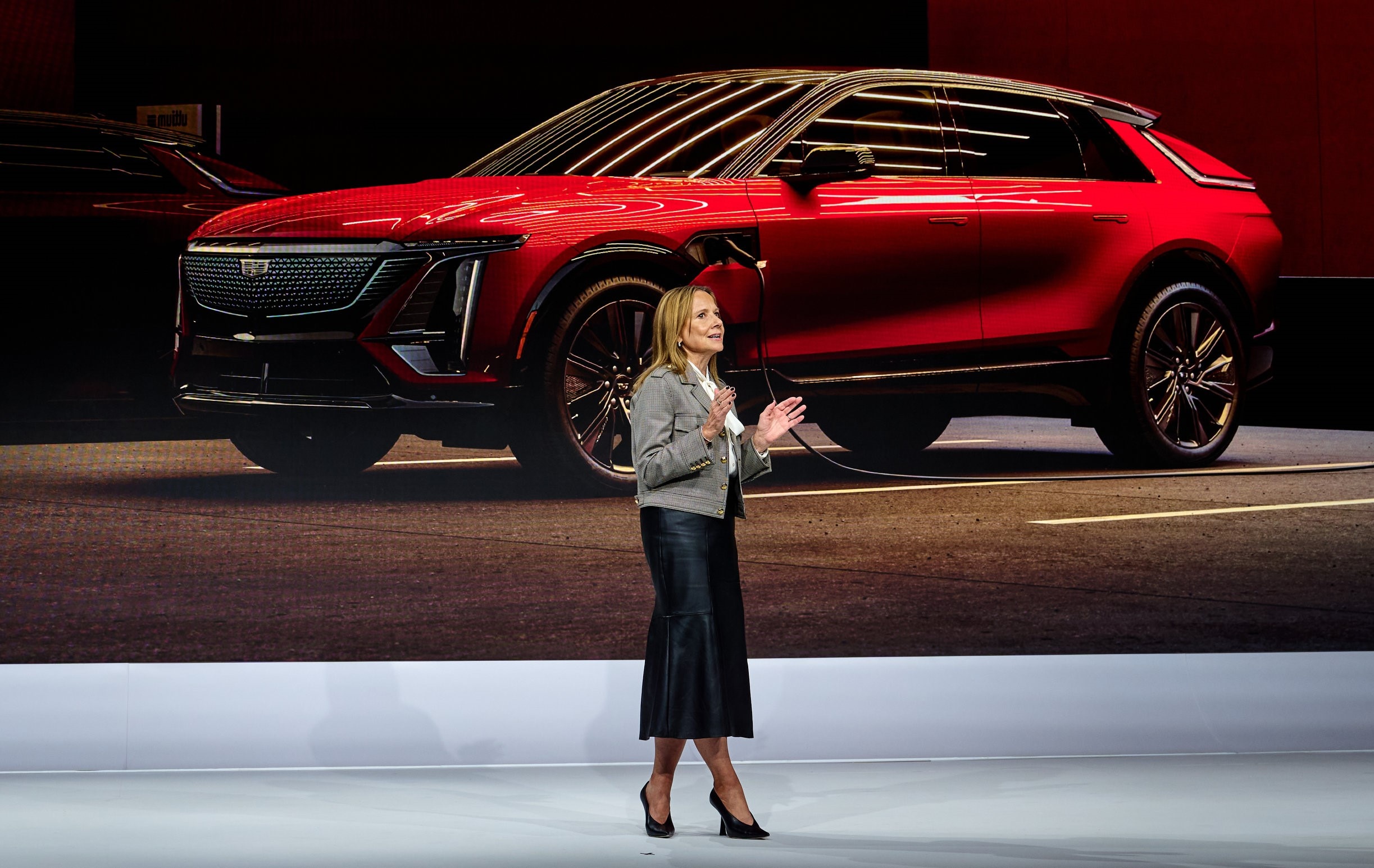
Barra’s future-facing ambitions have required more consequential decisions than shortening policies. GM bought Cruise in 2016, bringing autonomous-driving talent into an established manufacturer. In December 2024, the company announced that it would stop funding Cruise’s robotaxi development and combine technical efforts around assisted and autonomous driving for personal vehicles.
The explanation was financial and operational: scaling a robotaxi business required considerable time and resources in an increasingly competitive market. A technology could remain relevant while the business built around it ceased to justify further funding. Changing that allocation meant accepting a substantial change in course.
It is a revealing complication in a career sometimes presented as a steady climb. Staying at one company does not make its future predictable. Years of institutional knowledge can help an executive understand the machinery, but they cannot guarantee which new business will work. Barra has had to make decisions on both sides of that uncertainty.
GM’s subsequent hiring also shows how the company is trying to connect its automotive and software work. In May 2025 it named Aurora co-founder Sterling Anderson chief product officer, reporting to president Mark Reuss. The remit covered the full product lifecycle across gas and electric vehicles, including hardware, software, services and user experience.
For Barra, the challenge is organizational as well as technical. A vehicle’s physical systems and digital features have to work together for an owner who has little interest in which department built which part. A successful handoff inside the company matters only if the combined product makes sense outside it.
The road ahead still has a driver
GM’s current driver-assistance system, Super Cruise, allows hands-free driving on compatible roads under specified conditions while requiring driver attention. In April 2026, the company reported a billion hands-free customer miles. That is evidence of use of an assistance feature, rather than proof that every part of the autonomous future has arrived.
The next announced step is eyes-off driving, planned to begin with the Cadillac Escalade IQ in 2028. GM began supervised public-road testing of its next-generation automated technology in March 2026, with trained drivers able to take control. The distinction between today’s capability, testing and a planned launch matters to anyone considering the promise.
The electric strategy likewise extends into a broader idea of what a vehicle might do. At its October 2025 technology event, GM described bidirectional charging that can supply backup electricity to a properly equipped home. That adds another practical question to the emotional and financial ones Barra encountered as a young buyer: what else can this expensive thing be useful for?
Super Cruise assists on compatible roads. The driver must remain attentive.
Next-generation automated technology, with trained test drivers.
Planned introduction on the Cadillac Escalade IQ, beginning on highways.
Her October 20, 2026 shareholder letter placed the future alongside familiar business. New pickups and SUVs appeared with software services, battery development and the 2028 autonomy plan. She projected Super Cruise penetration in the truck portfolio to grow four to five times in 2027. Those were expectations, with the work of delivering them still ahead.
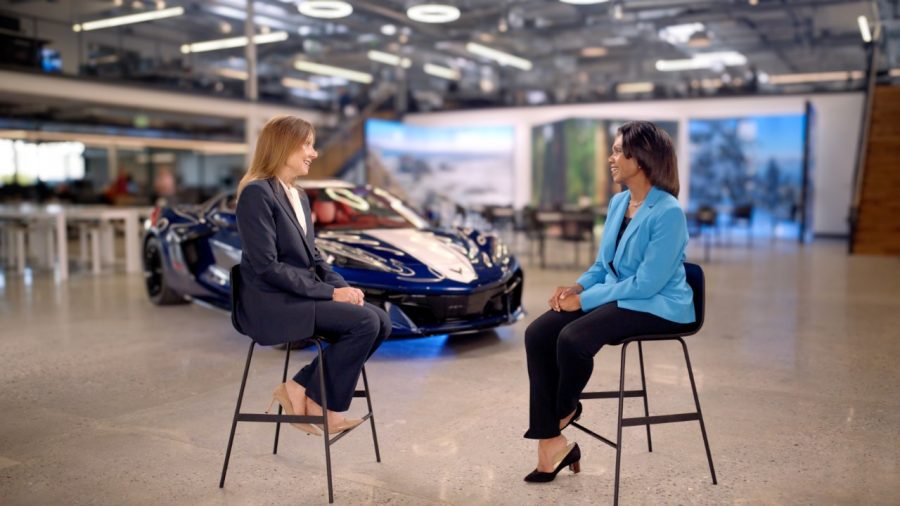
In her 2026 conversation with Condoleezza Rice, Barra returned to the assembly line and the skill of the people working there. “People are what make General Motors, General Motors,” she said. After forty-six years at the company, her subject was still the daily work of building a car. The dress code had been easy to shorten. Getting thousands of people to exercise judgment, speak up and make a complicated product work together remains a much longer assignment.
Continue the conversation
- General Motors · Mary Barra
- Mary Barra on LinkedIn
- Mary Barra on X
- Mary Barra on Facebook
- Her essay · From co-op student to CEO
- Her essay · The best time to solve a problem
- October 2026 · Letter to shareholders
- Watch · CBS extended interview, January 2026
- Watch · Stanford’s 2024 Arbuckle Award conversation