industrial-technology
(19)
Nekesa Echols Built a Business Around One Point of Accountability
An 18-year Army veteran turned founder, Echols is building a Texas contractor around a deceptively simple promise: one team owns the work from first survey to final system.

The Factory Built a Venture Lab - Then the Venture Lab Learned to Build Companies
Born inside an automotive supplier, Fark Labs now moves founders from whiteboard to factory floor, city street and overseas market. Its wager is that venture capital works better when it comes bundled with engineers, corporate buyers and a passport.
Sarah McAuley Almost Passed on Manufacturing. Then She Saw What the Machines Were Making.
A Supreme Court campaign, three children, countless youth practices, and one supposedly dull software category. Sarah McAuley built a career by noticing how the small pieces fit together - especially after a factory floor changed the way she looked at the world.
Kurt Andersen Learned the Factory Floor. Then He Made Enterprise Software Speak Human.
The BillingPlatform CMO built his career where machinery, software and revenue meet - turning complicated systems into practical stories that sales teams, finance leaders and customers can use.

Heather Adkins Is Rebuilding Marketing Like a Job Site
At Trimble, Heather Adkins is turning a 300-person marketing organization into one shared growth engine. Her method is less campaign magic than construction discipline: align the plans, pour the foundation, and make every name earn its place.
MITO Spent a Decade Making Graphene Boring Enough for the Factory Floor
Graphene had extraordinary lab results and an ordinary factory problem: it clumped, wandered and asked manufacturers to change too much. MITO built its business around the unglamorous fix - make the wonder material behave like an additive people can actually use.

Toshiba Lost the Living Room. Can It Win the Infrastructure Underneath Everything?
The 150-year-old Japanese icon survived scandal, a nuclear wipeout and a rejected breakup. Now private, leaner and newly profitable, it is betting that the best place to rebuild a household name is far outside the household.
The Factory for Ideas Big Companies Couldn’t Use
Innventure goes hunting in corporate R&D departments for technology that works but has nowhere to go. Then it tries to do the expensive part: turn the orphaned invention into an industrial business.

The Investors Who Stay for the Whole Story
For more than three decades, Baird Capital has backed founder-led B2B technology and services companies from an early venture check to a late-stage buyout - one global team, one employee-owned firm, and a preference for the sectors most people scroll past.

The VC Firm Betting That Software Is About to Get Its Hands Dirty
Converge VC backs pre-seed through Series A companies where AI, software infrastructure and machines meet the stubborn physics of work. Its pitch is capital with operating memory - and fewer scripts for founders to follow.

The Venture Firm Betting the Next Tech Boom Will Be Built From Atoms
8090 Industries is wagering that the next generation of valuable technology companies will sell electrons, molecules, machines and infrastructure - and that old industrial networks can help new founders build them faster.

Ron McMurtrie Makes the Complex Useful
Honeywell's chief marketing officer built his career by translating complicated systems into customer outcomes - and by treating marketing as an operating job, not a department of slogans.

Elaine Kanak Is Turning the Gas Pump Into a Customer Interface
Vontier's first enterprise CMO has an unusual brief: make a sprawling portfolio of pumps, payments, chargers, software, and repair tools feel like one useful system. Her method starts with the ordinary moments drivers barely notice.

Jackie Helfrich Sells the Invisible Parts That Hold the World Together
She markets connectors and sensors most people never see - the components inside airplanes, hospitals, factories and power grids - and has spent 20 years turning quiet industrial hardware into a story buyers can follow.

The Truck Company Quietly Building the Operating System for Tough Work
From fire engines and boom lifts to airport robots and the Postal Service's next delivery van, Oshkosh turns hard jobs into a shared engineering problem. Its century-old trick is making technology travel between machines that rarely appear in the same conversation.

The 140-Year-Old Thermostat Company Cooling the AI Boom
Johnson Controls began with a classroom that was too hot. Today, its chillers, controls and service crews sit at the intersection of two expensive problems: buildings use too much energy, and AI infrastructure produces too much heat.
Vontier
The company you have never heard of runs the fuel pumps, tool trucks and traffic lights you pass every day - and it is quietly betting all of them on the messy middle of the energy transition.

TE Connectivity
It is one of the largest companies most people have never heard of - the connector and sensor maker behind your car, your factory floor, and the AI data centers everyone else is busy hyping.
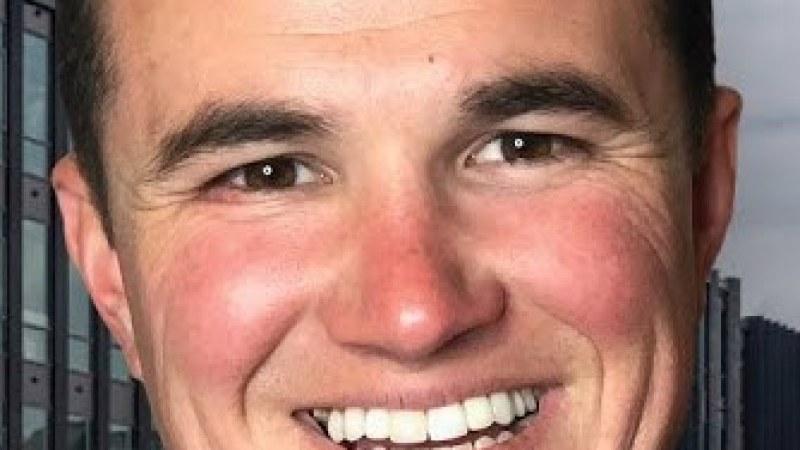
Dallas Hogensen
Dallas Hogensen is the co-founder and CEO of Felux, a Cleveland-based digital marketplace and operating platform for the steel and metals industry. A ranch-raised Oregonian and former college football player turned serial startup operator, he scaled Lyft Business toward $1 billion in revenue and co-founded two companies (Liveli and Signal HQ) before relocating his family to Ohio to digitize a $2 trillion industry famous for handshakes and fax machines. Under the irreverent banner #makingsteelsexy, he has grown Felux's platform volume from roughly $10M to hundreds of millions in transactions, raised more than $24M in venture capital, and set out to put Cleveland back on the map as a hub for industrial technology.