A crack is a rather late way for an aircraft component to introduce its troubles. By the time you can see it, quite a lot has already happened. Landon Grace has spent years working on the earlier part of that story: the small internal changes, the evidence hiding inside a material, the warning that arrives without the courtesy of a visible line.
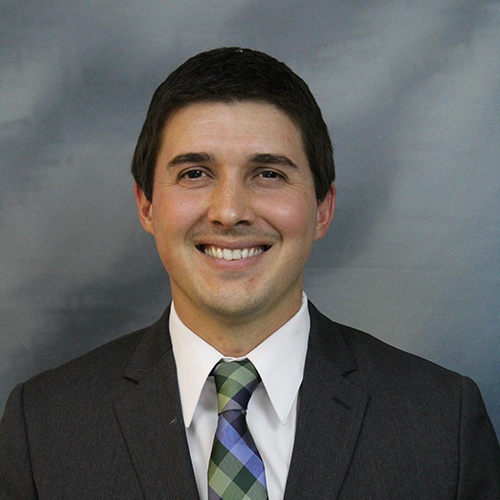
It is an unusual starting point for a company profile. Grace is CEO and co-founder of Lumata Health, an associate professor at North Carolina State University and a pilot. His professional life includes aircraft engineering, university laboratories, students, scientific awards and venture financing. Put together, those chapters suggest an enduring interest in how complicated things behave when they leave the diagram.
The diagram, after all, gets to enjoy perfect weather. Actual materials, organizations and careers must make other arrangements.
The engineer before the executive
Before the executive title came an engineering education. Grace earned his bachelor’s degree in mechanical engineering at the University of Missouri-Columbia, then completed master’s and doctoral degrees at the University of Oklahoma. His early professional record includes Cessna Aircraft Company and the United States Air Force. These were places where engineering had a decidedly physical destination.
At Tinker Air Force Base, he worked full-time as an aerospace engineer while completing his doctorate. He spent five years there and graduated from the Air Force’s Palace Acquire Program. The overlap matters. His research training developed alongside a job, with the demands of each occupying the same stretch of his life. A doctorate and a full-time position make an ambitious double booking.
He subsequently joined the University of Miami. By September 2015, he was directing its Composite Materials Laboratory and held the distinction of inaugural Junior Faculty Scholar. A talk he gave at Duke that month concerned the bridge between basic science and practical impact. Already, the question was how a material’s underlying behavior could become useful somewhere beyond the laboratory.
That Miami work crossed engineering disciplines and attracted support from organizations including NASA, the Department of Defense and the Everglades Foundation. The connecting interest was composite materials: combinations whose behavior depends on how their constituent parts work together. The subject offered plenty of room to move without abandoning a technical foundation.
A warning small enough to miss
In 2016, Grace joined NC State. Two years later, he received a National Science Foundation CAREER Award for work on damage in polymer composites. The announcement described $500,000 in support for investigating the mechanisms behind that damage. A problem usually encountered as a maintenance concern became a question about what happens inside the material before the damage announces itself.
A paper co-authored by Grace, Ogheneovo Idolor, Rishabh Guha and Katherine Berkowitz describes an intriguing possibility. Water naturally absorbed in a composite can occupy different molecular states. Some interacts with the surrounding polymer; some has fewer such interactions. Internal damage creates additional space. The behavior of water in that changing space may help reveal damage too small to see.
In that research, a familiar nuisance becomes a potential witness. Moisture is ordinarily something an engineer must account for. Here it can also carry information. The appeal lies in asking a more precise question of something already present, rather than waiting for an external sign that the structure has changed.
Reading a material before a visible crack tells the story.
The experimental work also contains a useful complication. A 2021 paper examined how moisture history affects these measurements. Changes in total water content can complicate the interpretation of damage. The researchers tracked absorption and desorption as well as dielectric behavior. An attractive explanation still had to survive contact with the other things the material was doing.
Later work co-authored by Grace examined machine learning for quantifying impact damage in polymer composites. The challenge included damage at different scales and locations, and the difficulty of following it over time. Together, these projects show a research practice concerned with measurement, interpretation and the patient business of distinguishing one kind of change from another.
The student who returned
There is a more human way to follow that research: through someone who chose to come back. In 2017, undergraduate researcher Katie Berkowitz arrived at NC State for the Composites for Extreme Environments program. She worked with Grace and fellow professor Mark Pankow on impact damage and the dielectric properties of bismaleimide, a material used in an aircraft radome.
A radome protects an antenna from the weather. It is a practical object with a specialized vocabulary attached, which makes it an appropriate resident of Grace’s professional world. Berkowitz returned the next summer to continue her research. In autumn 2019, she began a mechanical engineering doctorate at NC State.
Her later dissertation describes those early summers as decisive in discovering an appetite for research. In 2024, Grace chaired her advisory committee. A temporary undergraduate placement had become a relationship extending through doctoral work. For a professor, that is a different measure of progress from a grant amount: someone found enough in the work, and the people around it, to stay.
The educational component of Grace’s CAREER project belonged to this broader teaching interest. It included expanding access to engineering summer-camp activities for students in rural and isolated urban communities. The laboratory question came with a second ambition: give younger students a route into engineering before they had decided it belonged to somebody else.
Room for an unfinished idea
In 2022, NC State selected Grace for a Goodnight Early Career Innovators Award. He was one of 25 faculty recipients. The program provided $22,000 annually for three years to support scholarship and research. Its structure gave early-career faculty something quite concrete: resources with which to keep asking questions.
Grace’s stated plan was to pursue projects still too early in development for conventional funding agencies. That detail gives the award a particular character. There are questions that arrive with enough evidence to support a formal proposal, and questions that first need a little room to become that coherent. He wanted to spend time in the latter territory.
Annually for three years, under the award’s recipient funding terms.
The same year, Grace appeared among NC State’s newly promoted associate professors. His academic career was accumulating the recognizable markers: an appointment, research support, an award, a promotion. Alongside it, another set of responsibilities was expanding. He had co-founded Lumata and, by 2022, had become its CEO. The professor’s questions now shared space with a company’s daily decisions.
When forty becomes two hundred
NC State’s 2024 commercialization report records a sharp change in scale. While on sabbatical from his faculty position, Grace led Lumata as it expanded from 40 employees to more than 200 in less than a year. That is a historical snapshot, but an arresting one. A team small enough to hold in one’s head had become a much larger organization.
Employees, before and after an expansion of less than one year. Bars use 200 as the lower bound of the later figure.
The administrative consequences are easy to underestimate. More people means more connections to maintain, more context to communicate and more decisions that happen beyond the founder’s immediate view. The figure invites a leadership question: how do you remain useful to colleagues when keeping up can itself become a full-time occupation?
Grace has described enjoying close involvement in product strategy, innovation and difficult business problems. His co-founder Matt Wills has offered a corresponding account, publicly describing a colleague who works through challenges with the team and stays engaged when circumstances become difficult. The two descriptions put working relationships near the center of the job.
In March 2025, Lumata announced a $23 million Series B round co-led by LRVHealth, McKesson Ventures and Cencora Ventures, with existing investors including Cortado Ventures participating. The announcement put total financing since inception at $36 million. Those are company figures, and they mark another change in the resources and expectations surrounding its chief executive.
A pilot with colleagues
Grace’s aviation background supplies his own language for the role. In a November 2025 interview, he described thinking in systems and navigation and compared the CEO’s work to air traffic control. It is a revealing choice of analogy. An organization has people doing different jobs, moving toward a shared destination, with someone responsible for helping the whole arrangement stay coordinated.
“I don’t like to give big directives and then completely walk away.”
Landon Grace, November 2025
Read across the career, a pattern emerges: the full-time engineer completing a doctorate, the researcher looking for hidden changes, the professor whose summer student returned, the founder working beside colleagues. Each chapter involves staying close enough to learn something specific. That is an interpretation of the record, rather than a claim that every career move followed a single plan.
Grace’s story is more interesting with those separate parts intact. A laboratory offers one kind of feedback. A student’s decision to return offers another. A growing company supplies others still. He has put himself in places where the answer requires attention, collaboration and a willingness to look again. The crack may be visible eventually. There is a great deal of work to do before then.