The gold is what you notice. In photographs of the James Webb Space Telescope, eighteen hexagons become an enormous honeycomb, a surface seemingly designed to make astronomy look expensive. But the gold is a coating. Underneath sits beryllium. And before those mirrors could be polished, coated or assembled, somebody had to produce the material that would hold its shape in the cold.
- Materion supplies the materials inside chips, optical systems and demanding industrial components.
- Its advantage combines unusual material properties with the ability to manufacture to specification.
- The business rewards close attention: metal prices can make revenue growth look better than the underlying activity.
The mirror starts underground
Materion’s predecessor supplied optical-grade beryllium mirror blanks for Webb. That distinction matters. The company did not build the telescope, and other specialists did the subsequent mirror work. It occupied an earlier, less photogenic position in the chain: making the starting material suitable for an extraordinary assignment.
NASA’s explanation is refreshingly physical. Beryllium is light, stiff and stable at cryogenic temperatures. A mirror that changes shape changes what you can see. The selection followed testing of competing materials. The question was whether the material could behave properly where the instrument would actually operate.
This is a useful way into Materion. Start with the condition that makes a product difficult. Too much heat. Too little room. An electrical contact that must keep working. Light that must pass through at certain wavelengths and be rejected at others. Then work backward to the material.
Five years without the alloy
The business began with a much smaller budget than its current applications suggest. In 1931, Charles Baldwin Sawyer and Bengt Kjellgren incorporated Brush Beryllium in Cleveland with $500. Their work grew out of Brush Laboratories, where Sawyer and Charles Brush Jr. had investigated extracting and producing beryllium.
Then came a setback with an unmistakable price tag. A 1948 fire at the Lorain plant caused $350,000 in damage. Copper-beryllium production stopped for five years. Replacement alloy capacity opened in Elmore in 1953. There is nothing abstract about a competitive advantage when a burned factory can remove it.
Over time, the company built more of the chain around itself. A Utah bertrandite mine and processing mill followed in 1969. Electronic applications became its largest customer sector by 1987. The Materion name arrived in 2011, bringing a collection of businesses under one identity. The expertise had accumulated long before the branding caught up.
Three ways to sell a difficult specification
Today, Materion organizes its operating businesses into Performance Materials, Electronic Materials and Precision Optics. Taken together, they serve manufacturers rather than shoppers. The customers are building semiconductors, aircraft, defense equipment, industrial machinery, vehicles and medical technologies. They need a particular behavior from a component, often under awkward conditions.
and ceramics
and packaging
and assemblies
Performance Materials supplies alloys, composites, ceramics and beryllium products. ToughMet alloys address wear in components such as bushings and bearings. Clad metals combine materials in engineered layers. Applying a costly metal only where it is needed can be a practical design and cost decision.
Electronic Materials supplies inputs for fabrication: sputtering targets, evaporation materials, specialty chemicals and packaging products. A target is consumed in producing a thin film. Its composition and purity become part of the manufacturing problem. Materion also recovers and refines precious metals, connecting the supply of new material with the handling of valuable leftovers. A September 2026 company article highlights hermetic packaging: the advanced chip also needs protection from heat and environmental contaminants.
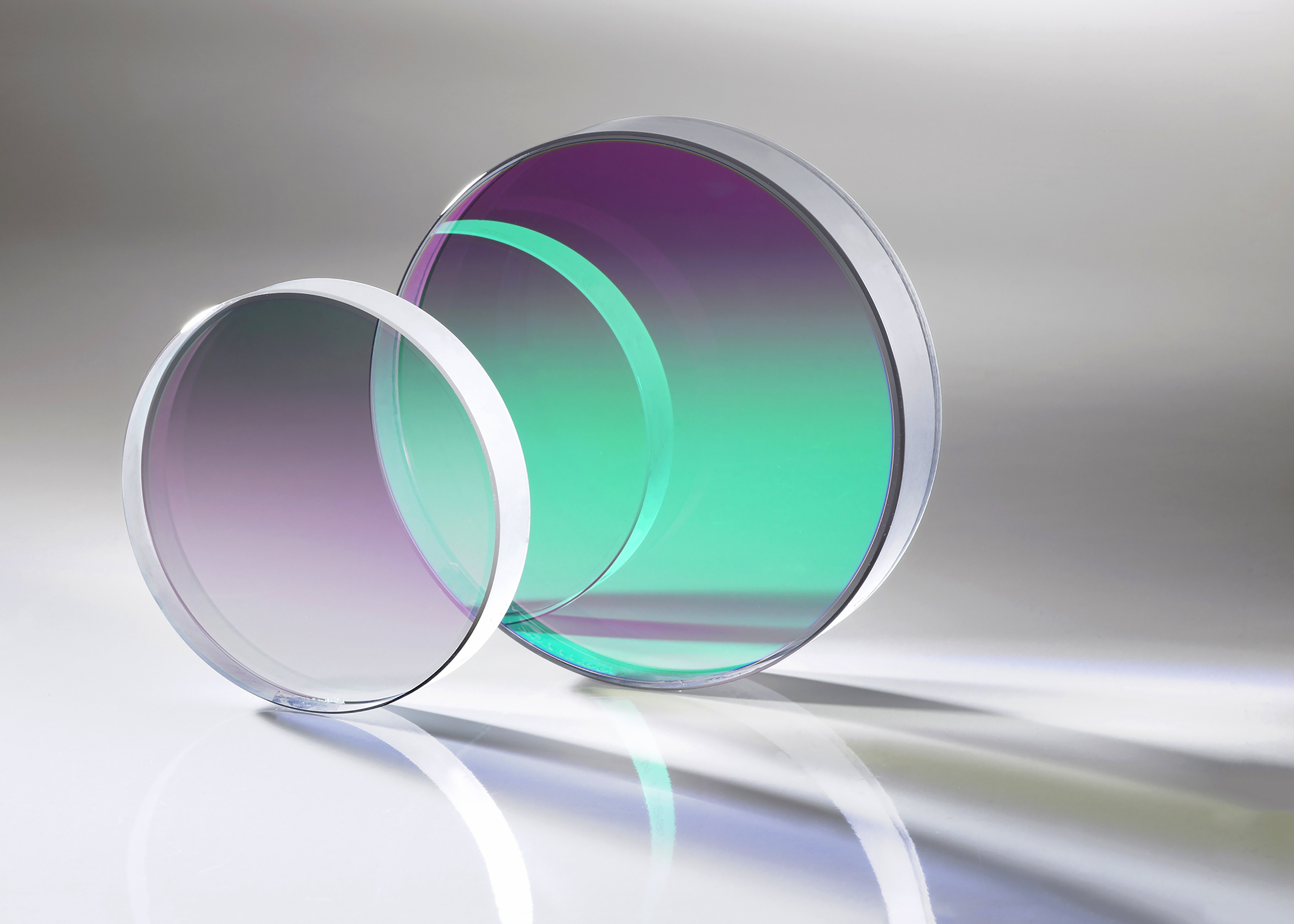
Precision Optics controls light through filters, coatings and assemblies. Here, customization is the product. Materion competes with specialists as well as larger technology businesses. Elsewhere, its disclosed competitors include NGK, IBC Advanced Alloys and CoorsTek. The comparison depends on the component; there is no single rival across this entire cupboard.

Read past the metal price
Expanding those capabilities takes money. In 2021, Materion announced a $380 million purchase of H.C. Starck’s electronic-materials portfolio. The deal strengthened its position in semiconductor thin-film materials. This was an acquisition of manufacturing capability and customer relationships, with a purchase price attached.
The accounts require similar precision. Materion reported $1.787 billion in 2025 net sales, up from $1.685 billion in 2024. Yet value-added sales fell from $1.098 billion to $1.046 billion. The company passes certain metal costs through to customers; its non-GAAP value-added measure removes those costs. Neither number is profit.
Rounded figures. Value-added sales are a non-GAAP measure, not earnings.
The more recent picture improved. Second-quarter 2026 value-added sales reached $308.2 million, up 15% year over year, and Materion raised its full-year adjusted earnings outlook. For anyone studying industrial businesses, the lesson is portable: ask how much of the invoice represents the company’s contribution and how much reflects the metal market.
The next customer needs salt
The same expertise now reaches developing energy systems. A 2020 collaboration with Kairos Power covered beryllium fluoride and technical support for reactor coolant. An October 2025 agreement with Commonwealth Fusion Systems covered beryllium fluoride for FLiBE molten salt planned for ARC fusion plants. These are supply relationships supporting technologies still being developed.
There is experimental work, too. In 2023, the Air Force Research Laboratory awarded Materion a $5 million, two-year contract to advance additive manufacturing of beryllium and aluminum-beryllium alloys.
“Our additive manufacturing laboratory has demonstrated the viability of beryllium additive manufacturing”Clive Grannum / Materion Performance Materials / 2023
Viability still leaves the work of making a process repeatable. Beryllium processing also requires exposure controls; Materion’s filings describe serious health risks from respirable material. Specialty materials make economic sense when the application needs their properties. Ordinary requirements may favor cheaper alternatives, while delayed chip investment or reactor development can postpone demand.
For an engineer, the practical move is to bring a materials supplier into the design discussion early. State the temperature, load, conductivity or wavelength requirement before settling the geometry. Materion’s history suggests that an invention’s decisive choice can happen well before there is a finished machine to photograph.