Before Silvio Napoli was asked to run an electric-car company, he was asked to put his own business plan into practice in India. He had worked on the strategy at Schindler’s Swiss headquarters. Now he would establish the subsidiary and live with the consequences. It was a tidy arrangement for everyone who had stayed in Switzerland.
The young Italian executive encountered a difficulty familiar to anyone who has carried a presentation into an actual workplace: other people had opinions. His Indian management team and the European factories supplying the business challenged the plan. Decisions that had looked coherent at headquarters became matters for negotiation. The episode became a Harvard Business School case, with Napoli’s name in the title.
Decades later, that early assignment offers a useful way into his arrival at Lucid. The products have changed. The question of how a promising idea becomes a functioning business has followed him across continents. On June 1, 2026, Napoli took over as Lucid’s chief executive, bringing a career spent largely in elevators and escalators to a company selling electric sedans and SUVs.
A plan acquires colleagues
There is something unusually revealing about being the subject of a management case before reaching the top of a company. A corporate biography normally arranges the past into a staircase. A case lets people stop on a landing and argue about whether you should have turned left.
Napoli’s Indian assignment was precisely the kind of experience that resists a clean success narrative. The central issue was implementation: how much of a strategy should survive contact with a new market, how much authority belongs locally, and how to persuade colleagues elsewhere to help. These are practical questions, with customers and suppliers attached. An organizational chart cannot answer them on its own.
That assignment also put the author of a plan in charge of executing it. There was no convenient handoff between the person who made the promises and the person who had to keep them. For a future industrial chief, it was an education in the distance between having an answer and making an organization act.
Rome, Lausanne, Germany, Harvard
Napoli was born in Rome in 1965. His childhood extended beyond Italy: he grew up in Belgium. The combination makes the later international career feel less like a sudden departure than a continuation, although geography alone explains nobody’s character.
He graduated from the École polytechnique fédérale de Lausanne in 1989 with a degree in materials science. His first employer was Dow Chemical in Germany. Harvard Business School followed, where he earned an MBA as a Fulbright scholar. Engineering, chemicals, business school: the sequence gave him several ways of looking at an industrial company before he joined Schindler in 1994.
Materials science is a pleasing starting point for someone whose later work would depend on what happens when designs meet manufacturing. A material has properties. A factory has constraints. A business has bills. His early career placed engineering and commercial decisions close together, before either became a boardroom responsibility.
His qualifications were followed by assignments with actual operating responsibility. The Indian business was one. Hong Kong and the wider Asian organization would supply others. The career required moving between a multinational’s central ambitions and the particular conditions of the places where it wanted to sell.
The long route to the chairman’s chair
Napoli’s progress through Schindler was measured in decades. Between 2001 and 2003, he worked in corporate development and acquisitions at ALSO Holding. He then ran Schindler’s Hong Kong company from 2003 to 2005, before leading the Jardine Schindler Group. From 2008 through 2013, he was responsible for Asia-Pacific on Schindler’s group executive committee.
He became group CEO in January 2014. In 2016 he joined the board, and in 2017 he became chairman. The dates matter because the climb was neither a single promotion nor an uninterrupted spell in the same office. It crossed operational management and board leadership, with another return to the CEO role in 2022.
- 1994Joins Schindler
- 2014Group CEO
- 2017Chairman
- 2022Returns as CEO
- 2026Leads Lucid
There was an unusually literal obstacle to that chairmanship. Schindler’s articles required its chairman to be Swiss. Napoli was Italian. In 2016, shareholders were asked to remove the nationality requirement, explicitly clearing a path for his election the following year. Few executive transitions come with such a concise illustration of the difference between belonging to an organization and qualifying under its rules.
His experience also took him into other boardrooms. Eaton appointed him a director in 2019. Its assessment emphasized his familiarity with industrial operations, technology, financial management and international strategy. These are less photogenic credentials than a new vehicle reveal, but a factory depends on them all the same.
The useful life after the sale
An elevator business teaches a particular lesson about customers: installation begins a relationship that can last for years. In a December 2024 interview, Napoli described maintenance as central to Schindler’s model. “We’re first and foremost a service company,” he said. New installations fed a continuing business in care and modernization.
That outlook makes his move into cars more interesting than the simple contrast between vertical and horizontal travel. Both put expensive engineering into everyday use. Both depend on service after delivery. The comparison has limits, of course. A person shopping for a sedan has different choices from a building owner commissioning lifts. Still, Napoli had spent years working in a business where the product’s working life mattered commercially long after the original sale.
“We’re first and foremost a service company.”
Silvio Napoli, December 2024
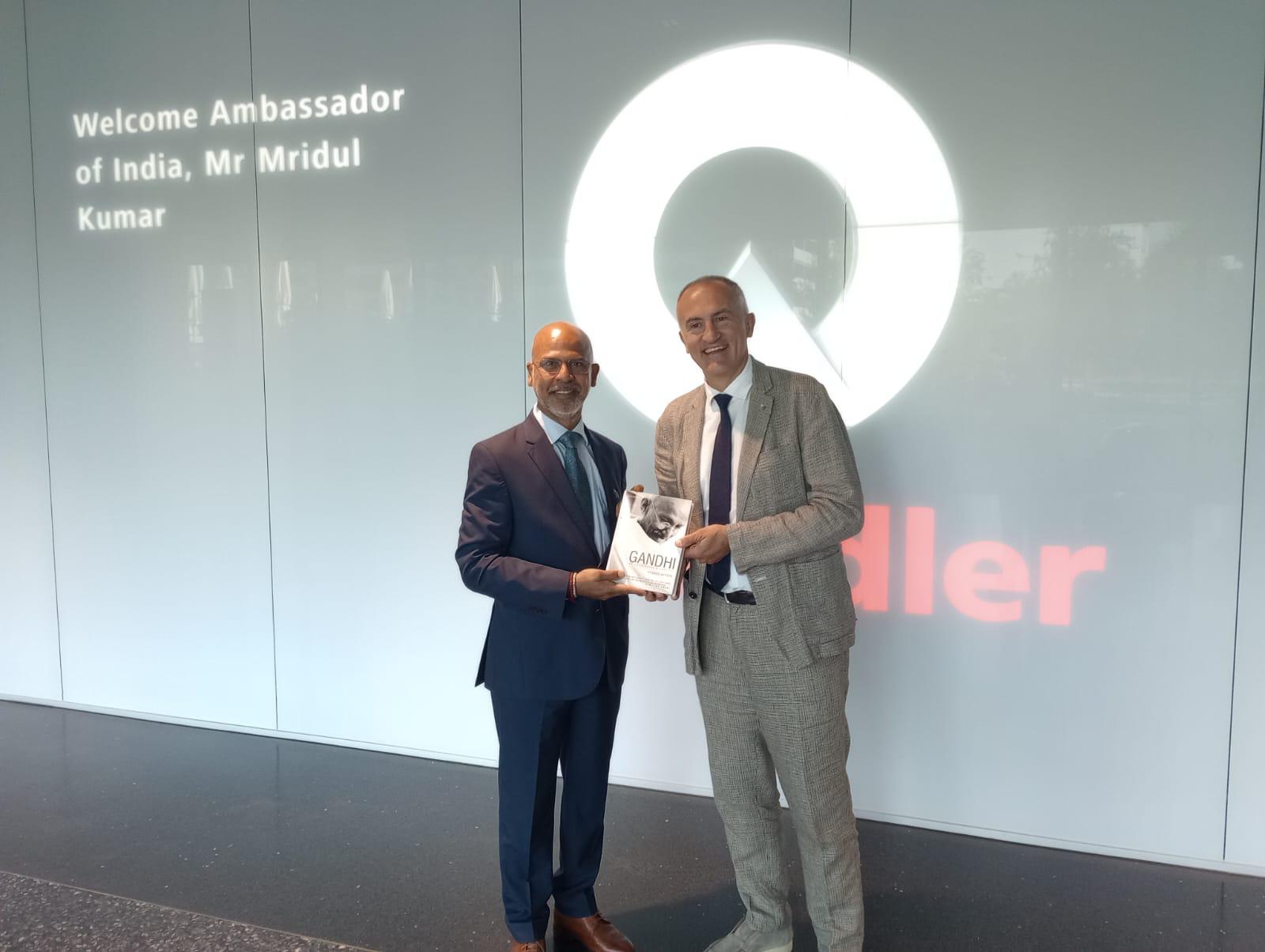
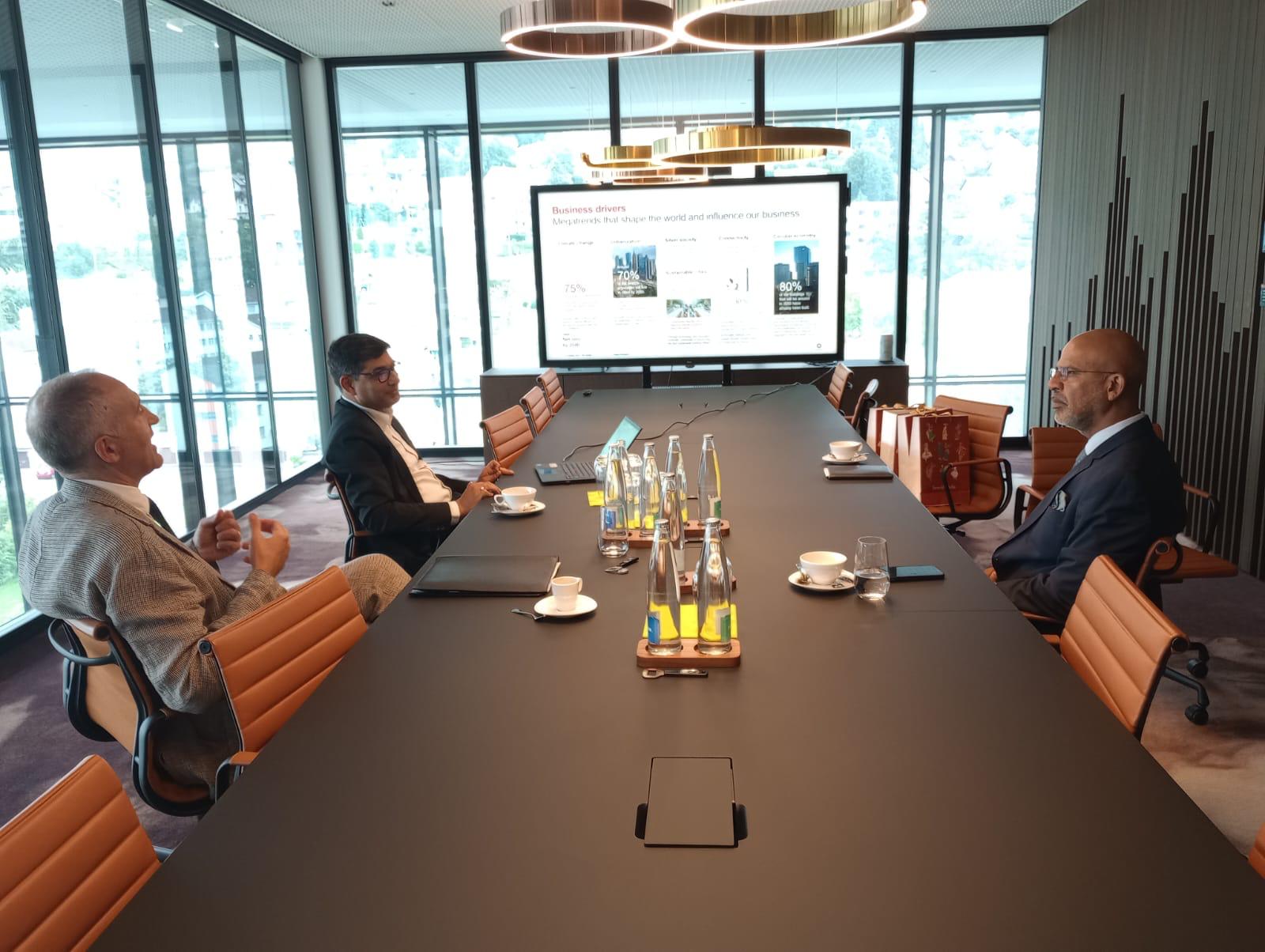
The international outlook remained visible near the end of his Schindler tenure. In August 2024 he met India’s ambassador, Mridul Kumar, during the company’s anniversary year. Their discussions included Schindler’s research, training and sustainability work in India. A market that had once tested an early business plan was still part of his working conversation.
A new job with a shorter reporting line
Lucid announced Napoli as its incoming CEO on April 14, 2026. He was then based in Switzerland and preparing to relocate to the United States. When he formally assumed the job in June, interim chief executive Marc Winterhoff returned to his role as chief operating officer.
Napoli’s arrival paired him with a business that already had vehicles, technology and a product roadmap. Air and Gravity were part of the portfolio; Midsize vehicles were in development. His stated assignment centered on improving execution and translating that work into an economically durable company. The interesting tension was already present: preserve the engineering while changing how the organization worked.
His first statement on taking office was specific about the work ahead: stronger customer engagement, consistent operations, clearer accountability, competitive costs and simpler processes. Read beside the earlier career, those priorities suggest a particular test for his leadership. Can a company become easier to run without losing the capabilities that made its products worth developing? The question reaches across departments. A customer experiences a delivery, a software feature or a service appointment as one encounter with the company. Internally, each may depend on several teams. Getting those teams to cooperate is part of the product, however rarely it appears in a specification sheet.
By July 2, Lucid had announced a simpler leadership structure that halved the number of people reporting directly to the CEO. It also named leaders across finance, technology, customer, transformation and digital functions. Organization design can seem like a bloodless subject until someone needs a decision and discovers that six offices think it belongs to a seventh.
The change made Napoli’s preferences tangible. Clarity and accountability had appeared in descriptions of his leadership; fewer direct reports gave those words a structural expression. It did not, by itself, establish that the new arrangement would work. That would depend on decisions, products and customers over time.
The promises have dates attached
In August, Lucid set out an operational reset around spending discipline, the customer experience and company culture. Among its announced objectives was a $1.4 billion cash-flow improvement plan. Its major programs included Robotaxi, the Saudi Arabian AMP-2 manufacturing facility and Midsize vehicles. Those were targets and work in progress, rather than a completed turnaround.
Commercial appointments followed in late August, including Shawn Mirabal in North America, Mike Molino in finance and Angela Zepeda in global marketing. The practical emphasis extended beyond the factory. Cars need buyers, and buyers need reasons to remain customers.
Then came a broader distribution ambition. On September 17, Lucid and Bolt announced a partnership aimed at autonomous mobility in Europe. Bolt’s stated goal was to deploy at least 25,000 autonomous Lucid vehicles based on the upcoming Midsize platform. Development, regulation and deployment still lay between the announcement and passengers taking those journeys.
For Napoli, the partnership brings familiar questions into a different industry: how to organize across markets, divide responsibilities between partners and make a technical proposition work at scale. Earlier in his career, he had to negotiate between an Indian subsidiary and European factories. Now the parties include a vehicle maker, a mobility platform, technology partners and regulators.
The continuity is in the work. Napoli once had to leave headquarters to discover what his own plan demanded. At Lucid, the distance between an announcement and a customer’s ordinary Tuesday remains the territory he has been hired to cross. There is no case-study ending yet. The next pages will have to be manufactured.
Continue the conversation
Profiles, interviews & further reading