After five hours of presentations, the conversation moved into a hotel hallway. It was spring 2004. Craig Morrison and his colleagues at Borden Chemical had been explaining their plans to people from Apollo. They wanted a bigger business in adhesives and resins. Josh Harris, an Apollo founding partner, took Morrison aside. The two sides, Morrison later recalled, had arrived with the same vision.
There are more glamorous settings for a corporate origin story. A corridor after a long meeting has the advantage of being believable. Before Hexion had its name, it had people who agreed about what a collection of chemical businesses might become. Morrison would spend the next dozen years running the company that grew out of that agreement.
His route to that hallway had included a fighter cockpit, Harvard Business School, consulting in Boston and jobs in packaging. Years later, after retiring from Hexion, he would bring the aviation and business chapters together in leadership education. The interesting part is how many different settings his career required him to learn.
Eight years before the business cards
Morrison earned a bachelor of science degree at Eastern Kentucky University, then spent eight years in the United States Marine Corps. He was a captain, fighter pilot and squadron operations officer. Those are three distinct responsibilities packed into one line of a biography: military rank, flying and the work of keeping an organization operating.
It would be tempting to make every subsequent business decision a lesson from the cockpit. His career allows a more useful reading. Aviation was one of several professional worlds he entered, each with its own vocabulary and its own way of judging performance. The sequence matters because he later helped offer a program that explicitly connected naval aviation with organizational leadership.
At Harvard Business School, where his LinkedIn profile dates his studies to 1985-1987, he earned an MBA with distinction. Bain & Company followed, from 1987 to 1990. Consulting put him in Boston and introduced another kind of work: examining businesses before being responsible for operating them.
Then came management positions in General Electric’s Plastics division, from March 1990 to November 1993. He became president and general manager of Van Leer Containers, serving from 1993 to 1998, and led Alcan Packaging’s pharmaceutical and cosmetic packaging business from 1999 to 2002. The job titles changed. The materials, production and customer businesses kept recurring.
Four businesses, one difficult introduction
Morrison became president and chief executive of the business that preceded Hexion on March 25, 2002. In April 2005, Borden Chemical, Resolution Performance Products and Resolution Specialty Materials announced their planned combination. Borden’s acquisition of Germany’s Bakelite was also part of the proposed group. Apollo affiliates owned the three merging businesses.
The industrial logic was specific. Borden brought binding and bonding resins and formaldehyde. Resolution Performance Products brought epoxy resins and Versatic acids. Resolution Specialty Materials supplied coatings, adhesives, specialty polymers and ink materials. Bakelite added phenolic and epoxy thermosetting resins. Each business made something a customer needed; together they offered a wider set of answers.
Morrison would lead the combined company from Columbus. The announcement described 86 plants in 18 countries and roughly 7,000 employees. Its $4.105 billion sales figure was pro forma for 2004, a picture of the businesses together before the new company existed. Scale arrived in the announcement before the name arrived in everyday conversation.
“I tell people we’re Borden Chemical and some other companies.”
Craig Morrison, 2006
By late 2006, that was Morrison’s practical introduction to Hexion. An industrial company could operate across borders and still need explaining at home. His shorthand had the virtue of dispensing with the corporate fanfare. Most people knew Borden. The new name would have to earn its place.
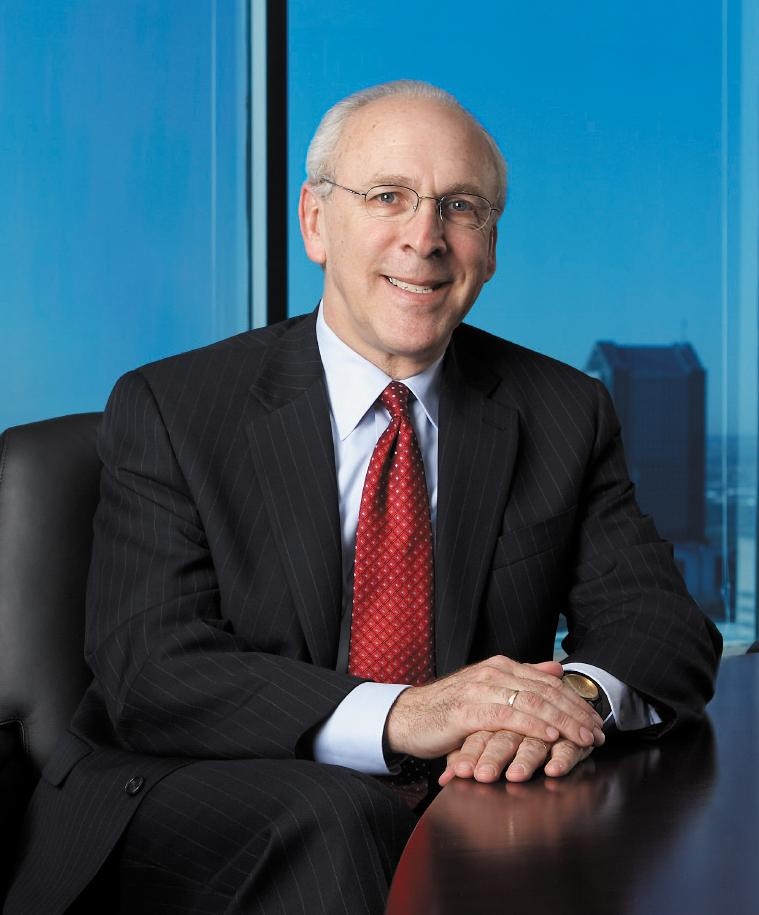
A business hiding in plain sight
Hexion’s work offered a particular kind of anonymity. Its resins and adhesives became parts of things people recognized: building exteriors, floor tiles, paints, finishes and wood panels. The finished object got the attention. The chemistry helped it hold together, resist weather or perform a specified task.
That makes the company’s obscurity easier to understand. A customer buying a building material sees the material’s brand. Several manufacturing decisions may sit behind it, including choices about the resin or coating. For Morrison, explaining the company meant explaining that less visible layer of industrial life.
The geography was less invisible in Columbus. At the end of 2006, the local workforce was reported at more than 200, compared with 120 at Borden in 2003. The headquarters remained in the old Borden offices on Broad Street. A business assembled through international transactions still needed people in an Ohio office to run it.
There is a useful tension here between the language of combinations and the ordinary work they create. A merger announcement can fit several businesses into a paragraph. Making them operate together takes people, responsibilities and decisions that continue long after the announcement has disappeared from the news.
When expansion met the downturn
The career also contains a conspicuous deal that never became an operating company. In 2007, Hexion agreed to buy Huntsman. The transaction unraveled in 2008 amid financing disputes and litigation. A settlement that December ended the merger agreement. The chemical business was entering a very different economic climate.
On the call discussing the fourth quarter of 2008, Morrison reported a 20 percent decline in sales. Hexion recorded an $876 million operating loss for the quarter, including $800 million in terminated merger and settlement costs associated with Huntsman. Those figures belong beside the acquisition story. They show the cost of a transaction failing while demand was weakening.
He also described Apollo’s $200 million commitment to Hexion and the importance of liquidity as a standalone business. By March 2009, the company was announcing plans to cut 15 percent of its workforce and reduce capital expenditure. Growth plans had become decisions about cash, capacity and jobs.
This chapter makes the later leadership work more substantial than a collection of career highlights. Morrison’s executive experience included expansion, a failed acquisition and recession management. A biography made only of promotions would miss the conditions in which some of his most consequential decisions had to be made.
Sales decline from the same quarter a year earlier, reported while Hexion was dealing with the failed Huntsman transaction.
Where the next dollar would go
In October 2010, Hexion and Momentive Performance Materials came together under a common holding structure. Morrison led both operating businesses for a period. The combination was announced with annual sales of $7.5 billion and more than 10,000 employees. The Momentive name introduced another turn in the company’s identity.
In a 2011 interview, he described a preference for putting more capital into downstream specialty products than upstream production. In practical terms, he wanted investment closer to formulations and customer applications. The company already made important ingredients. He saw opportunities in what could be done with them.
Automotive, electronics and construction were among the markets he discussed. A planned venture with Taiwan’s UPC Technology would make specialty phenolic resins in China. Brazil, Russia, India and China featured in his growth plans. These were stated investment priorities, with facilities, partners and customers attached to them.
The distinction helps explain his work as an operator. Running a materials company involves choosing where along a chain of production the next dollar should go. More upstream capacity and more specialized applications answer different business needs. His public preference in 2011 was clear, even though announcing a target could never guarantee its achievement.
The return of a name
In December 2014, Momentive Specialty Chemicals announced that it would become Hexion Inc. on January 15, 2015. Morrison said the Hexion name better matched the company’s heritage and already had recognition in its markets. The name he had once explained through Borden was now the familiar one worth recovering.
The product brands would continue, including EPIKOTE and EPIKURE. The announcement also described investment activity in Louisiana, Brazil and China, alongside planned formaldehyde facilities. Customers buying a particular product did not need the corporate name to carry every detail of their relationship with the business.
There is a small irony in the sequence. The new name of 2005 became the heritage name of 2015. Industrial history accumulates quickly when companies combine, rename and reorganize. Morrison’s tenure ran through several of those changes, while the business continued selling materials for wood and industrial applications.
That March, another change appeared in the company’s accounts. Morrison recommended reducing his base salary because his responsibilities had decreased after the separation of Momentive Performance Materials. The compensation committee approved a 22.9 percent cut, from $1,102,500 to $850,000. It is a precise, revealing episode: the scope of the job had changed, and he asked for the pay to follow.
His retirement followed on July 9, 2017. Craig Rogerson succeeded him the next day. Morrison said he was grateful for the opportunity to build the company and expressed confidence in his successor. Fifteen years after joining the predecessor business, he handed over an organization whose name had taken a round trip.
A different kind of briefing
Retirement left room for a return to an earlier subject. Precision Leadership’s 2024 brochures listed Morrison alongside Vanto Group CEO Olga Loffredi and retired Navy captain Ryan Bernacchi, a former Blue Angels commander and TOPGUN instructor. The advertised programs brought aviation experience into leadership education.
The dates included Miami in March, São Paulo in August and New Delhi in December. Their appearance in the brochures records the program’s planned international reach. Morrison’s role brought together the two ends of his working life: the former Marine aviator and the retired chief executive.
Vanto now lists him on its advisory board, and his newer LinkedIn profile identifies Precision Leadership Program as his professional affiliation. He has moved from running a chemical company to work concerned with how leaders and organizations perform. The connection to aviation is explicit this time.
The hotel hallway remains a good place to leave the earlier story. A long presentation had become a conversation between people who thought they could build something together. Decades later, Morrison’s professional setting has changed again. After all those factories, products and corporate names, people still have to agree on what comes next.