A car door is an unassuming place to begin a story about a chief executive. It opens, it closes, it gives your elbow somewhere to rest. Michael King’s working history includes the part most drivers would never think to ask about: foam-in-place upper door trim for Cadillac and Buick, a project he dates to 2003 and 2004. Long before his name appeared above a global leadership team, it appeared beside a problem involving how something was made.
That small entry makes his subsequent career easier to read. King has moved through automotive businesses, replacement parts and packaging into specialty chemicals. The products change. The underlying questions retain a family resemblance. What does the material need to do? Can the process deliver it consistently? Who has to work together to make that happen?
In November 2025, he became president and chief executive officer of Houston-based Vibrantz Technologies. By then, he had run Graham Packaging and Pactiv Evergreen. The latest appointment put an engineer with a long operating résumé in charge of a business whose ingredients turn up in paints, plastics, glass and electronic components. An ordinary shopping trip can take you past an improbable amount of chemistry.
The small parts of a large career
King’s education has a material specificity that the phrase “business leader” tends to erase. He earned associate and bachelor’s degrees in polymer and plastics engineering at Ferris State University, along with an MBA from Louisiana State University. His technical work produced 24 U.S. patents in product and polymer engineering. There was a career in making things before there was a career in overseeing the people who make them.
A technical beginning in product
and polymer engineering.
His public professional history also includes Lean Six Sigma certifications from TI Automotive: Black Belt in 2007 and Master Black Belt in 2009. These are unusually apt credentials for a career spent around repeated processes. A product may impress in a demonstration; manufacturing requires the next one to behave properly, too. The second example rarely gets a photograph.
The automotive and materials experience took him through TI Automotive, Lear Corporation and Huhtamaki. It gave his résumé a pattern before it acquired its succession of chief executive titles: businesses making physical products, where the customer’s requirements eventually have to survive contact with a production line. Reading the career through those objects brings the technical background back into view.
A business education, in factories
From 2015 to 2017, King served as president of FRAM Group, the vehicle replacement-parts and car-care business. He became CEO of Graham Packaging in 2018 and held that position until 2021. In September 2020, he also joined Pactiv Evergreen’s board. Six months later, he was chosen to succeed John McGrath as that company’s chief executive.
The move had an institutional connection as well as an industrial one. Graham Packaging and Pactiv Evergreen were affiliated through common ownership. King was moving into a company whose board he already knew. In announcing his appointment, Pactiv Evergreen’s chairman, Jonathan Rich, pointed to King’s record of improving margins and earnings at Graham. The endorsement was framed in operating terms.
Pactiv Evergreen made and distributed foodservice packaging, food merchandising products and beverage cartons. Its customers included restaurants, supermarkets and food producers. Here was another business close to daily life and largely backstage. A customer buys lunch; someone else has spent a considerable amount of time thinking about the container.
- FRAM GroupPresident
- Graham PackagingChief executive officer
- Pactiv EvergreenAppointed CEO in March
- Vibrantz TechnologiesJoined November 3
At Pactiv, the operating discussion extended down to what people were ordering. In 2023, King described customers changing where they ate as they managed food spending. Packaging followed those choices across channels. It is a useful glimpse of the job: a shift at the dinner table becomes a question about demand for the company making what the dinner arrives in.
The arithmetic has a town attached
King’s Pactiv Evergreen chapter also included decisions with consequences beyond customers and investors. In March 2023, the company announced a restructuring of its beverage merchandising operations. It closed the Canton, North Carolina, paper mill and the Olmsted Falls, Ohio, converting facility during the second quarter. Production from Olmsted Falls was reassigned to other locations.
Canton gives the corporate vocabulary a physical address. The mill had operated for 115 years and employed more than 1,000 people. It was part of the town’s economy and identity. Closing a facility of that age changes the calendar of a place: the routines of work, the businesses supported by wages, the assumptions families can make about the next year.
King attributed the difficult decisions to a challenging market for beverage merchandising and said the company considered employees, customers, shareholders and communities. The explanation belongs in the record alongside the closure itself. An operating career can contain an improved business and a town confronting the loss of its central employer. A serious account has to hold both in view.
In April 2025, Pactiv Evergreen’s combination with Novolex was completed. The announced transaction value was approximately $6.7 billion, including Pactiv Evergreen’s net debt as of September 30, 2024. Shareholders received $18 a share in cash, and the stock left Nasdaq. The transaction brought a financial endpoint to the public-company chapter King had led.
A new name, an older industrial world
Vibrantz offered a different set of materials problems. The business had been created in April 2022 by combining Prince International, Ferro and Chromaflo Technologies, with backing from American Securities. It brought together advanced materials, color solutions and performance coatings. By the time King arrived, the combination already existed; his assignment concerned how that business would operate and develop.
His appointment was announced in October 2025 and took effect on November 3. He succeeded Chris DiSantis, who had been interim CEO since February. DiSantis described him as thoughtful and people-focused, with both operating experience and commercial perspective. Those are the qualities a predecessor can endorse. The practical test comes afterward, across the business.
Vibrantz’s reported footprint, June 2026.
Consider one piece of that portfolio: Pearls, a solid colorant tinting system for waterborne architectural and industrial applications. In November 2025, Vibrantz announced that Peralin Paints in Namibia had become its first customer in Africa to implement the technology. The system uses volumetric dosing and recyclable packaging. The innovation sits inside a familiar ritual: choosing a paint color and expecting the next batch to match.
Pearls was developed before King’s arrival. Its significance here is the kind of business he inherited, where a technical change must work for a paint producer as well as for the people developing it. The company also supplies mineral additives, electronic materials, glass coatings and porcelain enamels. The portfolio makes the connection to his early materials education concrete, without making every invention in it his invention.
First, get the room together
King’s first months brought visible changes to the organization. In January 2026, Vibrantz announced Doug Owenby as its chief operations officer, a newly created position. JP Blanchard became president of Advanced Materials, while JD Bowlin took responsibility for human resources and communications. Owenby and Bowlin had both held senior roles at Pactiv Evergreen.
The responsibilities explain the agenda more clearly than a list of names alone. Owenby’s remit included consistent operating standards across the manufacturing and innovation network. Blanchard brought experience in specialty industrial portfolios. Bowlin’s role covered the people and communications functions. King was putting specific responsibilities behind a stated emphasis on execution.
“We are entering the next phase of execution at Vibrantz.”
Michael King · January 2026
Capital was part of the assignment, too. On February 18, Vibrantz announced an agreement with more than 90% of the holders of its first-lien term loans and unsecured bonds. The proposed financing and exchange transaction included new debt financing, extended maturities and liquidity enhancements. An industrial strategy depends on the resources available to carry it out; the financing announcement belongs beside the organizational changes.
In March, Scott Becker returned as president of Color Solutions. Becker had founded and led Chromaflo before Vibrantz was formed. His appointment added knowledge of one of the constituent businesses to King’s team. Later that month, King shared photographs of a global leadership gathering, describing a week spent agreeing priorities, exchanging perspectives and welcoming Becker.
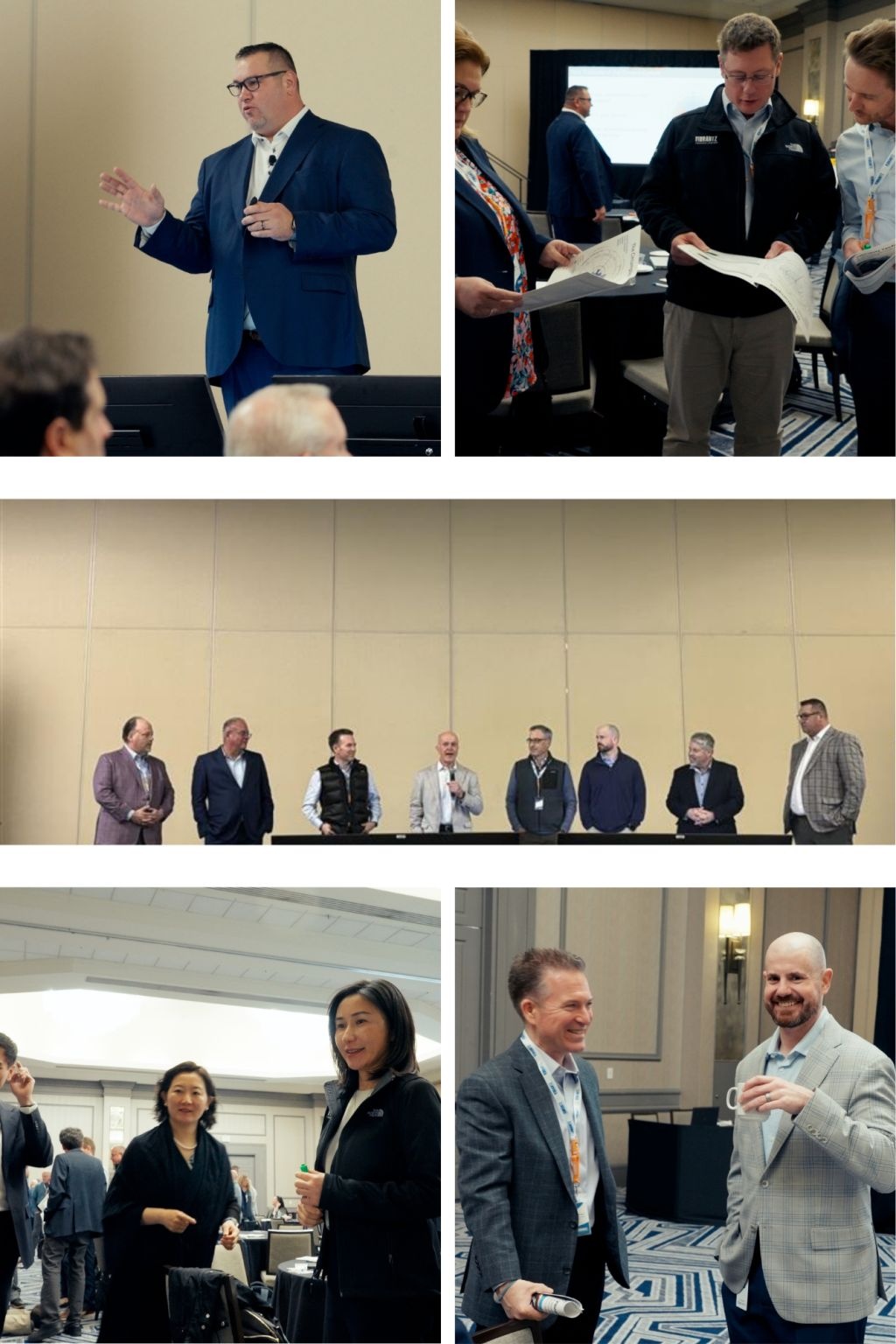
His comment included a plain admission: “We have a lot of work ahead.” The post emphasized focus and accountability. It is a more useful glimpse of his aspirations than an abstract claim about changing an industry. There are priorities to agree, a team to organize and work still to do after everyone goes home.
The appointments continued with Garrett Gabel, announced as chief financial officer in June and effective July 13. Gabel brought experience at Multi-Color Corporation, including a capital structure transformation. King highlighted the combination of operating knowledge and experience with sponsors and lenders. The pairing echoed the two subjects already visible in his early tenure: how the business runs and how it is financed.
King’s career now stretches from the details of an automotive interior to decisions that reach across a global manufacturing company. The scale has changed dramatically. The evidence of his first year at Vibrantz is still practical: assigned responsibilities, a financing agreement, a room of colleagues comparing priorities. The next measure is what those arrangements allow the people making the products to do.