Safwan Shah noticed something peculiar about lunch. People could pick up food in a cafeteria and leave without paying at the counter. The cost would come out of their wages later. Here was a system quite comfortable reaching into a future paycheck for a sandwich. Shah began thinking about the other direction: what would it take for a worker to reach money already earned?
It was an ordinary observation, of the sort that usually expires before the coffee does. For Shah, it became part of a much longer inquiry. He had built a payments company, sold it, and tried a life with more golf. Now he was considering a discrepancy that had survived a considerable amount of financial technology: the work could be finished while the wages remained unavailable.
That interval became the subject of Payactiv, the company he co-founded in 2012 with Sohail Aslam and Ijaz Anwar. It also became the organizing question of his later career. Shah had once worked on systems intended for space. The calendar on Earth was proving interesting enough.
A family business called engineering
Shah came from Karachi and a family in which engineering was a well-established occupation. His grandfather, father and uncles were engineers. An engineering degree was less a startling declaration of independence than a recognizable family move. His mother, whom he described as a perpetual artist, worked in oils. Between the circuits and the canvases, making things had several respectable forms.
He studied electrical engineering at NED before continuing at the University of Colorado Boulder. There, he earned a master’s degree in electrical and computer engineering in 1990 and an aerospace engineering doctorate in 1994. The progression suggests a student willing to cross a departmental boundary when the problem looked interesting. He also met Ginni Dhindsa, his future wife, in Boulder.
At BioServe Space Technologies, a NASA-affiliated research center, Shah worked on autonomous control systems and experiments associated with the space program. His research included artificial neural networks. Machines operating far from the person who built them demand considerable thought about reliability. A repair visit is an inconvenient proposition when the machinery has left the planet.
CU Boulder
Infonox
Payactiv
An ATM is a demanding customer
In 1999, Shah founded Infonox. The company built software for payments and self-service financial machines, including systems used in casinos. These were practical environments with little patience for a transaction that almost worked. A machine could accept a card, communicate with a network, manage cash and report what had happened. The customer expected the result to be boringly dependable.
Shah saw a connection with his earlier research: both involved equipment that needed to keep operating remotely. Infonox brought together payment methods, devices and networks that did not automatically speak the same language. It was the sort of work a person could use without ever learning the name of the company behind it.
TSYS acquired Infonox in November 2008. Its annual report recorded a purchase price of approximately $50.3 million, with additional payments possible if performance conditions were met. For Shah, the sale opened a period outside the usual business-building routine. He had an exit. The question of an entrance came next.
Retirement, interrupted by a question
Golf made its claim on his schedule. Friends have described him as a good player, and a day on the course has obvious advantages over a day spent troubleshooting payments. Yet Shah has described wanting more meaning than that version of retirement supplied. Having time to think turned out to be a fairly unreliable way of staying retired.
After the financial crisis, he kept returning to the circumstances of people who worked but struggled between paychecks. His interest shifted toward the human problem before the technical opportunity. He has described looking for something the world needed, rather than beginning with a fashionable technology and searching for somewhere to put it.
He has framed the mismatch through the coffee purchase. The customer pays immediately. The person serving the coffee waits for payday. Both took part in the same transaction; their clocks run differently. Shah’s payments experience gave him a way to examine that difference as something businesses could change.
“I cannot change the level of salary, but what I can change is the timing.”
Safwan Shah
The friend with a factory
To try the idea, Shah called a friend in New Jersey. Their relationship already contained a financial footnote: years earlier, the friend had lent him $800 when he needed help. Now Shah was asking about a system for employees who might need access to wages before their regular pay date.
The friend understood the difficulty. He was already giving employees advances and dealing with the inconvenience of carrying cash. He agreed to try the service and became an investor. In September 2013, Shah recalled, the early implementation began at a precast concrete factory. The experiment involved a phone app, a kiosk and cash, a decidedly physical beginning for a software proposition.
There is something revealing about that first customer. The employer had identified the need long before a new category of financial technology arrived to describe it. Shah could offer a repeatable system for an informal practice. A conversation about cash on hand supplied a more useful starting point than an abstract argument about the future of work.
A calendar acquires a business model
Payactiv’s employer connection was central. The company built around verified earnings and participation by the business employing the worker. That meant Shah needed to persuade people responsible for payroll and personnel, whose enthusiasm for experiments tends to be tempered by the obligation to get everybody paid correctly.
Early public demonstrations show a small company working through those practicalities. At FinovateSpring in 2015, Payactiv presented MyMo, an app for cash-flow management. Its event profile listed ten employees and early revenue. A year later, another demonstration focused on saving in units of time. Even the savings proposition carried an engineer’s interest in choosing a useful unit of measurement.
The company became a Certified B Corporation in 2015 and a Public Benefit Corporation in 2019. Those are distinct designations, and both fit the responsibilities Shah wanted the business to recognize. The company’s organization, as well as its product, became part of the argument about how commercial work should affect the people it serves.
completedEarned wages
waiting for paydayScheduled
payday
A conceptual view of timing, not a change in the amount earned.
Moving access forward still leaves a finite paycheck. The employer must participate, and workers can access only part of what they have earned. Those boundaries matter to understanding Shah’s idea. A calendar change cannot supply a pay increase. It can change whether earned money is available when an expense arrives, which is the narrower problem he chose to address.
An engineer writes a book
Shah has taught at Berkeley’s Haas School of Business and UC Santa Cruz’s Baskin School of Engineering. He also completed the Stanford Executive Program in 2009. The combination places him around both the construction of systems and the decisions businesses make about them. His later writing carries that combination into a different format.
His book, It’s About TIME: How Businesses Can Save the World (One Worker at a Time), appeared in April 2019 through Conscious Capitalism Press. The title has two jobs. It identifies the variable he wants employers to reconsider, and it conveys his impatience with leaving that variable unexamined. An engineer can apparently appreciate a double meaning.
The book uses short essays, stories and observations to argue for greater business responsibility. That same year, CU Boulder gave Shah its George Norlin Award. Twenty-five years after his doctorate, the university was recognizing a career that had moved well beyond the subject printed on the degree.
His interests have never fitted neatly into payments alone. He helped found Chowk, a South Asian discussion and literary website, in the late 1990s. He follows cricket and reads widely. Friends describe a habit of questioning accepted ideas. His wife has described the homework behind his decisions: studying a market, analyzing an idea, and challenging his own conclusions.
Still working on the interval
The product continued to develop around the places people actually keep and use money. In April 2025, Payactiv announced Visa+ integration for earned wage disbursements to Venmo and PayPal. The destination had changed from that early cash kiosk. Shah was still speaking as founder and CEO about giving employees greater control over access to earnings.
In January 2026, he returned to the underlying question in a public essay. Spending had become easier and faster, he argued, while many workers continued to receive pay on a fixed cycle. He described earned wage access as an additional layer connected to payroll, with payroll continuing to serve as the system of record.
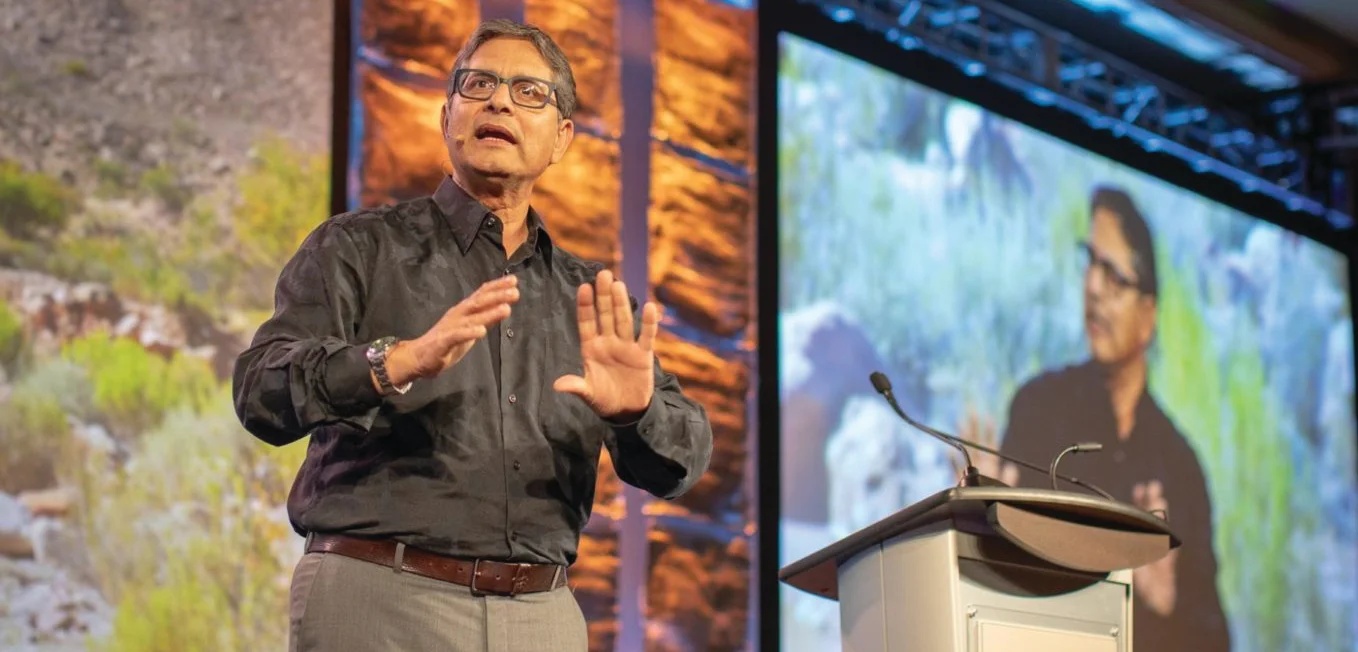
There is an engineer’s restraint inside that ambition. Keep the reliable accounting machinery. Examine the part that makes a person wait. His explanation has traveled through a book, conference demonstrations, interviews and a TEDx talk. The audience changes; the interval remains his subject.
Shah calls his entrepreneurship accidental. The description has a pleasing modesty, though the accidents seem to require a good deal of study and several years of work. From the cafeteria to the factory, his career offers a particular kind of attention: noticing that an arrangement convenient for a system may deserve another look from the person standing in front of it.
Follow the question
More of Shah’s work, conversations and public writing.
- Safwan Shah on LinkedIn
- Safwan Shah on X
- Payactiv’s website
- Read his January 2026 essay
- The early customer story: Mixergy interview
- Listen: Fintech One-on-One with Peter Renton
- Watch: Payactiv’s 2015 Finovate presentation
- YouTube: Payactiv’s short film, We Heard You
- His TEDxWilsonPark speaker page
- It’s About TIME: author and book information