Pini Yakuel had found something in the numbers. At one of his first customer’s shops, frozen chicken was selling unusually badly. He and his colleagues brought the discovery to the supermarket’s chief executive, pleased with their analysis. The executive supplied the missing variable: the freezer had been broken for two months. Mathematics had arrived at the scene. Maintenance had been there considerably longer.
In Yakuel’s telling, the customer was a small Israeli organic supermarket chain with seven stores. He collected transaction logs on a USB stick, driving between branches in an old Fiat Marea. The team assembled a database and searched for patterns. He remembers wanting the models to reveal things people could not see. The chicken episode taught him to ask what the data had left out.
That is a useful place to begin with the co-founder and CEO of Optimove. His business turns customer information into decisions about marketing. His career also contains a recurring question about decisions inside the company: when should the person who understands the machinery step in, and when should he make room for someone else?
A movie ambition meets a consulting invoice
Long before the supermarket, Yakuel had an entrepreneurial ambition borrowed from the Michael J. Fox comedy The Secret of My Success. The attraction was the young person taking charge of a company. Hollywood offered the destination with admirable efficiency. Yakuel’s route involved considerably more university and considerably fewer opening credits.
He studied at Tel Aviv University, earning a bachelor’s degree in industrial engineering and a master’s in industrial engineering and management. His academic work included operations research. Shachar Cohen, his eventual co-founder, brought a background in machine learning. They had complementary skills and a conviction that businesses could do more with customer information.
The consultancy that preceded Optimove began in 2009. The software business took shape in 2012. Those two dates describe different stages of the same journey: first, performing analytical work for clients; then, turning repeatable work into a product other people could use. The distinction matters because the early company had to earn its way toward the software.
Consulting revenue paid for development. A service business gave the founders something a presentation could not: paying customers and practical exposure to their problems. Their interest was specifically in customer analytics, rather than every possible application of prediction. A factory’s operational puzzle might be fascinating. They wanted to work on the relationship between a business and the people buying from it.
As they developed the product, another difficulty appeared. Knowing what a customer had done was only part of the picture. Records of previous marketing activity were scattered between systems. To recommend the next action, their models needed to learn from earlier actions. Optimove expanded into executing campaigns, bringing more of that feedback into the same environment.
The money arrived after the business
Yakuel continued financing the company from its own activity rather than treating an investment round as the starting gun. He has described declining a $1.5 million venture-capital offer in 2012. Bootstrapping required patience, but it also let him build around the customers already paying for the work. An investor’s timetable did not have to become the company’s calendar.
In September 2016, Optimove raised $20 million from Israel Growth Partners, its first outside financing. The business was already profitable, Yakuel said at the time. The money would support research, development, sales, and expansion in the United States. Raising capital became a choice about accelerating an existing operation.
That year he moved to New York to lead the American expansion. The relocation made the company’s international ambitions personal: a founder and his family changing cities while the business added another centre of gravity. London, Tel Aviv, and New York gave Optimove a presence across different markets and working days.
A further $75 million investment, led by Summit Partners, followed in September 2021. At that point the company reported 280 employees, more than 500 client brands, and customers across more than 40 countries. Those are a dated snapshot of the enterprise he had built, rather than a claim about its size today. The financing was intended to support hiring, acquisitions, and expansion of the platform.
The two rounds help explain the scale of the change in his job. A founder who once collected data himself now had investors, senior colleagues, international customers, and teams whose work could not sensibly pass through one pair of hands. Growth supplied resources. It also supplied a reason to reconsider his own habits.
An opinion about everything
Yakuel likes crossing disciplines. In an early career interview, he described the appeal of being a mathematician in product, a writer in content, and a hunter in sales. He also admitted to a less industrious alternative self: the couch potato. The contrast is funny because his account of working life is so thoroughly occupied with making things.
By 2023, he was describing the complications of that versatility. He knew enough about many areas to recognise an idea worth supporting. He could also offer an immediate opinion that made a colleague’s proposal harder to pursue. Expertise gives a founder authority even when he thinks he is merely making conversation.
He acknowledged having an opinion about everything. He had learned to share innovation, rely on colleagues, and change his approach as the company grew. Giving other people room to shine became part of the job. There is an ordinary workplace problem inside that admission: the boss has to notice how much space the boss occupies.
His hiring choices had already created room for people to grow. In 2018, he wrote that almost half the leadership team came from inexperienced people recruited in the early days. Limited money initially made younger candidates attractive. Their performance persuaded him that an impressive employment history was an incomplete way to judge potential.
He looked for relevant schooling, attitude, and appetite to learn. The early employees who developed into leaders became examples for those arriving later. There was an observable route from being new to being trusted. A company can announce that it values development; colleagues who have actually advanced make a more convincing announcement.
“I was able to allow others to shine next to me.”
Pini Yakuel, 2023
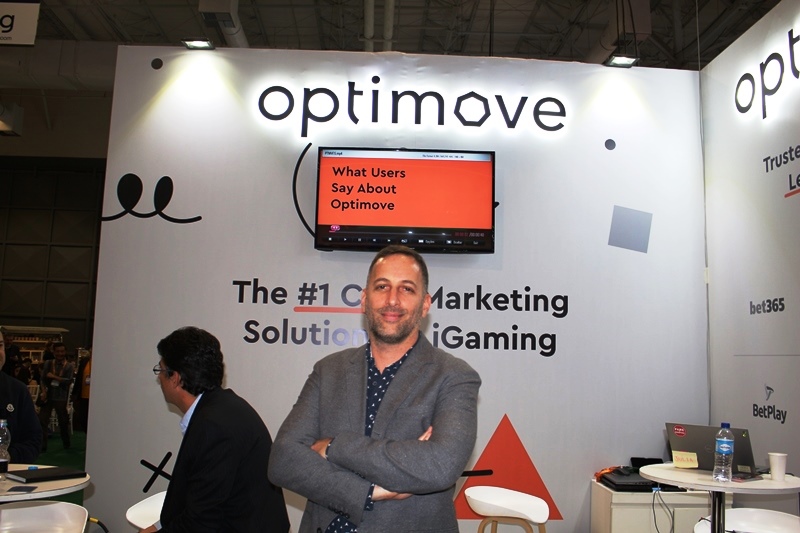
The customer who never got the car
The same impatience with incomplete pictures runs through his writing about customers. Yakuel has recounted trying to rent a car, failing to get it, and subsequently receiving an email asking about the rental. The automated follow-up had kept its appointment. The car had not. Anyone who has argued with an inbox can appreciate the distinction.
For him, the episode illustrates what happens when marketing follows a predetermined sequence without adequately responding to a person’s experience. A planned message can be perfectly punctual and entirely wrong. The purpose of collecting customer information is to make the next interaction fit what actually happened.
He has explored a different blind spot in writing about manufacturers that sell through retailers and third-party websites. The manufacturer may know that a product sold while learning little about the purchaser. That makes subsequent service, relevant offers, and a continuing relationship harder to organise. Sales figures alone do not provide the whole customer story.
His preferred ambition is straightforward: help brands communicate with more understanding of the individual. On a marketing podcast, he returned to his academic beginnings, joking about being the partner with a master’s rather than a doctorate. The humour sits comfortably with his argument. Technical sophistication should make an interaction feel more considered to the person receiving it.
Borrowing a move from basketball
In March 2024, at Optimove Connect, Yakuel introduced the idea of the Position-less Marketer. The analogy came from sport: players with the skills to operate across positions. Applied to marketing, the proposition was that better tools could let someone move between analysing data, creating material, and improving a campaign without always handing the work to another department.
He included a qualification that deserves to survive the slogan. Technology might help a data analyst write adequately, but some work still requires a specialist. “So, know when to call in the experts.” The argument leaves room for judgment about the task, rather than pretending a new tool automatically confers every skill.
Optimove subsequently repositioned itself around Positionless Marketing. Its framework groups the capabilities into data, creative, and optimization. The appeal is practical: give the person closest to a customer problem more ability to act on it. The promise also puts pressure on the product to make those separate activities work together.
The branding process had frustrated Yakuel before. He has recalled earlier efforts that took extensive discussion yet still left people asking what the company did. A conversation with narrative-design practitioner Carmel Yoeli helped him focus on the explanation behind the identity. The basketball comparison offered a way to describe a change in work, rather than merely another software badge.
Understand the customer.
Make the message.
Improve the next move.
More room to act, more reason to pay attention
In April 2026, Optimove announced an agreement to acquire Smartico. The announced arrangement kept the businesses independent, with Smartico’s founders retaining control of its strategy and daily operations. Yakuel praised its bootstrapped beginnings and original approach to combining gamification with customer-relationship marketing. The terms described a business being backed while its builders continued to lead it.
His September 2026 writing laid out another extension of the Positionless idea. Marketers could work inside Optimove, through external AI assistants connected to it, or with custom applications built on its underlying capabilities. He described campaign approval remaining with the marketer. More ways to begin the work would still lead back to someone responsible for what reached a customer.
In a separate essay about AI connections, he argued that easier access to a platform does not remove the need for its underlying systems. Customer histories, permissions, storage, and execution still need to function. Making a prototype quickly raises a further question: who will maintain it when the use becomes more demanding?
That brings his current ambitions surprisingly close to his beginnings. He wants people to do more for themselves, with enough information and working machinery to make the action useful. In his leadership, he has had to learn when an opinion helps and when it crowds someone out. In his product, he keeps returning to the difference between a plausible recommendation and one grounded in events.
The early supermarket story remains a good companion to both tasks. A pattern can be real and its explanation very ordinary. A founder can be knowledgeable and still need someone else’s view. Before the next elegant answer leaves the office, there is something to be said for checking what happened in the shop.