Six years is a long time to leave money waiting outside. It is longer still in software, where an announcement can sound like an achievement and a funding round can acquire the emotional significance of a graduation. Kaveh Rostampor and his co-founder, Niklas Skog, chose to spend those years building Planhat. When they finally announced outside investment in April 2022, the number was $50 million. The more interesting number was how long they had managed without it.
Rostampor’s career gives that choice some context. Before the customer platform, before the executive role, there was competitive sport. Before Planhat had an investor, its founder had spent years inside another software business. He had seen what happens when a company must sell, retain customers, enter markets and make its finances work. A convincing story about the future would have to survive those rather less glamorous activities.
There is an attraction to this sequence. Preparation occupies most of the calendar, yet usually receives the smallest paragraph. Rostampor’s story becomes more revealing when the waiting gets its proper share of the page.
A result you cannot talk your way into
He grew up in Stockholm, trained in martial arts and competed for Sweden. European championship results from 2004 list Kaveh Rostampor in the men’s 58-kilogram taekwondo category. Years later, describing his competitive past, he recalled winning Swedish championships several times. The sport preceded his business career; it remains part of the way he explains his work.
A contest offers a fairly severe form of feedback. Your intentions may be admirable. Your preparation may sound impressive. The result still arrives on its own terms. Business allows more room for explanation, but Rostampor’s account of sport suggests an appreciation for the moment when explanation runs out.
“Fighting humbles you,” he writes. He describes learning to look inward, respect quiet competitors and return to practice. Skog’s childhood competition was chess. The partnership therefore brings together two different kinds of preparation: the physical repetition of a fighter and the patient calculation of a player looking several moves ahead.
Neither background guarantees that someone will build good software. Both make waiting easier to understand. Repetition can be productive even when it gives an observer very little to report. A company has to learn to recognize that sort of progress before it can afford to rely on it.
“Fighting humbles you.”
Kaveh Rostampor
Fifteen years inside the machinery
Meltwater’s 2020 information document records Rostampor’s joining date as 2005. By then he was Executive Director, Americas. The document describes 15 years with the company, leadership of global go-to-market teams and six years running its Americas division. That is a substantial apprenticeship in the daily mechanics of a software business.
His education included a Master of Science in Business and Economics at Uppsala University and a Master Diploma in Strategy and Innovation at Oxford’s Saïd Business School. The academic vocabulary is strategy; the working vocabulary includes customers, teams and markets. His career put the two in frequent contact.
He also worked on the other side of the boardroom table. Cint’s 2022 annual report dates his board membership to 2018 and records other company affiliations. His work also includes co-founding Jobylon. The common thread is software operated over time, with the accompanying responsibilities that rarely appear in a product demonstration.
In a public message as a Meltwater executive, he committed the business to reviewing recruitment and providing support to organizations working for racial equity. It was a specific statement about what a company should do, expressed through processes and access to its product. The operational details matter: values become visible when someone decides how the organization will behave.
The years after the handshake
Planhat, founded in 2015, addressed a problem that continues long after a salesperson has reason to celebrate. A customer signs. The product then has to earn its place in the customer’s business. Implementation, use, support, renewal and expansion occupy the following months and years. Rostampor and Skog built a platform for that continuing relationship.
The distinction matters in recurring revenue. A signature is one event. A renewal depends on everything that happened afterward. If the company forgets its own promises as work passes between departments, the customer is left to supply the memory. That is an awkward service to ask someone to perform while also paying you.
One way to see the commercial stakes is to start with an imaginary group of customers. Keep the group fixed, and follow its spending into the next year. Losing customers reduces the total. Retaining them protects it. Expansion increases it. This is the logic behind net revenue retention, a measure that connects the initial relationship with the years that follow.
The graph explains a metric; the work beneath it is considerably messier. People need to understand what a customer is trying to achieve, who is responsible for helping and what has changed since the last conversation. Rostampor’s business sits in that stretch of time. The customer has already said yes. The company must keep earning it.
Money arrives after the habits
In his April 2022 announcement, Rostampor described just over six years of bootstrapping. He and Skog had agreed to accept short-term setbacks in service of a longer product vision. Investor interest had been present early, but accelerating with outside money had not initially felt right.
The decision changed in late 2021. Customers were asking whether more departments could work in Planhat, and demand was spreading beyond its original software audience. The founders now saw room to expand both the commercial team and the product’s applications. Sprints Capital led the $50 million Series A announced the following April.
By the funding announcement, the global team had grown from 40 to more than 100 people over the preceding year, spread across more than 25 countries. Those dated figures describe the business at the moment of the round. They also help explain why the announcement reads differently from a company raising money to discover what it might become.
Employee ownership was part of the earlier story. Contemporary coverage reported that employees held about 15 percent before the investment. Rostampor’s later account of fundraising emphasized the persistence of the old operating habits. Capital could enlarge the available choices while leaving the expectation that spending must produce value.
His relationship with investors also developed beyond the announcement. In a testimonial for Sprints, he describes the firm as an extension of the team, looking for ways to support growth. Waiting to take investment and valuing an investor’s help can coexist. The timing is the interesting part.
Managers with their sleeves rolled up
Rostampor’s stated approach to management expects leaders to contribute directly. They should know how to perform the work they oversee. At different moments they may need to be the strongest contributor or the coach helping others produce more. The title does not remove the obligation to participate.
That expectation makes leadership unusually concrete. A manager can coordinate a difficult problem indefinitely. Joining the work creates another kind of accountability. Advice becomes easier to assess when the person giving it has demonstrated what good execution requires.
Rostampor also writes that a team reflects its leader’s strengths and weaknesses. It is a demanding principle, and one that gives very little comfort to someone hoping to blame a disappointing result entirely on the people below them. The mirror is inexpensive office equipment. Using it can be costly to one’s dignity.
A meeting without the merchandise
His approach to gathering people has produced a more playful experiment. Planhat has used pop-up offices, sending colleagues somewhere to work and spend time together. He opened a California gathering to customers, partners and friends. The invitation put social time and shared activities near the centre of the event.
In 2024, Planhat Open brought more than 150 guests from over ten countries to Malibu. Rostampor’s initial proposal met resistance. A colleague feared a Fyre Festival. He went ahead. The programme included discussion, co-working, surfing, trails and music; senior executives also helped with practical hosting duties.

The experiment makes sense for a company selling the means to sustain relationships. A gathering gives customers time to observe the people behind the software. Hospitality requires action. Someone has to help. Someone has to listen. The useful details are often too small to merit a place on the agenda.
The next round of work
By June 2026, Rostampor was presenting a broader ambition with Planhat’s VP Product, Daniel Sternegard: software that automates commercial operations. He described AI working beyond a chat interface, alongside teams and in the background. He also acknowledged how difficult enterprise deployment becomes when a promise meets the actual work.
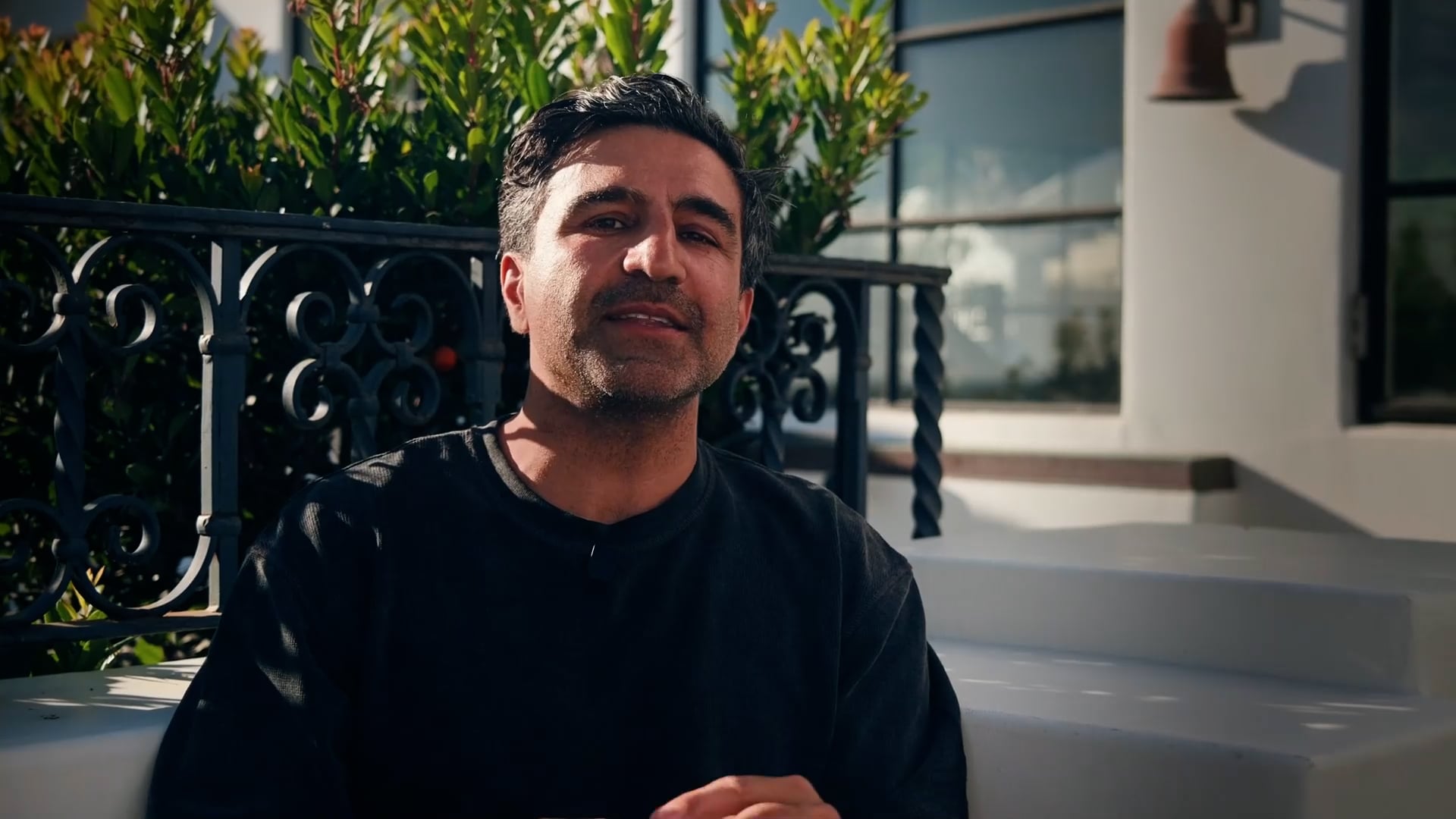
His writing on enterprise systems puts connected, reliable customer data beneath that ambition. His “One Commercial Brain” argument gives a practical example: an agent handling renewal needs to understand what was promised during the sale. Support needs context about implementation. Automation inherits the same continuity problem that people have been negotiating all along.
It is an aspiration with a familiar centre. The software changes, the means of doing the work change, and the customer still expects an outcome. Rostampor’s career has spent considerable time on that expectation. The dojo supplied one early lesson in results. Years in software supplied many more. The next test will arrive through customers, one ordinary working day at a time.