The first-class upgrade arrived in Munich. Manasij Ganguli was returning to Delhi from a meeting in Atlanta, a year after selling his first startup. The journey offered the usual consolations of corporate seniority: a better seat, attentive service, time to enjoy the meal. He had spent years flying economy to sell software. Now he could stretch his legs.
Before boarding, he shared a coffee-shop table with another founder. The conversation turned to the stranger’s fledgling business, and Ganguli noticed how animated he became when discussing his product. Later, on the aircraft, Ganguli walked back into economy and saw him at a laptop. The recognition was immediate.
“That guy used to be me.”
Manasij Ganguli, recalling the flight
He dates the trip to February 2020. In his telling, the comfortable job had left him remembering the dinners more vividly than the meetings. Watching someone else build made him reconsider what he wanted from work. The upgrade had delivered an awkward discovery: he missed the business that once kept him busy at the back of the plane.
A barbecue, a garment problem, a company
Long before that flight, there was an engineer and a woman who understood garment factories. Ganguli graduated in electrical and electronics engineering from Birla Institute of Technology in 2002. His software career took him through companies including TCS, CSC, Impetus Technologies and RS Software. An early role at the San Francisco startup Terracotta gave him a closer view of building a business.
Mausmi Ambastha brought a different education to the partnership. Her work in garment manufacturing exposed a stubborn expense: fabric. In the economics she described, material accounted for roughly 70 to 80 percent of a garment’s production cost. Small improvements in how a factory bought and cut it could make a meaningful difference to profit.
Ganguli has recalled a winter barbecue as the occasion when the idea for their software took shape. He and Ambastha had known each other since school and married in 2004. The problem joined her industry experience to his coding. A dinner conversation acquired a rather demanding afterlife.
ThreadSol’s products, including IntelloCut and IntelloBuy, addressed the buying and use of fabric. Behind the familiar finished shirt sat decisions about rolls, cutting plans and quantities. A factory could make the garment correctly and still spend too much making it. The founders were selling a way to inspect that arithmetic.
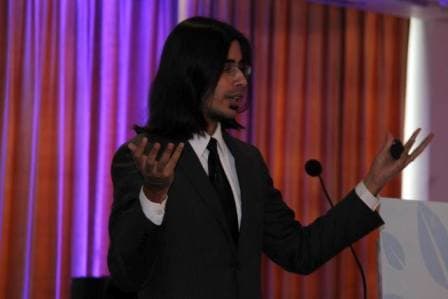
The arithmetic beneath the adventure
Ganguli’s later recollections include 119 investor rejections before his first investment. His startup memoir also describes repeated brushes with running out of money. These are his accounts of the experience, and they help explain why the title he eventually chose was The Economy Class Founder. The travel metaphor came with receipts.
His attitude toward entrepreneurial ceremony was already clear in 2016. He questioned the mystique surrounding founders and treated failure as a recurring feature of work. During one interview, he and six engineers had just spent the night dealing with a server crash. The glamorous part of software evidently needed someone to stay awake and repair it.
“Your business should always outpace the cash burns.”
Ganguli on financial discipline
He also moved software development to Kolkata, describing it as a place where he could find capable people at lower cost. The choices were practical: conserve money, keep talking to the team, make room for people to speak. A company selling efficiency to factories had reasons to take its own expenses seriously.
By December 2018, ThreadSol had become a business Coats wanted to buy. The announced agreement put cash consideration at up to $12 million. Completion followed on February 12, 2019. That figure belongs to the company transaction; the achievement lies in the operation the founders and their colleagues had built.
ThreadSol’s reported scale at the December 2018 acquisition announcement.
The business had more than 100 employees and offices across several Asian garment-manufacturing markets. Its platform planned more than 1.5 billion garments a year. Ganguli then entered a technology innovation role at Coats Digital. He had reached the sort of destination many founders have in mind when they first give up a salary.
The customer who stopped writing
The next business grew from another part of ThreadSol’s work: understanding why customers stayed, threatened to leave or actually left. Ganguli wrote a series called Learn From Churn, presenting cases as small investigations. A founder selling software had become a detective of its disappointments.
One case concerned a Singapore customer paying $40,000 annually. After three years, it announced it was moving on. The team inspected its usual account measures and found no obvious warning. Then they examined the email history. Contact had become erratic, with weaker volume and consistency in the preceding months.
The customer was restructuring. The product would no longer have a place in the new arrangement. Ganguli’s team had taken the quiet as reassurance and missed the change. The customer left. It is a useful story because the failure was ordinary: an absence of complaints can be wonderfully convenient to misread.
A sequence of events, not a prediction model. The lesson was to investigate silence.
A second case, involving a Sri Lankan customer with the same annual contract value, complicated another comforting measure. The customer complained of too many issues despite logging fewer support tickets than comparable happy customers. The reported problems were low or medium priority and had been resolved within the agreed service terms.
Interviewing the customer brought product usage into focus. Counting tickets alone had failed to explain its experience. These cases show the attraction of Ganguli’s chosen subject: the numbers may be accurate while the interpretation still needs work. A support report can describe everything it contains and leave the important question unanswered.
His retrospective account of ThreadSol describes years spent bringing product usage, support, payments, feature requests and communications into the same view. He also acknowledges relying on simplistic account rules early on. That admission gives his later product a clear origin. He had first been a customer of his own assumptions.
Building a second time, with fewer ceremonies
In 2021, Ganguli and his co-founders left their jobs and began building ZapScale. Ambastha and Bratish Goswami joined him in the new venture. They were carrying a working relationship into a different market, along with lessons about what happens after the contract is signed.
Ganguli’s stated ambition was to make customer success software feasible for smaller and medium-sized businesses. He thought the existing options often asked too much in money, operating effort and setup time. He wanted an affordable product teams could get running in less than a week. Ease of implementation was part of the problem he had chosen to solve.
That aim also gives the second company a connection to the first. ThreadSol asked what manufacturers could save by examining material use more carefully. ZapScale asks what software companies can understand by examining customer behavior more carefully. In both settings, the attractive sales story has to survive a less forgiving test: someone using the product in everyday work.
ZapScale announced a $2.5 million seed round in June 2023, with investors including Blume Ventures, Veda VC and Java Capital. Blume was backing Ganguli again. The stated plans included further product development and expansion in the United States. The second attempt had familiar participants, even as its customers and questions changed.
“Leading by example is not one of the ways of leading. It is the only way of leading.”
Ganguli in his IntelloCut interview
He has described leadership as something earned through the ability to do the work assigned to others. That fits the engineer who remained involved when the server failed. Titles can get people into meetings. Practical competence matters when someone comes back from the meeting with a problem.
Room for a drum kit and a weekend
Ganguli put the first-company experience into a book in 2023. Published by Juggernaut, The Economy Class Founder makes room for fundraising rejection, travel mishaps and the risk of running out of cash. The premise gives the ordinary founder’s experience a voice beside the familiar stories of much larger companies.
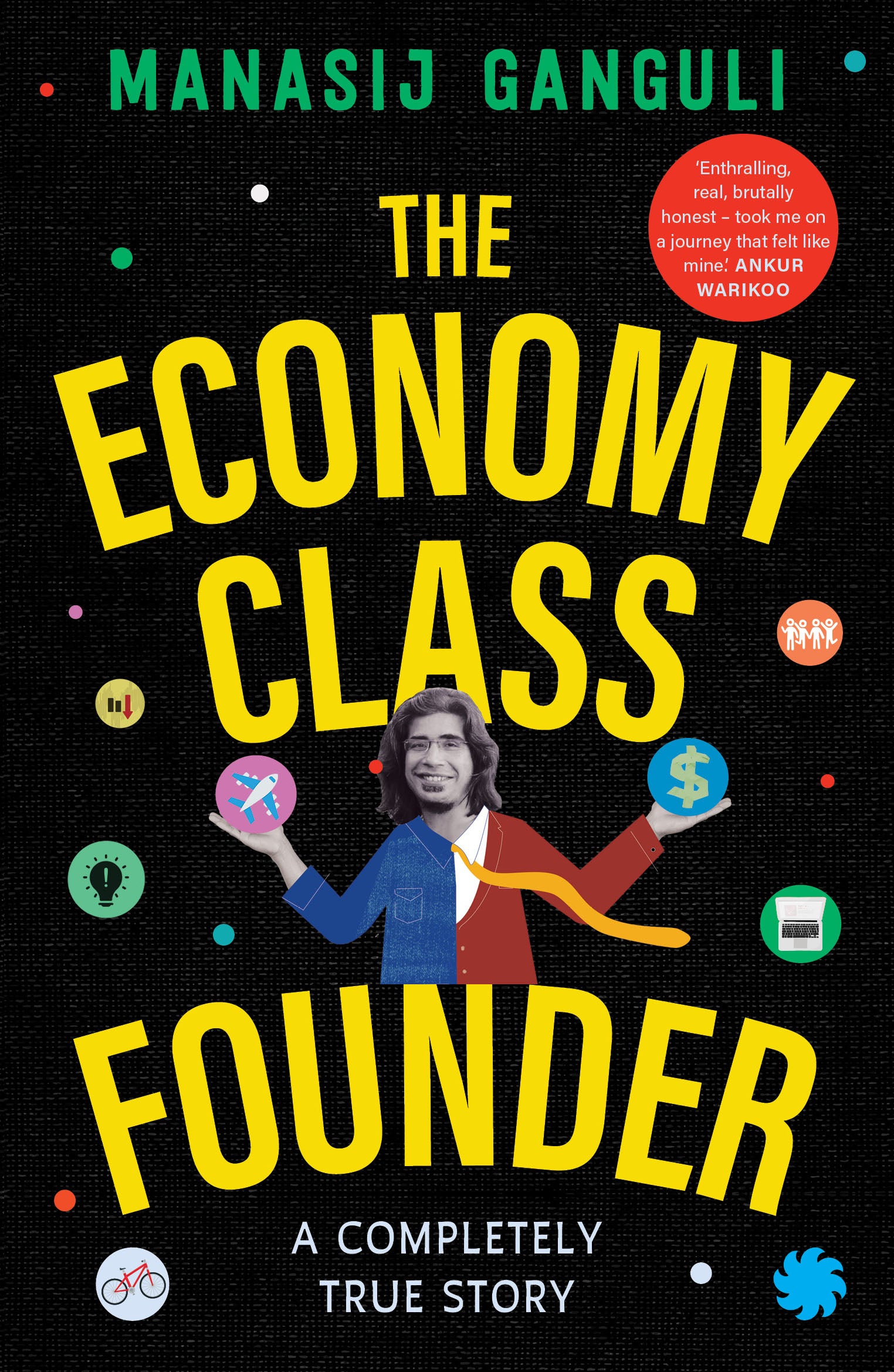
Writing was already part of his life. His personal blog covered the 2010 Tour of Nilgiris, mixing observations about the riders with jokes, scenery and roadside food. His publisher biography adds a rock band, where he plays drums, mountain biking, sport, books and a hobby of writing murder mysteries. The churn investigations have literary company.
In a later Saturday office post, he described trying to discourage weekend work at ZapScale. A late presentation had nevertheless brought him to an empty desk. He took the occasion as a reminder to manage his time better. Harari’s Nexus was waiting; football with friends and a film with his parents remained in the evening’s plans.
That detail puts a useful wrinkle in the economy-seat story. Returning to the demands of a startup need not mean wanting every demand repeated. Ganguli could miss building and still want a Saturday to himself. He has earned enough experience to recognize both desires, even on an afternoon when the presentation is overdue.
In April 2026, he shared another conversation about his founder journey, this time with Magenta’s Vikas Mundhra. The story continues to supply him with material. For the moment, the next chapter is being written at ZapScale, somewhere between a customer’s unanswered email and the work required to understand it.