Ross Andrew Paquette’s first plan for Maropost had room for a swimming pool. Ten customers would do. A manageable business, a useful income, and perhaps fewer hours committed to somebody else’s timetable. Then the customers arrived, the company grew, and the leisurely part of the plan became considerably harder to locate. Success has a habit of adding appointments.
“The plan was to have 10 customers and maybe sit by the pool a little more often than not,” he recalled in 2019. It is an unusually candid origin for a software company. There was no need to retrofit a grand mission onto the beginning. Paquette knew a market, thought its customers deserved better, and wanted to make a living serving them.
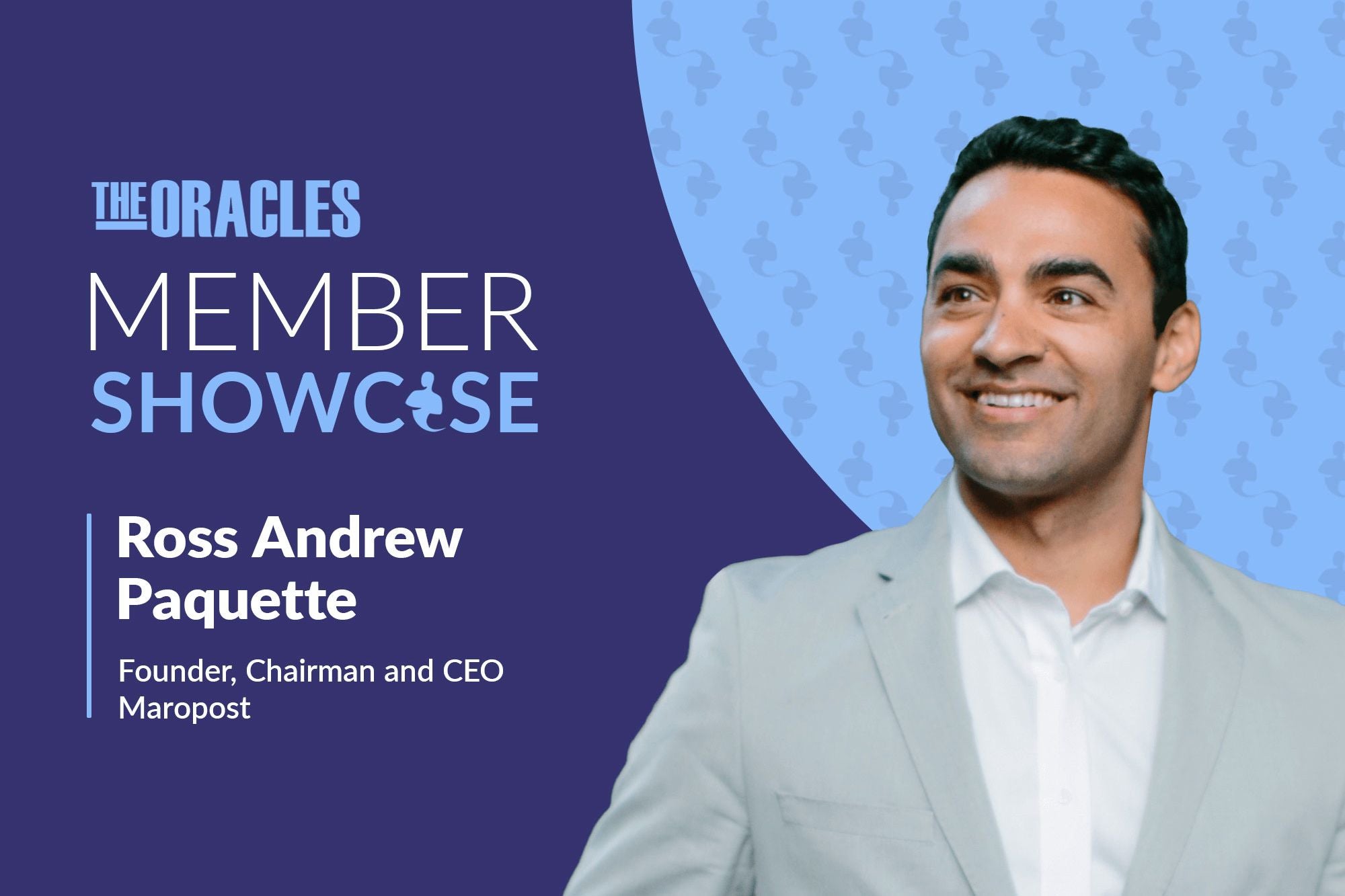
Today, he is Maropost’s co-founder, CEO and chairman. The company has expanded from email marketing into software for commerce, retail, product discovery and customer service. His own assignment has expanded too. Winning accounts was one challenge. Building an organization that could keep winning them without requiring him in every conversation has proved a longer education.
A reply was part of the product
Maropost started in 2011. Paquette had worked in marketing technology sales and seen customers paying substantial sums for service he considered inadequate. Software vendors could describe their features with considerable enthusiasm. Getting help after buying those features was another matter.
His answer was concrete: round-the-clock in-app live chat and a five-minute support response. For a young business, that was a demanding promise. It made the relationship part of what customers were buying. A marketer with a problem would have somebody to contact, rather than a vague expectation that a ticket might eventually find its way to a desk.
That approach helps explain his recurring interest in customer relationships. Support takes time. It exposes the vendor to complaints. It also puts the people building the product close to the people trying to use it. A company willing to listen has a chance to learn where the software earns its fee and where it creates extra work.
Years later, Paquette described doing sales, marketing and human resources himself. His account of early growth keeps returning to listening: customer calls helped him understand problems, and those problems became instructions for his co-founder. The sale and the product discussion lived remarkably close together. There was less distance in which a useful detail could disappear.
Support response target, paired with 24-hour in-app live chat.
The service commitment in Maropost’s early years.The unlikely route to software
Paquette describes an Ontario childhood far from the familiar mythology of the precocious computer founder. He grew up in a small mining and forestry town. In his own telling, technology was not the obvious destination; he did not get his first computer until he was fourteen. A software career arrived through work and observation.
At the University of Ottawa, he studied sociology, criminology and economics. Those subjects make an interesting prelude to a business built around customer behavior. They also resist the tidy biography in which every school choice points toward the company a person will eventually create. Paquette’s public story leaves room for a less predetermined route.
Sales gave him a practical view of the market. A person selling software hears the promised outcome and then, if the relationship continues, the actual experience. Paquette saw an opportunity in the gap. By the time he began Maropost, he had reasons to believe there were buyers willing to try a different approach.
He was also still earning a salary. The apartment business began alongside a full-time job selling Oracle enterprise software into the construction industry. The smaller venture had to fit around the existing one. The ambition for ten customers now sounds less like an amusing understatement and more like a sensible way to begin.
A business grows a backbone
The early platform was unreliable, and its developer was sometimes unavailable when needed. Paquette’s mother suggested a plain remedy: post a job online. He used oDesk, now Upwork. Jagdeep Singh was the first person to respond and, Paquette recalls, rebuilt the platform in two or three weeks. Singh became his co-founder and CTO.
It is a good business anecdote because the advice is so unceremonious. A founder explains an intricate technical predicament; his mother proposes hiring someone. The story also gives the company a second central character. Paquette could speak for the customer. Singh could turn the requirements into working software.
By November 2017, the growth had earned a place on Deloitte’s Canadian Technology Fast 50. Maropost ranked eighth, with reported revenue growth of 7,038 percent from 2013 to 2016. The following year, Deloitte’s North American Fast 500 placed it at number 159, recording 650 percent growth for that ranking’s measurement period.
The figures describe particular periods, rather than a permanent rate of ascent. They nevertheless show how far the operation had moved from the original small-account ambition. Growth also demands less photogenic work. In June 2018, Maropost announced its migration to Google Cloud Platform, seeking infrastructure that could support more customers and expanding products.
“We don’t just want to get clients - we want to grow them,” Paquette said then. That creates an obligation for a software vendor: its customers’ success increases the load its own systems must carry. The company that promises to help a merchant expand must be prepared for the merchant to take it seriously.
Buying the room to make decisions
In 2016, Paquette sold a minority stake in Maropost. He has described the transaction as a secondary sale: money went to shareholders selling their holdings, rather than being required to fund the company’s operations. It is a useful distinction in a story often told under the heading of bootstrapping.
The arrangement did not last. Paquette says his views and those of the investors diverged over how the business should grow. In 2019, he bought them out. He has spoken of a cheque of roughly $37 million, an expensive way to settle an argument about the future, although considerably more decisive than scheduling another meeting.
His account of the disagreement centers on profitability and growth together. He wanted a business whose expansion could coexist with its ability to make money. In an April 2022 interview, he reported $63 million in revenue for 2021 and a 52 percent EBITDA margin. Those are his historical figures, but they give substance to the philosophy he describes.
The buyback also makes his attachment to ownership easier to understand. It determines who can set priorities and how long a founder can pursue them. Paquette’s experience does not produce a universal rule for financing a company. It does show how a transaction can change the working relationships inside one.
The merchant’s day gets longer
The company’s scope widened through acquisitions. In March 2021, Maropost announced the purchase of Neto, an Australian commerce platform used by more than 3,000 retailers and wholesalers at the time. Neto handled product information, inventory, orders and fulfillment. These were tasks further along the merchant’s day than composing an email campaign.
Retail Express followed in an announcement in January 2022, bringing point-of-sale software and retail management capabilities. That put physical stores more firmly in the picture. In June, Maropost announced its acquisition of Findify, adding technology for search, merchandising and product recommendations.
Read together, the acquisitions describe the problem Paquette wanted to address. A merchant might attract a shopper, lose that shopper in an unhelpful product search, sell an item whose inventory sits in another system, and answer a complaint through yet another tool. Each handover can create work for somebody behind the screen.
Paquette has argued for bringing those activities into a connected platform. The ambition is practical, even when the execution is complex. Retailers need software that can manage their operations alongside their communications. The email business was acquiring responsibility for considerably more of the transaction.
- NetoCommerce, inventory, orders
- Retail ExpressPoint of sale, retail operations
- FindifySearch, merchandising, recommendations
The difficult art of becoming replaceable
There was another integration problem inside Maropost: how to make the organization work without routing its sales through Paquette. In September 2026, he described a decade-long effort to move beyond what he called “Ross and Company.” He recalled hiring seven or eight sales leaders whose credentials had looked promising but whose appointments did not work out.
That admission gives the early growth a more human scale. The founder’s close knowledge of customers had helped the business. Reproducing it in an organization proved difficult. A résumé could show experience elsewhere without explaining whether a person would thrive in this particular company.
Paquette has identified another leadership error just as bluntly: “Assuming that everyone knows what you know.” A founder has lived through the calls, mistakes and decisions that give an instruction its meaning. Other people receive the instruction. Communicating the accumulated knowledge takes patience that selling the next account does not automatically teach.
His proposed remedy includes adapting how he communicates. In his discussions of the team, he also emphasizes collaboration and the relationships between colleagues. Those are everyday concerns, but they belong near the center of this story. A business can grow quickly while its founder is still learning how to make his knowledge useful to other people.
“Assuming that everyone knows what you know.”
Ross Andrew Paquette, on a common leadership mistake
More people at the table
Recent developments add other voices to the picture. In December 2025, Maropost appointed Marcelo Cortes, Michael Litt and Loren Padelford to its advisory board. In May 2026, it launched a global partner portal for deal registration, referrals, sales resources and product updates. The company was giving more people ways to participate in its growth.
Paquette’s ambitions also extend beyond the software. He founded Maropost CARES in 2017, according to his personal biography, with a focus on environmental protection, conservation and education. He has spoken about the legacy of the company in terms of care and goodwill alongside its products.
The original poolside plan remains a useful place to end because it makes the distance traveled visible. He wanted a small business that would give him freedom. He built a much larger one that needed him constantly. The continuing work is to let that organization carry more of its own weight. Ten customers was an arithmetic problem. This one requires other people.