Breaking
Peyton Greenside assumes CEO role at BigHat Biosciences - 2025 BigHat's Milliner platform generates thousands of antibody designs per week $174.56M raised in total funding - Series B led by Section 32 Pharma partnerships: Amgen, Merck, AbbVie, J&J, Eli Lilly BigHat named to Fierce Biotech 15 - 2024 Two pipeline INDs targeted for 2026: ADC for GI cancers + TCE for solid tumors 2021 Silicon Valley Business Journal Women of Influence Inaugural Schmidt Science Fellow - 2018 cohort Climbed Mt. Kilimanjaro for Sickle Forward - September 2024 Peyton Greenside assumes CEO role at BigHat Biosciences - 2025 BigHat's Milliner platform generates thousands of antibody designs per week $174.56M raised in total funding - Series B led by Section 32 Pharma partnerships: Amgen, Merck, AbbVie, J&J, Eli Lilly BigHat named to Fierce Biotech 15 - 2024 Two pipeline INDs targeted for 2026: ADC for GI cancers + TCE for solid tumors 2021 Silicon Valley Business Journal Women of Influence Inaugural Schmidt Science Fellow - 2018 cohort Climbed Mt. Kilimanjaro for Sickle Forward - September 2024
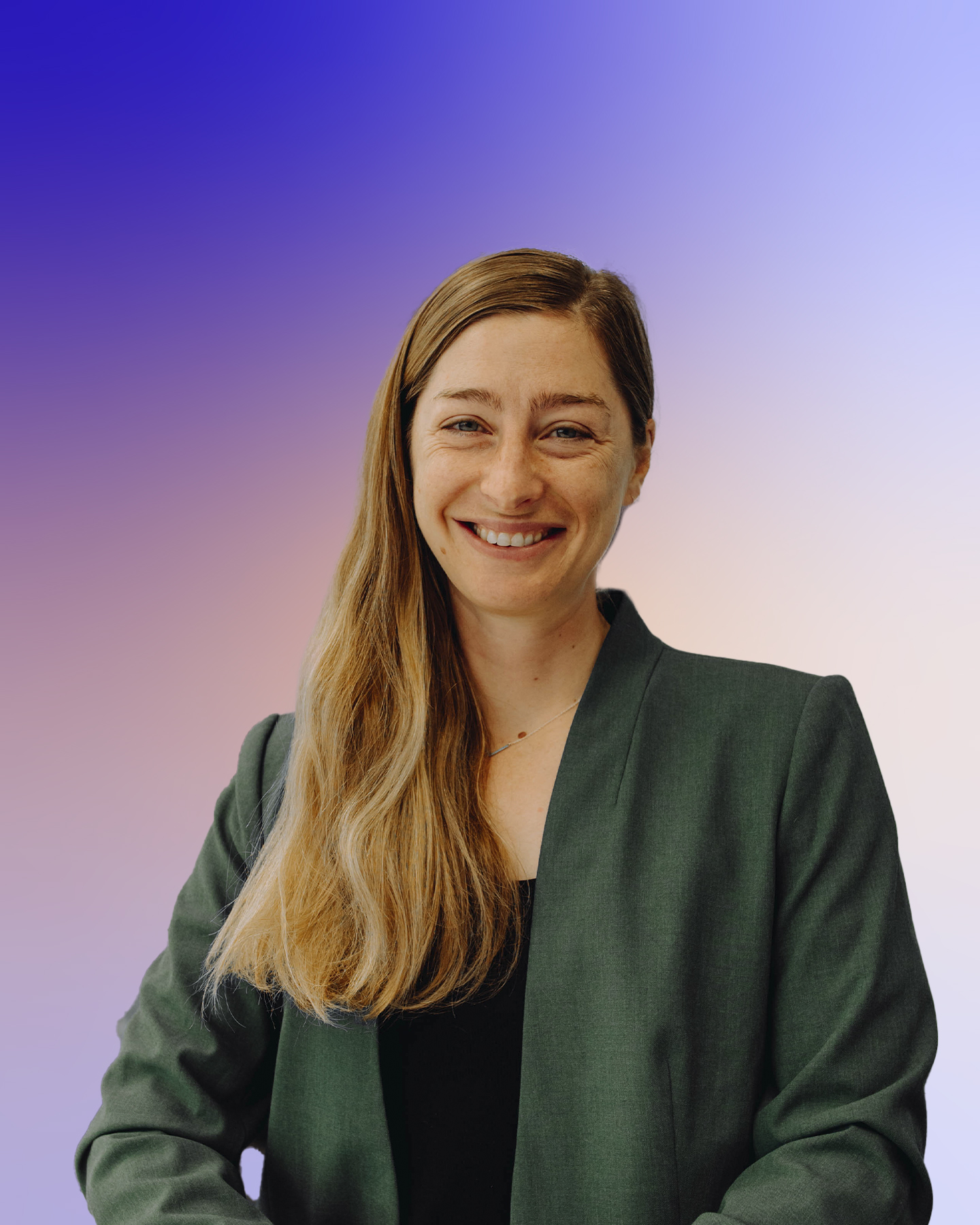
Peyton Greenside, CEO & Co-Founder of BigHat Biosciences
Biotech CEO - Founder - Computational Biologist

Peyton
Greenside

The woman who taught machines to design drugs - and then built the lab to prove they work.

CEO Co-Founder Antibody Design ML + Biology Schmidt Fellow
$174M Total Funding
5 Pharma Partners
2019 Founded BigHat
97 Team Members

The Machine That Learns to Heal

The antibodies that become drugs are not found. They are engineered - one amino acid at a time, through thousands of rounds of build-test-fail-try-again. It has always been that way. Until someone decided it didn't have to be.

Peyton Greenside co-founded BigHat Biosciences in 2019 with a single specific conviction: if you combine high-throughput synthetic biology with machine learning, you can close the design loop fast enough to make antibody drug discovery look less like mining and more like manufacturing. She built the Milliner platform around that idea. BigHat now runs more design cycles in a week than many labs complete in a year - thousands of unique antibody designs, tested, characterized, fed back into the model.

As of early 2025, Greenside stepped from Co-Founder and Chief Scientific Officer into the CEO chair, steering BigHat toward its first clinical trials in 2026. The company has two pipeline programs approaching IND filings: a next-generation antibody-drug conjugate targeting GI cancers, and an avidity-driven T-cell engager for solid tumors. Both emerged from a platform that Greenside helped design, code, and test - often literally.

Before BigHat, she spent time at the Broad Institute as a computational biologist and co-founded Valis, a bioscience startup. Before that, she was among the inaugural class of Schmidt Science Fellows - a cohort so selective it reads like a dispatch from the future of science. Her fellowship project: teaching algorithms to predict which experiments a scientist should run next, using reinforcement learning. She worked with Prof. Emma Brunskill at Stanford and applied it to cancer mutation detection primers. It was a very narrow problem. It turned out to be the right problem to solve first.

"I'm honored to receive this award and join the company of many incredible women in Silicon Valley. I'm also delighted that our work at BigHat is recognized as we continue to make progress in developing new generations of safer and more effective treatments for patients suffering from today's most challenging diseases."
- Peyton Greenside, on her 2021 SVBJ Women of Influence recognition

The question Greenside keeps returning to is a design question: how do you build a system that gets smarter every time it runs an experiment? Most drug discovery platforms are about throughput. BigHat's Milliner is about feedback - each antibody that gets made and tested teaches the model something new about what the next one should look like. The wet lab and the ML are not separate departments talking over a wall. They are the same loop.

She has a Harvard BA in Applied Mathematics. A Cambridge MPhil in Computational Biology - earned as a Herchel Smith Scholar. A Stanford PhD in Biomedical Informatics, where she was an Accel Innovation Scholar. Three of the world's five most prestigious universities, in ascending order of computational intensity. The academic record is formidable, but what is more interesting is that she turned it toward making things - not publishing things.
$174M

Total Funding Raised

$99.56M before Series B, plus $75M Series B in July 2022. Investors include Amgen Ventures and Bristol Myers Squibb.

5

Major Pharma Partnerships

Simultaneous active collaborations with Amgen, Merck, AbbVie, Johnson & Johnson, and Eli Lilly - a rare feat for a company of 97 people.

2026

First Clinical Trials

Two IND filings targeted: next-gen ADC for GI cancers and avidity-driven TCE for solid tumors. The clinical clock is running.

From Harvard Calculus to Antibody CEO

Harvard University
BA in Applied Mathematics - the foundation that would later run deep learning models on biological sequences.
University of Cambridge
MPhil in Computational Biology as a Herchel Smith Scholar. The biological complexity clicked into place alongside the math.
Stanford University - PhD
PhD in Biomedical Informatics (Accel Innovation Scholar). Spent years developing computational and statistical methods for biological sequence modeling.
2018 - Schmidt Science Fellowship
Selected for the inaugural cohort of Schmidt Science Fellows. Pivoted from biomedical informatics into ML/reinforcement learning, working with Prof. Emma Brunskill at Stanford to teach algorithms to predict which experiments to run next.
Broad Institute
Computational Biologist at one of genomics' crown jewels - applying ML techniques to life science challenges at scale.
Pre-BigHat
Scientific founder of Valis, demonstrating that founding instinct predated BigHat itself.
2019 - BigHat Founded
Co-founded BigHat Biosciences with Mark DePristo. Started as Chief Scientific Officer, building the Milliner platform from concept to production.
2021
Named to Silicon Valley Business Journal's Women of Influence list and won the Biocom Catalyst Award for innovators under 40 in life sciences.
July 2022
BigHat closes $75M Series B, led by Section 32, with Amgen Ventures and Bristol Myers Squibb joining as new investors. Total funding crosses $100M.
September 2024
Climbs Mt. Kilimanjaro (5,895m) for the Timmerman Traverse for Sickle Forward, committing to raise $50K+ for sickle cell disease treatment in sub-Saharan Africa.
2024
BigHat named to Fierce Biotech 15. Company announces partnerships with Lonza's Synaffix (ADC) and Eli Lilly (TuneLab).
2025 - CEO
Assumes CEO role as co-founder Mark DePristo moves to advisory position. Targets two IND filings and first clinical trials by 2026.

Milliner: The Fastest Antibody Design System in the World

Traditional antibody drug discovery works through trial and error. You design something that looks promising, synthesize it, test it, learn it doesn't quite work, and start over. The loop takes months. Greenside's platform compresses it into days.

Milliner integrates a synthetic biology-based high-speed wet lab with state-of-the-art machine learning into a single closed-loop system. The machine designs. The lab builds. The data flows back to the model. Thousands of unique antibody designs per week, each one teaching the system something the last didn't know.

The platform targets properties that make or break a drug candidate in the real world: affinity, selectivity, stability, immunogenicity, manufacturability. It doesn't just design antibodies that bind targets - it designs antibodies that survive the journey from bench to clinic.

BigHat's pipeline includes next-generation ADCs, T-cell engagers, VHH antibodies, and multi-specific formats - the most technically demanding categories in modern biologics. The platform's flexibility is the point.

The Milliner Loop
1
Design
ML model proposes thousands of candidate antibody sequences optimized for target properties
2
Build
High-speed synthetic biology wet lab synthesizes and expresses the designed antibodies at scale
3
Test
Automated biophysical and functional assays measure binding, stability, selectivity, and developability
4
Learn
Experimental data feeds back into the ML model, making every subsequent cycle smarter and faster
Result: thousands of unique designs per week - at the scale that lets the model actually learn.

Achievements & Recognition

Inaugural Schmidt Science Fellow (2018 cohort) - one of the most selective early-career science fellowships in the world
Silicon Valley Business Journal Women of Influence (2021) - alongside many leading figures in Bay Area technology and business
Biocom Catalyst Award - recognizing innovators under 40 in the life sciences
BigHat named to Fierce Biotech 15 (2024) - the publication's annual list of companies to watch in biopharma
$174.56M raised total, with BigHat's Series B (2022) backed by Amgen Ventures and Bristol Myers Squibb
Simultaneous pharma partnerships with five top-20 global pharmaceutical companies: Amgen, Merck, AbbVie, J&J, Eli Lilly
Harvard
University
BA in Applied Mathematics
Cambridge, Massachusetts
Foundation
University of
Cambridge
MPhil in Computational Biology
Herchel Smith Scholar
Stanford
University
PhD in Biomedical Informatics
Palo Alto, California
Accel Innovation Scholar


Beyond the Platform

Kilimanjaro and Sickle Cell

In September 2024, Greenside joined the Timmerman Traverse for Sickle Forward - an expedition to the summit of Mt. Kilimanjaro in Tanzania, Africa's highest peak at 5,895 meters. Each participant committed to raising at least $50,000 for sickle cell disease diagnosis and treatment in sub-Saharan Africa, with the collective goal matched to create a $2M+ impact fund.

The expedition was not incidental to her work. BigHat has a preclinical antibody program targeting sickle cell vaso-occlusive crises - the sudden, intensely painful episodes caused by abnormally shaped blood cells blocking blood flow. The climb was a physical commitment to a disease her own team was trying to address with their platform. Not many CEOs enter the clinic from 5,895 meters above sea level.

The Reinforcement Learning Detour That Wasn't

During her Schmidt Science Fellowship in 2018, Greenside made a deliberate disciplinary pivot. She shifted from biomedical informatics - her PhD field - into machine learning, specifically reinforcement learning. Working with Prof. Emma Brunskill at Stanford, she developed algorithms to optimize the design of primers for cancer mutation detection in blood samples. The problem sounds narrow. The approach was not: build a model that predicts which experiments to run next, rather than running all of them.

That same logic - use ML to choose experiments intelligently, not exhaustively - became the intellectual spine of the Milliner platform. The fellowship was not a detour. It was the shortcut.

A Message at the Starting Line

When Greenside formally assumed the CEO role in early 2025, she published a public message framing BigHat's next chapter. The company was no longer purely a platform business. It was becoming a clinical-stage company with proprietary pipeline assets, pharmaceutical partnerships generating real data, and a team of 97 people pointed toward IND filings. She described BigHat as "poised to lead the next era of ML-powered therapeutics" - a claim backed by two programs preparing for their first encounter with patients.

The transition from scientist-founder to CEO is a harder gear shift than it looks from outside. Greenside navigated it with BigHat's co-founder Mark DePristo moving to an advisory position, and by surrounding herself with clinical talent ahead of the 2026 IND timelines. The science hadn't changed. The accountability had.

"I am deeply committed to carrying that vision forward."
- Peyton Greenside, on assuming the CEO role at BigHat Biosciences, 2025

The Pharma Five

Five of the world's top pharmaceutical companies have active collaborations with BigHat.

Amgen
Merck
AbbVie
Johnson & Johnson
Eli Lilly

Things Worth Knowing

01
She holds degrees from Harvard, Cambridge, and Stanford - three of the world's most prestigious universities, each at a higher level than the last. The trajectory is not subtle.
02
As one of the inaugural Schmidt Science Fellows (2018), she was in the very first cohort of a fellowship specifically designed to cross disciplinary boundaries in science. She switched from biomedical informatics to reinforcement learning - and never switched back.
03
BigHat's Milliner platform runs more design-build-test cycles in a week than many traditional drug discovery labs complete in a year. The scale difference is what the machine learning model needs to actually learn.
04
Before BigHat, she was scientific founder of Valis - demonstrating a serial founding instinct that predates the company she's best known for. BigHat was not her first attempt to build something from science.
05
She climbed Africa's tallest mountain (Kilimanjaro, 5,895 meters) for a rare blood disease cause directly connected to her own company's pipeline program. That's one way to demonstrate conviction about a program's importance.
06
BigHat has simultaneous active partnerships with five of the world's top-20 pharmaceutical companies. At 97 employees, the partnership-to-headcount ratio is not standard for the industry.

Share This Profile