A welding robot has an awkward assignment: make the same movement again and again, in a world that keeps changing. A seam shifts. Two pieces of steel meet at a slightly different angle. Heat pulls the assembly out of shape. The drawing stays immaculate. The metal declines to cooperate.
- The job: automate welds on parts that vary.
- The engine: Obsidian, Path’s welding AI.
- The next test: mobile welding and qualified shipbuilding production.
For a factory making identical products in long runs, controlling that variation can justify substantial engineering. For a fabricator switching between large, complicated jobs, the arithmetic gets harder. Programming, fixturing and adjusting the system can eat into the time automation was supposed to save. The arm can move beautifully and still be the wrong purchase.
Path Robotics, based in Columbus, Ohio, has built its business around that mismatch. Its welding systems use computer vision and machine learning to locate seams, plan robot motion and adapt to differences between parts. The useful question is wonderfully practical: can the machine work with the piece of steel actually in front of it?
A workshop education
Andy and Alex Lonsberry describe growing up in Ohio welding with their father in the garage. Later, at Case Western Reserve University, they worked on the sensing and control problems behind intelligent machines. Their route to manufacturing ran through Sears think[box], the university’s open-access innovation center, where prototypes could become physical objects.
The university reports that they spent nearly two years in its incubator refining optical sensors, computer vision models and robotic controllers before winning their first industrial contract. Path was founded in 2018. Fellow doctoral student Matt Klein became a co-founder; their father, Ken, joined the business too. This was a company assembled around making machines behave.
“Without think[box], we would not exist, period,” Alex told the university. There is a useful lesson in that origin: access to a place where hardware can be built, tested and revised matters. A manufacturing company needs encounters with materials. The workbench was part of the intellectual equipment.

The seam gets a vote
Path’s current software centerpiece is Obsidian, announced in September 2025. The company describes it as a foundational AI model for welding, trained on tens of millions of welded inches. It determines what to weld, where to weld and how to execute the work, adjusting robot motion as conditions change.
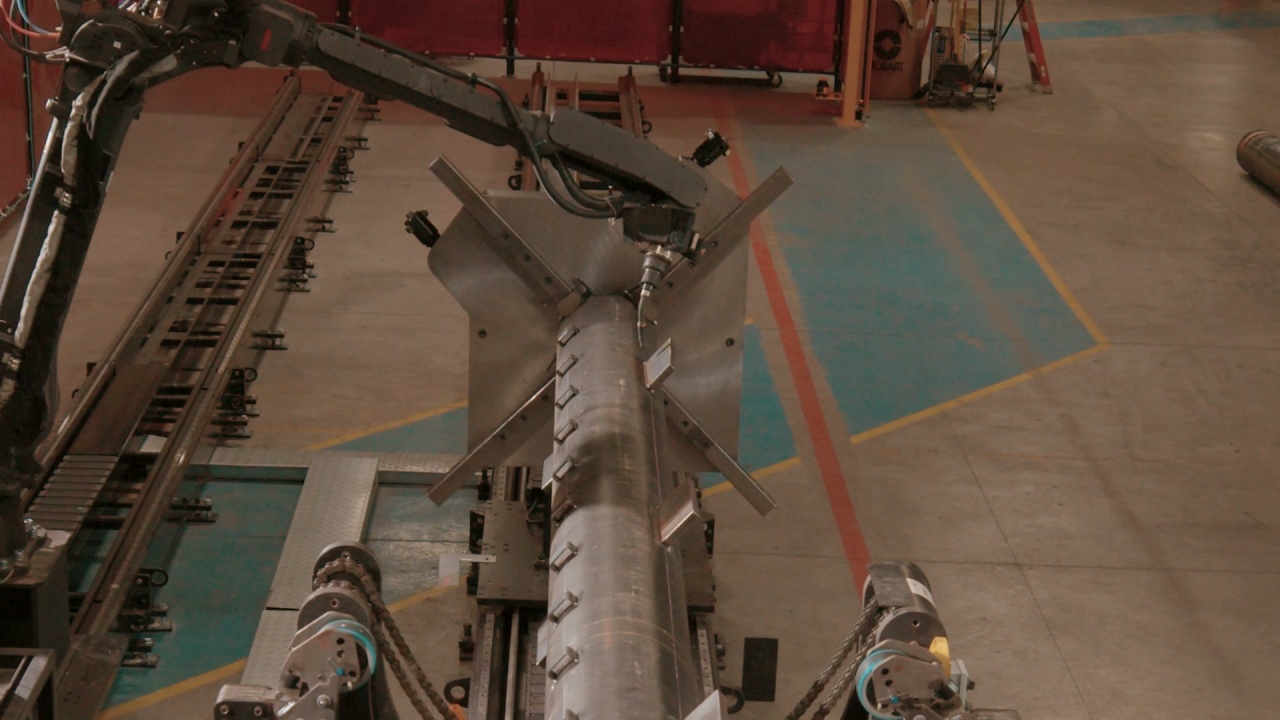
That intelligence appears in several forms. Path’s welding cells handle large structures, use positioners to orient heavy workpieces, and offer multi-pass adaptive fill. In that process, scans help determine the number and placement of weld passes needed to fill a joint. Heat-distortion compensation addresses the inconvenient fact that welding changes the thing being welded.
The earlier AF-1, introduced in 2023, extended automation into picking, fitting and welding small metal parts. The distinction matters: joining an assembly involves preparation as well as depositing a weld. Path’s expertise spans perception, motion planning and process control, with hardware and software working together around a particular manufacturing task.
Conceptual view of Path’s adaptive workflow.
The purchase that finally made sense
Consider TYCROP, a Canadian equipment manufacturer building chassis systems for mobile power generation. Its work connects welding capacity to delivery schedules. Path’s customer material describes a chronic shortage of welders. On Path’s website, TYCROP operations executive Russ Janzen explains the earlier obstacle: “We’ve looked at robotic welders in the past, and the cost benefit didn’t work out. Path was different.”
That is a buying decision worth examining. The earlier case for automation had failed on economics. The later attraction was additional production capacity when hiring could not supply it. Other named users include Millerbernd and LAD Services. Path sells into the unglamorous places where another finished assembly is more valuable than another impressive demonstration.
Its robots-as-a-service offer advertises zero upfront capital expenditure and around-the-clock Mission Control support. That changes the shape of the purchase: the customer evaluates an ongoing production service and its operating economics. Zero capital expenditure still leaves a serious calculation involving service charges, utilization, loading, changeovers and accepted output.
Investors have financed the long development cycle. A $56 million Series B was announced in May 2021. The October 2024 Series D announcement reported $100 million in new investments accumulated over the preceding year, led by Matter Venture Partners and Drive Capital. Path’s current newsroom reports more than $370 million raised. Its 2025 review reports over $100 million in bookings; bookings measure commitments, with revenue recognized separately.
with revenue recognized separately.
Now the robot walks to work
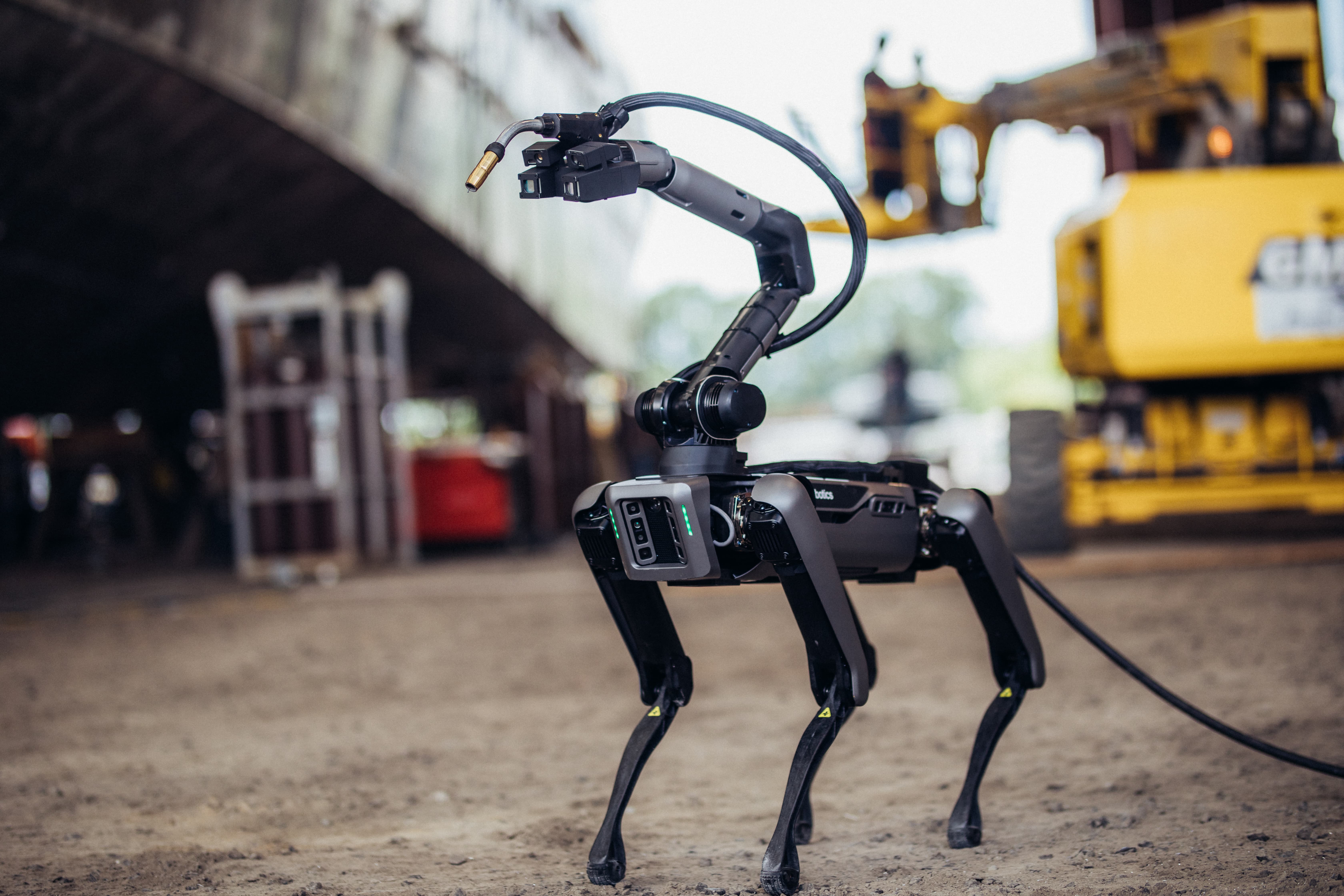
A shipyard adds a problem that a better fixed cell cannot solve by itself: the assembly may be too large to bring to the robot. In April 2026, Path introduced Rove, pairing Obsidian with a quadruped platform to bring welding to the workpiece. Saronic joined as an early adopter evaluating the system in Franklin, Louisiana.
The product page describes positioning the machine, scanning the seam, adjusting welding parameters and welding with data capture. It lists an initial 50 units shipping in 2027. That schedule puts the announcement in perspective: mobile welding is an expansion being brought to market, with early adopters helping establish its usefulness.
HII’s commitment is larger, and carefully conditional. In August 2026, the shipbuilder announced agreements with Path and GrayMatter Robotics covering up to $900 million in combined work across seven years. Awards depend on technology readiness and performance milestones. Development, qualification and oversight precede delivery. The agreement makes cost, schedule and quality conditions of the opportunity.
Copy the buying test
Path competes with familiar alternatives: skilled manual welding, conventional integrated robot cells and newer adaptive systems. FANUC offers seam tracking, multi-pass functions and coordinated positioners; Novarc specializes in pipe-spool welding. Buyers should compare those approaches against their own part mix, access requirements and production flow. Adaptation is a capability to test on actual work.
The transferable idea is to start with the variation that makes a process expensive. Bring representative parts, including awkward ones. Measure accepted assemblies per shift, loading effort, rework and total operating cost. A fast weld can coexist with a slow production line. Path’s case is strongest where variable work and constrained welding capacity meet. A standardized, well-served line may need a different solution.
Bring representative parts,
including awkward ones.The buyer’s test
The interesting achievement is a change in what the robot is expected to know. Its instructions must survive contact with an imperfect assembly. Path is asking the machine to look again, then act on what it sees. For the manufacturer waiting on the next completed part, that second look has a very concrete purpose.