The founding prop is almost suspiciously perfect: a crockpot in a Nebraska dorm room. In 2010, Hastings College student Andrew Vrbas returned from volunteering in Peru bothered by the links between sanitation, education and economic opportunity. He taught himself to make soap. Farmers markets followed. Abi Vrbas, his future wife and co-founder, joined him in packaging bars between classes. A modest household object became their answer to an immodest question: could an everyday purchase create work and better hygiene at the same time?
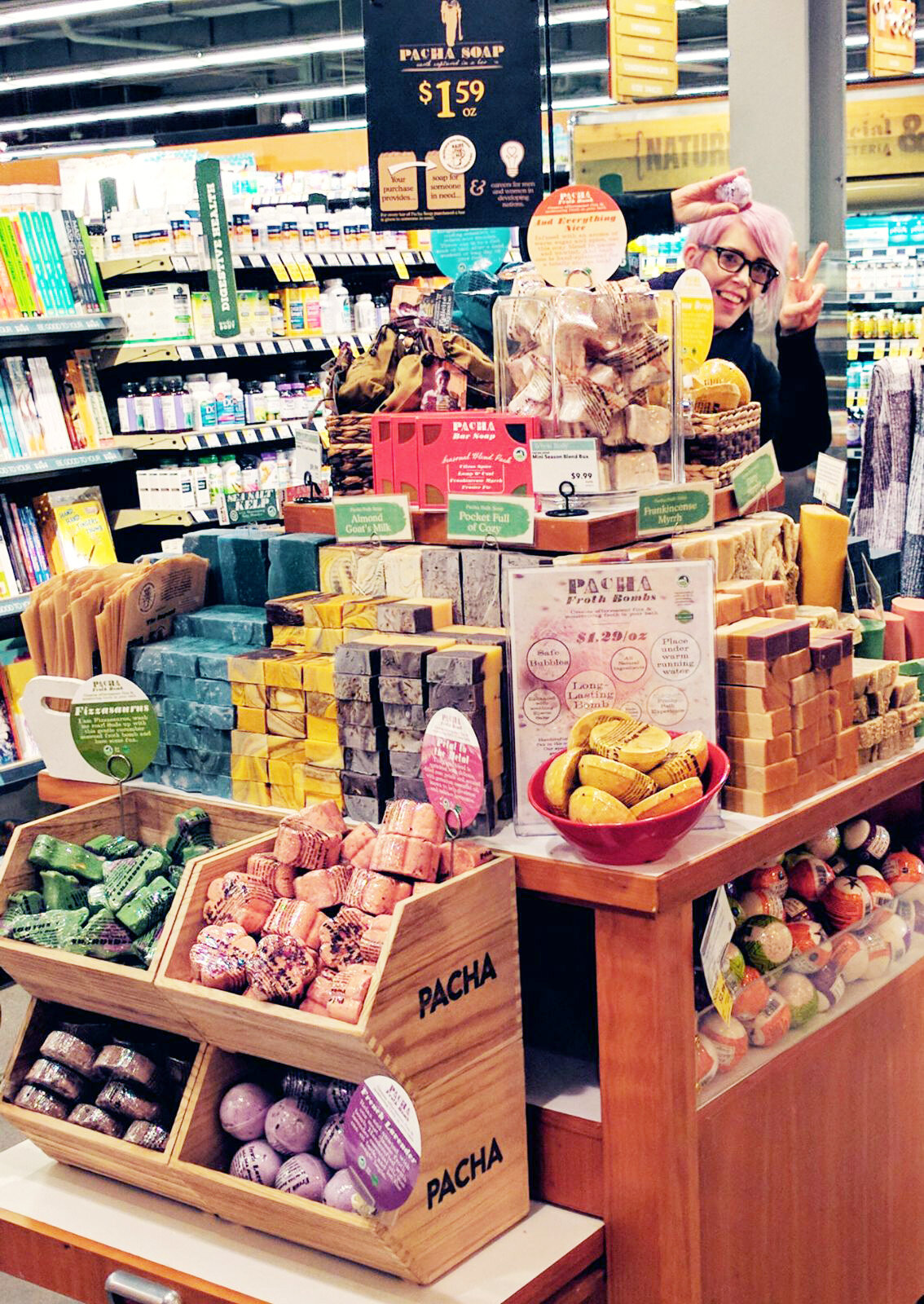
Pacha Soap Co. now makes the sort of bath aisle that interrupts a grocery run. Bars arrive in marbled slabs of teal, ochre and lavender. Bath bombs sit in bins like candy for adults with tubs. The company sells soap, body wash, scrubs, lotion, deodorant, shower steamers, candles and gifts online and through natural grocers. Its 2025 refresh reached 500 Whole Foods and 300 Sprouts locations. Beauty Independent described the company as a $30 million business with more than 100 employees.
The obvious customer is someone who reads an ingredient panel and still wants the shower to be fun. Pacha's base has skewed millennial and older, with the income and inclination to buy natural personal care at Whole Foods. Retail buyers are the other customer. They need velocity per foot of shelf, a display that explains itself and seasonal reasons to reorder. Pacha's open-stock bars do useful work here: they turn an aisle into a tiny market stall.
01 / The actual machineThe mission gets attention. The merchandise closes the sale.
Pacha is a for-profit manufacturer, not a charity. It earns money through wholesale accounts, its Shopify store and Amazon. Handcrafted bars and bath bombs make up most sales; body care, home fragrance and gifts widen the basket. About 65 products form the core range, while several hundred seasonal variations contribute roughly a quarter of sales. That seasonal tail creates factory complexity, but it also gives grocers fresh displays and customers an excuse to return.
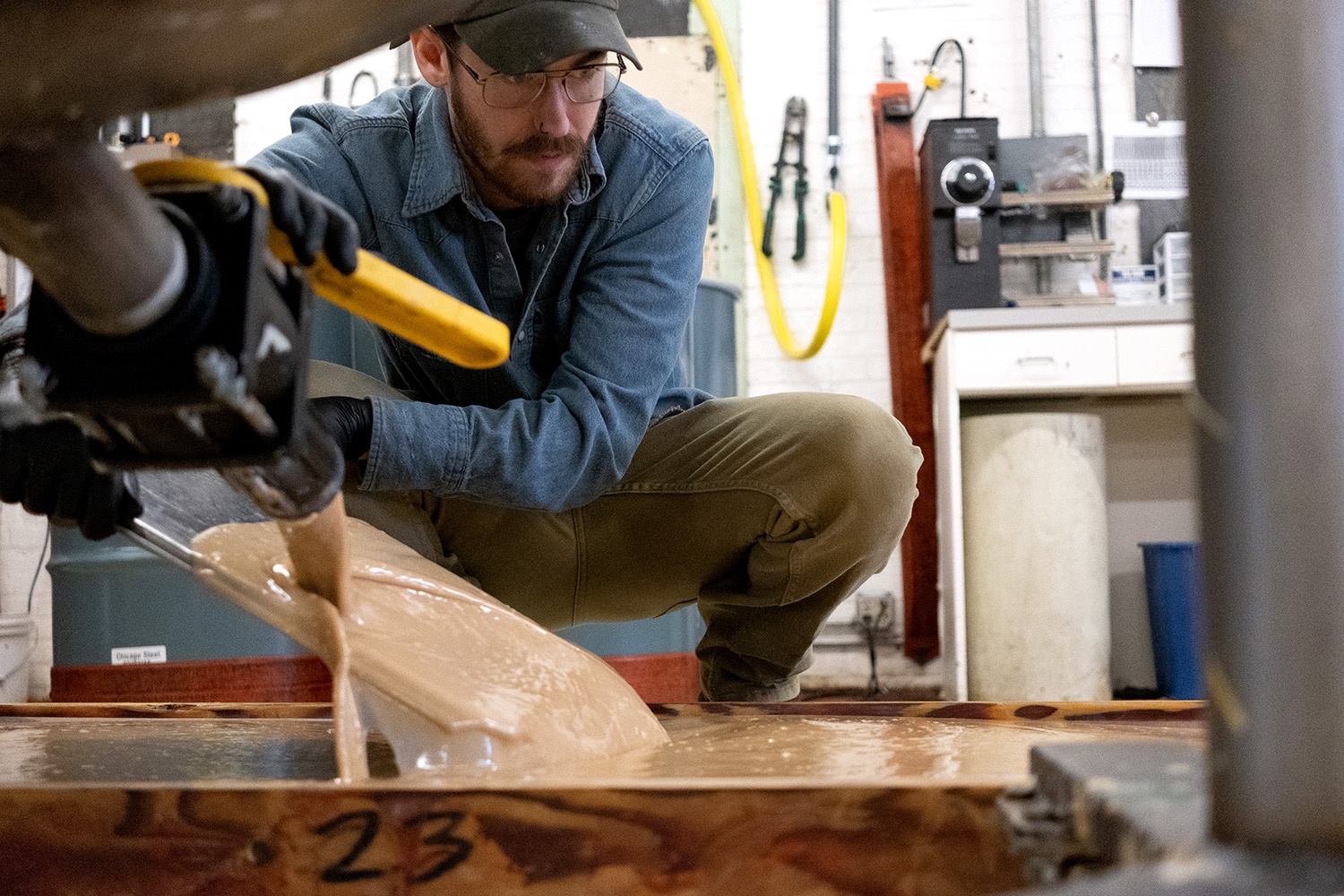
The company reported making about 60 percent of its products itself in 2025, with a plan to reach 80 percent in 2026 as candle capacity grows. In-house manufacturing is romantic only from a distance. It means equipment, labor, inventory, quality control and expensive mold changes. It also means Pacha can change the density of a bath bomb so it floats, or turn French Lavender from a plain sphere into a flower, without waiting for a contract factory's next available quarter.
Its differentiation sits in three layers. The first is sensory: color, fragrance, lather and shape. The second is commercial: displays built for the natural-grocery channel. The third is ethical: direct relationships with ingredient suppliers and support for sanitation, entrepreneurship and clean-water programs. Plenty of competitors can claim natural ingredients. Lush can out-theater almost anyone. Dr. Bronner's owns a recognizable values story. Indie soap makers can feel more local. Pacha's narrow advantage is combining small-batch visual character with the scale and paperwork a national retailer expects.
“We believe business can free people.”Andrew Vrbas, co-founder and CEO
02 / What changedGiving away soap was legible. Rebuilding a supply chain was durable.
Early Pacha used a “Buy to Give” story that was easy to repeat: purchases helped fund donated bars, handwashing education, clean water and locally created jobs. By 2017 the company said it had given more than one million bars, taught 75,000 children and helped establish 105 careers. Later accounts put donations above three million bars. Yet the founders had already spotted the weakness in a one-way donation model. Shipping free goods can relieve a need while doing little for the economy around it.
So Pacha moved more of the work upstream. It pursued ingredient partners, local soap enterprises and in-country clean-water jobs. Its current language emphasizes ethical, transparent supply chains that strengthen local economies. The 2024 impact summary reports ingredients directly sourced from 6,100 smallholder farmers, $890,000 spent with direct-sourcing partners and nonprofits that catalyzed 740 entrepreneurs. Pacha also reported producing the first regenerative-certified bar soap. Those are company figures, but they reveal the design: as purchasing volume rises, supplier impact can rise with it.
The stronger purpose-brand loop
What did this cost? Exact deal terms are mostly private, but growth clearly required more than farmers-market cash. Pacha reported a $350,000 convertible note in supplied company data. It combined with purpose-led brand Hand in Hand and received a minority growth investment from Bain Capital Double Impact. Advantage Capital lists a $3 million investment connected to a brand acquisition, candles and a larger facility. SG Credit Partners added senior debt in 2024. Mission did not make equipment or working capital free.
03 / The failure worth studyingA merged brand stopped earning its keep.
Hand in Hand had its own clean origin story and a buy-one, give-one model. It merged with Pacha in 2022. Then sales declined after the pandemic, and the brand failed to gain traction with Gen Z. Pacha did not keep polishing it out of affection. In 2025 the company sunset Hand in Hand and launched Foxly, a separate line designed for a younger natural-grocery shopper.
Foxly comes in Dragon Fruit, Citrus Beach and Midnight Vanilla, across deodorant, body wash, lotion, sugar scrub and bar soap priced from $4.99 to $12.99. The visuals are brighter, the fragrances stronger and the posture more playful. Whole Foods gave it an exclusive 500-store debut. This was not merely a new label pasted on Pacha. Management's bet was that a younger audience deserved different signals and should not be asked to inherit another generation's purpose-brand vocabulary.
At the same time, Pacha protected the recognizable bars and bath bombs in its main line. It repaired the weaker edges by reading reviews. Customers said soap stuck to the utilitarian dish. Bath bombs sank. Some packages failed to match the beauty inside. Pacha changed materials, formats, density and shapes. That is what changed its mind: not a trend deck alone, but small, repeated evidence of friction.
What management reported after the reset
Relative scale, capped visually at 100. These are company-reported changes, not audited comparisons.
By November 2025, company president Alan Cunningham said every refreshed item had grown at least 20 percent since rollout, with some up 100 percent. He reported a 20 percent improvement in profitability and a 500 percent increase in Amazon sales that year. These figures are snapshots supplied by management, not proof that every bet will compound. They do show that better listening paid for more ambition.
04 / The stealable partsCopy the sequence, not the sunburst.
Make the object attractive on scent, feel, color or performance. Purpose is a reason to prefer, not permission to disappoint.
Pacha's displays give grocers color, discovery and seasonal turnover. Win the buyer's problem as deliberately as the user's.
Direct sourcing makes growth increase purchasing from partners. The mechanism survives even when a campaign ends.
Keep equity where it exists. Build a new brand when the customer, language and sensory codes are genuinely different.
A fifth lesson is less glamorous: own enough of the feedback loop. Pacha's factory makes product changes expensive, but possible. A founder copying this model does not need a plant on day one. They do need supplier relationships, minimum-order economics and testing cycles that let repeated complaints become physical revisions before the shelf moves on.
Where this playbook stops working
- Direct-source ingredients vary so much that quality or delivery becomes unreliable.
- Handcraft becomes a margin-eating performance rather than a customer-valued feature.
- One retailer controls too much distribution and quietly becomes the product manager.
- A new audience is mostly a mood board, not a distinct need with repeat-purchase evidence.
- The mission is asked to compensate for weak fragrance, skin feel, packaging or price.
Pacha fits in the broad natural personal-care market, but its more precise neighborhood is “affordable sensory treat with a traceable conscience.” That is a useful place to be when shoppers trade down from prestige beauty yet still want a small indulgence. It is also crowded. Clean claims have become table stakes, fragrance fashions turn quickly and grocers can fill the shelf with private label.
The company has endured because it kept changing the answer while holding the question. Soap was first a vehicle for giving. Then it became a way to create businesses and buy from farmers. Now it is also a portfolio, a manufacturing system and a test of whether natural grocery can recruit a fragrance-hungry generation. The crockpot story gets the smile. The willingness to kill a fading brand, fix a sticky dish and keep the useful parts is what another operator should remember.