Jared Pobre moved to Jackson Hole and discovered that a change of scenery could become a change of face. The mountain air left his skin dry. The men's products he used weren't helping. Some of the products in his wife's cupboard did. There was the question: why did the better experience seem to live on the other side of the bathroom?
Pobre came from advertising technology. His wife, Stacy Keibler, came from entertainment. They began developing Caldera + Lab in 2017 and launched in 2019 with one product, The Good. Today that serum lists at $110 for a one-time purchase. A business had formed around the possibility that men would pay for a better experience of looking after their skin.
- Premium skincare for men concerned with dryness and visible aging.
- One original serum grew into rich and lightweight routines, plus haircare.
- Botanical formulas, published testing and replenishment subscriptions underpin the offer.
- Nordstrom expansion puts a largely online proposition on a physical shelf.
01 / The customer was already in the mirror
The obvious grooming pitch promises speed. A bottle, a splash, back to business. Caldera + Lab makes a more interesting assumption: a man can want a short routine and still care deeply about what is inside it. Simplicity and seriousness can share a bathroom.
In an October 2025 interview, Pobre said the company had sold to more than 150,000 customers. Earlier reporting described its core shoppers as 40 to 70 years old, overwhelmingly men purchasing for themselves. The imagined wife buying a gift gives way to a customer researching his own face.
That helps explain the company's proximity to fitness and wellness. Its conversations include longevity-minded consumers, and Pobre has discussed hospitality and country-club distribution. The inference is commercial: find people already willing to spend on their well-being, then give skincare a place in that expenditure. A serum needn't arrive dressed as an emergency.
02 / Four weeks inside one bottle
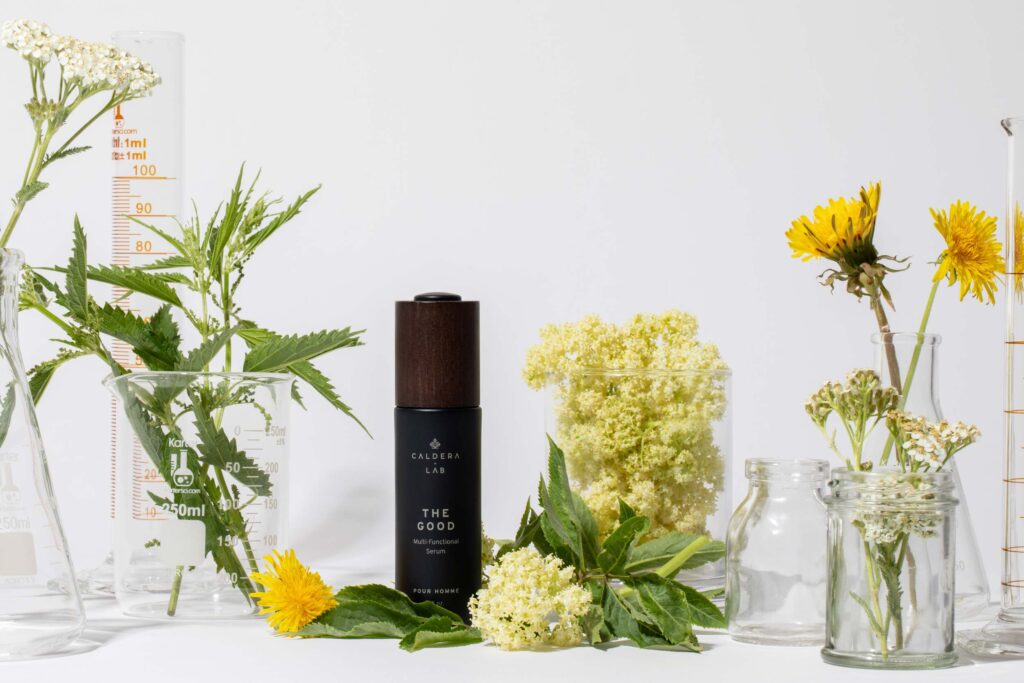
The Good is an oil-based serum built with 27 botanicals. The company describes four weeks of maceration to extract nutrients. Its guidance points toward dry-to-normal skin, colder climates and nighttime use. The romance is the mountain plant; the business difficulty is turning plants into a consistent product that can be made, tested and shipped.
Pobre has described choosing costly development partners and the challenge of keeping production abreast of demand. In a 2020 interview, he said manufacturing The Good took months once processing and quality control were included. An ingredient story can therefore become an inventory problem. Demand may move faster than an extraction vessel.
“clean is not enough”
Jared Pobre, on building effective skincare
The alternatives are quite real. Jack Black sells cleansers, moisturizers, age-focused products and shaving care; Brickell offers skincare routines alongside hair and body products. Caldera + Lab must persuade a customer who already has choices. Its botanical serum and newer delivery technology give it a story to tell, but the decision still comes down to the formula, the feel and the price. A shelf crowded with competitors is a test of persuasion.
The company occupies the premium end of men's grooming, where it competes for attention with established men's brands and unisex prestige products. Its chosen distinction is custom formulation, botanical sourcing and evidence. The MADE SAFE directory lists its original serum, cleanser and moisturizer. That is a specific certification shoppers can inspect, rather than a vague instruction to trust the word “natural.”
03 / The small print earns its space
The company's original study of The Good ran for eight weeks in 2018 with 53 men aged 37 to 64. Its results page describes instrumentation, expert assessment and self-reports. The much-repeated figure is that 96% reported healthier-looking skin. The words “reported” and “looking” matter: they describe a cosmetic outcome, not a promise to every future buyer.
Published 2018 study of The Good • Ages 37-64 • Includes consumer perception
The newer The Great and The Hydro Layer use what the company calls patent-pending plant-based exosome technology. The proposition is to carry active ingredients into skin more effectively. A patent-pending description establishes an application status; it doesn't establish superiority over every rival. The useful shopping distinction is texture and fit: these are the lighter options.
Dry-to-normal skin / colder climate
Clean Slate → The Good → Base LayerOily or combination skin / warmer climate
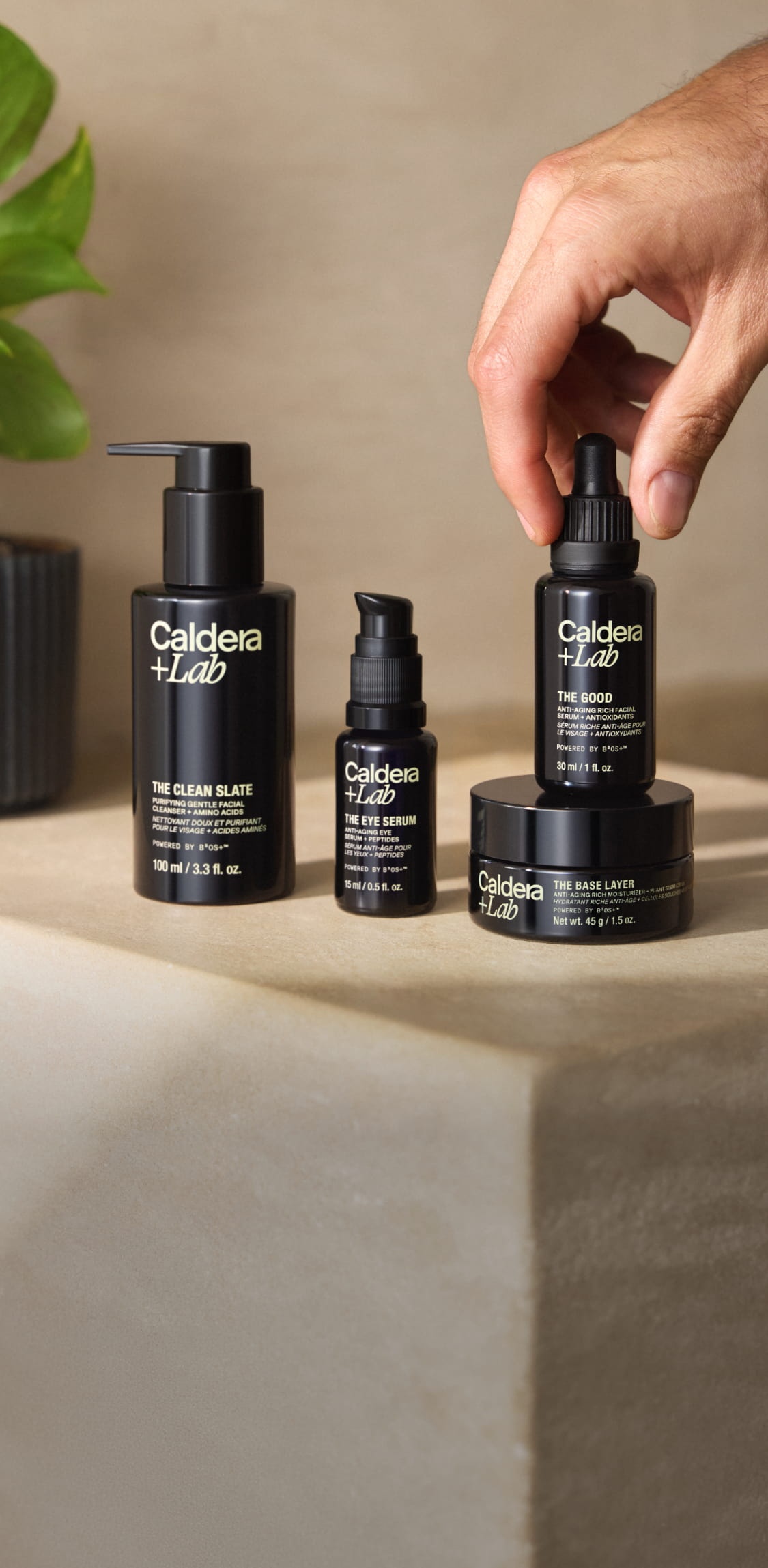
Clean Slate → The Great → Hydro LayerUsers can buy a cleanser, serum and moisturizer together instead of constructing a routine from unrelated shelves. The rich original serum contains naturally derived fragrance; The Great is described as fragrance-free. A shopper seeking the latter has a reason to choose carefully. The brand's expanding catalogue also includes eye care and a shampoo, conditioner and hair-serum system.
04 / A handsome bottle must survive the trip
The venture cost real money before it attracted institutional money. Pobre's initial commitment was reported as a six-figure sum. In October 2024, HIPstr, HighPost Capital's early-stage arm, supplied a $6 million Series A. The announced uses included research, marketing, hiring and retail expansion.
The founder's October 2026 Shelf Space interview offers less polished details: impractical glass packaging, an expensive agency engagement and an inventory truck stolen before Black Friday. Those are founder accounts, not an audited loss schedule. They are nevertheless useful reminders that formulation, packaging and distribution each need to work. A beautiful bottle has duties beyond being photographed.
05 / The counter is a different classroom
The website sells individual products, bundles and recurring deliveries. The Good's displayed subscription price is $86, against $110 once; customers can adjust or pause replenishment. A repeat routine gives the company repeat business. It also makes the price and delivery interval worth reading before checkout.
The next experiment is retail. BeautyMatter reported $40 million in 2025 revenue and a Nordstrom expansion in June 2026. More than $60 million was its forecast for 2026, not a finished result. After establishing demand online, Caldera + Lab now has to make a counter explain what a product page can explain at leisure.
The transferable lesson is to begin with a specific dissatisfaction, offer a coherent remedy and expand when the customer reveals another concern. It requires patient development, credible evidence and enough money to sustain production. For the customer, the proposition is pleasantly concrete: choose the texture that fits, follow a manageable routine, and judge the experience in the mirror.