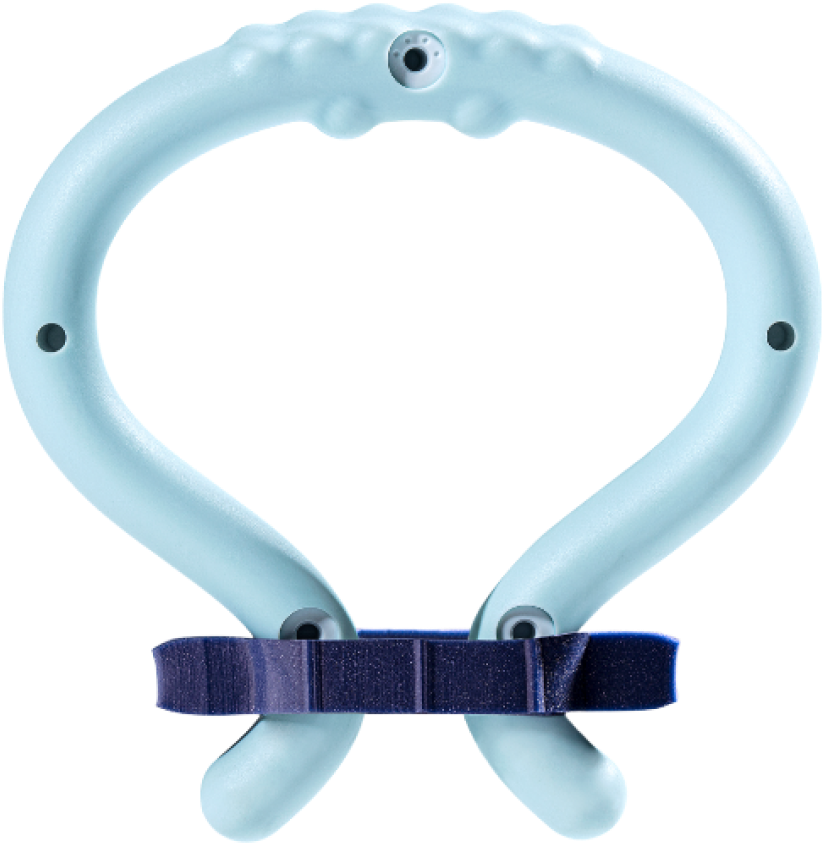
Look at Eddie, the erectile dysfunction device sold by Giddy, and the first thing to notice is the missing piece. It resembles a horseshoe closed by a little tension band. Where an ordinary ring completes its circle, Eddie leaves an opening. That gap is a useful place to begin.
- The product: a $188 ED wearable; four sizes, free resizing.
- The bigger audience: sexual-health publishing beyond ED.
- The fine print: 95% describes study satisfaction.
Giddy describes the shape as a way to restrict blood leaving the penis while preserving incoming flow and avoiding pressure on the urethra. The proposition: help maintain an erection without another pill. A familiar product category can conceal an overlooked design question. Must every ring be round?
The company, founded in 2017 and led by founder and CEO Brett Jacobson, has built two public identities around that question. Eddie is its physical product. GetMeGiddy is its publication, covering sexual health across diseases, relationships and stages of life. One asks whether a device fits; the other gives people words to explain what is wrong.
02 /The expensive part of a small device
The path to a discreet bedside purchase included a decidedly public argument. A federal appeals opinion describes an early manufacturing arrangement for 55,112 Giddy Packs across two production runs. A pricing dispute produced a settlement that contemplated a third run. Meanwhile, the FDA seized a shipment imported from China because the devices had not been properly registered.
Giddy paid registration and legal fees, then chose not to fund the third run. The ensuing contract case resulted in $40,000 relating to the earlier runs and $85,600 in lost profits for the manufacturer. The Sixth Circuit upheld the judgment in March 2022. For another hardware founder: a volume discount can carry obligations after enthusiasm for the next batch fades.
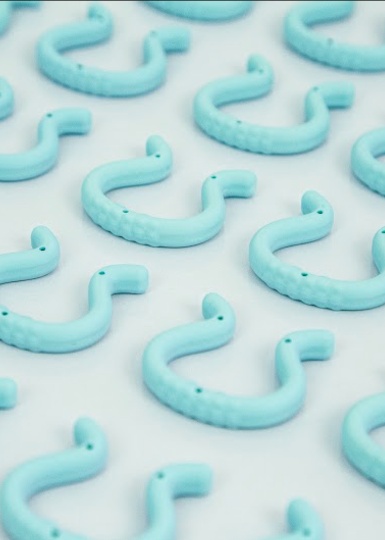
Today, the storefront makes a more domestic calculation possible. Eddie is listed at $188, with four sizes and two band strengths. The company advertises complimentary resizing and a 30-day money-back guarantee. It says insurance does not cover Eddie, although FSA/HSA funds can be used. Buyers pay for the device, the fit and the assistance around it; getting the fit wrong is an unusually personal form of buyer’s remorse.
October 2026
Fit matters
03 /A statistic with a denominator
Giddy markets Eddie as 95% effective. Read the company-hosted study and the number becomes more specific: 60 men enrolled, 59 completed twelve weeks, and 95% of completers reported overall positive results. The authors acknowledge a small sample and a questionnaire that had not been validated. The report describes follow-up surveys, rather than a randomized comparison with another treatment.
That is encouraging satisfaction data, with boundaries. People unable to achieve an erection and those with limited manual dexterity were excluded. The study cannot promise the same outcome for everyone who sees the advertisement. Christopher Kyle, one of its authors, also appeared as a Giddy medical adviser in a 2020 trade-publication interview.
Eddie is described as an FDA-registered Class II medical device. Registration alone does not mean FDA approval or clearance. Those distinctions matter when the buyer is trying to turn a reassuring badge into a decision. A constriction device helps retain blood; persistent erectile difficulties can also require investigation of an underlying condition. The device and the doctor answer different parts of the question.
04 /The reader who never buys Eddie
Open GetMeGiddy’s guides and the audience changes. Alongside impotence are PCOS, breastfeeding, ovarian cancer, HIV, mental health and dating after forty. There are owner’s and visitor’s guides to genital anatomy. The titles suggest a publication prepared to explain what a school lesson skipped, or what a patient remembered only after leaving an appointment.
Its medical-review policy names physicians, counselors and therapists as reviewers. It also states that reviewing an article does not endorse the products mentioned in it. That sentence deserves its place. A publisher selling health products has to earn two kinds of trust: that the explanation is sound, and that the explanation has not been bent into a sales pitch.
The editorial voice extends into video. BARE features personal experiences; Well, IMO turns relationships into frank discussion. In April 2022, Giddy reported reaching 2.8 million users during the publication’s first year and publishing more than 3,100 free articles. Those were company-reported audience figures, not a count of device customers. Plenty of readers have no reason to buy an ED product.
“We are in the midst of a sexual health revolution.”
Brett Jacobson · April 2022
05 /From the search box to the shopping basket
The ambition is visible in the additions. In April 2022, Giddy announced virtual-care access powered by Sesame, offering a choice of providers at self-pay prices. That June it introduced Giddy + Health: five vitamin products aimed at libido, prostate health, menopause and general nutrition, priced at launch between $30 and $50 per month.
These launches show a company testing several ways to make a health audience commercially useful. Direct device sales sit beside educational content, a care partnership and an expansion into supplements. Its affiliate page offers $1 for each referred GetMeGiddy subscriber through impact.com. An educational relationship can therefore begin well before a product purchase.
In the market for ED support, Eddie competes with conventional tension rings and vacuum devices, while prescription sildenafil and tadalafil offer another treatment route. In publishing, Giddy competes for the searches that also bring readers to broad health-information sites. Its distinctive position is the overlap: a specialized physical product attached to a publication whose curiosity extends beyond the product’s natural customer.
06 /An awkward question, well answered
The copyable idea is to make the uncomfortable question easy to approach. Explain the mechanism. Give the customer a way to correct the fit. Let the publication discuss subjects that will never sell the flagship product. Together, those choices offer a plausible route from embarrassment to a useful next step, without requiring every reader to become a buyer.
The limits are equally concrete. A person who cannot achieve an erection is outside the device study’s population. Someone with limited dexterity may find the fastening difficult. A reader facing a diagnosis needs clinical care beyond an article. Giddy’s design, support and publishing can reduce friction around those decisions; they cannot make every decision disappear.
There is something appealingly modest about returning to that gap in Eddie’s shape. Health businesses often sell certainty in a crowded room. Here, the useful question is smaller and more exact: where should the pressure go, and where should space remain? It is a reasonable question for a device. It is an excellent one for a conversation.