The first sentence of a cold email has an awkward job. It must persuade a stranger that the sender has done some homework, without sounding like homework. Mention a job title and the message feels assembled. Mention something the person actually wrote, and there is at least a reason to keep reading. OutreachWriter by 500apps built its pitch around that small, expensive difference: finding something worth saying before producing the words.
- The job: turn prospect information into tailored email and LinkedIn drafts.
- The old offer: $14.99 per user monthly, bundled with 50 apps.
- The turn: 500apps has announced a suite wind-down as it moves toward 500agents.
The work before the words
Consider the ordinary sequence. A salesperson opens a profile, checks the company, reads a recent post, and tries to connect those details to an offer. The email may be short. Preparing it can take longer than writing it. Repeat that process across a prospect list and the research becomes a substantial part of the day.
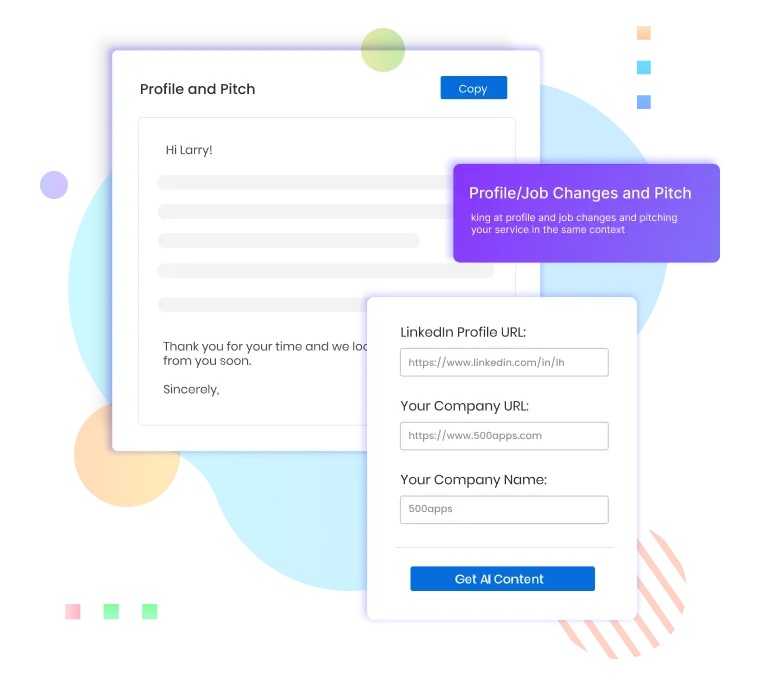
OutreachWriter’s advertised approach was to pull a prospect’s digital context into the drafting process. LinkedIn profiles, recent activity, company information and website material supplied the ingredients. Its product listing describes tools for personalized emails, LinkedIn outreach and opening lines. The proposed advantage was a shorter route from finding a person to having a plausible message ready.
That put it in a particular corner of the AI writing market. A general writing assistant starts with what the user asks it to write. An outreach specialist also needs to establish why this recipient should care. OutreachWriter’s emphasis on prospect context made that second task part of the proposition. The distinction matters more than the number of sentences a model can generate.
The price of fifty
The business model added a second hook. OutreachWriter came inside the wider 500apps subscription. Its historical advertised price was $14.99 per user per month for access to 50 apps, with a trial available. Five seats at that rate would cost $74.95 monthly before tax. For a small team comparing several separate software bills, the arithmetic was easy to grasp.
50 apps included. One seat-based bill.
Historical offer, not a current purchase quote.
But buying a suite also means understanding its divisions of labor. The vendor’s old navigation listed OutreachWriter as the AI writer and OutReachly as sales cadence software. Finder.io handled email finding; CRM.io handled customer management. Those neighboring products help explain the ambition: cover the business process through multiple tools sold together. A writing feature was one stop along a much longer route to a sale.
A rejection letter belongs in the same machine
Sales was only one use. The recruitment writer advertised candidate prospecting, interview invitations and rejection emails. That last job is revealing. An invitation seeks a response; a rejection closes a loop. Both involve repetitive communication where the particulars still matter. The software was selling relief from recurring composition work, even when nobody was buying anything.
SEO teams had another version of the problem. A backlink request asks a website owner to make room for somebody else’s work. OutreachWriter offered a backlink email writer built around relevant blog or website context. Here, too, personalization was the mechanism. For marketers, recruiters and salespeople, the common task was to turn available information into an appropriate ask. Templates gave the task a starting shape.
Count the conversation, not the copy
Speed is the easy part to notice. A filled text box looks productive. Yet a message can mention the correct company and still make an irrelevant offer. Personal details establish recognition; they do not automatically establish need. That is the distinction a buyer should carry into any AI outreach evaluation.
the fact02Connect
the offer03Draft
the message04Edit
before sending
A practical test would compare the whole process: research, generation, checking and revision. Then look at useful replies. If the research is stale, the editor inherits detective work. If every draft requires a rewrite, the apparent time saving moves elsewhere. This is a way to judge the category, rather than a measured result from OutreachWriter.
The bundle gets a rewrite
The company’s current direction makes that workflow question more pointed. OutreachWriter’s homepage now leads to a 500apps transition announcement. The parent says it is winding down the suite and concentrating on 500agents. Its explanation includes the phrase “stop spreading thin across 50 products.” The notice describes a 90-day transition, but carries no publication date.
“stop spreading thin across 50 products”500apps transition announcement, signed Manohar & the team
The proposed replacement changes the unit of ambition. The 500agents site presents a platform that generates interfaces around users’ tasks, with forthcoming reference products for website conversations, CRM, outbound sales and website building. Founder Manohar Chapalamadugu’s team is moving from a catalogue of applications toward an adaptable interface. These are announced plans, and deserve to be read as plans.
Keep the method. Keep your judgment.
For someone studying the business, the useful lesson is portable. Begin with a fact about the recipient that can be checked. Connect it to the reason for writing. Generate a draft. Remove the flattery, correct the details, and make the request small enough to understand. That sequence can survive a change of software.
It depends on good inputs and a relevant offer. A sparse profile gives a writer little to work with. An old job title can spoil an otherwise polished introduction. And a team that lets drafts bypass review gives up the very judgment that makes personalization useful. Existing customers also have a practical task: preserve the data and working material they need through the suite’s transition.
OutreachWriter’s story begins with the first line of an email and reaches an entire software purchasing decision. A low price makes a bundle attractive. A useful workflow earns its place in the working day. For the reader choosing tools, the question is wonderfully concrete: after the software has written, what work is still yours?
Follow the next chapter
OutreachWriter website 500apps announcement 500agents LinkedIn Twitter / X