Consider the employee whose morning begins with two browser tabs. A number lives in one. A form waits in the other. Copy, paste, check, repeat. The work requires attention without offering much satisfaction. BotPath by 500apps was built for this small, stubborn gap between having information and getting something done with it.
- The job: turn repeatable business tasks into software-bot workflows.
- The offer: historically, $14.99 per user each month for a 50-app suite.
- The turn: 500apps now announces a suite wind-down and a move toward 500agents.
There is an appealing modesty to the original problem. Nobody needs a robot to have an opinion about a spreadsheet. They need the right information put in the right place. BotPath approached that problem through robotic process automation, or RPA: software configured to carry out repeatable steps across business applications.
The employee who knows the clicks
BotPath’s product materials described a visual builder, custom bots, task capture, templates, and data management. Record a workflow, replay it, reuse it. The promise was that people who understood the task could build an automation with little or no programming. Expertise in the work could become the starting point for configuring the software.
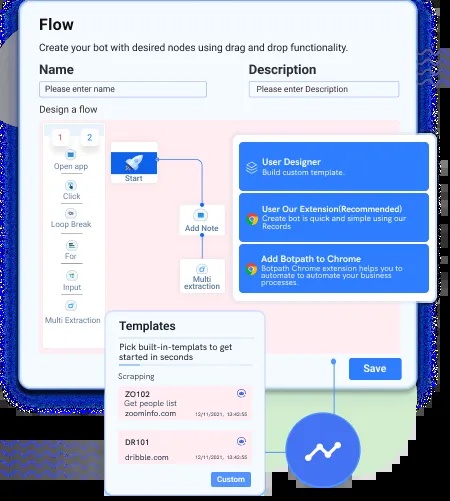
The published builder image makes that ambition concrete. Its menu includes actions for opening an app, clicking, looping, supplying input, and extracting data. The canvas connects steps into a flow. This is the attraction of a visual interface: a sequence that once existed inside somebody’s habits becomes something another person can inspect.
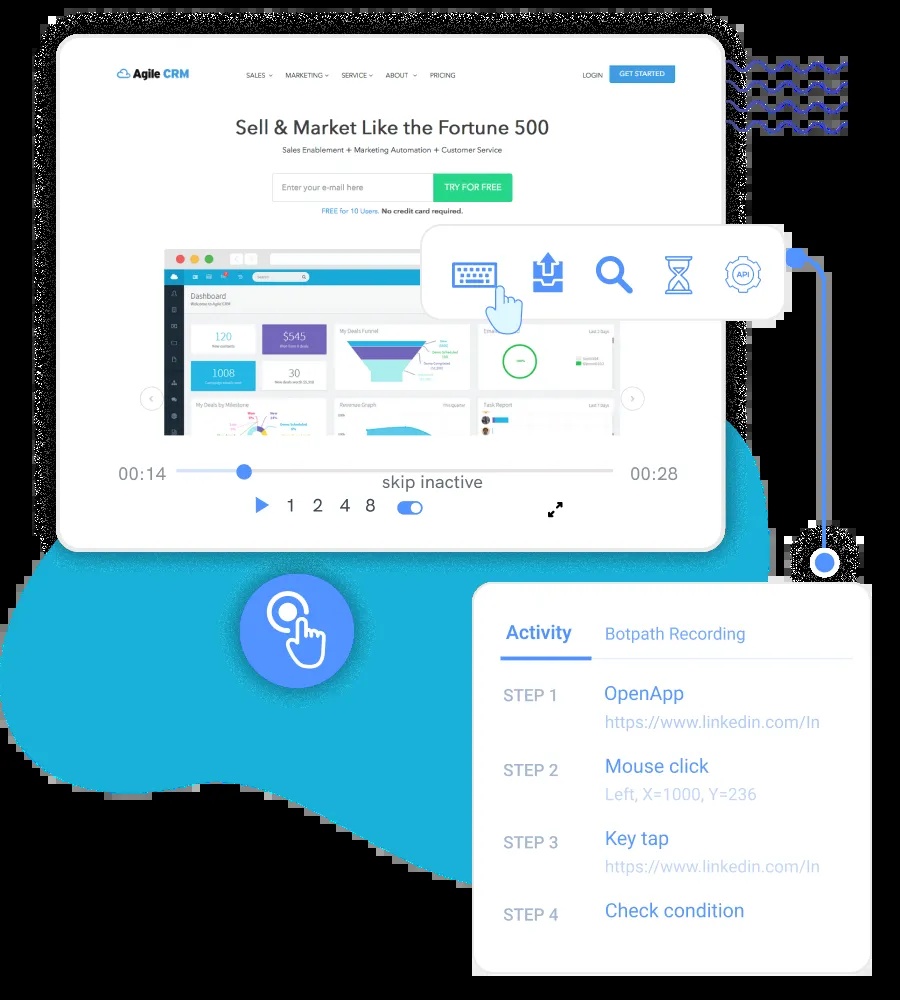
Task capture supplied another route in. Rather than start with a blank diagram, a user could record actions and reuse the resulting workflow. Templates offered a further shortcut. These features addressed the awkward first mile of automation: explaining, precisely, what a person has been doing almost without thinking.
SoftwareOne’s product listing describes applications including data entry, form filling, invoice handling, inventory tasks, and web scraping. Those are different departments with a similar need: move information through a known sequence. The sensible buyer was a team with recurring operational work and a reasonably clear definition of a correct result.
- 01Capture
- 02Arrange
- 03Run
- 04Check
The bundle was part of the machine
BotPath’s distinctive commercial detail was the company it kept. It sat within the 500apps suite alongside tools for sales, marketing, support, collaboration, and operations. A customer was being offered automation as one item in a much larger subscription. That changed the purchasing question from the value of one bot tool to the usefulness of a shared software cupboard.
Even within that cupboard, automation came in several forms. BotPath handled software bots. BPMApp addressed business processes through a visual flow builder. ZapUp connected applications into workflows. BotUp, despite the similar name, was a chatbot product. The catalog treated neighboring problems as separate tools, each with its own place in the suite.
50 apps in the Basic subscription
G2 pricing record updated October 10, 2024. Historical terms.G2’s pricing record listed that Basic subscription with a free trial, multiple workspaces, support, and no feature caps. The company’s LinkedIn description also advertised free onboarding and 24/5 support. These details made the offer legible to a growing business: a predictable bill and help getting started, with other tools already included.
But subscription arithmetic covers only access. An automation still has to be specified, tested, and checked. For a prospective buyer, the useful comparison is the effort of the whole process. A modest fee can coexist with substantial setup work. The fee answers one question; a working trial answers the other.
The market offered other ways to buy. UiPath and Automation Anywhere built platforms around automation; Zoho One sold a broad business-software suite. BotPath occupied the overlap: a bot-building product inside an inexpensive bundle. Its pitch gave a team already interested in the suite another reason to subscribe. Choosing between them still requires checking the specific workflow and operating requirements.
It also suggests a useful purchasing discipline. If only one application matters, judge that application on its own. If several matter, test a real handoff between them. The number of included tools says little about whether a particular process becomes easier. A cupboard full of equipment is valuable when somebody can use the equipment to finish the job.
Fifty products, then a change of mind
Behind the suite is Manohar Chapalamadugu, identified in public company profiles as 500apps’ founder and CEO. BotPath belonged to that wider software business. This matters when reading its footprint: the suite’s product range and customer claims describe a broader operation than a standalone browser-automation tool. The brand was one doorway into a shared commercial proposition.
The current turn is unusually direct. BotPath’s homepage redirects to a 500apps customer notice announcing a wind-down of the suite and a move toward 500agents. The team describes its earlier position as “spreading thin across 50 products.” It credits customer feedback with shaping the decision to pursue a single conversational AI platform.
“spreading thin across 50 products”500apps, customer notice
The notice outlines a 90-day transition, support-assisted exports, and early access to the successor. It is undated, so those relative steps should not become invented calendar deadlines. The practical reading is straightforward: old BotPath pricing and product pages describe the earlier offer; the live notice changes the context for anyone considering a new dependency.
Start with one finished task
There is a useful experiment a reader can copy from BotPath’s approach. Pick one recurring task. Write down the input, the steps, the desired output, and the cases that need a person. Then ask whether a visual workflow would reduce the total work. Begin small enough that someone can tell, without a meeting, whether it succeeded.
This approach has conditions. A changing screen can undermine instructions tied to an interface. A task dominated by judgment may resist a fixed sequence. Exceptions can consume the time supposedly saved. These are reasons to inspect a workflow before automating it, rather than assume that repetition alone makes it a good candidate.
BotPath’s story ends up joining two versions of the same ambition. The product tried to reduce the effort inside a task. Its maker now wants to reduce the number of products around the task. For the person still moving that number between browser tabs, the test remains wonderfully plain: does the work get finished, correctly, with less attention?