The first interview has a peculiar expense: two people must stop doing everything else at exactly the same time. Before anyone has established whether the applicant can do the job, a calendar has become involved. NinjaInterview by 500apps offered a way around that opening appointment. Send questions. Collect answers. Watch the recording later. The conversation could wait until there was something worth discussing.
- One-way video, coding tests and custom questions gathered screening evidence.
- The historical offer: $14.99 per user, per month, inside a 50-app bundle.
- 500apps now announces a suite wind-down and a move toward 500agents.
That last point changes how the company should be understood. NinjaInterview belongs to a larger experiment in selling business software: make the toolbox broad enough, and inexpensive enough, that a growing company can stop debating every individual purchase. The hiring application is a useful place to examine the bargain. Recruitment makes the difference between buying software and organizing work particularly easy to see.
First, take the calendar out
NinjaInterview’s central job was pre-employment assessment. A recruiter could assemble questions around a role, invite candidates and collect responses for evaluation. Its question library supported formats including multiple choice, short text, audio, video and file uploads. A portfolio and a spoken explanation could therefore sit alongside more conventional test answers. Different questions asked candidates to demonstrate different things.
The programming assessments extended that idea to technical hiring. Historical promotional material advertised Python, Java, JavaScript, .NET and more than 60 languages. Automatic grading helped organize the results. The point was practical: a résumé describes someone’s experience; an assessment asks that person to do something. Hiring teams could use the resulting evidence to decide where a longer conversation was worthwhile.
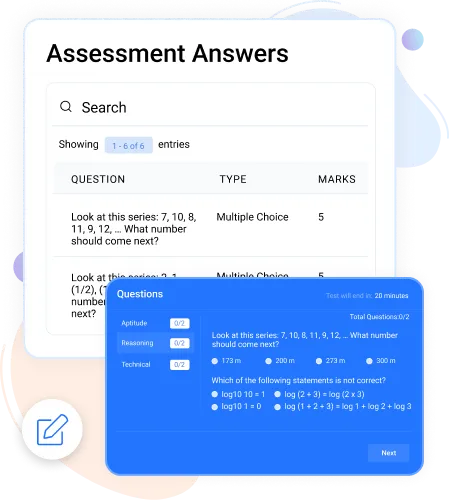
That arrangement is especially legible when several applicants face the same opening questions. Reviewers can return to an answer instead of relying entirely on notes from separate conversations. The product’s expertise lay in collecting and organizing these materials: assessment management, question construction, candidate information and results. Its place in the market was between a basic application form and the deeper exchange of a live interview.
- 01Build questions
- 02Collect responses
- 03Review evidence
- 04Talk together
Consider the difference between collecting an answer and making use of it. A recruiter might receive a recording today; a technical colleague might review it tomorrow. The advantage depends on a shared understanding of what each reviewer is looking for. Without that agreement, moving an interview out of the calendar can move the disagreement further down the process.
The other 49 apps in the room
Then came the commercial twist. NinjaInterview’s historical Basic listing advertised $14.99 per user per month, a 14-day trial and access to 50 apps. The offer included unlimited questions and responses. A buyer was being invited to consider assessment software as one part of a much larger subscription, with tools serving other departments. The catalog itself became part of the sales argument.
For a small team already using that suite, trying the interview application could involve relatively little additional purchasing friction. The budget conversation had partly happened already. For a buyer seeking only an assessment tool, the calculation was different: the other applications mattered only if someone would actually use them. A bundle’s apparent abundance and a company’s practical requirements are rarely identical.
Old advertised rate × paid users. Excludes taxes and setup effort; not a current quote.
This positioned NinjaInterview alongside talent-assessment products such as TestGorilla and HiPeople, while its coding tests overlapped with technical-assessment alternatives such as Codility. Its particular pitch was the combination of screening features and suite economics. The sensible comparison depended on the job: technical testing, recorded answers, or broader applicant evaluation. Fifty applications could not answer that question for the buyer.
The subscription arithmetic also leaves out the hours spent setting up a role. Someone must select the questions, decide which answers need a person’s attention and agree on the next step. That work can be worthwhile when the same process serves many applicants. For an occasional, highly specialized hire, a short custom exercise and a conversation may be easier to manage. The bundle price alone cannot settle the choice.
A score still needs a question
Public user accounts help explain the appeal. In 2023, G2 reviewers described keeping applicant information and assessment outcomes together, tailoring questions to a profile and evaluating coding skills. A SoftwareSuggest reviewer described choosing tests, inviting candidates and requesting video presentations during developer hiring. These are recognizable administrative tasks. The product promised to make them easier to repeat. These accounts describe particular users’ experiences. They are useful clues about the work being done, rather than a reliable estimate of what every hiring team would save after adopting it.
Repeatability has limits. A consistent question can still be a poor question. A coding exercise needs to resemble the work closely enough to justify the time it asks of an applicant. A recorded explanation can be useful evidence, but it cannot pursue an unexpected answer with a follow-up. Automatic scoring handles a defined evaluation task; choosing what deserves evaluation remains a managerial responsibility.
A consistent question can still be a poor question.
A reader can copy the useful process without copying every feature: decide what the role requires, ask comparable opening questions, preserve the answers and reserve live time for uncertainty. That approach becomes less useful when the role demands extensive back-and-forth from the start, when the test poorly represents the work, or when reviewing recordings simply becomes another unattended queue.
When the catalog became the question
The parent’s current announcement supplies the sharpest turn. On its website, 500apps says it will “stop spreading thin across 50 products” and concentrate on 500agents. It attributes the change to customer feedback and presents a conversational AI platform as its next direction. The notice describes a 90-day wind-down, export assistance and early access for existing customers.
The announcement is undated, so its countdown should not be converted into a calendar deadline. Its explanation does, however, identify portfolio breadth as a problem in the company’s own account. Reading this as a warning about the demands of maintaining a broad suite is reasonable; claiming that a particular NinjaInterview feature caused the retreat would go further than the evidence.
For a hiring team, the practical issue now is continuity: where candidate records live, how they can be exported and what process will carry on afterward. NinjaInterview’s enduring lesson is smaller than its bundle. Collect useful evidence before spending everyone’s time together. Then give that evidence somewhere dependable to live.